Photo: Wikipedia
Demographics of Michigan
Affluence Level in Michigan
An upper-middle-class area. Household wealth, education levels, and homeownership run ahead of national benchmarks.
People of Michigan
Michigan’s 10 million residents today are a blend of industrial-era European immigrant stock, Great Migration Black families, and a smaller but growing Hispanic and Asian presence, concentrated heavily in the southeastern corner of the state. The population is older and less diverse than the national average, with a foreign-born share of just 3.1% and a white population of 73.0%. The state’s identity remains rooted in its automotive and manufacturing heritage, though that economic base has shifted dramatically since 2000, reshaping where and how people live.
Settlement & growth (pre-1960)
Long before European arrival, Michigan was home to the Anishinaabe peoples—primarily the Ojibwe (Chippewa), Odawa (Ottawa), and Potawatomi—who formed the Three Fires Confederacy and lived across the Lower and Upper Peninsulas. French explorers and fur traders established the first European settlements in the 17th century, founding Sault Ste. Marie in 1668 and Detroit in 1701 as strategic forts and trading posts. The British took control after the French and Indian War in 1763, but the region remained sparsely populated by Europeans until after the War of 1812.
Mass settlement began with the opening of the Erie Canal in 1825, which gave New Englanders and New Yorkers a direct water route to Michigan. These Yankees—mostly of English and Scots-Irish descent—poured into the southern tier, founding Ann Arbor (1824), Kalamazoo (1829), and Grand Rapids (1826). They brought a culture of small-scale farming, Protestant piety, and early abolitionism. The 1830s and 1840s saw a wave of German immigrants, many of them Lutheran and Catholic, who settled in Frankenmuth (1845) and across the Saginaw Valley, where they worked as farmers and brewers. Dutch Calvinists arrived in the 1840s under the leadership of Albertus Van Raalte, founding Holland (1847) and later Zeeland, creating a tightly-knit Reformed community that remains culturally distinct today.
The Civil War era brought no new large immigrant wave, but the post-war period saw a dramatic shift as Michigan industrialized. The discovery of copper and iron in the Upper Peninsula drew Cornish miners (known as “Cousin Jacks”) to Calumet and Hancock in the 1860s-1880s, alongside Finnish, Swedish, and Norwegian immigrants who became the dominant ethnic group in the region. By 1900, the Upper Peninsula was the most heavily Scandinavian part of the United States outside Minnesota.
The automobile boom after 1900 transformed Michigan’s population. Henry Ford’s $5-a-day wage in 1914 drew a massive wave of Southern and Eastern European immigrants—Poles, Italians, Hungarians, and Slovaks—to Detroit and its suburbs. Hamtramck became a Polish enclave so dense that Polish was spoken on the streets into the 1960s. At the same time, the Great Migration brought hundreds of thousands of Black Americans from the rural South to Detroit, Flint, and Pontiac between 1915 and 1960, seeking work in auto plants. By 1950, Detroit’s Black population had grown to 16%, concentrated on the city’s near-east side. The post-World War II era saw a wave of Appalachian whites—often called “hillbillies” at the time—moving to Ypsilanti and Warren for factory jobs, adding a distinct Southern white working-class element to the state’s mix.
Modern era (post-1965)
The 1965 Hart-Cellar Act had a modest effect on Michigan compared to coastal states, but it did open the door to new immigrant groups. The most notable post-1965 wave has been Arab immigration, particularly from Lebanon, Iraq, and Yemen. Dearborn became the epicenter of Arab America, with the largest concentration of Arab-Americans outside the Middle East—now roughly 40% of the city’s population. This community grew through chain migration and family reunification, and it has maintained strong cultural and religious institutions, including the Islamic Center of America.
Hispanic immigration, primarily from Mexico and Puerto Rico, accelerated after 1970. Grand Rapids and Holland saw significant Mexican settlement, drawn by agricultural work in fruit orchards and later by manufacturing jobs. The Hispanic share of Michigan’s population reached 5.7% by 2024, with the largest concentrations in the Grand Rapids area and southwest Detroit. East and Southeast Asian communities—primarily Vietnamese, Chinese, and Korean—settled in Troy and Novi in Oakland County, drawn by the tech and engineering sectors. The Indian-subcontinent population (1.5% of the state) is heavily concentrated in the same suburbs, particularly around the automotive research and engineering corridor along I-275.
Domestic migration has reshaped Michigan more than immigration. The decline of the auto industry after 1970 triggered a long-term population shift: Detroit lost over 60% of its population between 1950 and 2020, falling from 1.85 million to 639,000. Much of that outflow went to the outer-ring suburbs of Macomb and Livingston counties, or left the state entirely for the Sun Belt. The 2008-2009 recession hit Michigan especially hard, accelerating out-migration. Since 2010, however, the state has stabilized, with the population growing slowly—about 2% from 2010 to 2024—driven by natural increase and modest international immigration. The Upper Peninsula continues to lose population, while the Grand Rapids area and the lakeshore counties are growing.
The future
Michigan’s population is likely to continue its slow growth, but the composition will shift. The white population, already 73.0%, is aging and declining in absolute numbers, as birth rates among white residents fall below replacement. The Hispanic and Asian shares will grow, though from a low base. The Arab-American community in Dearborn is expected to remain a distinct, cohesive enclave, with high rates of endogamy and strong institutional retention. The Black population, concentrated in Detroit and Flint, is projected to decline slightly as out-migration to the South continues—a reverse of the Great Migration that is now well underway.
Suburbanization will continue to hollow out the core cities. The most dynamic growth is in the Grand Rapids-Holland corridor, where a mix of native-born whites, Hispanic immigrants, and a small but growing Asian professional class is creating a more diverse, economically resilient region. The Upper Peninsula faces a demographic crisis: an aging, shrinking population with few young adults and little immigration. The state’s overall character will remain Midwestern and industrial in memory, but the lived reality is increasingly suburban, service-sector, and polarized between a growing west side and a stagnant east side.
For someone moving to Michigan now, the state offers a choice between distinct regional cultures: the dense, diverse, Arab-and-Black urban core of metro Detroit; the fast-growing, conservative-leaning Dutch-and-Hispanic west side; or the quiet, aging, overwhelmingly white rural and northern areas. The state is not homogenizing—it is tribalizing into enclaves that reflect the settlement patterns laid down 150 years ago, with new immigrant groups adding layers rather than replacing the old ones.

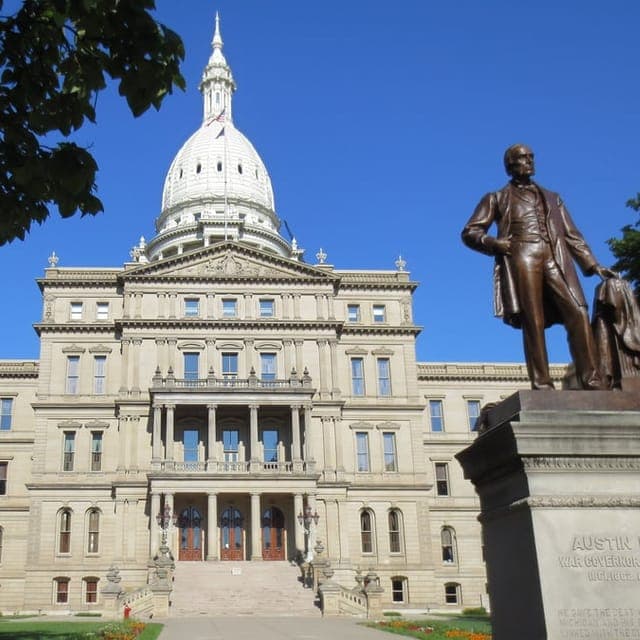
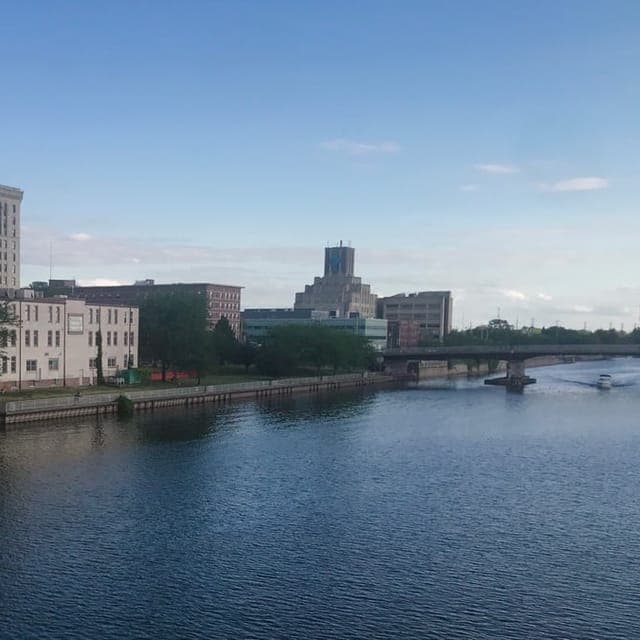
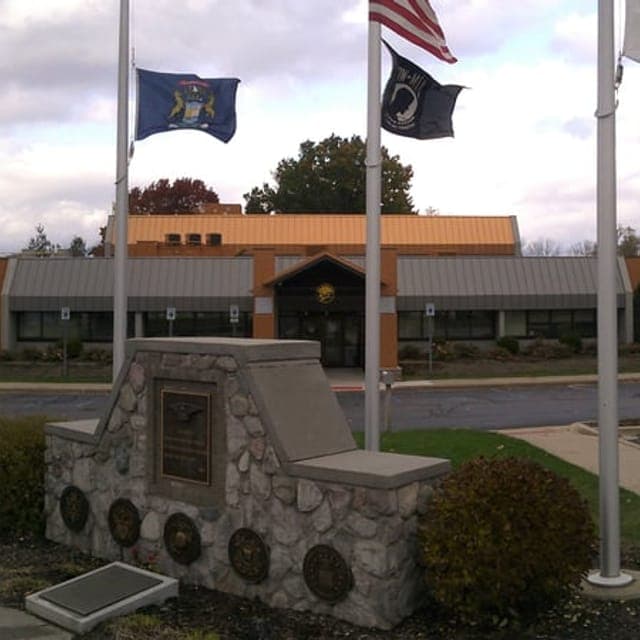
Most Diverse Cities in Michigan

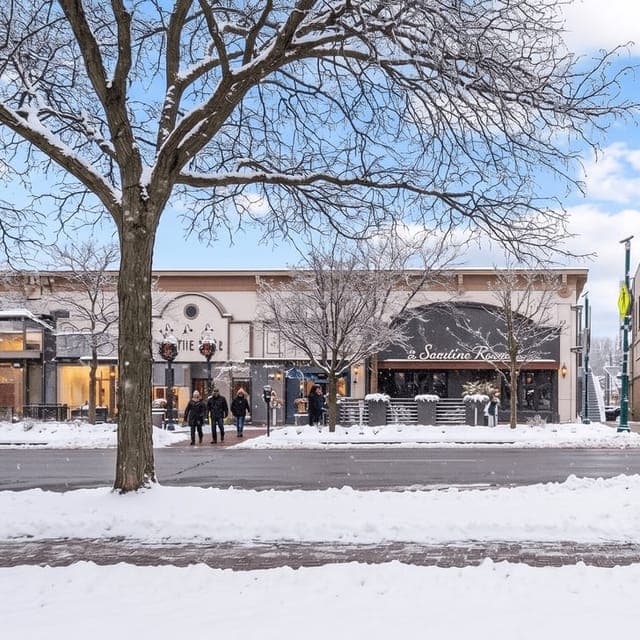
Most Homogenous Cities in Michigan

* Values derived from national, state, county, city and local statistics and may differ in a specific area. Last updated: 2026-04-18T23:04:36.000Z
Narrative content on this page is AI-generated and may contain mistakes. Verify any details that matter before acting on them.
ReloMaps may earn a commission from affiliate links at no extra cost to you.

