Photo: Wikipedia
Political ClimatePolitical Climate in Michigan
Political Environment in the State
Michigan is a true battleground state, with a Cook PVI of EVEN, meaning it votes almost exactly in line with the national average. Over the past 20 years, the state has shifted from a reliably blue stronghold in presidential elections (voting for Democrats from 1992 to 2012) to a fiercely contested toss-up, flipping to Donald Trump in 2016 by a razor-thin 0.23% margin, then back to Joe Biden in 2020 by 2.8%, and then swinging hard to the right again in 2024 as Trump reclaimed it. The dominant coalitions are a shrinking, union-heavy, urban Democratic base centered in Detroit, Ann Arbor, and Grand Rapids versus a growing, exurban and rural conservative coalition that has been energized by cultural and economic grievances. The long-term trajectory is a slow but steady rightward shift, driven by population losses in the blue strongholds and a surge of conservative activism in the outer suburbs and rural north.
Urban vs. rural divide
The political map of Michigan is a textbook case of urban-rural polarization. The Democratic stronghold is Wayne County (Detroit), which alone provides roughly 30% of the statewide Democratic vote, along with Washtenaw County (Ann Arbor) and parts of Oakland County (the affluent northern suburbs of Detroit). These three counties are the engine of the blue vote. In contrast, the entire Upper Peninsula, most of the Lower Peninsula north of Bay City, and the western side of the state (outside Grand Rapids) are deeply red. The key swing areas are Macomb County (the blue-collar, exurban Detroit county that flipped hard for Trump in 2016 and 2024) and Kent County (Grand Rapids), which has been trending blue as the city grows but still has a strong conservative base in its outer townships. The rural counties like Oscoda, Alcona, and Montmorency in the northern Lower Peninsula routinely vote 70%+ Republican. The divide isn't just about population density—it's cultural. The urban areas are dominated by public sector unions, university elites, and a growing immigrant population, while rural Michigan is overwhelmingly white, older, and deeply skeptical of government overreach.
Policy environment
Michigan's policy environment is a mixed bag that has become noticeably more progressive since Democrats took full control of state government in 2023. The state has a flat income tax of 4.25%, which was actually reduced from 4.35% in 2023 due to a 2015 law that triggers automatic cuts when revenue exceeds inflation—a rare win for taxpayers. However, the new Democratic trifecta immediately repealed the state's "right-to-work" law (which had been in place since 2012), reinstated prevailing wage mandates, and expanded the state's Elliott-Larsen Civil Rights Act to include sexual orientation and gender identity. On education, the state has a universal school choice program (the "Schools of Choice" system) that allows inter-district transfers, but the new administration has pushed for more funding for traditional public schools and expanded pre-K. Healthcare policy is a flashpoint: Michigan expanded Medicaid under the Healthy Michigan Plan, and the state has a strong certificate-of-need (CON) law that restricts new hospital and clinic construction, which critics say limits competition and drives up costs. Election laws have been a major battleground: in 2022, voters passed Proposal 2, which enshrined nine days of early voting, automatic voter registration, and no-excuse absentee voting into the state constitution—a move that conservatives argue makes the system more vulnerable to fraud. The state also has a "red flag" law (extreme risk protection order) passed in 2023, which allows courts to temporarily seize firearms from individuals deemed a threat, a policy that many gun owners view as a due process violation.
Trajectory & freedom
Michigan is clearly trending less free from a conservative perspective, especially since the 2022 election gave Democrats unified control of the legislature and governor's office. The most significant contraction of personal liberty came in 2023 with the repeal of right-to-work, which forces private-sector workers in unionized workplaces to pay dues or fees as a condition of employment—a direct hit on individual economic freedom. The same year, the legislature passed a package of gun control laws including universal background checks, safe storage requirements, and the red flag law mentioned above. On parental rights, the state has moved in the opposite direction of many red states: in 2023, the governor signed a law banning conversion therapy for minors, and the state board of education has pushed for LGBTQ-inclusive curriculum standards, which has sparked fierce local battles in conservative districts like Saline and Northville. Property rights have seen some bright spots: the state's "dark store" loophole was closed in 2023, which actually increased property tax assessments on big-box retailers, but for homeowners, the Proposal A system (1994) still caps annual assessment increases at the rate of inflation or 5%, whichever is less, providing strong protection against tax spikes. Medical freedom took a hit with the 2023 repeal of the state's 1931 abortion ban (which had been unenforceable since Roe), replaced with a constitutional right to abortion up to fetal viability, enshrined by Proposal 3 in 2022. For conservatives, the biggest concern is the trajectory: every session seems to bring new restrictions on gun rights, new mandates on employers, and new cultural mandates from Lansing.
Civil unrest & political movements
Michigan has been a flashpoint for political activism on both sides. The most visible recent event was the 2020 "Operation Gridlock" protest at the state capitol in Lansing, where thousands of armed protesters, including members of the "Wolverine Watchmen" militia, demonstrated against Governor Gretchen Whitmer's COVID-19 lockdown orders. That protest led to the foiled plot to kidnap the governor, which remains a deeply polarizing issue—many conservatives see it as a government entrapment operation, while liberals view it as proof of domestic terrorism. The state has also seen intense activism around election integrity: in 2020, the "Stop the Steal" movement was particularly strong in rural counties like Livingston and Lapeer, where local clerks faced harassment and threats. On the left, the "Michigan Liberation" and "Detroit Justice Center" movements have pushed for criminal justice reform and defunding the police, though with limited success. Immigration politics are relatively low-key compared to border states, but the city of Detroit has declared itself a "sanctuary city" (though the state has no such policy), and there have been localized tensions in Hamtramck, where a Muslim-majority city council has passed ordinances restricting LGBTQ pride flags on public property—a unique culture war flashpoint. The "Wolverine Watchmen" trial and the ongoing federal cases against January 6 participants from Michigan (including several from Grand Rapids and Macomb County) keep the state in the national spotlight for political violence concerns.
Projection
Over the next 5-10 years, Michigan is likely to remain a battleground, but the demographic trends favor a slow rightward shift. The Detroit metro area is losing population (down about 10% since 2010), while the outer exurbs and rural areas are growing. The Upper Peninsula and northern Lower Peninsula are seeing an influx of remote workers from blue states, but many of these newcomers are actually conservative-leaning (fleeing high taxes and lockdowns), which could reinforce the red trend. The wild card is the growing Hispanic population in Holland and Grand Rapids, which has historically leaned Democratic but is showing signs of shifting right on cultural issues. The Democratic trifecta of 2023-2026 will likely be short-lived; the 2026 midterms are expected to flip the state House and possibly the Senate back to Republican control, given the historical pattern of midterm backlash. However, the progressive policies passed in 2023 (right-to-work repeal, gun control, abortion rights) are now entrenched and will be very difficult to reverse even with a Republican legislature, because the governor's veto pen will remain in Democratic hands until at least 2027. The biggest unknown is the 2028 presidential election: if the national environment favors Republicans, Michigan could become a reliably red state in presidential races, but if Democrats nominate a moderate, it will remain a toss-up. For a new resident, expect the cultural war to intensify, with school boards, local zoning, and gun laws being the primary battlegrounds.
For a conservative considering a move to Michigan, the bottom line is this: you'll find strong communities of like-minded people in the outer suburbs (like Rochester Hills or Grand Haven) and the rural north, but you'll be living under a state government that is actively hostile to gun rights, parental control over education, and economic freedom. The state's tax burden is moderate (flat income tax, reasonable property taxes thanks to Proposal A), but the regulatory environment is getting worse. If you're willing to fight for your values at the local level—school board meetings, county commission races, and city council elections—Michigan offers a real chance to make a difference. But if you're looking for a state where the government already respects your freedoms, you'd be better off looking at Indiana or Ohio. Michigan is a battlefield, not a refuge.

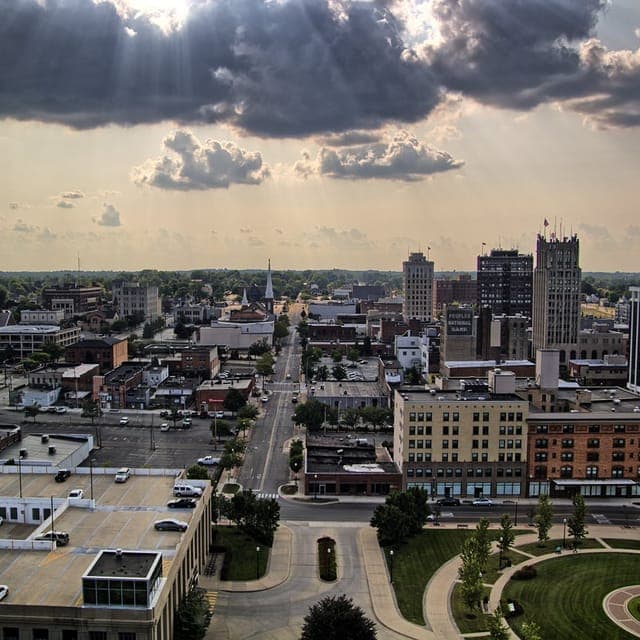
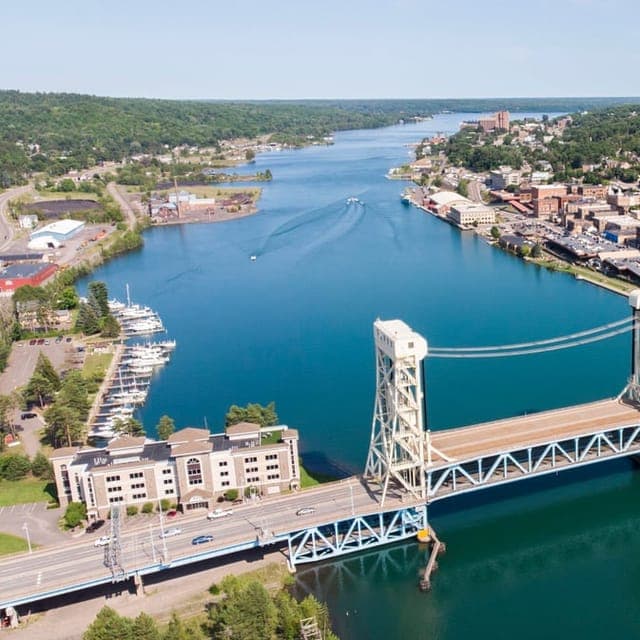
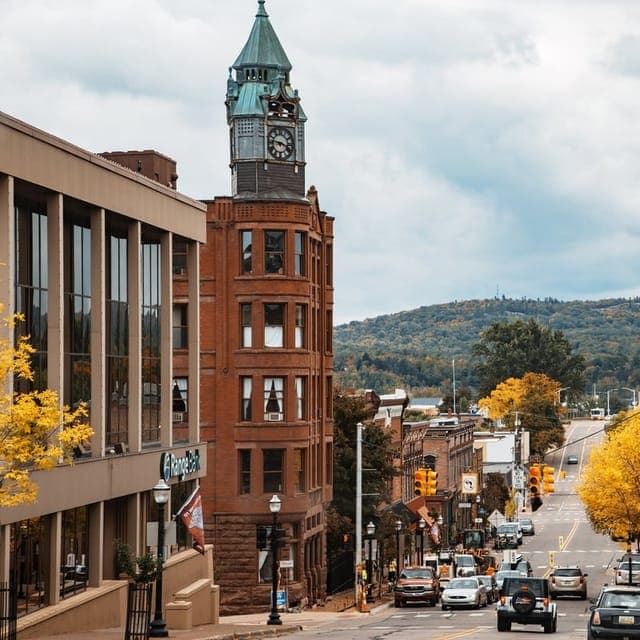
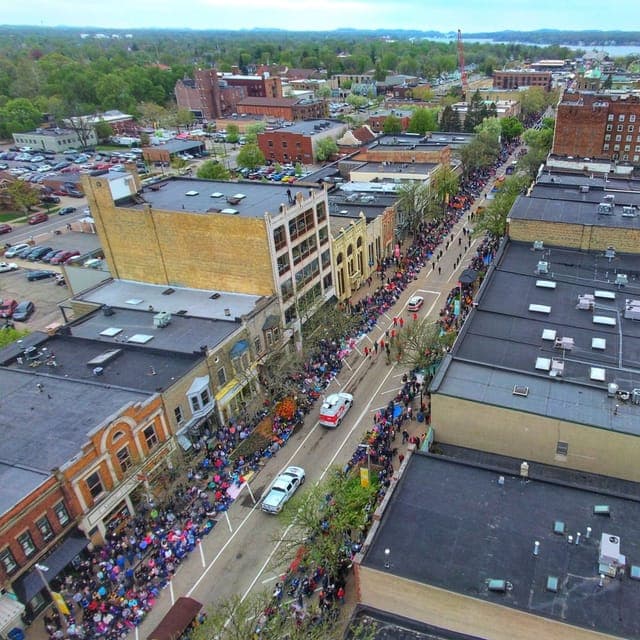
Most Conservative Cities in Michigan

Most Liberal Cities in Michigan
* Values derived from national, state, county, city and local statistics and may differ in a specific area. Last updated: 2026-04-18T23:04:36.000Z
Narrative content on this page is AI-generated and may contain mistakes. Verify any details that matter before acting on them.
ReloMaps may earn a commission from affiliate links at no extra cost to you.

