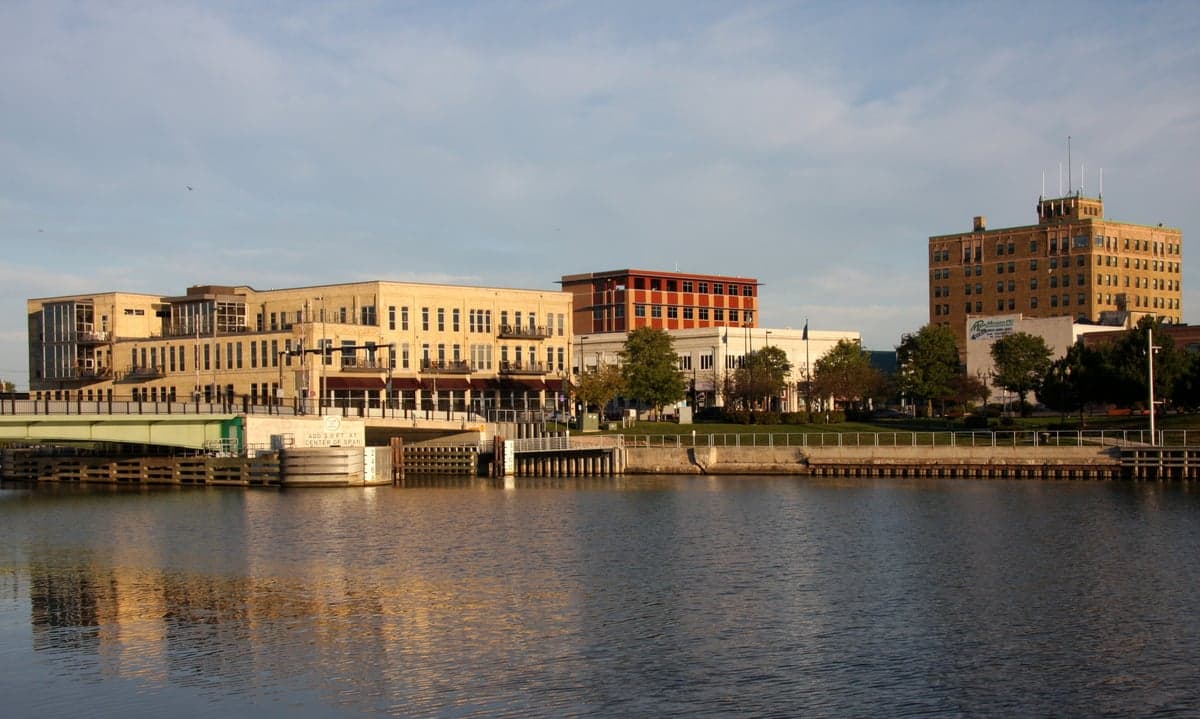
Photo: Wikipedia
Political ClimatePolitical Climate in Manitowoc, WI
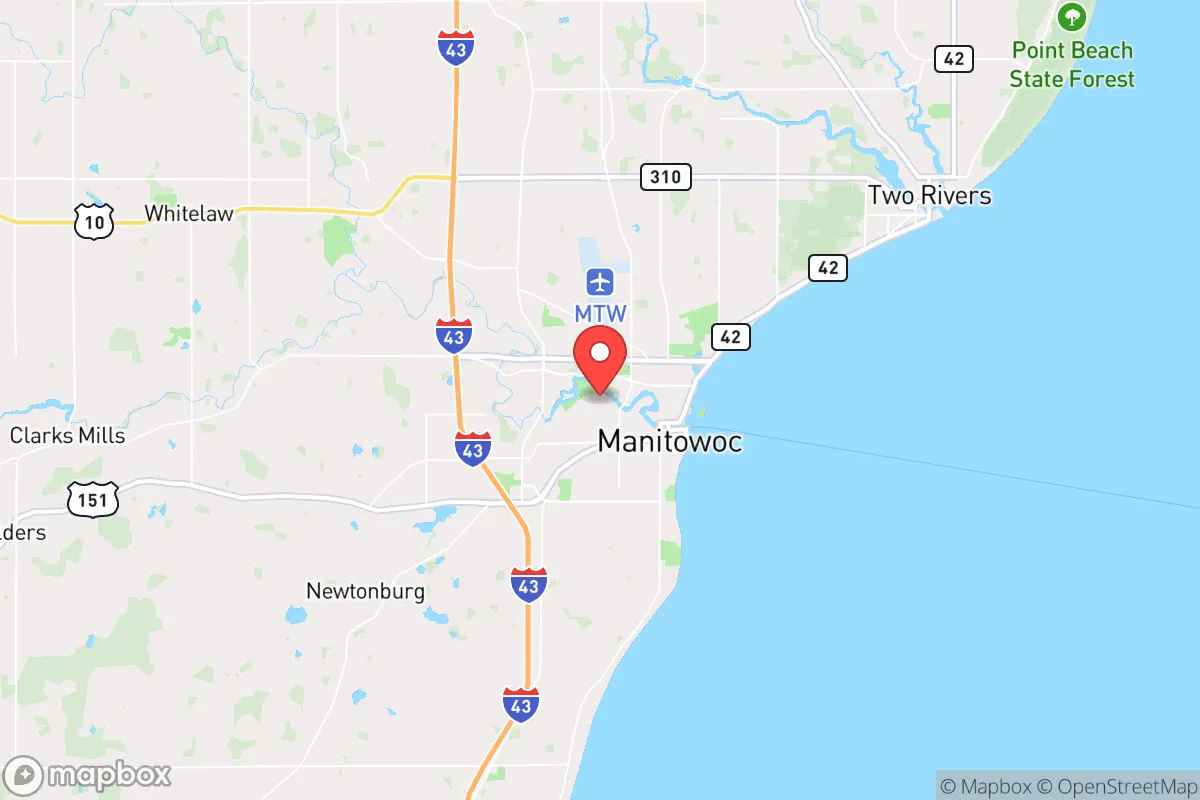
District shown is the primary district for this city’s centroid. Cities may span multiple districts.
Local Political AnalysisPolitical Analysis of Manitowoc, WI
Manitowoc has always been a solidly conservative place, and that hasn't changed much. The Cook PVI of R+8 tells the real story—this area leans Republican by a healthy margin, and it's been that way for as long as I can remember. You see it in the local elections, the school board races, and the way folks talk about things at the hardware store or the diner. It's not a flashy political scene, but it's steady, and that's something a lot of us appreciate. The trajectory here is pretty stable, though you do get the occasional rumble from the bigger cities to the south, like Green Bay or Milwaukee, trying to push their ideas north.
How it compares
Drive twenty minutes south to Sheboygan, and you'll find a similar conservative vibe, though maybe a little more mixed with some manufacturing union influence that can swing things. Head up to Green Bay, and it's a different animal—more of a toss-up, with a lot of that urban-suburban split you see in bigger places. But Manitowoc? It's more like the rural towns around it, like Two Rivers or Mishicot. Those places are even more reliably red. The contrast is sharpest when you look at the state level: Manitowoc County consistently votes for conservative candidates, while places like Madison or Milwaukee are pushing a whole different agenda. It's a reminder that our values here—personal responsibility, limited government, and keeping your nose out of your neighbor's business—aren't shared everywhere.
What this means for residents
For the people living here, the political climate means a few things in daily life. First, there's a general sense that government isn't breathing down your neck. You don't see the kind of overreach you hear about in other parts of the country—no heavy-handed mandates, no busybody regulations on how you run your small business or what you can do with your own property. The local government tends to stay out of the way, which is how most folks want it. That said, there's always a concern when you see any shift toward progressive ideology creeping in, whether it's from state-level policies or national trends. The school board has been a battleground lately, with some pushing for curriculum changes that don't sit well with a lot of parents. It's a reminder that you have to stay engaged, because the moment you look away, someone's trying to tell you how to live.
One thing that sets Manitowoc apart is its cultural conservatism, which runs deeper than just voting patterns. There's a strong sense of community here, where people look out for each other without needing a government program to do it. The local churches, the volunteer fire departments, the civic groups—that's where the real support comes from. You also see it in the policy distinctions: property taxes are manageable, zoning is reasonable, and there's a general reluctance to adopt the kind of progressive social experiments you see in bigger cities. It's not a perfect place, but it's a place where you can still have a say in how things run, and where the government is more of a partner than a boss. That's worth holding onto, and most folks here are determined to do just that.

State Political ClimatePolitical Climate in Wisconsin
State Political AnalysisPolitical Environment in the State
Wisconsin has long been a classic swing state, but over the past 20 years it has hardened into a near-perfect 50/50 battleground, with the rural-urban divide growing sharper by the cycle. The state’s political center of gravity has shifted from the moderate, union-heavy “Blue Dog” Democrats of the 1990s to a polarized landscape where Milwaukee and Madison drive the blue vote, while the rest of the state—especially the WOW counties (Waukesha, Ozaukee, Washington) and the rural north and west—anchor the red. The 2024 presidential race saw Donald Trump carry the state by roughly 30,000 votes, a margin that underscores just how tight and contested every election has become. For a conservative considering relocation, the key takeaway is that Wisconsin offers a genuine political fight—but one where your vote and your voice can actually tip the balance.
Urban vs. rural divide
The political map of Wisconsin is a textbook case of urban-rural polarization. Milwaukee County, home to the state’s largest city, delivered over 300,000 votes for Joe Biden in 2020, while Dane County (Madison) added another 260,000. Together, these two counties account for nearly a third of the state’s total vote, and they are overwhelmingly Democratic. In contrast, the WOW counties—Waukesha, Ozaukee, and Washington—form a conservative stronghold that reliably delivers 60-70% Republican margins. The real battlegrounds are the suburban and exurban counties like Brown County (Green Bay), Racine County, and Kenosha County, which have trended right in recent cycles. The rural northwoods counties—Vilas, Oneida, and Lincoln—are deeply red, while the western driftless region, including La Crosse and Eau Claire, has become more competitive as college towns pull left. The divide is not just electoral; it’s cultural. A resident of Waukesha lives in a world of church suppers and small business optimism, while a resident of Madison experiences a progressive bubble where government expansion is seen as the solution to everything.
Policy environment
Wisconsin’s policy environment is a mixed bag for conservatives, but the trend has been positive in recent years. The state has a flat income tax of 4.4% (down from 7.75% in 2011), and the corporate tax rate has been slashed to 4.9%. Property taxes are moderate, though they vary significantly by county—Waukesha County averages around $3,500 annually on a median home, while Milwaukee County is closer to $4,800. The state legislature, under Republican control since 2011, has passed right-to-work legislation (2015), eliminated the state’s prevailing wage law, and enacted a voter ID law that withstood court challenges. School choice is robust: Wisconsin has one of the oldest and largest voucher programs in the nation, with over 40,000 students using vouchers in Milwaukee alone. On the downside, the state’s Medicaid expansion was accepted under Governor Tony Evers, and the governor has vetoed several conservative bills, including a 2023 proposal to ban gender transition procedures for minors. The state’s election laws are a flashpoint: Wisconsin uses drop boxes and same-day voter registration, which conservatives argue create vulnerabilities, though the 2020 election audit found no widespread fraud.
Trajectory & freedom
On balance, Wisconsin has become more free over the past decade, but the gains are fragile. The 2011 Act 10, which effectively ended collective bargaining for most public employees, was a landmark victory for fiscal conservatism and taxpayer freedom. The state’s concealed carry law (2011) is shall-issue, and there is no state-level red flag law, though a 2023 attempt to pass one failed. In 2024, the legislature passed a bill banning gender transition procedures for minors, which Governor Evers vetoed—a clear example of the governor’s office blocking conservative priorities. On parental rights, the state has a weak record: there is no universal school choice expansion beyond Milwaukee and Racine, and the Department of Public Instruction under Superintendent Jill Underly has pushed progressive curricula. The biggest threat to freedom is the potential for a Democratic trifecta: if Democrats win the governorship and both legislative chambers in 2026, expect a wave of new gun control, higher taxes, and expanded government healthcare. For now, the state’s constitutional carry status and low tax burden are bright spots, but they require constant vigilance to maintain.
Civil unrest & political movements
Wisconsin has been a flashpoint for civil unrest, most notably the 2020 Kenosha riots following the Jacob Blake shooting, which saw businesses burned and two people killed during protests. The Kenosha Guard and armed citizen groups became a national symbol of self-defense against mob violence. The state has also seen massive protests at the state capitol in Madison—the 2011 Act 10 protests drew over 100,000 people, and the 2020 Black Lives Matter protests shut down downtown Madison for weeks. On the right, the Wisconsin Republican Party is well-organized, with a strong grassroots network in the WOW counties and rural areas. The election integrity movement is active: the 2020 election saw a controversial use of drop boxes and a $8.8 million grant from the Center for Tech and Civic Life, which many conservatives believe tilted the race. The state’s Supreme Court flipped to a 4-3 liberal majority in 2023 after Janet Protasiewicz’s election, which has already led to the overturning of the state’s gerrymandered legislative maps. Immigration politics are less heated than in border states, but the issue is rising: the Evers administration has resisted cooperation with ICE, and sanctuary city policies in Madison and Milwaukee are a growing concern for conservatives.
Projection
Over the next 5-10 years, Wisconsin is likely to remain a battleground, but the demographic trends favor conservatives in the short term. The state is seeing net in-migration from Illinois, particularly to the WOW counties and the Lake Geneva area, bringing fiscally conservative voters who fled high taxes and crime. The rural counties are aging but remain deeply red, while the Milwaukee suburbs are trending right as minority voters shift toward the GOP—Trump gained 10 points among Hispanic voters in Milwaukee County from 2020 to 2024. However, the liberal Supreme Court majority will continue to reshape the state’s political landscape: the 2024 redistricting has already created more competitive legislative seats, which could erode the Republican supermajority. The biggest wildcard is the 2026 gubernatorial election: if a conservative wins, the state could see a school choice expansion, a flat tax reduction, and a ban on sanctuary policies. If a progressive wins, expect a red flag law, higher taxes, and a push for universal mail-in voting. For a new resident, the next decade offers a chance to be part of a state that is still up for grabs—but the window to lock in conservative gains is narrow.
For a conservative moving to Wisconsin, the bottom line is this: you are moving to a state where your vote matters, where the culture war is real and visible, and where the policy landscape can shift dramatically with each election. The WOW counties offer a safe, family-friendly environment with strong schools and low crime, while the rural north offers a slower pace and a like-minded community. But be prepared for a fight: the Madison-Milwaukee axis is powerful, and the state’s future depends on whether conservatives can hold the line on taxes, gun rights, and parental control. If you’re willing to get involved—vote in every primary, attend school board meetings, and support conservative candidates—Wisconsin is a place where you can make a real difference. If you’re looking for a state where conservative values are already secure, you might prefer Texas or Florida. But if you want to be on the front lines of the battle for freedom, Wisconsin is your place.
* Values derived from national, state, county, city and local statistics and may differ in a specific area. Last updated: 2026-04-21T10:20:37.000Z
Narrative content on this page is AI-generated and may contain mistakes. Verify any details that matter before acting on them.
ReloMaps may earn a commission from affiliate links at no extra cost to you.

