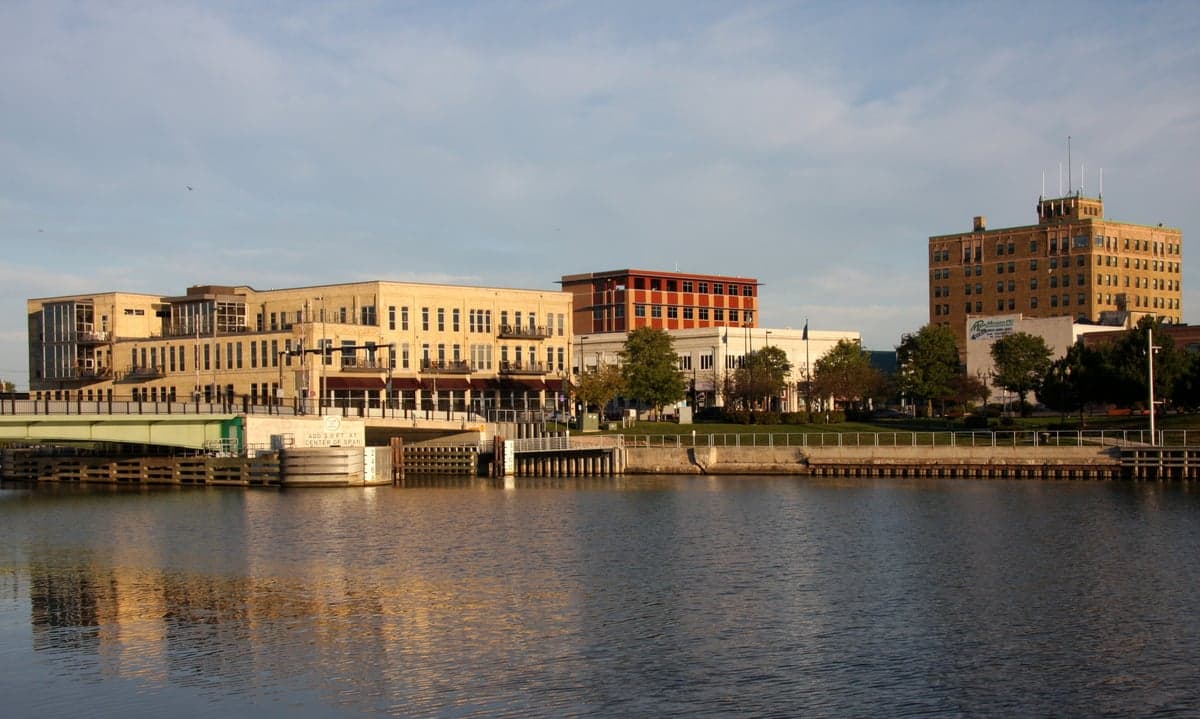
Photo: Wikipedia
Quality of Life in Manitowoc, WI
A high quality of life with strong walkability, manageable living costs, healthy neighborhood signals, and solid amenity access.
What does Quality of Life tell us?
Quality of Life blends cost of living, nearby amenities, socioeconomic signals, and neighborhood character. City-level scores represent the whole municipality; individual neighborhoods can differ.
What does this tell us?
Quality of Life blends cost of living, nearby amenities, socioeconomic signals, and neighborhood character. City-level scores represent the whole municipality; individual neighborhoods can differ.
Cost of Living
39% below national average
The Real Cost of Living in Manitowoc, WI for 2026
| Tier | Individual | Family (4) |
|---|---|---|
| Survival | $13k | $24k |
| Comfortable | $28k | $41k |
| Luxury | $107k+ | $166k+ |
| Elite (Top 5%) | $126k+ | $196k+ |
151%
The Area Signal
A metric tracking the socioeconomic signals of the area.
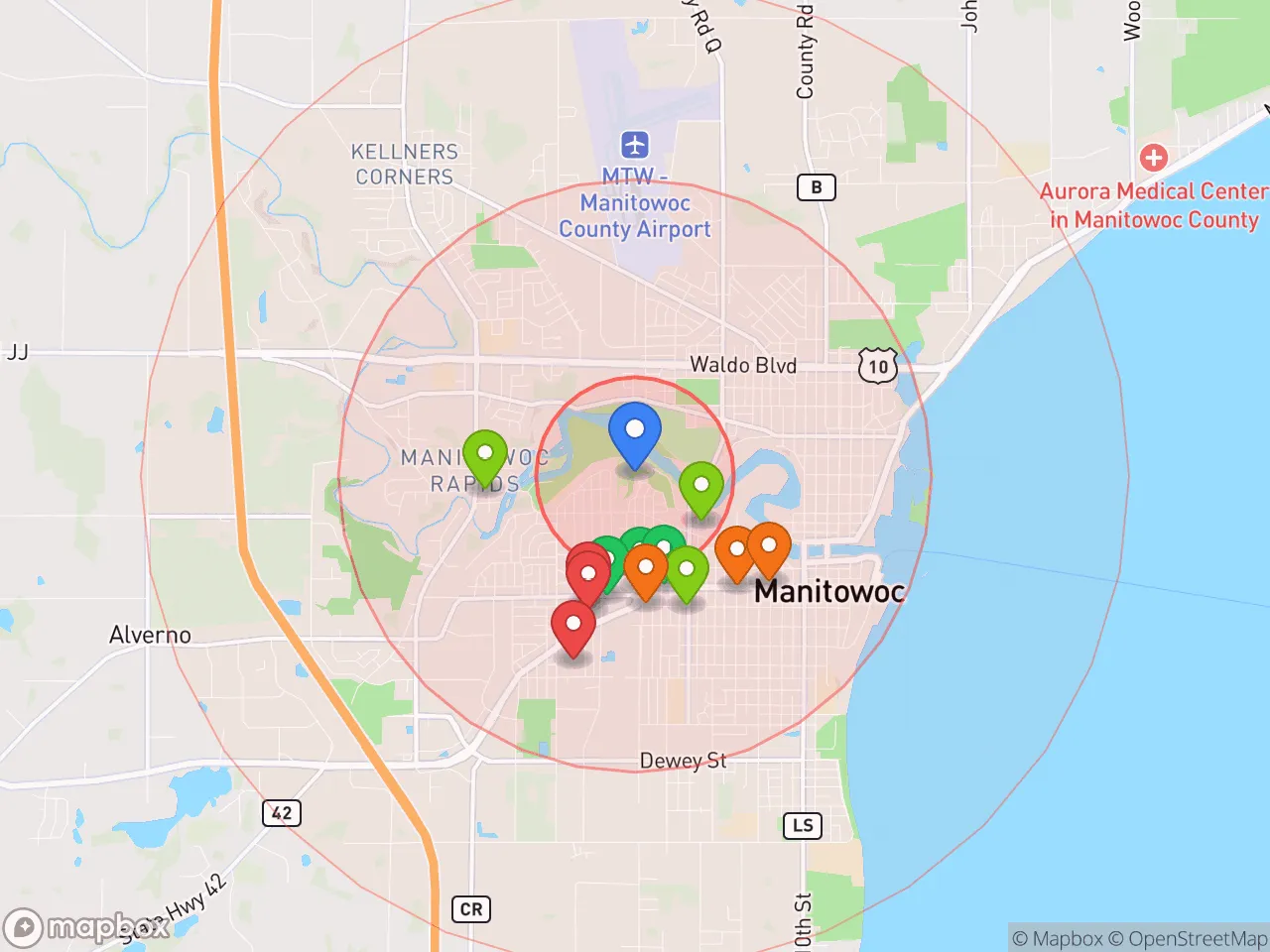
Hobbies
Explore the areaGroceries
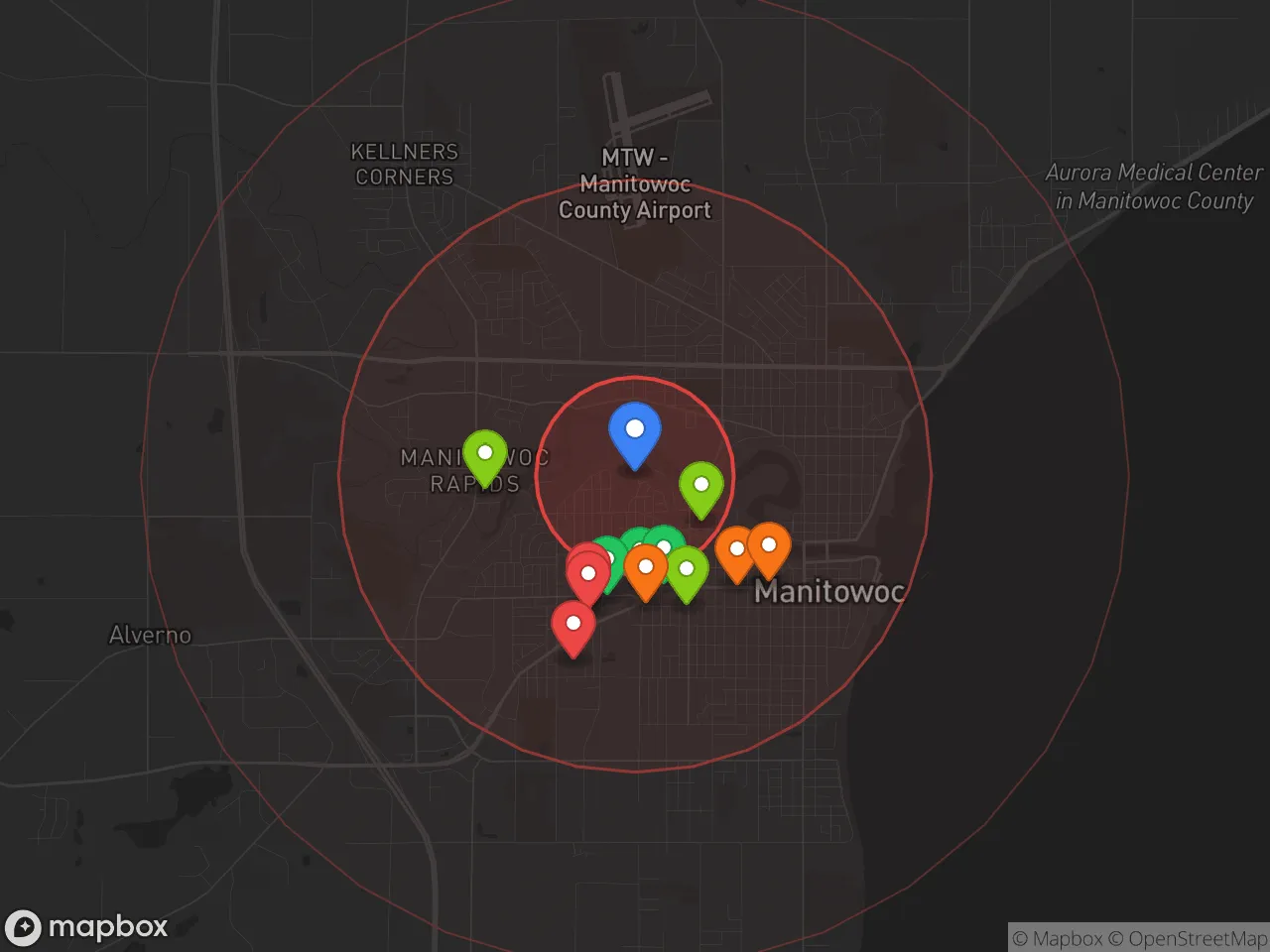
5 within 10 miles
Gas
8 within 10 miles
Hospital
2 within 20 miles
Airport
ORD — O'Hare International
Post Office
USPS — Manitowoc, WI
Critical Amenities
Quality-of-Life Analysis
Manitowoc, Wisconsin, offers a quality of life defined by exceptional affordability and a steady, family-oriented pace, with a cost of living index of 61—39% below the U.S. average. The area attracts a mix of manufacturing workers, retirees seeking low property taxes, and young families priced out of larger Great Lakes cities. Median household incomes hover near the state average, but the dramatically lower housing costs mean residents enjoy a higher effective standard of living than their nominal earnings would suggest.
How housing costs and daily expenses compare to nearby cities
The most striking feature of Manitowoc’s quality of life is its housing market. The median home value sits at $143,900, roughly half the national median and significantly below neighboring Green Bay ($210,000) or Sheboygan ($175,000). Median rent is just $787, making it one of the most affordable rental markets on Lake Michigan. The average commute of 17.9 minutes is well under the national average of 26 minutes, meaning residents spend far less time and money on transportation. Utility costs and grocery prices also run below state averages, though property taxes in Manitowoc County are slightly above the Wisconsin median—a trade-off for well-funded local schools and roads. For comparison, a family earning $55,000 in Manitowoc can afford a home that would require $70,000+ in Appleton or $85,000+ in Milwaukee’s northern suburbs.
Schools, amenities, and what daily life feels like
Daily life in Manitowoc centers on Lake Michigan access, local parks, and a compact downtown. The Manitowoc Public School District serves roughly 5,000 students, with Wilson Junior High and Lincoln High School both rated above state averages on standardized tests. Private options include Roncalli Catholic High School and several Lutheran elementary schools. For recreation, the city maintains 20+ parks, the 1.5-mile Lakeshore Trail along the marina, and the Wisconsin Maritime Museum—home to the USS Cobia submarine. The downtown area along Washington Street has seen modest revitalization, with independent coffee shops, a farmers market from May to October, and events like the Wisconsin Aviation Expo. Healthcare is anchored by Holy Family Memorial Hospital, a 128-bed facility with a Level III trauma center. The trade-off for low costs is limited nightlife and fewer dining options than cities of similar size in more affluent regions; most entertainment is family-oriented or outdoor-focused.
Manitowoc is best suited for those who prioritize financial breathing room and a slower rhythm over urban amenities. Retirees on fixed incomes, remote workers who can keep higher salaries while paying lower housing costs, and manufacturing or logistics employees at local employers like Orion Energy Systems or the Manitowoc Company will find the math works in their favor. Families with young children benefit from short commutes and safe neighborhoods, though older teens may find the social scene limited. The city’s quality of life is not about luxury—it is about stability, space, and the ability to own a home on a single average income, a combination increasingly rare in the Midwest.

Crime in Manitowoc, WI
Lower crime rates than 87% of comparable U.S. locations.
Violent CrimeViolent Crime Analysis
Property CrimeProperty Crime Analysis
Crime Analysis
Manitowoc, Wisconsin, presents a mixed safety profile for potential residents. The city's violent crime rate of 156.1 incidents per 100,000 residents is notably lower than both the Wisconsin state average and the national median, indicating a relatively low risk of serious personal offenses. However, the property crime rate of 708 per 100,000 is slightly elevated compared to state figures, suggesting that theft and burglary are more common concerns for daily life in this Lake Michigan community.
Crime in context
When compared to broader benchmarks, Manitowoc's violent crime rate is roughly half the national average, placing it in a safer tier for offenses like assault, robbery, and homicide. The property crime rate, while higher than the state average of approximately 650 per 100,000, remains below the national median of roughly 1,000 per 100,000. This places Manitowoc in a moderate-risk category for property offenses. It is important to note that Manitowoc County, like much of Wisconsin, operates under a traditional justice system. Unlike large, progressive metro areas where lenient sentencing and rehabilitative-first policies can lead to higher recidivism and more criminals on the street, Manitowoc's judicial approach tends to prioritize public safety and victim accountability, which helps keep violent crime suppressed.
What residents experience
For those living in Manitowoc, the primary safety concern is property crime—specifically theft from vehicles, bicycle theft, and occasional residential burglaries. These incidents are often concentrated in areas with higher foot traffic, such as near the downtown commercial district and along the lakefront. Violent crime is rare and typically isolated to domestic disputes or incidents among known individuals, meaning random attacks on strangers are uncommon. The Manitowoc Police Department maintains a visible presence and has community policing initiatives, which contributes to a sense of security in most neighborhoods. Residents generally report feeling safe walking downtown during the day and in residential areas at night, though standard precautions like locking doors and securing valuables are recommended.
Neighborhood-level variation is modest but noticeable. Areas closer to the city's industrial zones and the Silver Creek Park vicinity have slightly higher reported property crime incidents. In contrast, the neighborhoods west of Highway 42 and near the University of Wisconsin-Green Bay, Manitowoc Campus tend to see lower crime rates. The city's overall stability is reinforced by its judicial environment, which avoids the progressive policies seen in larger liberal jurisdictions—policies that often result in more offenders being released without accountability, thereby increasing risks for law-abiding residents. For families and retirees, Manitowoc offers a generally safe environment, provided they remain aware of the property crime risks that are typical for a city of its size.
* Values derived from national, state, county, city and local statistics and may differ in a specific area. Last updated: 2026-04-21T10:20:37.000Z
Narrative content on this page is AI-generated and may contain mistakes. Verify any details that matter before acting on them.
ReloMaps may earn a commission from affiliate links at no extra cost to you.

