Photo: Wikipedia
Strategic Assessment of Lubec, ME
Workable tactical position. Some exposure to population density or targets, but generally defensible in a crisis.
What does the Strategic Assessment tell us?
Our Strategic Assessment grades tactical survivability of an area. Major population centers, military targets, fallout zones, natural disasters, and border exposure all drive risk — lower exposure means a more defensible position in a crisis.
This is heavily inspired by Joel Skousen's Strategic Relocation book. Highly recommended you checkout the book ($)What does this tell us?
Our Strategic Assessment grades tactical survivability of an area. Major population centers, military targets, fallout zones, natural disasters, and border exposure all drive risk — lower exposure means a more defensible position in a crisis.
This is heavily inspired by Joel Skousen's Strategic Relocation book. Highly recommended you checkout the book ($)Strategic Pillars

Key Distances
Regional Safe Places
Below is our recommended "safe zones" in Maine and the surrounding area based on our strategic heuristics. For most people, it's unrealistic to live in a “safe zone” full-time due to work, family or other personal reasons. They tend to be more rural. However, many of these areas are perfect for second homes and retreat properties that double as a vacation home or even a short-term rental.
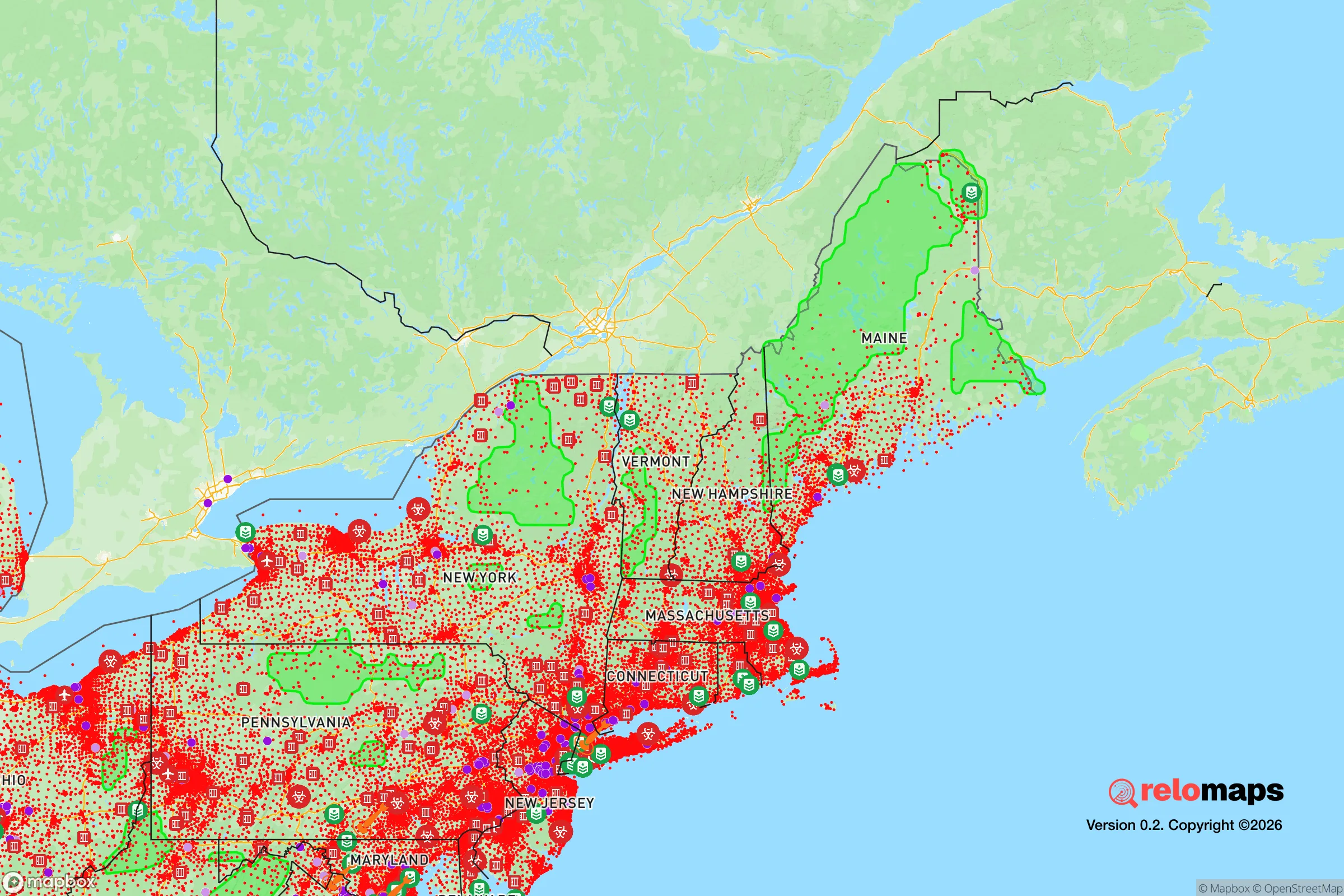
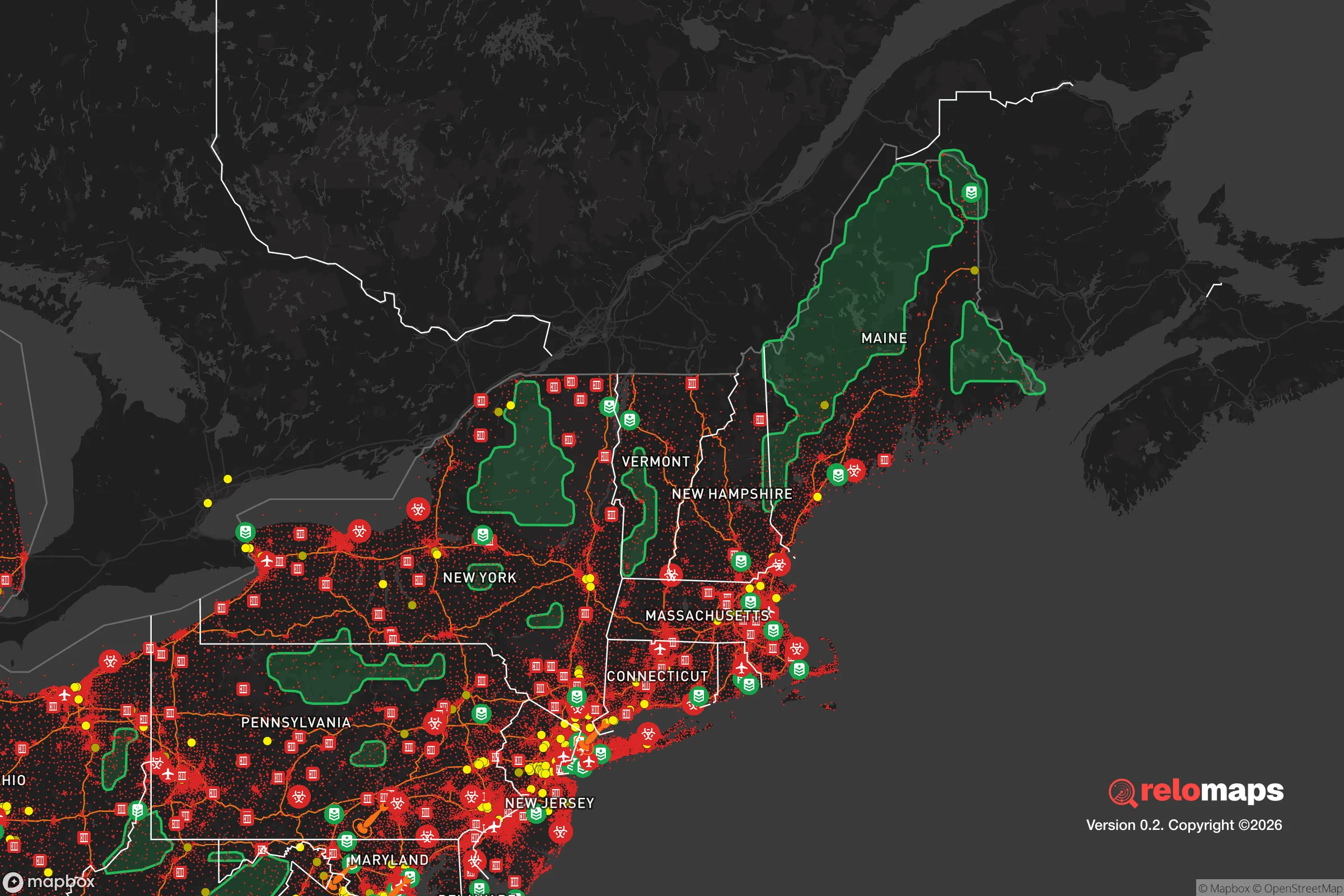


Important Note: For informational purposes only. This does not mean nothing bad ever happens in the green zones. Please use common sense. This is based on public data and modeled with AI. We tried to take a conservative approach but mistakes happen. We update this regularly as new information becomes available.
Solar Generator Recommendations
Backup power matters more here than in safer locations. We've picked three solar generators across budgets and capacity tiers — start with the budget unit if you only need a few essentials, or step up if you want to run a fridge and HVAC for days at a time.

Jackery Portable Power Station Explorer 300
Budget OptionPower on the Go: Weighing only 11 lbs, it's convenient to set up and store with book-sized foldable solar panels

BLUETTI Portable Power Station AC180
Designed for both indoor and outdoor scenarios, AC180 is highly capable as it has a robost capacity and continuous output power.

EF ECOFLOW DELTA Pro Ultra Power Station
Upgraded PickEcoFlow DELTA Pro Ultra is a whole-home energy system designed to grow with your family. Integrated with the Smart Home Panel 2, it scales to meet your evolving energy needs — keeping your home powered, intelligent, and secure through every stage of life.
We earn a commission, at no additional cost to you.
Strategic Assessment Analysis
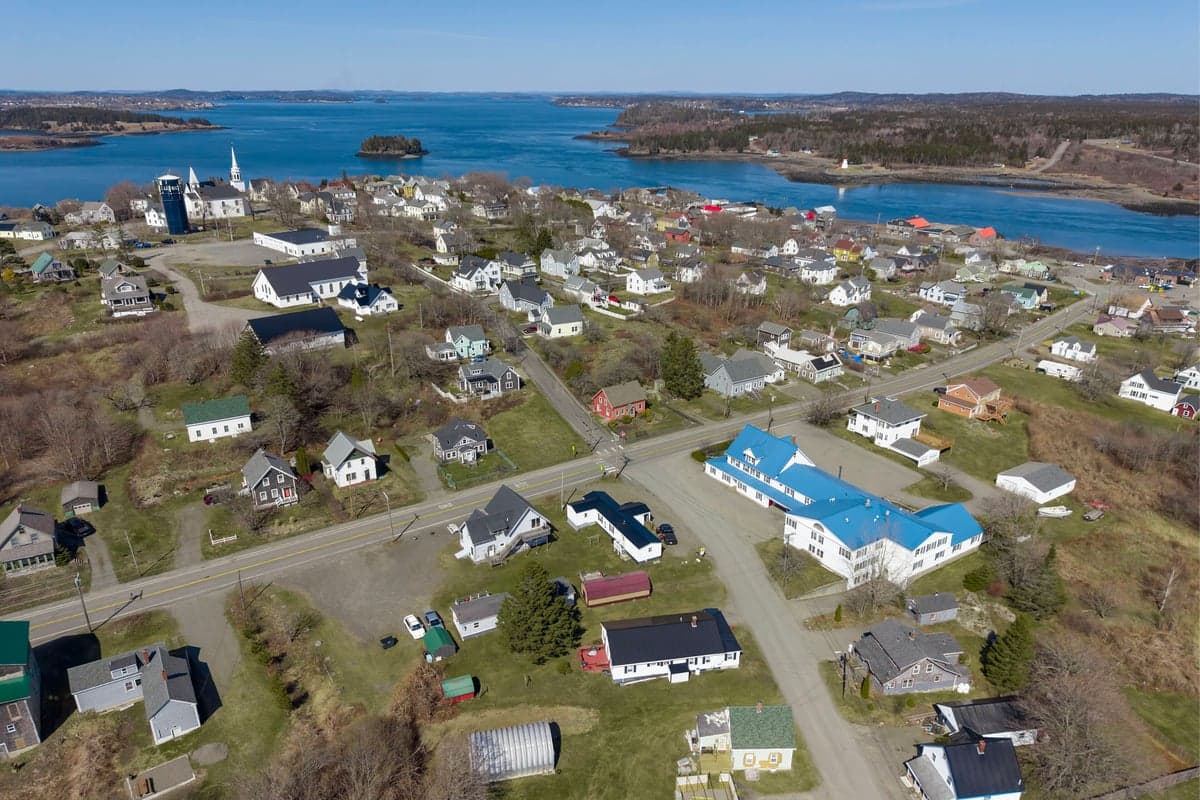
Lubec, Maine, the easternmost town in the continental United States, offers a unique strategic profile for the disaster-conscious relocator: extreme geographic isolation combined with proximity to the Canadian border and the vast, sparsely populated Downeast region. Its position on a peninsula jutting into the Bay of Fundy creates a natural buffer zone, but that same isolation introduces significant logistical challenges for self-sufficiency. For a reader weighing resilience against accessibility, Lubec presents a trade-off between low population density and high exposure to harsh maritime conditions, with few nearby urban centers to rely on in a crisis.
Geographic position and natural advantages for a strategic relocation
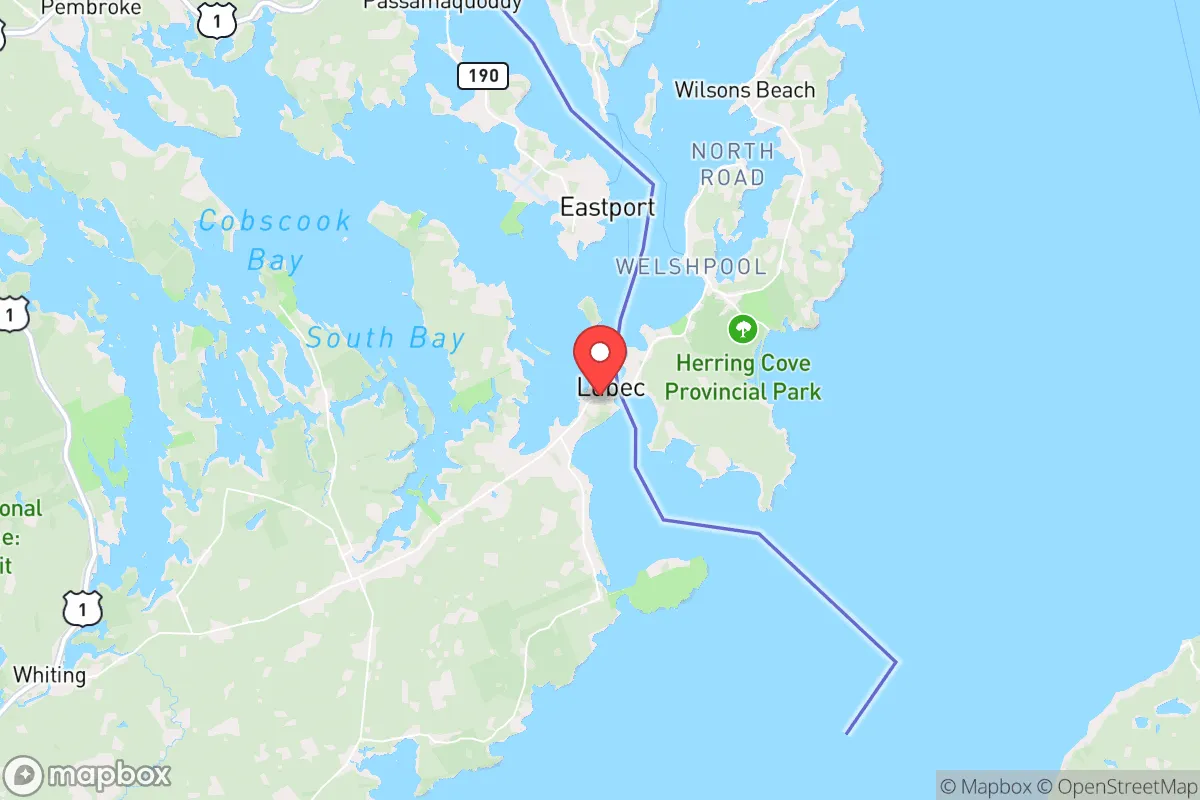
Lubec’s primary strategic asset is its location at the far eastern edge of Maine, roughly 90 miles from Bangor and over 200 miles from Portland. This distance from major population centers is a double-edged sword: it dramatically reduces the risk of being caught in a cascading urban collapse or fallout plume from a coastal strike, but it also means that resupply routes are long and vulnerable. The town sits on a narrow peninsula, with the Lubec Narrows separating it from Campobello Island, New Brunswick, Canada. A bridge connects the two, providing a potential secondary egress route into Canada—a significant advantage if U.S. highways become compromised. The surrounding landscape is a mix of rocky coastline, dense spruce-fir forest, and tidal marshes, offering abundant natural resources for fishing, foraging, and timber. The Bay of Fundy’s extreme tides (up to 28 feet) create rich intertidal zones for shellfish and seaweed, a reliable food source that requires no infrastructure. The area’s low population density—fewer than 1,300 year-round residents in Lubec proper, with the entire Washington County population under 32,000—means minimal competition for resources in a post-disaster scenario. However, the region’s thin soils and short growing season (roughly 100 frost-free days) limit large-scale agriculture, making reliance on stored food and marine harvests essential.
Risks, exposures, and proximity to fallout-relevant landmarks
Lubec’s primary man-made risk is its proximity to the Point Lepreau Nuclear Generating Station, located about 30 miles southwest on the New Brunswick coast. While this is a CANDU reactor with a solid safety record, a major incident could contaminate the Bay of Fundy and prevailing winds could carry fallout across the Lubec area. The town is also within 150 miles of the Portsmouth Naval Shipyard (Kittery, ME) and the Bath Iron Works, both potential targets in a conflict scenario, though prevailing winds from the southwest would likely push fallout away from Lubec. Natural risks are more immediate: the region is subject to nor’easters, coastal flooding, and storm surges that can isolate the peninsula for days. The only road access is via Maine State Route 189, a two-lane road that runs through dense forest and crosses several tidal creeks—a single washout or downed tree can cut off the town entirely. Winter storms bring heavy snow (averaging 60-70 inches annually) and ice, which can down power lines for extended periods. The area is seismically stable, with no significant earthquake risk, and the deep, cold waters of the Bay of Fundy make tsunamis unlikely. For the fallout-conscious relocator, Lubec’s distance from major military and industrial targets is a clear positive, but the proximity to a nuclear plant and the vulnerability of the single road are serious considerations.
Practical resilience for a relocator: food, water, energy, and defensibility
Food security in Lubec relies heavily on the sea. The town has a working waterfront with a small harbor that supports lobster, scallop, and groundfish boats. In a crisis, a motivated individual could harvest mussels, clams, and seaweed from the intertidal zone year-round, though red tide closures can occur in warmer months. Freshwater is abundant but requires treatment: the area receives about 45 inches of rain annually, and most properties have access to shallow wells or surface water from streams and ponds. However, groundwater in coastal areas can be brackish, and many wells are shallow and vulnerable to drought. Rainwater collection is a viable backup, but storage capacity must account for long, cloudy periods. Energy is a weak point. Lubec is at the end of the power grid, served by a single transmission line from Machias. Outages are common, especially in winter, and can last days to weeks. Solar potential is moderate—the area gets about 1,600 peak sun hours per year, comparable to Seattle—but winter cloud cover and short days reduce output significantly. Wood heat is the most reliable backup, and the surrounding forests provide ample fuel, but cutting and splitting it requires physical labor and equipment. Defensibility is high: the peninsula’s narrow approach via Route 189 creates a natural chokepoint, and the rugged coastline offers few landing spots for unauthorized boats. The small, tight-knit community (many families have been here for generations) can be an asset for mutual aid, but newcomers may face a long trust-building period. Law enforcement is limited—the Washington County Sheriff’s Office covers a vast area, and the nearest state police barracks is in Machias, 30 minutes away. For a relocator seeking a low-profile, defensible location with abundant marine resources, Lubec is a strong candidate, but only if they are prepared for extreme isolation, harsh winters, and a steep learning curve in self-sufficiency.
The overall strategic picture for Lubec is one of high resilience in a narrow band of scenarios and significant vulnerability in others. It excels as a fallout-avoidance location due to its distance from major targets and its single-road access, which can be easily monitored or blocked. Its marine resources provide a reliable, infrastructure-independent food source that few inland locations can match. However, the same isolation that makes it defensible also makes it dependent on stored fuel, medical supplies, and specialized skills. A serious illness or injury requiring advanced care would mean a 90-minute drive to Bangor or a 2-hour drive to Saint John, New Brunswick—assuming the border is open. For the conservative-leaning relocator who values self-reliance, community cohesion, and low population density, Lubec offers a genuine frontier lifestyle with real trade-offs. It is not a place for someone seeking a bug-out location with easy resupply; it is a place for someone willing to commit to a permanent, hardscrabble existence where resilience is earned through preparation, not purchased through infrastructure. If you can handle the isolation, the cold, and the constant work of living off a thin edge of land and sea, Lubec is one of the most strategically sound locations in the lower 48. If you cannot, it will break you.

* Values derived from national, state, county, city and local statistics and may differ in a specific area. Last updated: 2026-09-20T21:56:04.000Z
Narrative content on this page is AI-generated and may contain mistakes. Verify any details that matter before acting on them.
ReloMaps may earn a commission from affiliate links at no extra cost to you.

