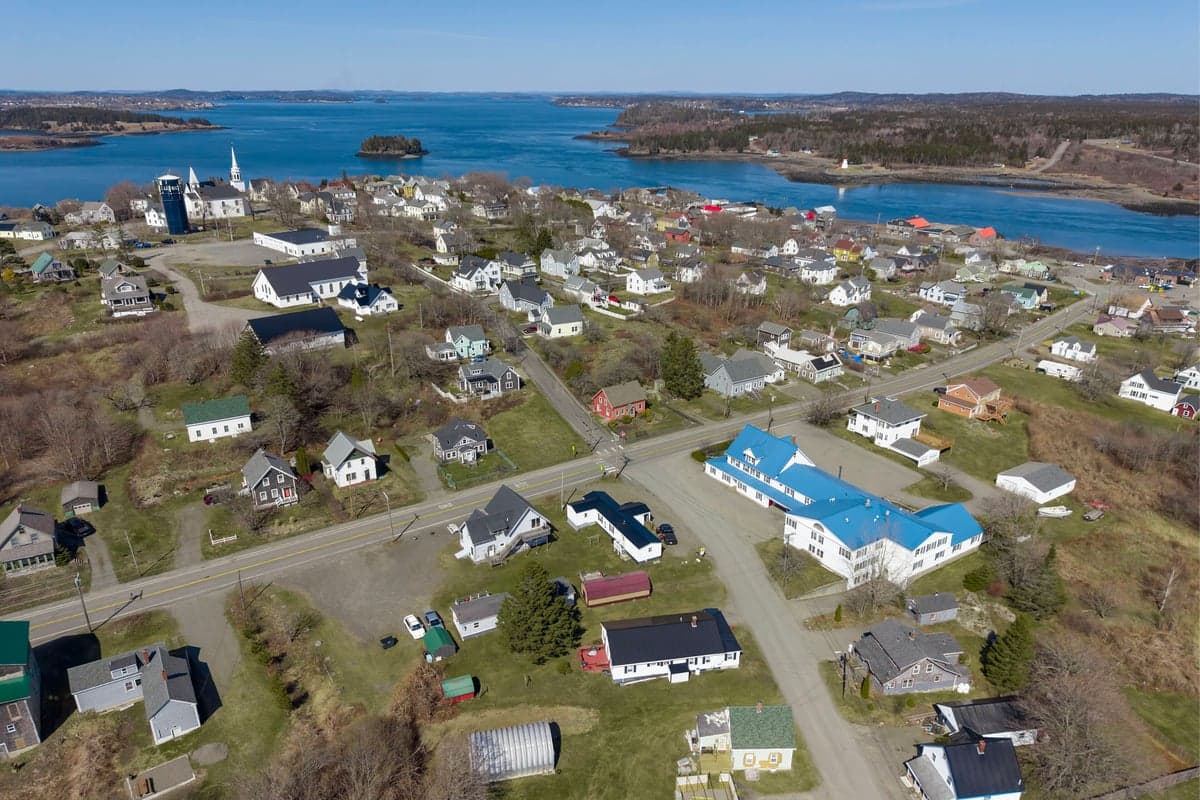
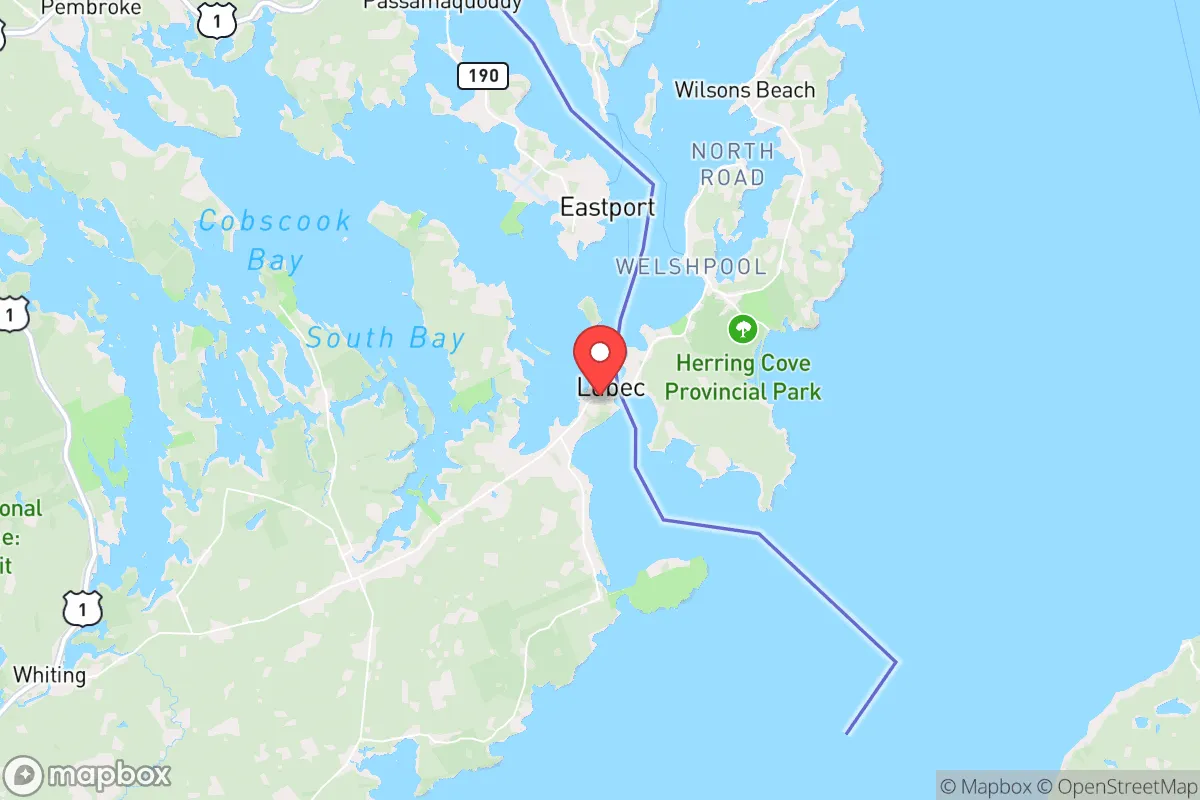
Photo: Wikipedia
Political ClimatePolitical Climate in Lubec, ME
District shown is the primary district for this city’s centroid. Cities may span multiple districts.
Local Political AnalysisPolitical Analysis of Lubec, ME
Lubec, Maine, the easternmost town in the continental United States, leans reliably Republican in a state that often splits its tickets. The town sits in Washington County, which has a Cook Partisan Voting Index of R+4, meaning it votes about four points more Republican than the nation as a whole. That’s a meaningful shift from even a decade ago, when the area was more of a swing zone—now it’s solidly red in presidential races, though local elections still see plenty of independent and Democratic candidates winning seats on the school board or town council. The trajectory is toward a deeper conservative tilt, driven by an aging population, a strong fishing and blue-collar workforce, and a growing number of out-of-state retirees who often bring their own brand of fiscal conservatism.
How it compares
Compared to the rest of Maine, Lubec is noticeably more conservative. The state as a whole has a mixed reputation—Maine’s Cook PVI is unknown in the data you provided, but in practice it’s a purple state that voted for Biden in 2020 by about 9 points, thanks largely to the Portland and Augusta areas. Lubec is the opposite end of that spectrum. Drive 90 minutes west to Ellsworth or Bangor, and you’ll find more moderate-to-liberal pockets, especially around the university and hospitals. Head south to Machias, the county seat, and you’ll see a similar Republican lean but with a stronger independent streak—many voters there register as unenrolled and decide race by race. The contrast is sharpest with Portland, where the political energy is progressive and the economy is service- and tech-driven. In Lubec, the conversation is more about property taxes, fishing quotas, and the cost of heating oil.
What this means for residents
For conservative residents, Lubec feels like a comfortable fit. The local Republican committee is active but not overbearing, and you’ll hear plenty of talk about Second Amendment rights and opposition to new state-level environmental regulations that affect the lobster and scallop industries. For liberal residents, life is more about finding common ground. You won’t see many yard signs for progressive candidates, but you will find a strong community ethos around local food, land conservation, and the public library. The real tension isn’t left vs. right—it’s between year-round locals and seasonal residents, many of whom are from away and bring different expectations about development and services. That dynamic shapes local politics more than national party labels do.
Culturally, Lubec stands apart from the rest of Maine in a few ways. The town’s isolation—it’s a 90-minute drive to the nearest Walmart in Calais—fosters a self-reliance that cuts across party lines. There’s a strong local push for broadband access and economic diversification, which both conservatives and liberals support, though they differ on how to fund it. Policy-wise, the town has resisted some of the more progressive state mandates, like the push for electric vehicle infrastructure, not out of ideology but out of practicality—the grid is fragile and distances are long. In the near future, expect Lubec to stay red but with a pragmatic, live-and-let-live attitude that’s typical of coastal Downeast Maine. The long-term wildcard is climate change: rising sea levels and warming waters are already reshaping the fishing economy, and how the town adapts could shift its political priorities in ways no one can predict yet.

State Political ClimatePolitical Climate in Maine
State Political AnalysisPolitical Environment in the State
Maine has long been known as a swingy, independent-minded state, but over the past decade it has settled into a reliably blue lean at the statewide level while retaining a fiercely conservative, rural counterweight. Since 2012, Democrats have won every presidential election here by margins of 5 to 12 points, and the party controls both chambers of the legislature and the governor’s office as of 2026. Yet this isn’t Massachusetts-style liberalism — Maine’s political culture is shaped by a deep libertarian streak, a strong tradition of local control, and a rural-urban split that makes it one of the most politically divided states in New England.
Urban vs. rural divide
The political map of Maine is essentially a story of two regions. The southern coast, anchored by Portland and its suburbs like South Portland and Scarborough, is the Democratic stronghold — these areas vote 60-70% blue and drive the statewide results. Portland itself is a progressive hub, with a city council that has passed rent control, sanctuary city policies, and a $15 minimum wage. In contrast, the vast interior and northern reaches — places like Bangor, Presque Isle, and Caribou — are deeply conservative. Aroostook County, the state’s largest county by area, voted for Trump by 20 points in 2024. The swing districts are the mid-coast and central regions, including Augusta and Waterville, where independent and moderate voters often decide races. The 2nd Congressional District, which covers most of the state outside Portland’s orbit, has flipped between parties in recent cycles and is one of the few rural districts in the country that still elects Democrats to the House — though it backed Trump in 2020 and 2024.
Policy environment
Maine’s tax structure is moderately progressive but high by national standards. The state has a top marginal income tax rate of 7.15% and a sales tax of 5.5%, though groceries and prescription drugs are exempt. Property taxes are among the highest in the country, averaging about 1.3% of home value, which hits rural landowners hard. The regulatory posture leans left on environmental issues — Maine has strict coastal development rules and a strong renewable energy mandate — but is relatively permissive on land use outside of protected zones. Education policy is decentralized; school funding is a perennial fight, with rural districts often feeling shortchanged by the state’s funding formula. Healthcare is a major issue: Maine expanded Medicaid under the Affordable Care Act via a 2017 ballot initiative, and the state runs its own exchange. Election laws are among the most accessible in the nation — same-day voter registration, no-excuse absentee voting, and ranked-choice voting for federal and state primaries (and presidential elections) are all in place. Gun laws are moderate: no permit required for open carry, but a permit is needed for concealed carry, and the state has a “yellow flag” law (not a red flag law) that allows law enforcement to temporarily seize weapons from individuals deemed a danger, with a mental health evaluation required.
Recent policy direction
The last five years have seen Maine move left on several fronts, but with notable exceptions. In 2023, the legislature passed a paid family and medical leave program funded by payroll taxes, set to begin in 2026. A 2024 law expanded abortion access by removing the requirement that only physicians can perform the procedure, allowing advanced practice clinicians to do so. On gun policy, a 2023 law expanded background checks to private sales, though it exempts transfers between immediate family members. On the other hand, a 2025 attempt to pass a red flag law failed after rural Democrats joined Republicans in opposition. Parental rights have been a flashpoint: in 2024, the legislature overrode the governor’s veto of a bill requiring schools to notify parents if a child requests a name or pronoun change, a win for conservative families. Property rights remain strong — Maine has no statewide rent control (Portland’s local ordinance is an exception), and there is no state-level estate tax on estates under $5.8 million. Voting access has expanded: ranked-choice voting was extended to presidential primaries in 2024, and automatic voter registration at the DMV was implemented in 2023. The state’s privacy laws are relatively strong — Maine was one of the first states to require internet service providers to get opt-in consent before selling customer data.
Civil unrest & political movements
Maine is not known for large-scale civil unrest, but there are active political movements on both sides. The most visible left-leaning activism centers on climate and housing — Portland has seen protests over rent increases and evictions, and groups like Maine Youth for Climate Justice have organized school strikes. On the right, the Maine Gun Owners Association and the Maine Republican Party have been vocal against gun control measures, drawing large crowds at state house hearings. The 2020 election integrity debate was muted here compared to swing states, but a 2021 audit of the 2020 election in Oxford County found no irregularities, and the state’s ranked-choice voting system has been accepted by both parties after initial Republican opposition. Immigration politics are less heated than in border states — Maine has a small foreign-born population (about 4%), but the arrival of asylum seekers in Portland has strained city services and sparked local debates. There is no sanctuary state law, though Portland has a “Welcoming City” ordinance. Secessionist rhetoric is minimal, though there is a long-running movement for northern Maine to join Canada, which resurfaces occasionally in Aroostook County but has no serious political traction.
Projection
Over the next 5-10 years, Maine is likely to become slightly more Democratic at the statewide level, driven by in-migration to the southern coast from Massachusetts and New York. The Portland metro area is growing faster than the rest of the state, and these newcomers tend to be younger and more liberal. However, the rural-urban divide will deepen — the 2nd District will remain a battleground, and the state legislature will continue to see close margins. The biggest wildcard is housing: if the cost of living in southern Maine continues to rise, it could push moderate and conservative families into the interior, potentially shifting some rural districts. The state’s independent streak will persist — expect more ballot initiatives on issues like tax reform and education funding. For a conservative relocator, the bottom line is that Maine offers a mix of high taxes and liberal social policy in the south, but a more affordable, gun-friendly, and community-oriented life in the north and west. You’ll find plenty of like-minded neighbors in Bangor or Ellsworth, but you’ll also need to accept that statewide elections will likely go blue for the foreseeable future.
For a new resident, the practical takeaway is this: Maine is a state where your experience depends heavily on where you land. If you choose Portland or its suburbs, you’re in a progressive bubble with high costs and strong Democratic governance. If you settle in Bangor, Lewiston, or the rural counties, you’ll find lower taxes, more conservative neighbors, and a political culture that values independence over party loyalty. The state’s ranked-choice voting and strong local control mean your vote matters more than in many states, but the overall trajectory is toward a blue-leaning future. Come for the outdoor lifestyle and the sense of community; just know that the politics will be a mixed bag depending on your zip code.
* Values derived from national, state, county, city and local statistics and may differ in a specific area. Last updated: 2026-09-20T21:56:04.000Z
Narrative content on this page is AI-generated and may contain mistakes. Verify any details that matter before acting on them.
ReloMaps may earn a commission from affiliate links at no extra cost to you.

