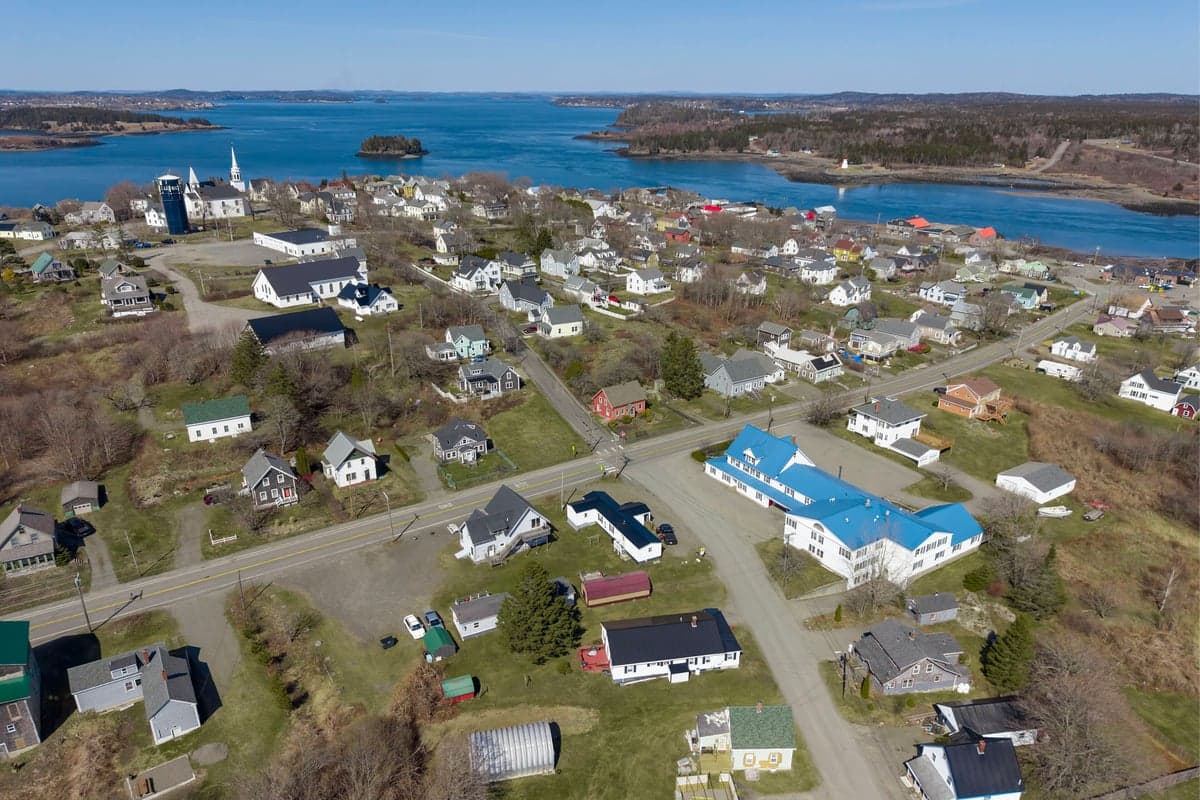
Photo: Wikipedia
Personal Sovereignty in Lubec, ME
Viable for self-reliance. Generally workable, though some barriers may limit total independence.
What does Personal Sovereignty tell us?
Personal Sovereignty measures your capacity for self-reliance and independence with minimal government friction. Higher scores mean fewer barriers between you and the way you want to live... but it assumes you have the space you need and good neighbors.
What does this tell us?
Personal Sovereignty measures your capacity for self-reliance and independence with minimal government friction. Higher scores mean fewer barriers between you and the way you want to live... but it assumes you have the space you need and good neighbors.
State Policy
Energy independence: Importer (30% of energy produced in-state)
Personal Liberty
Homesteading

Personal Liberty Analysis
Lubec, Maine, offers a personal sovereignty environment that is distinctly shaped by its remote coastal location and the state’s generally live-and-let-live cultural undercurrent, but it operates within a state-level regulatory framework that is neither fully libertarian nor heavily restrictive. For a conservative-leaning individual or family prioritizing autonomy, the town provides a tangible sense of physical isolation and low-density living that fosters self-reliance, yet the practical exercise of personal freedom is mediated by Maine’s tax structure, gun laws, and land-use rules. The key trade-off is between the day-to-day independence of a small, tight-knit community and the obligations of state-level governance that can feel moderate to those coming from high-tax states, but burdensome to those accustomed to minimal government.
Tax burden and regulatory posture in Washington County
Maine’s overall tax burden is among the highest in the nation, ranking 8th in combined state and local tax collections as a percentage of income in 2024, and Lubec residents feel this directly. The state levies a progressive income tax with a top marginal rate of 7.15% on income over $68,950 for single filers, and a statewide property tax rate that, while not uniform, is supplemented by a homestead exemption that reduces taxable value by $25,000 for primary residences. In Washington County, property tax rates are relatively moderate compared to southern Maine—typically around 1.2% to 1.4% of assessed value—but the town’s low property values mean the dollar amount is manageable for many. The regulatory posture in Lubec is light-touch at the local level: the town has minimal zoning ordinances, no building code enforcement beyond state requirements for new construction, and a planning board that handles subdivision and shoreland zoning under state mandate. The Maine Department of Environmental Protection (DEP) imposes strict shoreland zoning rules within 250 feet of tidal waters, which affects many waterfront properties in Lubec, requiring permits for structures, vegetation clearing, and septic systems. For a homesteader, this means the state has a clear say in how you use your land near the coast, but inland parcels are largely free from local interference. The sales tax is 5.5%, and there is no local sales tax, keeping consumer costs predictable. Overall, the tax burden is a real consideration—especially for retirees on fixed incomes—but the regulatory environment is more about state-level oversight than local red tape.
Self-defense and gun law specifics in Maine
Maine is a strong Second Amendment state with a permissive legal framework for gun owners, and Lubec residents enjoy broad self-defense rights. The state has permitless carry for both open and concealed handguns for anyone 21 or older who is legally allowed to possess a firearm, a law that took effect in 2015. No state permit is required to purchase a rifle, shotgun, or handgun, though federal background checks apply at licensed dealers. Private sales between individuals require no paperwork or background check, which is a significant freedom for those who value privacy in firearm transactions. There is no state-level assault weapons ban, no magazine capacity restrictions, and no firearm registration. The Castle Doctrine applies in Maine, meaning there is no duty to retreat from one’s home or dwelling before using deadly force in self-defense, and the “stand your ground” principle extends to any place where a person is lawfully present, though Maine’s statute is less explicit than in some states. Use of deadly force is justified when a person reasonably believes it is necessary to prevent death or serious bodily injury to themselves or another. Lubec has no local gun ordinances beyond state law, and the Washington County Sheriff’s Office, which provides law enforcement, is generally supportive of gun rights. For a conservative reader, the gun laws in Lubec are a clear positive—they are among the most permissive in New England, and the rural nature of the area means that firearm ownership is a normal part of life for hunting, pest control, and personal protection.
Self-reliance and homesteading viability: lot sizes, zoning, and off-grid feasibility
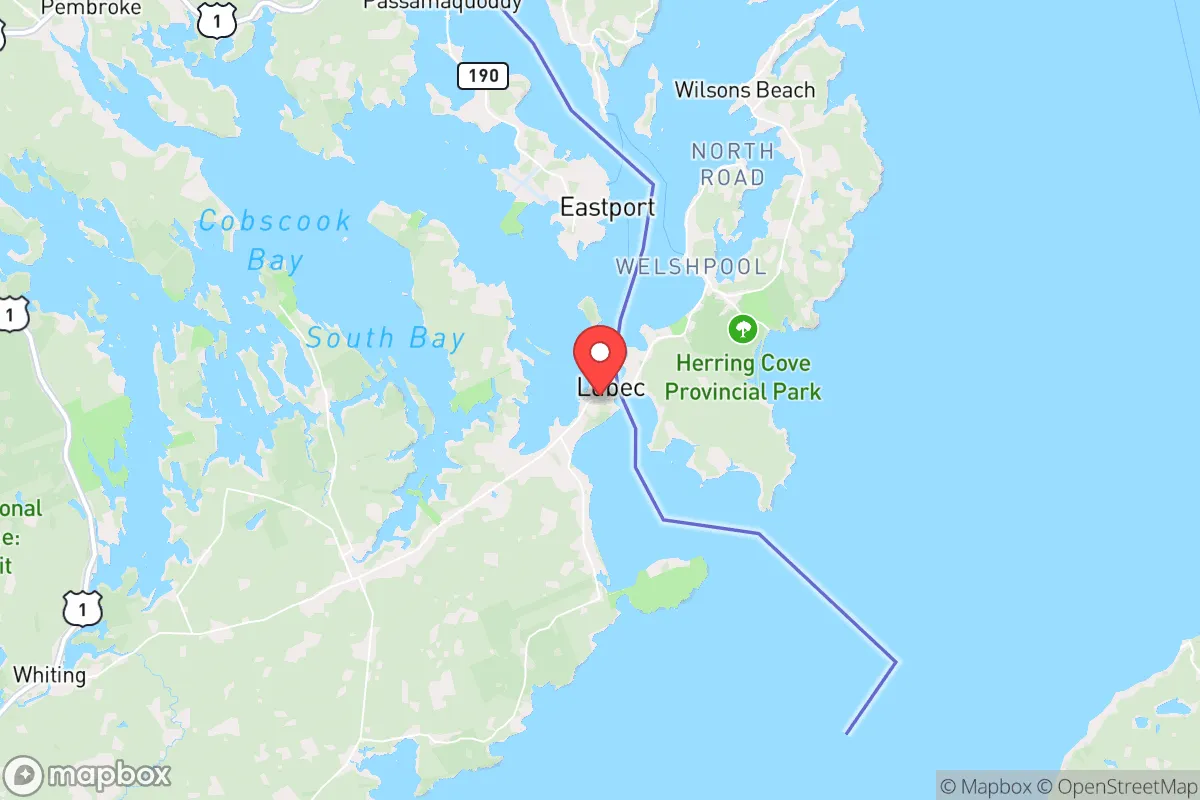
Lubec is a prime location for homesteading and off-grid living, with large lot sizes, minimal zoning, and a climate that demands self-sufficiency. Most residential parcels in the town are at least one to five acres, and many undeveloped lots are 10 acres or more, allowing for substantial gardening, small-scale livestock, and woodlot management. The town has no zoning ordinance for residential use, meaning there are no minimum lot size requirements for single-family homes beyond state septic rules, which typically require at least one acre for a conventional system. This lack of zoning gives residents wide latitude to build sheds, barns, greenhouses, and workshops without permits, as long as they comply with state plumbing and electrical codes. Off-grid living is feasible: solar panels are common, and many homes rely on well water and septic systems. The town does not have municipal water or sewer, so self-contained systems are the norm. Wood stoves are a primary heat source for many, and the local climate—with cold, snowy winters and foggy summers—makes firewood a practical necessity. The Maine Uniform Building and Energy Code applies to new construction and major renovations, requiring insulation and energy efficiency standards, but this is a one-time compliance cost rather than an ongoing regulatory burden. For those seeking true independence, Lubec’s remote location—over 90 miles from Bangor, the nearest major city—means that self-reliance is not just a lifestyle choice but a practical requirement: grocery stores, hardware stores, and medical services are limited, and residents must plan for supply runs. The town’s population of about 1,200 ensures that neighbors are few and far between, which is ideal for privacy but also means that community support networks are thin. Homesteading viability is high, but it requires a serious commitment to managing your own utilities, waste, and food production.
Personal liberties: parental rights, medical autonomy, speech, and property
Personal liberties in Lubec are shaped by state law and local culture, with strong protections for property rights and speech, but some constraints on medical and parental autonomy. Maine has a relatively robust set of parental rights in education: parents can opt their children out of sex education, and the state does not mandate any specific curriculum on gender identity or sexual orientation in K-12 schools, though local school boards have discretion. Lubec’s small school system, Lubec Consolidated School, serves grades K-8, and parents have significant influence through the school board and direct communication with teachers. For high school, students typically attend Washington Academy in East Machias, a private school that operates independently of the public system, giving parents more choice. Medical autonomy is more limited: Maine has a state-run health insurance exchange, and the state mandates vaccination for school attendance (with medical and religious exemptions available). The COVID-19 pandemic saw Maine impose some of the strictest public health measures in the country, including a statewide mask mandate and vaccine requirements for healthcare workers, which generated significant backlash in rural areas like Lubec. Currently, no such mandates are in place, but the state retains the authority to impose them in future health emergencies. Speech and assembly rights are fully protected, and Lubec’s small-town atmosphere means that political expression is generally tolerated, though the community leans left in local elections—Washington County voted 52% for Biden in 2020, but the town itself is more mixed. Property rights are strong: there is no rent control, no inclusionary zoning, and no local historic district that restricts exterior modifications, though the state’s shoreland zoning does limit development near the coast. For a conservative reader, the key concern is medical autonomy, where Maine’s track record of aggressive public health measures may be a red flag, but the day-to-day reality in Lubec is one of minimal interference in personal choices.
Overall, Lubec offers a high degree of personal sovereignty relative to most of New England, particularly in terms of gun rights, property freedom, and the ability to live off-grid. The tax burden is the main drawback, but it is offset by low property values and a cost of living that is 15% below the national average. Compared to areas like coastal New Hampshire or northern Vermont, Lubec is more isolated and less regulated at the local level, but it carries the weight of Maine’s state-level tax and health policies. For a single individual or family who values self-reliance and is willing to accept a remote, weather-beaten lifestyle, Lubec represents a genuine opportunity to exercise personal freedom with minimal daily interference—just be prepared to pay for it in taxes and to navigate state mandates on health and land use.

* Values derived from national, state, county, city and local statistics and may differ in a specific area. Last updated: 2026-09-20T21:56:04.000Z
Narrative content on this page is AI-generated and may contain mistakes. Verify any details that matter before acting on them.
ReloMaps may earn a commission from affiliate links at no extra cost to you.

