Photo: Wikipedia
Find The Best Places To Live
in Lake Ozark
PRO TIP! You can paste a Zillow or Redfin link to get info on that property.
Compare Lake Ozark with another place
What It's Like Living in Lake Ozark, MO
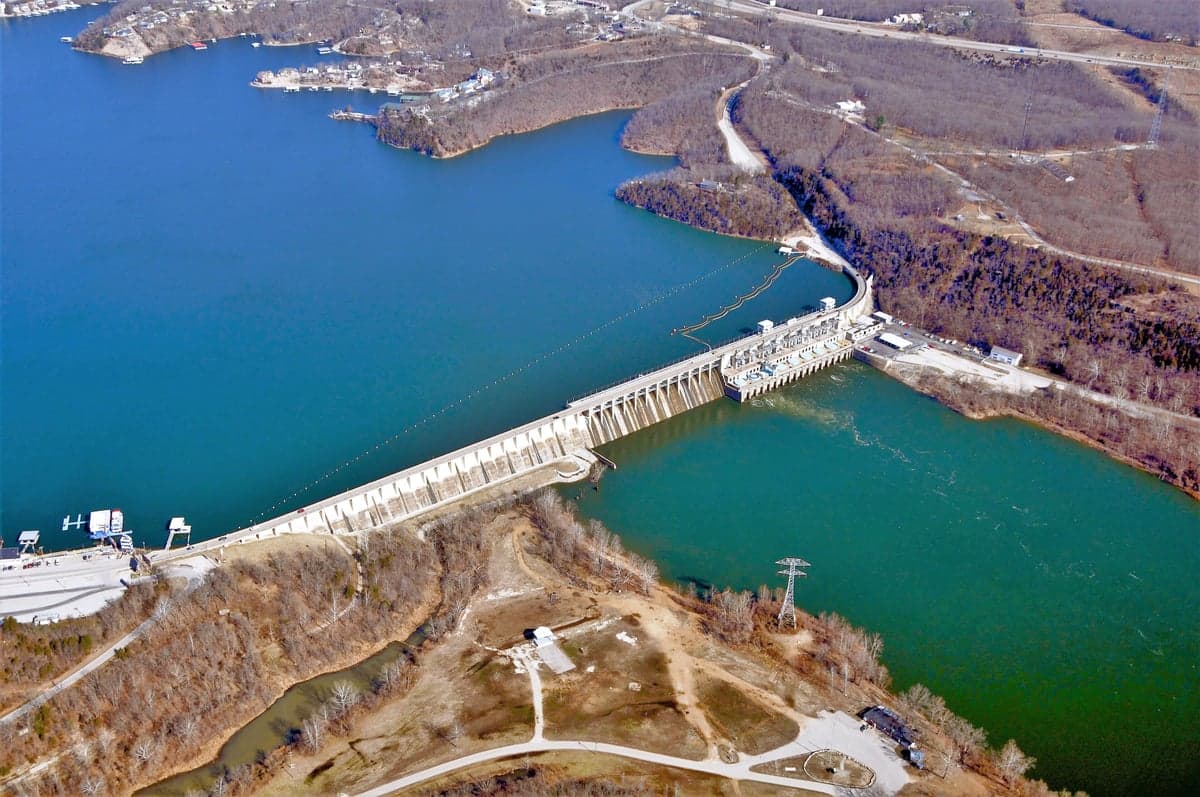
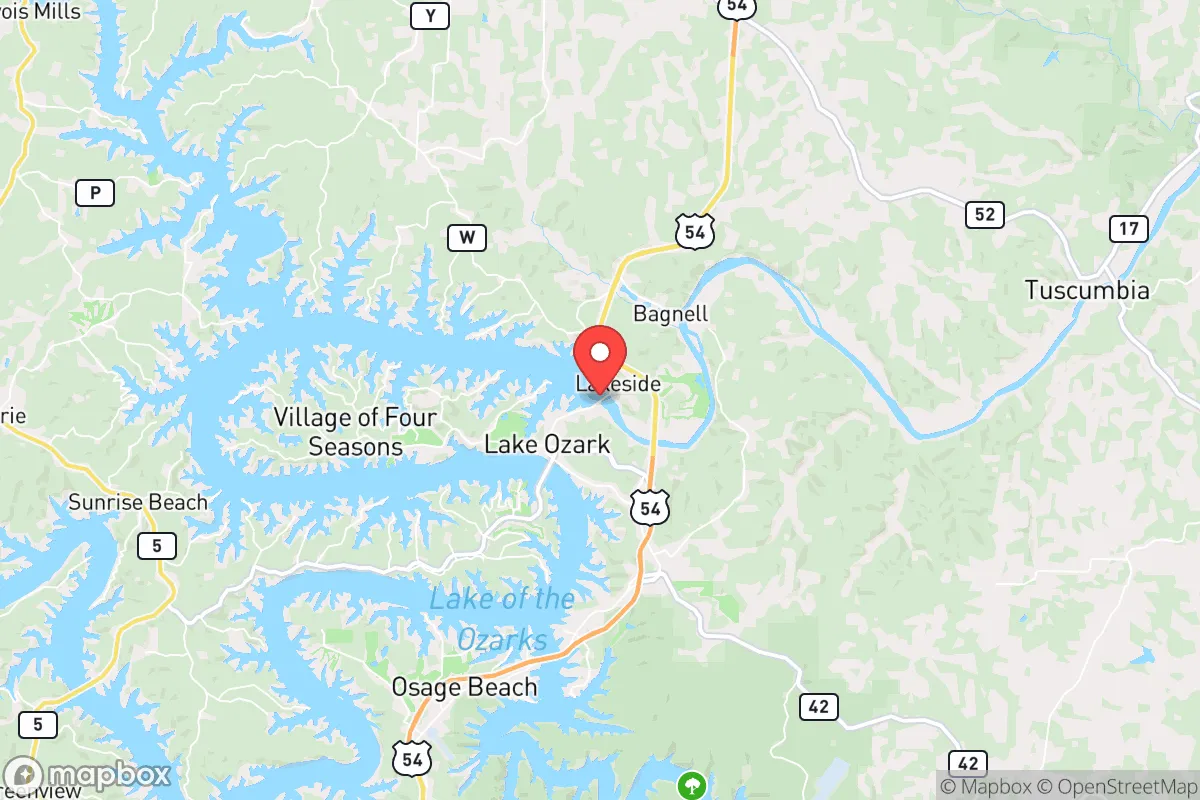
Lake Ozark is a small city of about 2,451 people sitting at the eastern end of the Lake of the Ozarks, right where the lake's main channel meets Bagnell Dam and the strip of businesses along Business Route 54 known locally as the "Bagnell Dam Strip." It's the kind of place where the population swells on summer weekends and then quietly empties out, where a lot of people own a boat before they own a lawnmower, and where the median age of 48.1 tells you something important: this is a community that skews older, more established, and more seasonal than a typical Midwestern small town.
What a Typical Week Looks Like Here
Daily life in Lake Ozark revolves around the water and the businesses that serve it. On a Tuesday morning in July, you'll see pontoon boats idling through the no-wake zone below the dam, contractors loading equipment into trucks, and a steady trickle of people grabbing breakfast at one of the strip's diners before heading to a marina. On a Tuesday morning in January, that same strip is nearly empty, and the rhythm shifts indoors — coffee at a local shop, errands at the Hy-Vee or Walmart up the road in Osage Beach, and a lot of people simply staying home.
The practical geography matters. Lake Ozark itself is small, but it sits within a 15-minute drive of Osage Beach, which has the big-box stores, chain restaurants, and the outlet mall. Most residents do their serious shopping there or in Eldon to the north. For dining and nightlife, the Bagnell Dam Strip is the anchor — places like Shady Gators, Lazy Gators, and the various bars and grills that line the road draw crowds from across the lake on summer nights. The average commute of about 24 minutes reflects the reality that many residents work in Osage Beach, Camdenton, or at the lake's resorts and service businesses rather than in Lake Ozark proper.
Who Fits In — and Who Doesn't
The person who thrives here tends to be someone who values the lake over convenience. With a median household income of $80,476 and a median home value of $308,700, Lake Ozark is comfortably middle-to-upper-middle class, and the 40.9% college-educated share is high for a town this size. You'll find a mix of retirees who bought a second home and made it permanent, remote workers who wanted water views, and families attached to the School of the Osage district, which serves the area and is a genuine community anchor — Friday night football and high school sports draw real crowds here, and the school is one of the few institutions that keeps the town connected year-round.
What doesn't fit as well: someone who needs a big-city job market, hates seasonal swings, or wants a walkable downtown with a grocery store on the corner. Lake Ozark is car-dependent, and the cost of living index of 96 (slightly below the national average) is a genuine draw, but it comes with the tradeoff of limited local services.
What There Is to Do — and When
Summer is the whole point. The lake itself is the main attraction — boating, fishing, swimming, and the sandbars that fill up on weekends. The Bagnell Dam Strip hosts car shows, biker rallies, and the annual Magic Dragon Street Meet, one of the region's bigger car events. There's also the Lake of the Ozarks Shootout, a powerboat race that draws thousands, and the various waterfront bars that host live music from Memorial Day through Labor Day. For quieter outings, there are parks and marinas, and the nearby Lake of the Ozarks State Park offers trails and swimming areas.
Winter is the honest test. The festivals stop, many restaurants cut hours or close entirely, and the town gets very quiet. Longtime residents will tell you they love the off-season for exactly that reason — no traffic on the strip, easy parking, and a sense of having the place to yourself. But newcomers who expect year-round energy often find January and February isolating.
The Honest Pros and Cons
- Pros: Lake access and water recreation at your doorstep; a cost of living index of 96 that's below the national average; a strong school district in School of the Osage; a tight-knit, older, established population that values stability; and a genuine sense of community during the summer season.
- Cons: Severe seasonal swings that empty the town in winter; car-dependent geography with limited local retail; a violent crime rate of 413.1 per 100K that, while not alarming for a town this size, is worth understanding in context; summer traffic on Route 54 and the strip that can turn a short errand into a crawl; and a limited job market outside tourism, hospitality, and services.
The cultural quirk that defines Lake Ozark more than anything is its dual identity: it's a party town in July and a quiet retirement community in February, and the people who live here full-time have made peace with both. If you're the kind of person who wants a boat, a slower pace, and a community that knows your name at the local diner, Lake Ozark delivers — as long as you're honest with yourself about what the off-season looks like.

Similar small towns to Lake Ozark
* Values derived from national, state, county, city and local statistics and may differ in a specific area. Last updated: 2026-11-03T04:17:38.000Z
Narrative content on this page is AI-generated and may contain mistakes. Verify any details that matter before acting on them.
ReloMaps may earn a commission from affiliate links at no extra cost to you.

