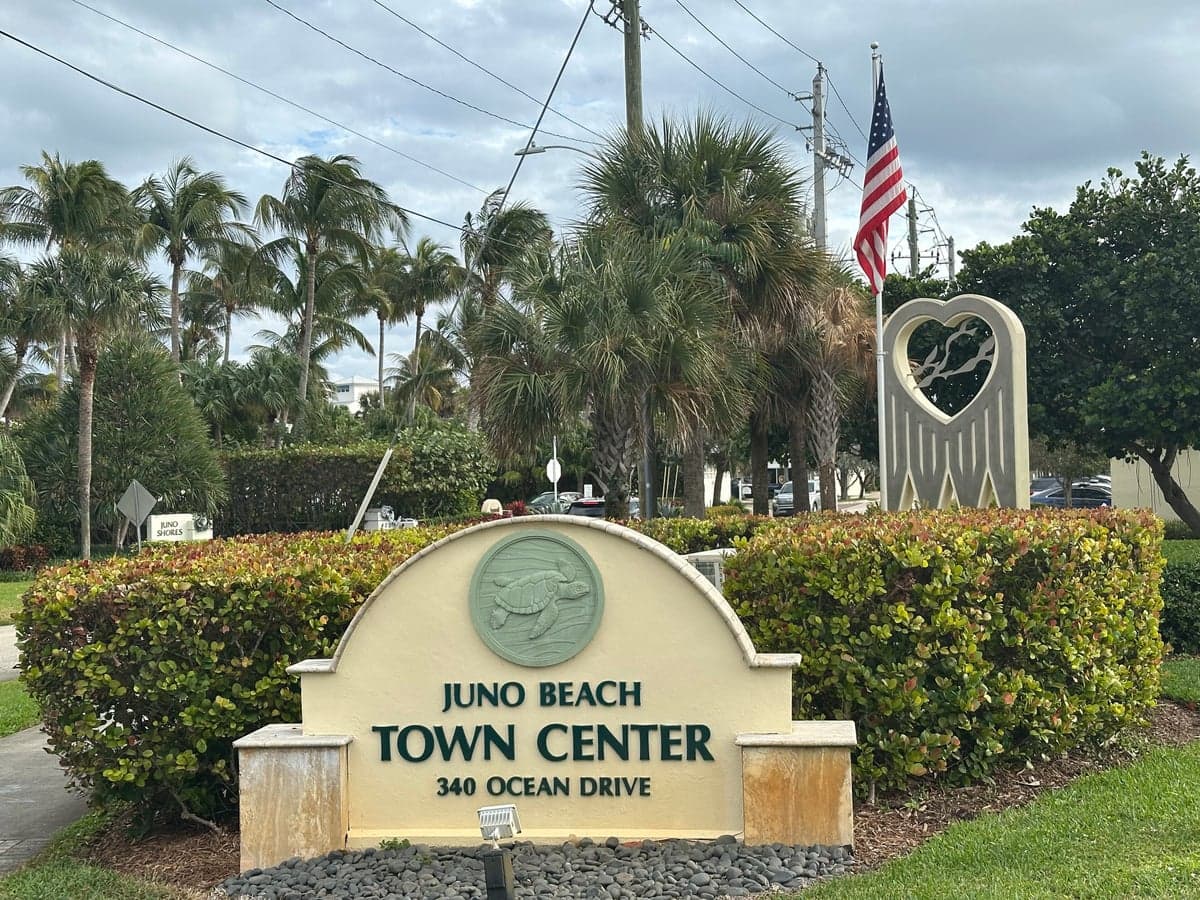
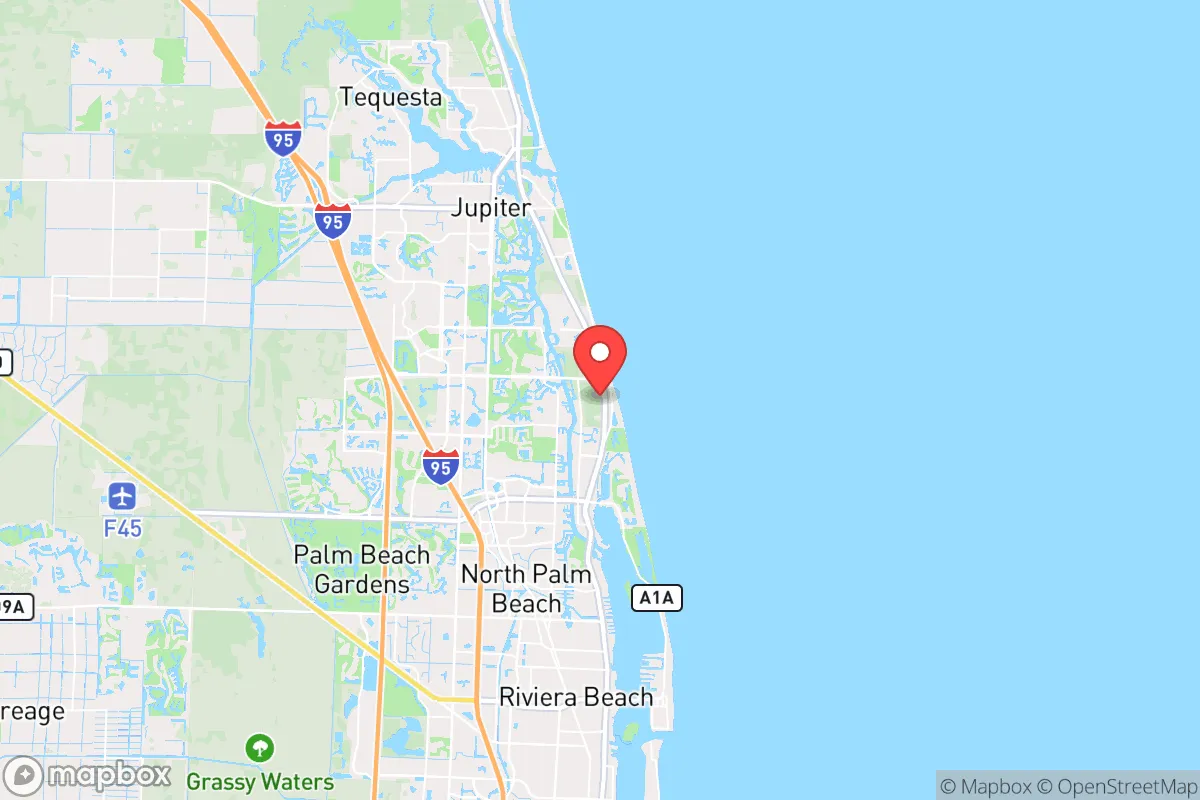
Photo: Wikipedia
Political ClimatePolitical Climate in Juno Beach, FL
District shown is the primary district for this city’s centroid. Cities may span multiple districts.
* Lean and PVI are calculated from Juno Beach, FL’s own 2020 presidential results (precinct returns summed to the city), with 2024 estimated from the surrounding county’s 2020–2024 shift, Cook-style. Sources: state election offices; VEST 2020 precinct results (CC BY 4.0).
Political rankings in Florida
- Most Conservative Cities in Florida
- Most Liberal Cities in Florida
- Best Liberal-Leaning Towns in the South
- Safest Liberal-Leaning Towns in the South
- Safest Conservative-Leaning Towns in the South
- Safest Liberal-Leaning Towns on the East Coast
- Safest Conservative-Leaning Towns on the East Coast
- Affordable Small Towns for Conservatives
- Most Conservative Counties in Florida
- Most Liberal Counties in Florida
Local Political AnalysisPolitical Analysis of Juno Beach, FL
Juno Beach leans reliably Republican, with a Cook Partisan Voting Index of R+7 that places it to the right of the national average and noticeably more conservative than Palm Beach County as a whole. The town’s politics have been shaped by its older, wealthier, and largely white demographic—many residents are retirees from the Northeast who brought their fiscal conservatism with them but tend to be moderate on social issues. Over the past decade, the local GOP has held firm, though a slow trickle of younger families and remote workers from bluer states has nudged the margin slightly closer, especially in municipal races where development and beach access dominate the conversation.
How it compares
Compared to Florida as a whole—which is a purple state with no fixed PVI but has voted Republican in every presidential election since 2016 by margins of 1.5 to 3.5 points—Juno Beach is roughly 5 to 7 points more conservative. The contrast is sharper when you look at nearby towns: just south, Palm Beach Gardens leans R+3 and feels more suburban and corporate, while West Palm Beach to the south is a Democratic stronghold (D+15 or so) with a younger, more diverse electorate. North of Juno Beach, Jupiter is also Republican-leaning but slightly softer, around R+5, thanks to a growing population of tech and healthcare workers. The real outlier is Lake Worth Beach, about 15 minutes south, which is solidly blue and known for its progressive city council and LGBTQ+ community. So Juno Beach sits in a kind of conservative pocket along the coast, buffered by wealth and age, but surrounded by a county that’s been trending purple-to-blue in presidential years.
What this means for residents
For conservative residents, Juno Beach feels like a safe harbor. Local elections rarely see serious Democratic challengers, and the town council tends to prioritize low taxes, limited regulation, and beach preservation over social programs or density. You’ll find Republican signs on lawns year-round, and the local chamber of commerce leans right. For liberal residents, the reality is more nuanced. You won’t face hostility—this isn’t a rural red enclave—but you’ll be in the minority at town hall meetings, and progressive policy proposals (like rent control or sanctuary city measures) are non-starters. That said, the town’s nonpartisan municipal elections mean that local issues like dune restoration, parking, and noise ordinances often transcend party lines. Most residents, regardless of affiliation, agree on keeping the beach pristine and limiting high-rise development. The real friction comes in county-wide races, where Juno Beach’s votes are reliably Republican, but Palm Beach County’s overall tilt means Democrats often win at that level.
Culturally, Juno Beach is quieter and more insular than its neighbors. There’s no downtown nightlife or arts district—the social scene revolves around the beach, the Loggerhead Marinelife Center, and a handful of seafood spots. Politically, that translates into a preference for stability over change. The town has resisted the kind of rapid development seen in West Palm Beach or Boca Raton, and its zoning laws are among the strictest in the county. For a conservative, that’s a feature; for a liberal, it can feel like a lack of dynamism. But the shared love of the coast and the low-key lifestyle means most people here get along, even if they disagree on who should be governor. The trajectory is slow and steady: Juno Beach will likely stay R+5 to R+7 for the foreseeable future, aging in place while the rest of the county grows younger and more diverse around it.

State Political ClimatePolitical Climate in Florida
State Political AnalysisPolitical Environment in the State
Florida has transformed from a quintessential swing state into a solidly Republican-leaning powerhouse over the past decade, driven by a massive influx of conservative-leaning transplants from the Northeast and Midwest. The state’s overall partisan lean now sits at roughly R+3 to R+5 in statewide elections, a dramatic shift from the nail-biter 2000 recount era. The dominant coalition is a mix of Cuban-American and other Hispanic voters in South Florida, rural and suburban whites across the Panhandle and I-4 corridor, and a growing bloc of fiscally conservative, socially moderate retirees. The trajectory has been a steady rightward march since 2012, with Democrats losing ground even in formerly competitive strongholds like Palm Beach and Pinellas counties.
Urban vs. rural divide
The political map of Florida is a textbook study in geographic polarization. The major metros—Miami-Dade, Broward, and Palm Beach in the southeast, and Orlando (Orange County) and Tampa (Hillsborough County)—are the Democratic anchors, though even here the margins have tightened. Miami-Dade, once reliably blue, flipped to Trump in 2020 and 2024, driven by a rightward shift among Cuban and Venezuelan voters. Meanwhile, the sprawling suburbs of Jacksonville (Duval County) and Fort Myers (Lee County) have become reliably red, with Lee County delivering a +25-point margin for Trump in 2024. The rural Panhandle, from Pensacola to Tallahassee, is deeply conservative, while the I-4 corridor—a band of swing counties like Volusia and Polk—has trended red as working-class voters abandon the Democratic Party. The result is a state where Democrats are increasingly confined to a few dense urban cores and college towns, while the rest of the map is a sea of red.
Policy environment
Florida’s policy environment is a deliberate counterpoint to states like California and New York. The state has no personal income tax, a cap on property tax increases (the Save Our Homes amendment), and a business-friendly regulatory climate that has attracted corporate relocations. Education policy is a flashpoint: the state has one of the nation’s largest school voucher programs (the Family Empowerment Scholarship) and has aggressively expanded charter schools, while also passing the “Parental Rights in Education” law (HB 1557, often called the “Don’t Say Gay” law) that restricts classroom instruction on sexual orientation and gender identity. Healthcare policy is mixed—Florida expanded Medicaid under the Affordable Care Act, but the state has also restricted abortion access to six weeks (HB 5, signed in 2023). Election laws have been tightened: the state requires voter ID, limits drop boxes, and has purged voter rolls for non-citizens and felons. The overall posture is one of low taxes, limited government intervention in business, and a strong emphasis on parental and local control in education.
Recent policy direction
The last three years have seen a flurry of legislation that signals where Florida is headed. On gun rights, the state passed permitless carry (HB 543) in 2023, allowing concealed carry without a permit, and has a strong “Stand Your Ground” law. On education and parental rights, the “Stop WOKE Act” (HB 7) restricts workplace and school training on race and gender, while the “Individual Freedom” law bans critical race theory in schools. On speech and privacy, the state has taken on social media platforms with a law (SB 7072) that prohibits deplatforming political candidates, though it’s been tied up in court. Medical and bodily autonomy is sharply restricted: abortion is banned after six weeks, with exceptions for rape, incest, and the life of the mother, and the state has banned gender-affirming care for minors (SB 254). Property rights are strong—Florida has no state-level rent control, and the “Live Local Act” (SB 102) preempts local zoning to allow affordable housing development. On voting, the state has implemented strict signature matching requirements and limited third-party ballot collection. The direction is unmistakably toward a more conservative, individual-liberty-focused framework, with a heavy emphasis on parental rights and limited government.
Civil unrest & political movements
Florida has seen its share of political flashpoints. The 2020 Black Lives Matter protests in Miami, Orlando, and Jacksonville were large but largely peaceful, though they sparked a backlash that fueled the “law and order” messaging of Governor Ron DeSantis. Immigration politics are a constant undercurrent: the state passed SB 1718 in 2023, which requires businesses with 25+ employees to use E-Verify, bans local governments from issuing ID cards to undocumented immigrants, and makes it a felony to transport undocumented people into the state. There is no sanctuary city policy—in fact, the state has preempted any such local ordinances. Election integrity remains a hot-button issue: the state created a new Office of Election Crimes and Security in 2022, which has prosecuted a handful of cases of double voting and non-citizen voting, though critics say it’s performative. The most visible movement is the “Free Florida” coalition, a mix of libertarian-leaning Republicans and conservative activists who push for further tax cuts, school choice, and gun rights. On the left, the “Florida Rising” group organizes around voting rights and economic justice, but has limited influence in the current political climate.
Projection
Over the next 5-10 years, Florida is likely to become even more conservative, but with a twist. The in-migration from blue states—especially New York, New Jersey, and California—is bringing a wave of voters who are fiscally conservative but socially moderate, which could create tension within the GOP. The Hispanic vote, particularly in Miami-Dade and Tampa, is trending right, but younger Hispanic voters in Orlando are more liberal, so the overall Hispanic shift may plateau. The biggest wildcard is climate change: rising sea levels and hurricane risk could slow growth in coastal areas like Miami Beach and Fort Lauderdale, while inland cities like Gainesville and Ocala may see more growth. Demographically, the state is aging, which tends to favor Republican turnout, but the influx of younger families from high-cost states could moderate the lean. Expect continued battles over abortion, school curriculum, and property insurance costs, but the overall trajectory is a state that remains red-leaning, with a pragmatic, business-first conservatism that may soften on some social issues as the electorate diversifies.
For a new resident, the bottom line is this: Florida offers a low-tax, high-freedom environment that rewards individual initiative, but it comes with a clear political culture that is skeptical of government overreach and protective of traditional values. If you’re conservative, you’ll find a state that aligns with your priorities on taxes, guns, and education. If you’re liberal, you’ll find a vibrant civic life in the cities and a strong network of advocacy groups, but you’ll be swimming against the current in state policy. The practical takeaway is that Florida is a place where your vote matters less in statewide races than it used to, but your local choices—school board, city council, county commission—are where the real action is. Come for the weather and the tax savings, but be ready for a political climate that is unapologetically red and getting redder.
* Values derived from national, state, county, city and local statistics and may differ in a specific area. Last updated: 2026-11-23T03:09:20.000Z
Narrative content on this page is AI-generated and may contain mistakes. Verify any details that matter before acting on them.
ReloMaps may earn a commission from affiliate links at no extra cost to you.

