Photo: Wikipedia
Strategic Assessment of Juno Beach, FL
Meaningful friction. Expect exposure to either population pressure, blast zones, or natural disaster risk. Consider buying a retreat property.
What does the Strategic Assessment tell us?
Our Strategic Assessment grades tactical survivability of an area. Major population centers, military targets, fallout zones, natural disasters, and border exposure all drive risk — lower exposure means a more defensible position in a crisis.
This is heavily inspired by Joel Skousen's Strategic Relocation book. Highly recommended you checkout the book ($)What does this tell us?
Our Strategic Assessment grades tactical survivability of an area. Major population centers, military targets, fallout zones, natural disasters, and border exposure all drive risk — lower exposure means a more defensible position in a crisis.
This is heavily inspired by Joel Skousen's Strategic Relocation book. Highly recommended you checkout the book ($)Strategic Pillars
Key Distances
Regional Safe Places
Below is our recommended "safe zones" in Florida and the surrounding area based on our strategic heuristics. For most people, it's unrealistic to live in a “safe zone” full-time due to work, family or other personal reasons. They tend to be more rural. However, many of these areas are perfect for second homes and retreat properties that double as a vacation home or even a short-term rental.

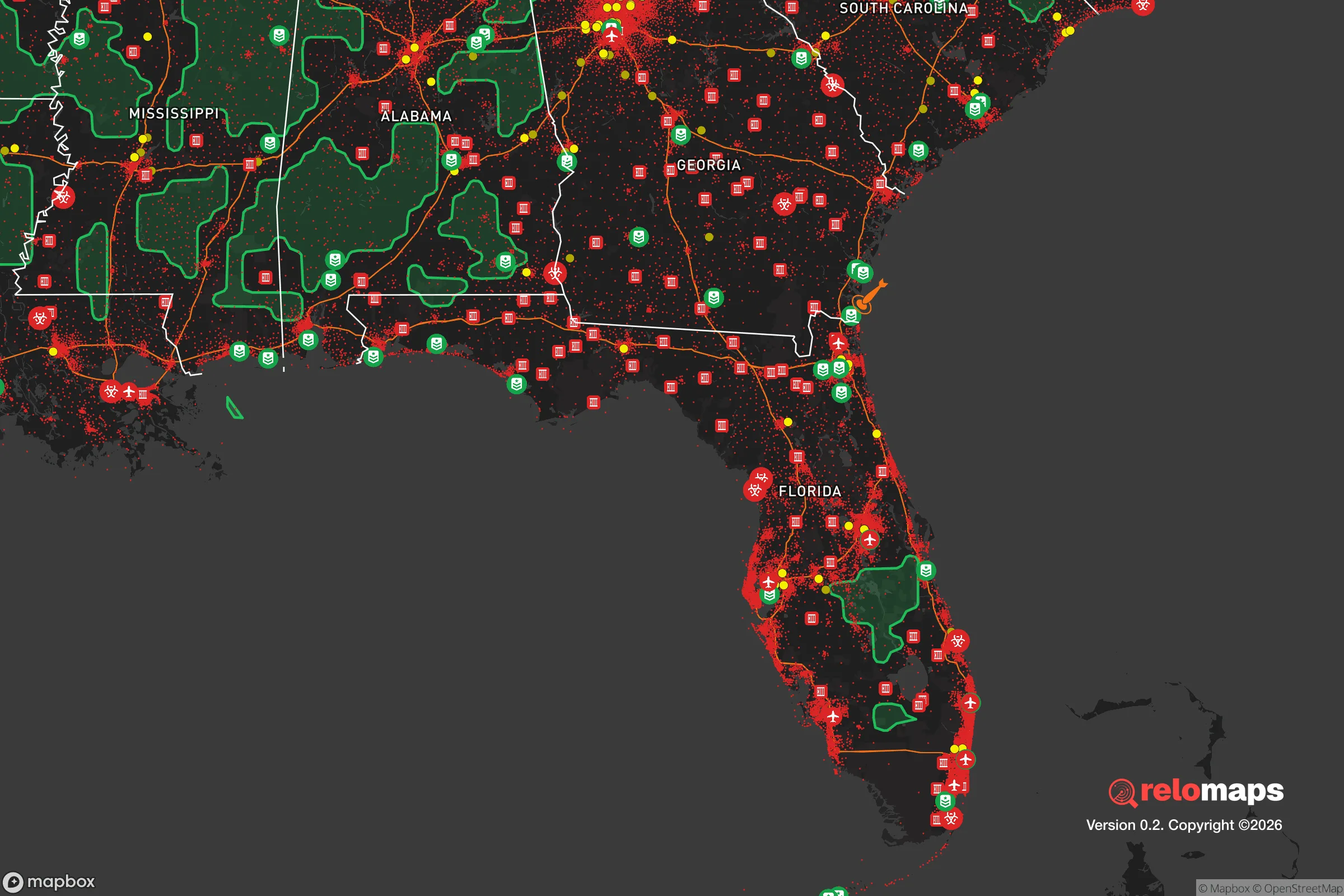


Important Note: For informational purposes only. This does not mean nothing bad ever happens in the green zones. Please use common sense. This is based on public data and modeled with AI. We tried to take a conservative approach but mistakes happen. We update this regularly as new information becomes available.
Solar Generator Recommendations
Backup power matters more here than in safer locations. We've picked three solar generators across budgets and capacity tiers — start with the budget unit if you only need a few essentials, or step up if you want to run a fridge and HVAC for days at a time.
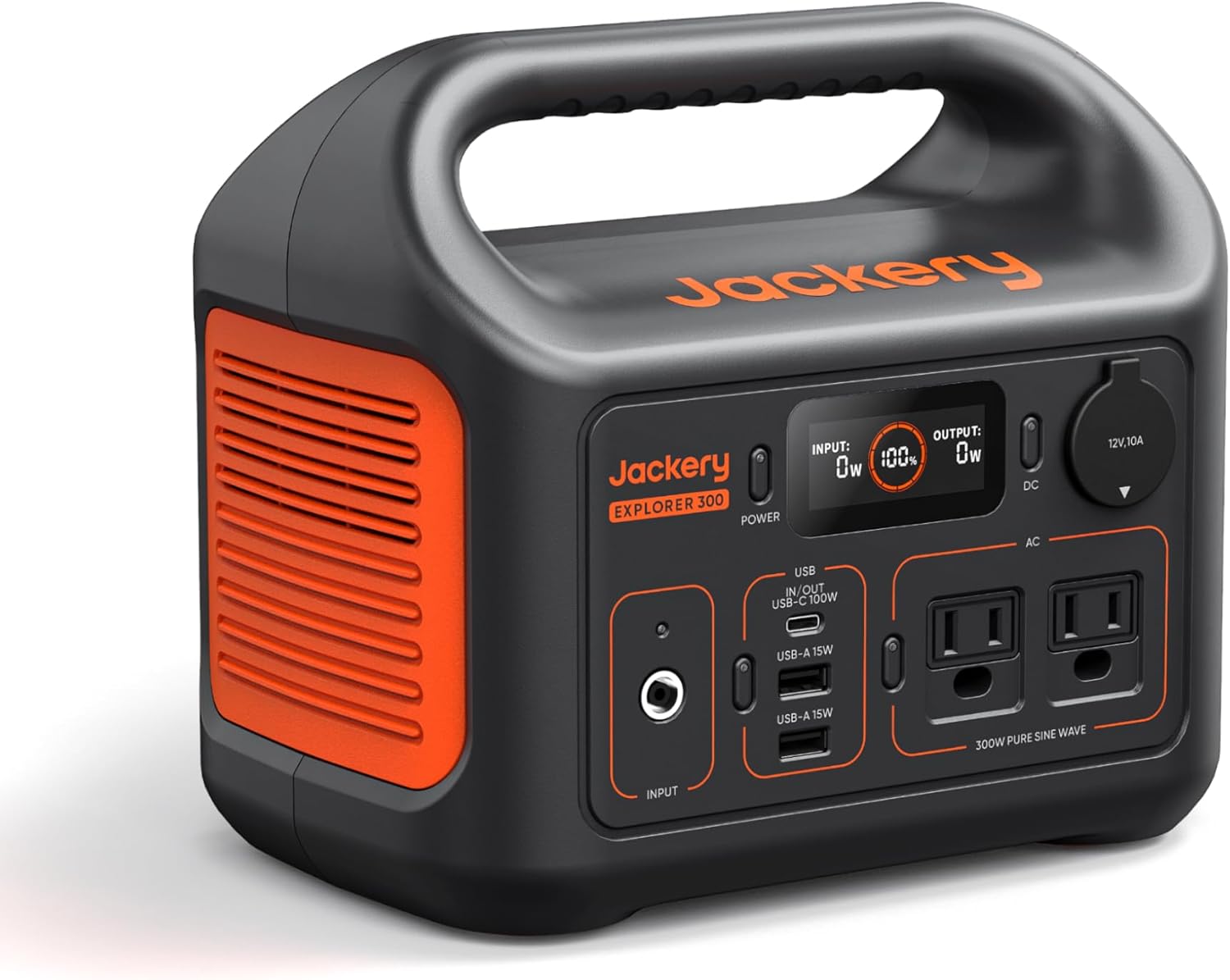
Jackery Portable Power Station Explorer 300
Budget OptionPower on the Go: Weighing only 11 lbs, it's convenient to set up and store with book-sized foldable solar panels

BLUETTI Portable Power Station AC180
Designed for both indoor and outdoor scenarios, AC180 is highly capable as it has a robost capacity and continuous output power.

EF ECOFLOW DELTA Pro Ultra Power Station
Upgraded PickEcoFlow DELTA Pro Ultra is a whole-home energy system designed to grow with your family. Integrated with the Smart Home Panel 2, it scales to meet your evolving energy needs — keeping your home powered, intelligent, and secure through every stage of life.
We earn a commission, at no additional cost to you.
Strategic Assessment Analysis
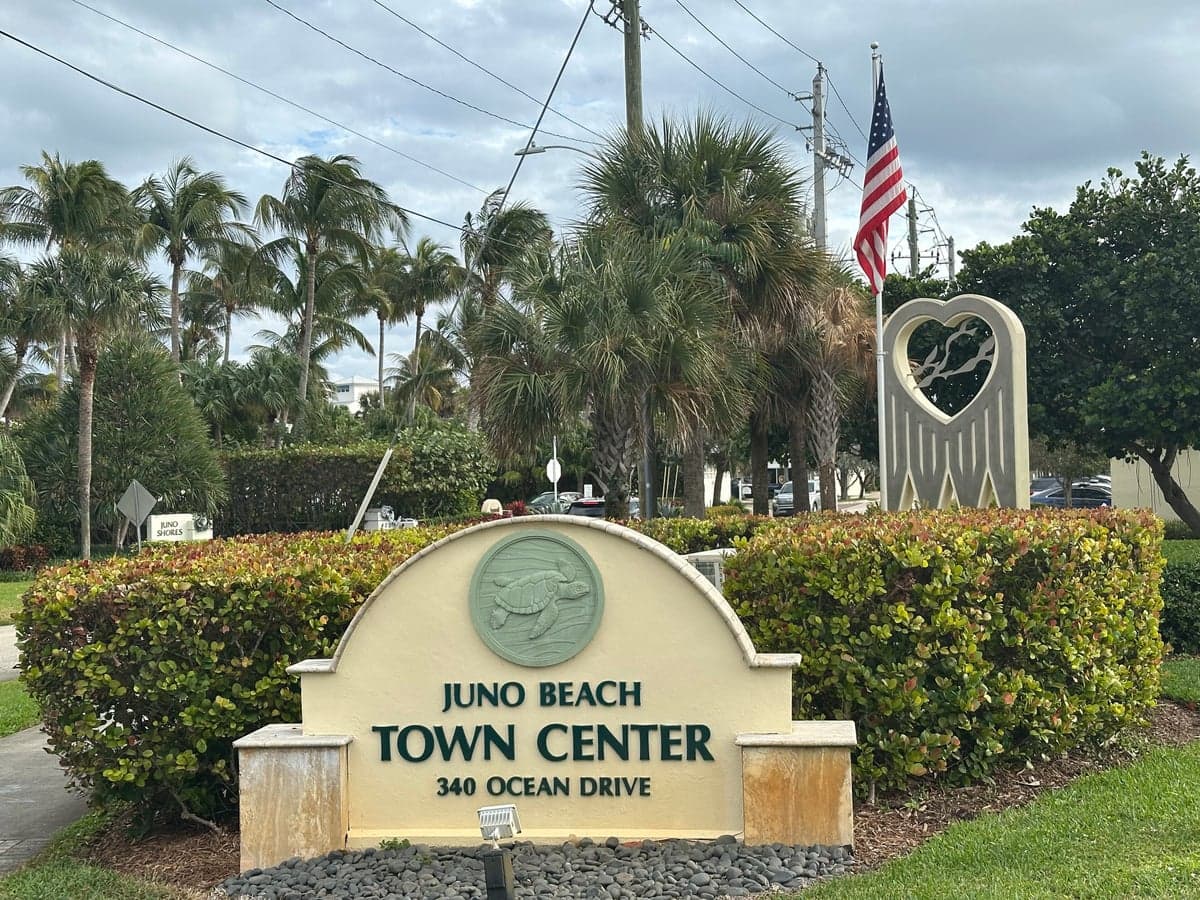
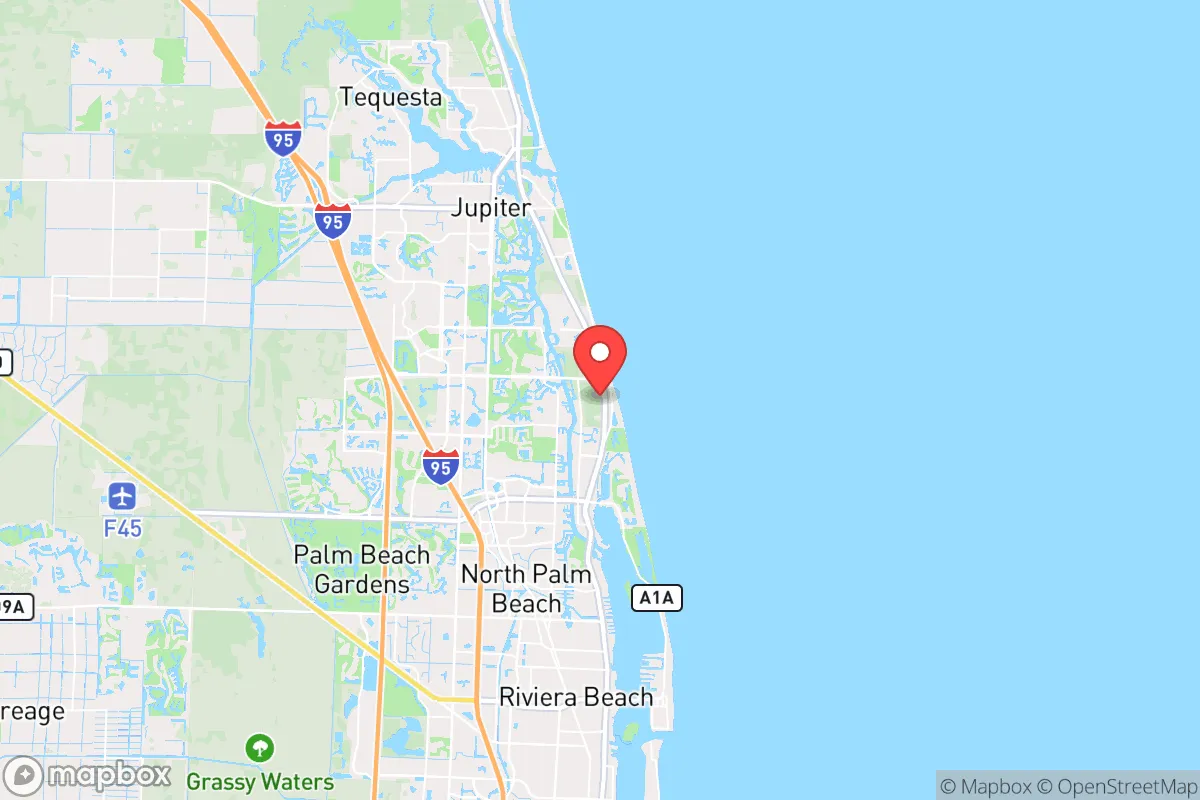
Juno Beach, Florida, occupies a narrow barrier island on the state’s southeastern coast, roughly 15 miles north of West Palm Beach. For a relocator prioritizing disaster readiness and self-sufficiency, this location presents a mixed strategic picture: the town benefits from a relatively low-density residential character and direct ocean access, but its position on a barrier island introduces inherent exposure to storm surge, hurricane winds, and sea-level rise. The area’s resilience is shaped less by any single natural advantage and more by its proximity to larger population centers—a double-edged sword that offers logistical support while also increasing vulnerability to cascading failures and man-made risks.
Geographic position and natural advantages for resilience
Juno Beach sits on a 2.5-mile stretch of coastline between the Atlantic Ocean and the Intracoastal Waterway, with the town’s elevation averaging roughly 10 feet above sea level. This low-lying profile is typical of southeast Florida’s barrier islands, but Juno Beach benefits from a relatively narrow footprint—the island is only a few blocks wide at most points—which means evacuation routes are limited to a single bridge (Donald Ross Road) connecting to the mainland. The town’s small permanent population of around 3,500 residents reduces competition for resources during emergencies, and the local government maintains a well-regarded emergency management office that coordinates with Palm Beach County’s larger system. The nearby Atlantic Ocean provides an abundant source of saltwater for potential desalination, though practical access to freshwater is entirely dependent on municipal supply from the mainland. The area’s subtropical climate supports year-round growing seasons for those with the space and knowledge to cultivate food, but the sandy, nutrient-poor soil typical of barrier islands limits serious agricultural self-sufficiency without significant amendment.
Risks, exposures, and proximity to fallout-relevant landmarks
The most immediate natural risk is hurricane landfall. Juno Beach lies in a zone that has experienced direct hits from major storms (Category 3 or higher) roughly once every 15–20 years historically, with Hurricane Wilma in 2005 and Hurricane Irma in 2017 providing recent examples of widespread power outages, flooding, and structural damage. Storm surge is the primary threat: a Category 3 storm could push water 6–10 feet above ground level across the entire island, making any ground-floor structure uninhabitable. Sea-level rise projections for 2050 suggest an additional 12–18 inches of water, which would increase the frequency of “nuisance” flooding during king tides and minor storms. From a man-made risk perspective, Juno Beach’s proximity to West Palm Beach (15 miles south) and Palm Beach International Airport (18 miles south) places it within the potential fallout zone of a major transportation or industrial incident. The town is also roughly 45 miles north of the Port of Palm Beach, a commercial shipping hub that handles containerized cargo and fuel imports. While no nuclear power plants or major chemical facilities are within 20 miles, the nearby I-95 corridor (3 miles west) is a high-volume trucking route carrying hazardous materials. For a relocator concerned with societal disruption, the town’s dependence on a single bridge for evacuation and resupply is a critical vulnerability—any blockage or damage to that bridge effectively isolates the island.
Practical resilience for a relocator: food, water, energy, and defensibility
Juno Beach’s practical resilience is constrained by its geography and infrastructure. Water is the most pressing concern: the town’s municipal supply comes from the Biscayne Aquifer via mainland treatment plants, and a prolonged power outage would halt pumping. A relocator would need to store at least two weeks of drinking water (roughly 14 gallons per person) or invest in a portable reverse-osmosis system capable of treating brackish water from the Intracoastal. Food options are limited: the town has one small grocery store (Publix on Donald Ross Road) and a handful of restaurants, but no local farms or community gardens. The nearest farmers’ markets are in Palm Beach Gardens (8 miles south) or Jupiter (5 miles north). For those willing to fish, the Atlantic offers a reliable protein source, but access to the beach is public and could become contested during a crisis. Energy reliability is moderate: Florida Power & Light serves the area with underground lines in some newer developments, but overhead lines along the main road are vulnerable to wind damage. Solar panels are a viable option—Florida averages 237 sunny days per year—but roof-mounted systems must be hurricane-rated and may not survive a direct hit. Battery storage (e.g., Tesla Powerwall) is recommended for grid independence. Defensibility is poor: the barrier island’s single bridge and narrow streets create a funnel for both evacuation and potential security threats. The town’s low crime rate (violent crime is roughly 60% below the national average) is a positive, but a breakdown in civil order could quickly turn the island into a trap. The nearest National Guard armory is in West Palm Beach, and local law enforcement is limited to the Palm Beach County Sheriff’s Office, which would be stretched thin during a regional emergency.
Overall, Juno Beach offers a comfortable coastal lifestyle with moderate disaster readiness for those who prepare deliberately, but it is not a strong candidate for long-term self-sufficiency or strategic resilience. The town’s small size and low density are advantages in a short-duration crisis (e.g., a week-long power outage), but its dependence on mainland infrastructure, single evacuation route, and exposure to storm surge make it a high-risk location for a major hurricane or prolonged societal disruption. For a relocator who values ocean access and a quiet community and is willing to invest in robust backup systems (water storage, solar+battery, a seaworthy vehicle), Juno Beach can work as a base—but it should be viewed as a coastal outpost with limited fallback options, not a fortress. The smarter play for a resilience-minded family might be to use Juno Beach as a seasonal residence while maintaining a more defensible property inland, perhaps in the Lake Okeechobee region or along the western edge of Palm Beach County, where elevation is higher and evacuation routes are more numerous.

* Values derived from national, state, county, city and local statistics and may differ in a specific area. Last updated: 2026-11-23T03:09:20.000Z
Narrative content on this page is AI-generated and may contain mistakes. Verify any details that matter before acting on them.
ReloMaps may earn a commission from affiliate links at no extra cost to you.

