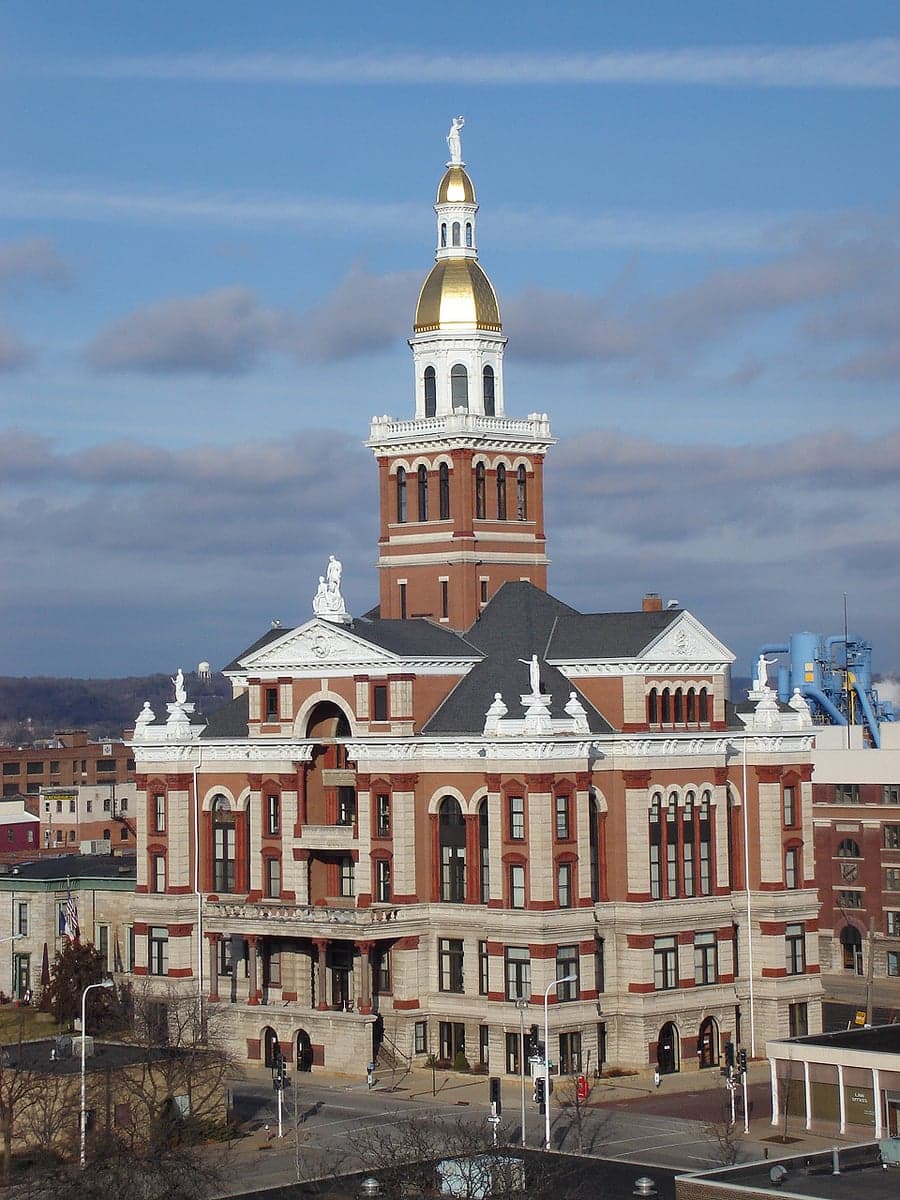
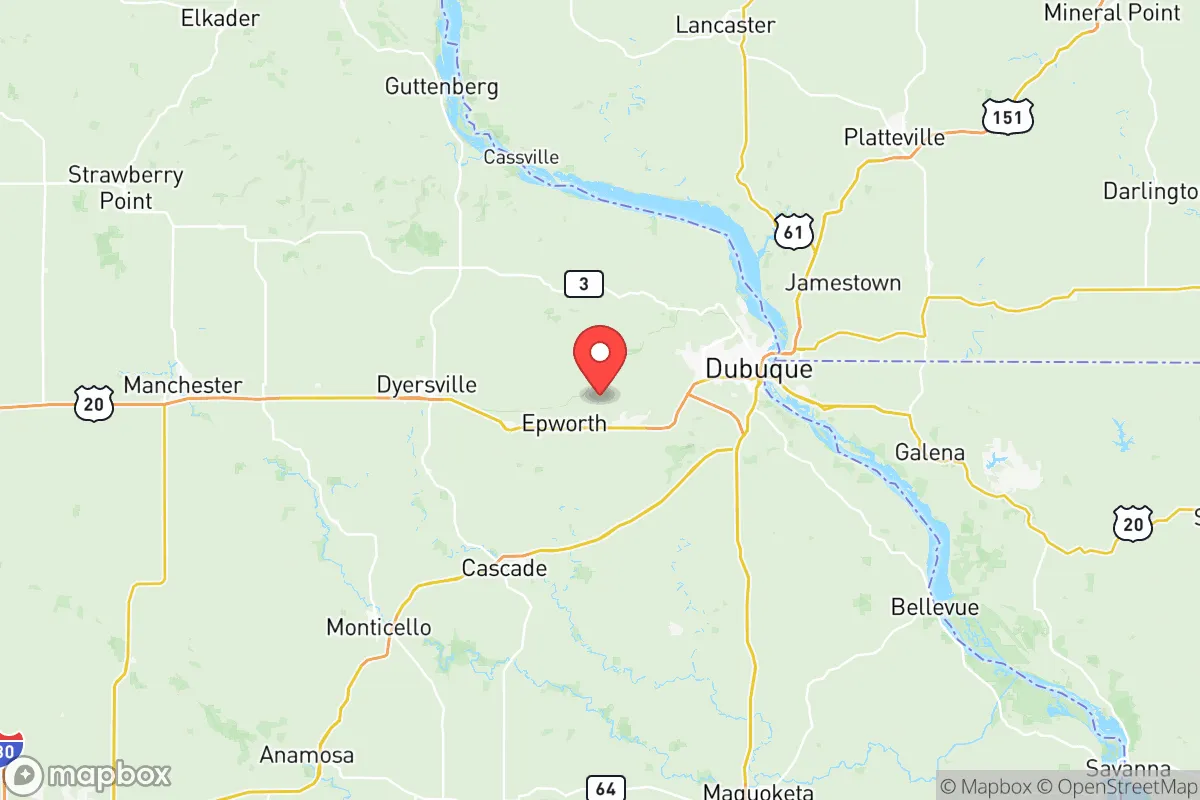
Photo: Wikipedia
Quality of Life in Dubuque County
A livable area that tracks near national norms for affordability, walkability, and neighborhood health.
What does Quality of Life tell us?
Quality of Life measures an area by evaluating factors like cost of living, nearby amenities, country club access, airport proximity, socioeconomic signals and neighborhood character. For large states, this is a general average — quality of life can vary dramatically between metro areas, suburbs, and rural communities within the same state.
What does this tell us?
Quality of Life measures an area by evaluating factors like cost of living, nearby amenities, country club access, airport proximity, socioeconomic signals and neighborhood character. For large states, this is a general average — quality of life can vary dramatically between metro areas, suburbs, and rural communities within the same state.
Cost of Living
19% below national average
118%
The Real Cost of Living in Dubuque County for 2026
| Tier | Individual | Family (4) |
|---|---|---|
| Survival | $15k | $28k |
| Comfortable | $44k | $65k |
| Luxury | $131k+ | $203k+ |
| Elite (Top 5%) | $154k+ | $239k+ |
Quality-of-Life Analysis
Dubuque County offers a spectrum of quality-of-life options that range from the urban-riverfront energy of its core city to the quiet, self-reliant pace of its rural townships and farming valleys. With a cost of living index of 81 (20% below the U.S. average) and a median home value of $226,100, the county attracts everyone from remote tech workers seeking affordability to retirees downsizing from the Chicago suburbs and young families drawn to its top-rated school districts. The diversity of settings—compact city blocks, historic small towns, and unincorporated cropland—means that one's daily experience in Dubuque County depends heavily on whether they choose a river bluff apartment, a Main Street walk-up in a satellite village, or a house on a gravel road.
Largest town(s) & population centers
Dubuque, the county seat and population anchor with roughly 60,000 residents, is the primary population center and the only place in the county offering a full urban amenity set. Daily life here centers around the historic Millwork District, the riverfront Mississippi Riverwalk, and a walkable downtown with breweries, galleries, and the Five Flags Center arena. The city is home to the University of Dubuque, Loras College, and Northeast Iowa Community College, giving it a noticeable student and faculty presence that supports coffee shops, bike lanes, and a weekly farmers’ market. Housing stock ranges from Victorian-era mansions on tree-lined streets near Fenelon Place to affordable ranch homes in the West End, with median rent at $944 keeping the city accessible. Residents commute an average of 17 minutes—among the shortest in the state for a micropolitan area—making it feasible to live in a walkable urban core and still work for major employers like John Deere, Flexsteel Industries, or the growing healthcare sector at MercyOne Dubuque Medical Center.
Smaller towns & rural pockets
Directionally radiating from Dubuque, the county’s smaller communities offer a markedly different rhythm. Asbury, immediately west of Dubuque, has grown into a bedroom suburb of roughly 5,800 people, with newer subdivisions, chain retail along Highway 20, and access to Western Dubuque Community Schools—the county’s highest-rated district. Further out, Dyersville (pop. ~4,200) is the most prominent independent town in the rural west, famous as the filming location for Field of Dreams and a functioning agricultural trade center with a historic downtown block, small manufacturing, and a strong Catholic parish identity. Cascade (pop. ~2,100) anchors the county’s southwest corner, a tight-knight community where the old grain elevator still dominates Main Street, and residents often commute east to Dubuque or south to Maquoketa. Smaller still are the unincorporated crossroads like St. Donatus, Rickardsville, and Balltown—each essentially a church, a handful of houses, and farmland—where daily life means driving the county blacktops to the nearest grocery (often in Peosta or Luxemburg) and relying on volunteer fire departments and church socials for community ties.
Cost & lifestyle range
The financial spread across Dubuque County is surprisingly narrow for a metro-to-rural gradient, but the lifestyle divergence is sharp. At the urban end, living in Dubuque’s downtown lofts or the North End means walkable access to restaurants, the Fenelon Place Elevator, and the Mississippi River trail, with rent matching the county median of $944 and home values slightly above the county median of $226,100—often in the $240,000–$280,000 range for a fixer-upper Victorian. In contrast, a newer construction in Asbury or Dyersville commands $260,000–$300,000, but offers larger lots, new schools, and lower property taxes than Dubuproper city levies. The cheapest inventory lies in the rural townships: a three-bedroom house on a half-acre in Balltown or Rickardsville can sell for $140,000–$180,000, with a cost of living effectively lower than the index suggests because of reduced sales tax exposure and no city utility fees. However, that savings comes at a trade-off—no grocery delivery, limited internet options (often only satellite or spotty DSL), and a minimum 20-minute drive to a pharmacy or urgent care.
The county's diversity of settings means that a family earning the median household income of roughly $68,000 can either own a downtown condo with a short walk to work in Dubuque or mortgage a farmette in St. Donatus with an outbuilding for a workshop. Anyone who values short commutes, historic architecture, and a walkable city core will prefer the Dubuque city limits. Those who want space, quiet, and a slower pace rooted in church and school life will feel more at home in the smaller towns like Cascade or the rural crossroads near Sherrill. The county does not have a true "luxury" tier—homes rarely exceed $400,000, even on the river bluffs—so the primary differentiator is not wealth but what a resident is willing to trade in convenience for solitude. Families with school-age children often compromise by living in the rural reaches of the Western Dubuque district, which receives top marks, at the cost of a longer bus ride. Retirees, meanwhile, tend to cluster near Dubuque’s medical facilities or the walkable small towns of Dyersville and Asbury, balancing access to care with lower property taxes. The county works best for those who know whether they want to hear the Mississippi barge horns at night or nothing but wind through corn.

Crime in Dubuque County
Generally safer than 69% of comparable U.S. locations.
Violent CrimeViolent Crime Analysis
Property CrimeProperty Crime Analysis
Crime Analysis
Dubuque County, anchored by the city of Dubuque along the Mississippi River, reports a violent crime rate of 230.5 incidents per 100,000 residents and a property crime rate of 1,167.7 per 100,000. These figures place the county in a middle tier for safety within Iowa, though the specific distribution of crime across its communities—from the urban core of Dubuque to smaller towns like Asbury, Peosta, and Dyersville—reveals significant variation in resident risk. The county's overall safety picture is shaped by a mix of urban density in the city of Dubuque and lower-crime patterns in its surrounding suburbs and rural townships.
Crime in context
Dubuque County's violent crime rate of 230.5 per 100,000 is roughly 40% below the national average of approximately 380 per 100,000, but it sits slightly above the Iowa state average of around 200 per 100,000. The property crime rate of 1,167.7 per 100,000 is notably higher than the Iowa state average of roughly 1,000 per 100,000, though it remains below the national property crime rate of about 1,950 per 100,000. When compared to peer counties in eastern Iowa, Dubuque County's violent crime rate is higher than Linn County (Cedar Rapids) and Johnson County (Iowa City), but lower than Scott County (Davenport). The elevated property crime numbers are concentrated in the city of Dubuque itself, where thefts from vehicles and residential burglaries drive the figures, while outlying communities like Asbury and Peosta report property crime rates closer to the state average.
What residents experience
Residents of Dubuque County experience a safety landscape that differs sharply depending on where they live. The city of Dubuque, which contains the majority of the county's population, accounts for the bulk of reported violent crime, including aggravated assaults and robberies concentrated in areas near the downtown core and along the US 151 corridor. In contrast, the suburbs of Asbury and Peosta report violent crime rates well below the county average, with many neighborhoods seeing fewer than 50 violent crimes per 100,000. The town of Dyersville, known for the Field of Dreams movie site, maintains a low crime profile typical of small Iowa communities, while the unincorporated areas of the county—such as those around Sageville and Sherrill—see minimal crime activity. Residents in the city of Dubuque commonly cite property crime, particularly theft from unlocked vehicles and package theft, as the most frequent safety concern, while violent crime remains a more localized issue tied to specific blocks and apartment complexes rather than a countywide threat.
Neighborhood-level variation within Dubuque is pronounced. The areas around the University of Dubuque and Loras College see periodic spikes in theft and minor assaults, while the west side of the city near Kennedy Mall and the northwest neighborhoods near John Deere's Dubuque Works tend to report lower crime rates. The county's judicial system, operating under the Iowa District Court for Judicial District 1, has not adopted the progressive prosecutorial policies seen in some larger urban counties, which means offenders in Dubuque County generally face more traditional sentencing outcomes. This is a positive factor for residents concerned about public safety, as it contrasts with the more lenient approaches found in some larger metro areas where progressive district attorneys have been linked to higher recidivism and reduced consequences for property and violent offenders. For those considering relocation, the safest housing options within the county are typically found in Asbury, Peosta, and the rural townships east of the Mississippi River bluffs, while the city of Dubuque requires more careful neighborhood selection to avoid the higher-crime pockets near the downtown and industrial districts.
* Values derived from national, state, county, city and local statistics and may differ in a specific area. Last updated: 2026-07-03T00:25:59.000Z
Narrative content on this page is AI-generated and may contain mistakes. Verify any details that matter before acting on them.
ReloMaps may earn a commission from affiliate links at no extra cost to you.

