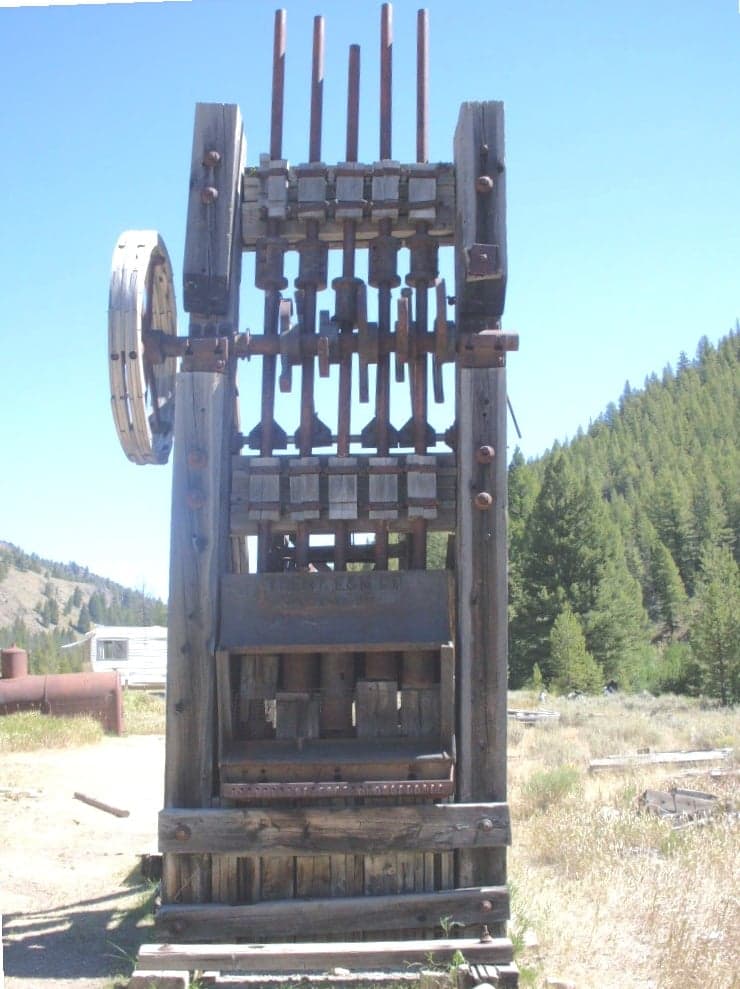
Photo: Wikipedia
Political ClimatePolitical Climate in Custer County
Showing district-level results — no local-only data available.
Local Political AnalysisPolitical Analysis of Custer County
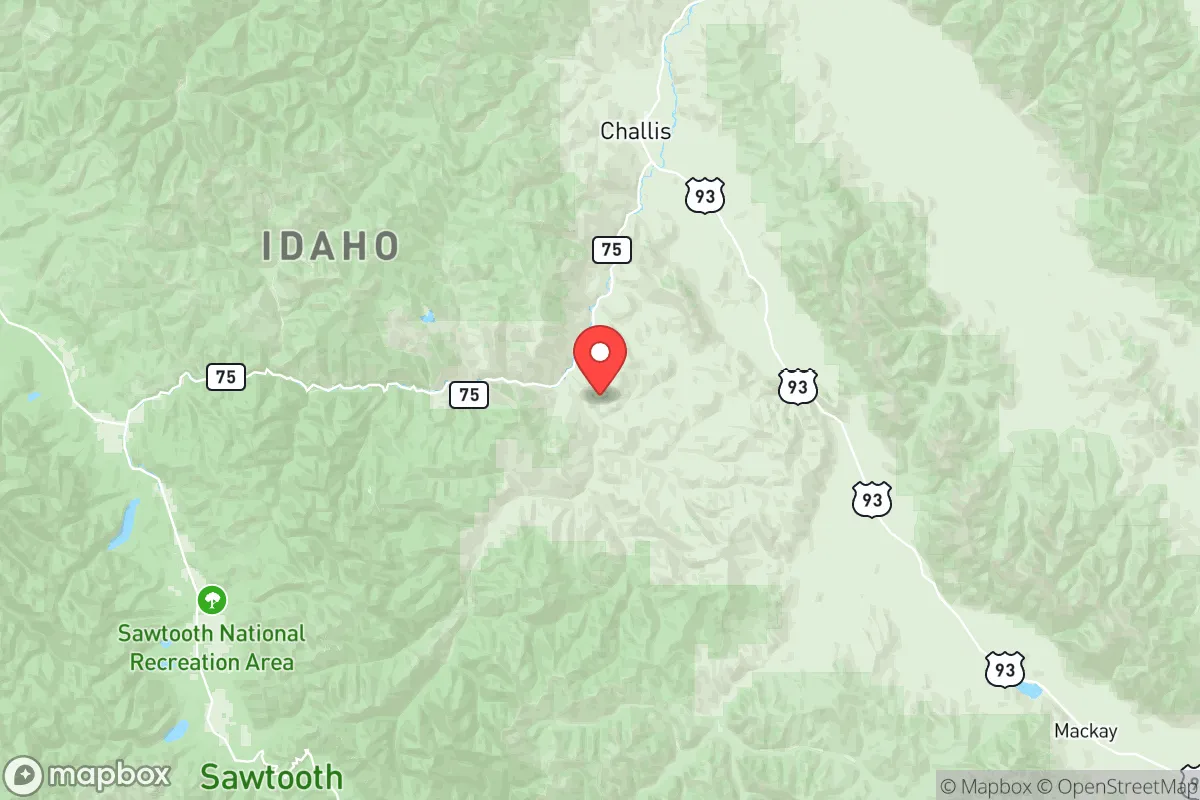
Custer County, Idaho, is a deeply conservative area with a Cook PVI of R+13, but it's not quite as red as the state of Idaho as a whole, which sits at R+18. The county's politics are shaped by a mix of ranching, mining, and a growing outdoor recreation economy, creating a more libertarian-leaning conservatism than the religious-right flavor found in some other parts of the state. While the county has been reliably Republican for decades, the trajectory is toward a slight softening of that dominance, driven by an influx of remote workers and second-home owners who tend to be more moderate.
How it compares
The five-point gap between Custer County's R+13 and Idaho's R+18 is significant in a state where many rural counties are R+25 or higher. The difference is most visible in the county's two main population centers. Challis, the county seat, is the heart of the old-guard conservative base—think mining families, ranchers, and long-time locals who vote straight-ticket Republican and show up for every local election. In contrast, Stanley, a small town of about 100 year-round residents that swells with tourists and seasonal workers, is the county's most moderate precinct. Stanley has a noticeable libertarian streak and even a small but consistent Democratic vote, often around 30-35% in presidential races, driven by environmentalists, guides, and second-home owners from places like Boise and California. The swing precincts are the rural areas along the Salmon River corridor, where voters are reliably Republican but less ideologically rigid—they'll split tickets for a moderate Democrat on the county commission if the candidate is a known local. Statewide, Idaho's R+18 reflects a more uniform conservatism, with the influence of the Mormon Church and the Treasure Valley's suburban sprawl pushing the needle further right. Custer County, by contrast, has a more individualistic, "leave me alone" political culture that sometimes bucks party orthodoxy, especially on land-use and public-lands issues.
What this means for residents
For conservative residents, Custer County is a comfortable place to live politically. Local offices are almost entirely held by Republicans, and the county commission, sheriff, and school board reflect traditional values. There's little pressure to moderate views, and the local GOP is active but not as dominant as in, say, Bonneville County. For liberal or moderate residents, the reality is more nuanced. You won't find many overtly progressive spaces, but you also won't face the kind of social pressure you might in a more uniformly conservative county. The libertarian ethos means people generally mind their own business. The biggest practical difference from the state as a whole is on public lands policy: Custer County residents, regardless of party, tend to be more skeptical of federal land management than the state average, but they're also more protective of wilderness designations than the Idaho GOP platform would suggest. This creates occasional tension with state-level Republicans who push for more aggressive resource extraction.
Culturally, Custer County is distinct from much of Idaho. The county's economy is tied to the Salmon-Challis National Forest and the Frank Church River of No Return Wilderness, which fosters a shared identity around outdoor recreation and conservation that cuts across party lines. You'll see a "Save the Salmon" bumper sticker on a truck next to a "Trump 2024" sticker. The state-level culture war issues—like library book bans or transgender sports—are less prominent here than in the suburbs of Boise or Idaho Falls. The local paper, the Challis Messenger, covers county commission meetings and elk hunting seasons more than national politics. Looking ahead, the county's political trajectory will likely follow its demographic shift: as Stanley and the Salmon River corridor attract more remote workers, expect the R+13 to inch toward R+10 or R+11 over the next decade, but don't expect Custer County to ever become a swing county. The libertarian-conservative consensus is too deeply rooted.

State Political ClimatePolitical Climate in Idaho
State Political AnalysisPolitical Environment in the State
Idaho is one of the most reliably Republican states in the country, with a Cook Partisan Voting Index of R+18, meaning it votes about 18 points more Republican than the national average. The state hasn’t voted for a Democratic presidential candidate since 1964, and the GOP holds every statewide office, supermajorities in both legislative chambers, and all four congressional seats. Over the last 10-20 years, the shift has been toward deeper red, driven by explosive growth in the conservative-leaning Treasure Valley and an exodus of moderate Democrats from rural areas, though the influx of out-of-state transplants has begun to introduce small but noticeable pockets of political diversity.
Urban vs. rural divide
The political map of Idaho is a study in contrasts. The state’s population center, the Treasure Valley—anchored by Boise, Meridian, and Nampa—is where most of the growth and political action happens. Boise itself has become a blue island in a red sea: Ada County, which includes Boise, voted for Joe Biden in 2020 by a slim margin, a flip from its 2016 vote for Trump. Meridian and Nampa, however, remain solidly Republican, with Nampa’s Canyon County voting +22 R in 2024. The rest of the state is overwhelmingly rural and conservative. Idaho Falls, Rexburg, and Coeur d’Alene are GOP strongholds, with Rexburg (home to BYU-Idaho) being one of the most conservative small cities in the nation. The only other notable blue spot is Blaine County, home to the resort town of Ketchum and Sun Valley, which votes reliably Democratic thanks to a mix of wealthy second-home owners and a small progressive community. The divide isn’t just urban vs. rural—it’s also cultural: the fast-growing suburbs of the Treasure Valley are attracting Californians and Washingtonians who often bring more moderate or libertarian-leaning views, while the rural north and east remain deeply traditional.
Policy environment
Idaho’s policy environment is built on a foundation of low taxes, limited government, and cultural conservatism. The state has a flat income tax rate of 5.8% (reduced from 6% in 2023), no corporate income tax on pass-through entities, and a sales tax of 6% that exempts groceries. Property taxes are relatively low, though they vary by county. The regulatory posture is business-friendly, with right-to-work laws and minimal zoning restrictions in most rural areas. Education policy is a flashpoint: the state has a robust school choice movement, with a new education savings account (ESA) program passed in 2023 that allows parents to use public funds for private school tuition, though it’s currently tied up in court. Public school funding per pupil remains among the lowest in the nation. Healthcare is a mixed bag—Idaho expanded Medicaid in 2020 via ballot initiative, but the legislature has since added work requirements and a 5-year lifetime cap. Election laws are restrictive: voter ID is required, same-day registration is not allowed, and mail-in voting is limited to those with an approved excuse. The state also has a near-total abortion ban, with exceptions only for rape, incest, and the life of the mother, passed in 2023 after the Dobbs decision.
Recent policy direction
The last three years have seen a dramatic acceleration of conservative policy. On guns and self-defense, Idaho passed constitutional carry in 2016 and in 2023 enacted a law prohibiting local governments from enforcing federal gun regulations—a direct challenge to federal authority. Parental and education rights have been a major focus: the 2023 “Parents’ Bill of Rights” (HB 93) requires schools to notify parents of any curriculum changes and allows them to opt their children out of any material they find objectionable. Speech and privacy laws are trending toward protection of conservative viewpoints: a 2024 law prohibits public universities from requiring diversity statements in hiring, and a 2023 law bans “obscene” materials in school libraries, which critics say targets LGBTQ+ content. Medical and bodily autonomy is sharply restricted: the abortion ban includes no exceptions for fetal anomalies, and a 2024 law bans gender-affirming care for minors. Property rights are strong, with a 2023 law limiting the use of eminent domain for economic development. Taxation continues to trend downward: the 2023 income tax cut was paired with a $600 million property tax relief package. Voting and ballot access remain restrictive, with a 2024 law requiring proof of citizenship to register, which is already being challenged in court.
Civil unrest & political movements
Idaho has a long history of anti-government and militia movements, dating back to the Ruby Ridge standoff in 1992. In recent years, the state has seen a resurgence of far-right activism, particularly around the “constitutional sheriff” movement and the “People’s Rights” network founded by Ammon Bundy. In 2022, Bundy’s group staged a weeks-long protest at the Idaho Statehouse over COVID-19 mandates and child protective services, leading to several arrests. The state also saw a significant protest in 2020 over the death of George Floyd, with a march in Boise that turned violent when a driver plowed into a crowd. Immigration politics are relatively quiet—Idaho has no sanctuary cities, and the legislature passed a law in 2023 requiring local law enforcement to cooperate with ICE. Election integrity controversies have been minimal, though the 2020 election saw a small number of activists pushing for a hand-count audit, which the legislature rejected. The most visible flashpoint for a new resident would be the presence of armed protesters at the state capitol during the legislative session, particularly around bills on abortion and gun rights. The state’s libertarian streak means that both left- and right-wing activists can find space to organize, but the dominant political energy is clearly on the right.
Projection
Over the next 5-10 years, Idaho’s political trajectory is likely to continue moving right, but with increasing internal tension. The Treasure Valley’s growth—Boise’s population grew 25% from 2010 to 2020—is bringing in a mix of moderate Republicans and a small but growing number of Democrats, which could make Ada County more competitive and potentially flip a state legislative seat or two. However, the rural and exurban areas are growing even faster in terms of political weight, as new subdivisions in Canyon County and Kootenai County (Coeur d’Alene) fill with conservative transplants from California and Washington. The state’s Republican Party is also fracturing between mainstream conservatives and a more hardline, anti-government faction, which could lead to more primary battles and legislative gridlock. On policy, expect further tax cuts, continued expansion of school choice, and more aggressive challenges to federal authority, particularly on public lands and gun laws. The abortion ban is unlikely to be softened unless the courts intervene. For a new resident, the state will remain deeply conservative, but the political conversation will increasingly be about how to manage growth—not whether to grow.
For someone moving to Idaho, the bottom line is this: if you’re conservative, you’ll find a state that largely aligns with your values, with low taxes, strong gun rights, and a government that’s actively pushing the envelope on parental rights and school choice. If you’re liberal, you’ll find a small but active community in Boise and Ketchum, but you’ll be living in a state where your vote has little impact on statewide elections and where many policies—especially on abortion and LGBTQ+ rights—will feel hostile. The practical takeaway is that Idaho is a place where politics is part of daily life, from the signs in yards to the conversations at the grocery store. It’s not a state where you can ignore the political climate—it’s woven into the fabric of the community. If you’re looking for a place where your political views are the norm, you’ll fit right in. If you’re looking for a place where you can live and let live, you’ll find that too, but you’ll need to be comfortable being in the minority.
* Values derived from national, state, county, city and local statistics and may differ in a specific area. Last updated: 2026-07-23T00:38:57.000Z
Narrative content on this page is AI-generated and may contain mistakes. Verify any details that matter before acting on them.
ReloMaps may earn a commission from affiliate links at no extra cost to you.

