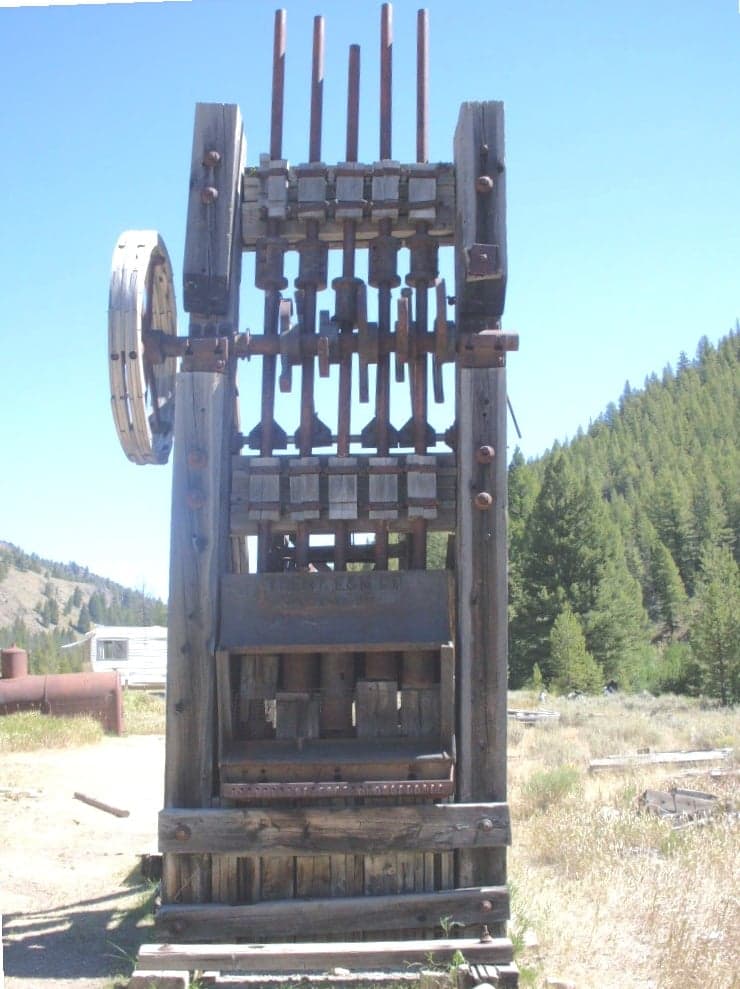
Photo: Wikipedia
Personal Sovereignty in Custer County
Moderate friction. Expect trade-offs in some aspect of personal liberty and independence.
What does Personal Sovereignty tell us?
Personal Sovereignty measures your capacity for self-reliance and independence with minimal government friction. Higher scores mean fewer barriers between you and the way you want to live... but it assumes you have the space you need and good neighbors.
What does this tell us?
Personal Sovereignty measures your capacity for self-reliance and independence with minimal government friction. Higher scores mean fewer barriers between you and the way you want to live... but it assumes you have the space you need and good neighbors.
State Policy
Energy independence: Importer (25% of energy produced in-state)
Personal Liberty
Homesteading

Personal Liberty Analysis
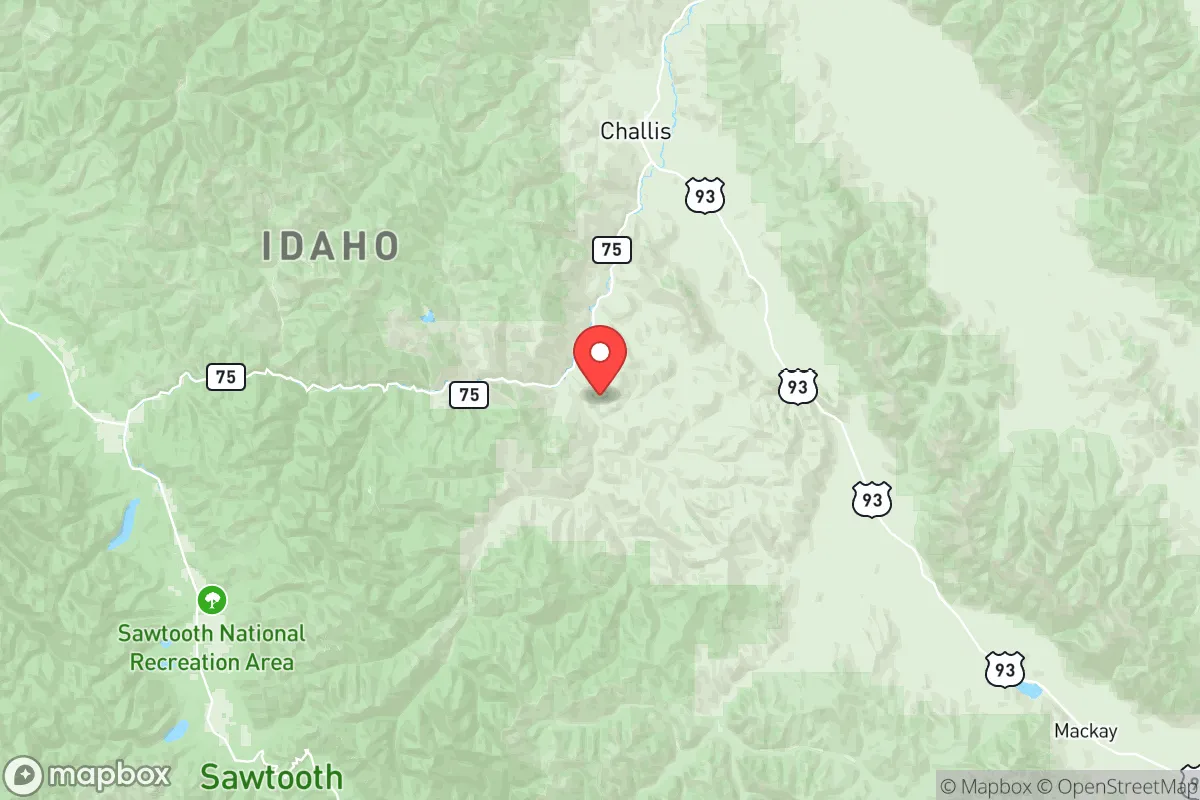
Custer County, Idaho, offers one of the most robust environments for personal sovereignty in the lower 48 states, where state-level preemption of local control and a deeply ingrained culture of self-reliance create a legal and social atmosphere that prioritizes individual autonomy. The county’s regulatory posture is among the lightest in the nation, with minimal zoning, no building codes in unincorporated areas, and a tax burden that ranks among the lowest in the country. For a relocation-minded individual or family who values the ability to live, work, and defend themselves with minimal government interference, Custer County presents a compelling case, though the practical realities of its remote, high-elevation geography demand a high degree of personal capability and preparation.
Tax burden and regulatory posture: How Custer County compares to other Idaho counties
Idaho’s state-level framework already favors low taxation and limited regulation, and Custer County leans even further into that ethos. The county’s property tax rate is among the lowest in Idaho, with a 2024 effective rate of roughly 0.55% of assessed value, well below the state average of 0.72%. There is no county-level sales tax, and Idaho’s flat state income tax of 5.8% (as of 2025) is moderate but not burdensome. The regulatory environment is defined by what is absent: unincorporated areas like Challis, Stanley, and Mackay have no county-wide building codes, no zoning ordinances, and no mandatory septic inspections for single-family homes. This means a landowner can build a cabin, a workshop, or a fence without permits or inspections, provided they are not within the limited city limits of those towns. The city of Clayton, a tiny hamlet of fewer than 10 permanent residents, has no municipal code at all. The county’s planning and zoning department is minimal, with a staff of two, and its primary role is administering state-mandated subdivision regulations. For a reader who chafes at permit fees, inspection delays, and use restrictions, Custer County’s regulatory posture is as close to a blank slate as exists in the contiguous United States.
Self-defense and gun law specifics: What the Second Sanctuary designation means for residents
Custer County is a Second Amendment Sanctuary, with a 2021 resolution affirming that county resources will not be used to enforce federal firearms laws deemed unconstitutional. Idaho is a constitutional carry state, meaning no permit is required to carry a concealed firearm for anyone 18 or older who can legally possess a firearm. The county sheriff’s office, based in Challis, is explicitly pro-Second Amendment and has stated publicly that it will not enforce federal red flag laws or magazine capacity bans. There are no county-level firearm registration requirements, no waiting periods, and no restrictions on magazine capacity or firearm types. The practical effect is that a resident can purchase a rifle, shotgun, or handgun from a private seller with no background check, carry it openly or concealed without a permit, and use it in self-defense under Idaho’s Stand Your Ground law, which has no duty to retreat in any place where the person is lawfully present. The closest gun ranges are in Challis and Mackay, both informal BLM-land setups. For a reader who prioritizes the right to self-defense without bureaucratic hurdles, Custer County’s legal environment is among the most permissive in the nation.
Self-reliance and homesteading viability: Lot sizes, zoning, and off-grid feasibility in Challis, Stanley, and Mackay
Homesteading and off-grid living are not just possible in Custer County—they are the norm. Unincorporated areas have no minimum lot size for residential use, meaning a person can buy a 1-acre parcel or a 160-acre ranch and build without county interference. The city of Stanley, a tourist gateway to the Sawtooth National Recreation Area, has slightly more restrictive zoning within its 1.5-square-mile limits, but even there, off-grid systems like solar panels, composting toilets, and rainwater collection are explicitly allowed. Challis, the county seat, has no zoning at all outside its small city limits, and the county’s subdivision ordinance only kicks in when a parcel is split into five or more lots. Mackay, a former mining town, has a similar hands-off approach, with no building codes and no requirement for connection to municipal water or sewer. The practical challenges are not regulatory but environmental: the county sits at 5,000 to 7,000 feet elevation, with a short growing season (60-90 days) and heavy winter snowpack. Solar power is viable but requires battery storage for the long, cloudy winters. Well drilling is common, with depths of 100-400 feet, and costs around $15-25 per foot. For a reader who wants to live off-grid with minimal government oversight, Custer County offers a legal framework that is nearly frictionless, but the physical demands are significant.
Personal liberties: Parental rights, medical autonomy, speech, and property rights in practice
Idaho’s legal framework strongly supports parental rights, medical autonomy, and property rights, and Custer County’s local culture reinforces these values. The state’s Parental Rights Act (2022) gives parents the explicit right to direct their children’s education, healthcare, and religious upbringing, and the county’s school districts in Challis and Mackay have not adopted any curriculum or policies that conflict with that. Medical autonomy is protected by Idaho’s Health Care Freedom Act, which prohibits any mandate requiring individuals to participate in a health plan or treatment. The county has no local mask mandates, vaccine requirements, or health orders beyond state law. Property rights are robust: there is no county-wide eminent domain beyond state-defined utility corridors, and the county assessor’s office is known for conservative valuations that keep tax bills low. Free speech is protected by the Idaho Constitution, which has stronger protections than the First Amendment in some areas, and the county has no local ordinances restricting signs, leafleting, or public assembly. The only notable limitation is that the county’s remote nature means that exercising these rights often requires self-sufficiency—there is no public defender’s office in the county, and the nearest federal courthouse is in Boise, 150 miles away.
Overall, Custer County’s personal sovereignty environment is among the most permissive in the United States, rivaled only by a handful of counties in Alaska, Montana, and Nevada. The combination of no building codes, no zoning in unincorporated areas, constitutional carry, a Second Amendment Sanctuary designation, and strong state-level protections for parental and medical rights creates a legal landscape where individual autonomy is the default. The trade-off is that this freedom comes with a high degree of personal responsibility: the county has no hospital, no urgent care, and no public transportation, and the nearest major airport is in Boise, a 3-hour drive from Challis. For a reader who values the ability to live without government interference and is willing to accept the logistical challenges of a remote, high-elevation environment, Custer County offers a sovereignty profile that is difficult to match elsewhere in the lower 48.

* Values derived from national, state, county, city and local statistics and may differ in a specific area. Last updated: 2026-07-23T00:38:57.000Z
Narrative content on this page is AI-generated and may contain mistakes. Verify any details that matter before acting on them.
ReloMaps may earn a commission from affiliate links at no extra cost to you.

