
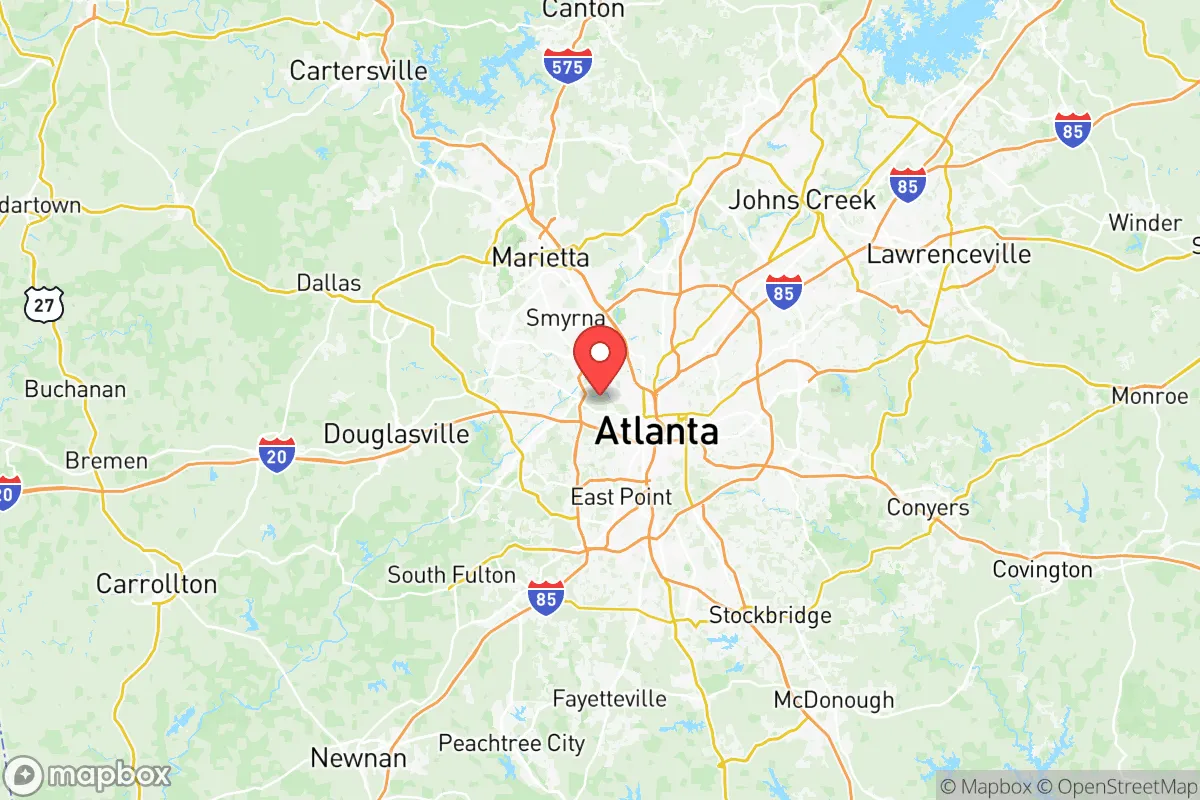
Photo: Wikipedia
Quality of Life in Fulton County
A livable area that tracks near national norms for affordability, walkability, and neighborhood health.
What does Quality of Life tell us?
Quality of Life measures an area by evaluating factors like cost of living, nearby amenities, country club access, airport proximity, socioeconomic signals and neighborhood character. For large states, this is a general average — quality of life can vary dramatically between metro areas, suburbs, and rural communities within the same state.
What does this tell us?
Quality of Life measures an area by evaluating factors like cost of living, nearby amenities, country club access, airport proximity, socioeconomic signals and neighborhood character. For large states, this is a general average — quality of life can vary dramatically between metro areas, suburbs, and rural communities within the same state.
Cost of Living
46% above national average
74%
The Real Cost of Living in Fulton County for 2026
| Tier | Individual | Family (4) |
|---|---|---|
| Survival | $26k | $49k |
| Comfortable | $84k | $123k |
| Luxury | $165k+ | $256k+ |
| Elite (Top 5%) | $256k+ | $397k+ |
Quality-of-Life Analysis
Fulton County, Georgia, offers one of the most dramatic quality-of-life spectrums in the Atlanta metro area, ranging from the dense urban core of Atlanta proper to quiet, unincorporated rural pockets near the Chattahoochee River. The county’s character shifts block by block: high-rise condos in Midtown, historic bungalows in East Point, horse farms in the far south near Palmetto, and lakefront estates in the northern reaches of Milton. This diversity draws a wide range of residents — from young professionals and corporate transplants seeking walkable city life to families and retirees looking for land, lower density, and a slower pace — all within the same county lines.
Largest town(s) & population centers
The city of Atlanta dominates Fulton County as its economic and cultural engine, with a population exceeding 500,000 within the county portion. Daily life in Atlanta proper is defined by walkable neighborhoods like Midtown, Buckhead, and Old Fourth Ward, where residents rely on MARTA rail, bike lanes, and ride-share for commutes. The average commute across the county is 28 minutes, but that figure masks a wide range: a Buckhead resident commuting to Midtown might spend 15 minutes, while a south Fulton resident driving to Hartsfield-Jackson Airport or downtown Atlanta can easily hit 45 minutes. Outside Atlanta, the largest incorporated cities are Sandy Springs (pop. ~108,000) and Roswell (pop. ~94,000), both offering suburban lifestyles with their own downtown districts, top-rated schools, and access to the Chattahoochee River National Recreation Area. Sandy Springs feels like a self-contained edge city with high-rise offices and luxury apartments, while Roswell retains a historic small-town core with antebellum homes and a vibrant restaurant scene along Canton Street.
Smaller towns & rural pockets
Fulton County’s southern half contains several smaller towns and unincorporated communities that feel worlds apart from the urban north. East Point (pop. ~38,000) and College Park (pop. ~14,000) are historic railroad towns with bungalow-lined streets, a growing arts scene, and proximity to Hartsfield-Jackson Airport. Further south, Union City (pop. ~23,000) and Fairburn (pop. ~17,000) offer more affordable housing stock and a quieter, family-oriented atmosphere. The most rural pockets lie in the far southwest, near the communities of Palmetto and Chattahoochee Hills. Chattahoochee Hills, incorporated in 2007, is a deliberately rural city with a population under 3,000, where zoning protects farmland, horse trails, and the 1,200-acre Cochran Mill Park. Here, residents live on acreage, commute to Atlanta for work, and enjoy a lifestyle closer to the county’s pre-1990s character.
Cost & lifestyle range
The cost of living in Fulton County is 46% above the national average (COL index 146), but this figure flattens a steep internal gradient. At the high end, Buckhead and Milton (north Fulton) command median home values well above the county’s $431,200 average, with many properties exceeding $1 million. Rents in these areas often surpass $2,500 for a two-bedroom apartment. At the lower end, College Park and Union City offer median home values closer to $250,000–$300,000, and the countywide median rent of $1,635 is achievable in older apartment complexes in south Fulton. Lifestyle amenities vary accordingly: north Fulton residents have access to the upscale Avalon mixed-use development in Alpharetta (just over the county line), the Chattahoochee River trails, and top-tier private schools. South Fulton residents rely on the Camp Creek Marketplace retail corridor, the Georgia International Convention Center, and the expanding film studio complexes at Pinewood Atlanta (now Trilith) in nearby Fayetteville. Public transit access is strongest in the Atlanta core and along the MARTA rail lines that extend to Sandy Springs and the airport; south Fulton’s unincorporated areas have limited bus service, making car ownership essential.
Fulton County is best suited for residents who value proximity to a major urban center but want the flexibility to choose their own density level — from a high-rise in Midtown to a five-acre homestead in Chattahoochee Hills. The county works well for professionals who can afford the elevated cost of living in the north, and for families or commuters willing to trade longer drives for more space and lower housing costs in the south. It is less ideal for those seeking a truly low-cost rural lifestyle or a single, cohesive community identity, as the county’s vast size and economic disparities create very different daily realities depending on which side of Interstate 285 you call home.

Crime in Fulton County
Generally safer than 56% of comparable U.S. locations.
Violent CrimeViolent Crime Analysis
Property CrimeProperty Crime Analysis
Crime Analysis
Fulton County, Georgia, presents a complex safety landscape shaped by the contrast between its urban core and affluent suburbs. With a violent crime rate of 262 per 100,000 residents and a property crime rate of 1,236.6 per 100,000, the county sits above both the Georgia state average and the national median. These figures are heavily influenced by conditions in Atlanta, the county seat and largest city, while communities like Sandy Springs, Roswell, and Alpharetta report significantly lower crime rates. The county’s progressive judicial leadership, including District Attorney Fani Willis, has drawn criticism for policies that some argue prioritize offender rehabilitation over public safety, contributing to recidivism and a perception of leniency.
Crime in context
Fulton County’s violent crime rate of 262 per 100,000 is roughly 25% higher than the national average of 210 per 100,000, while its property crime rate of 1,236.6 per 100,000 exceeds the national figure of 1,100 per 100,000. Compared to Georgia as a whole, Fulton’s violent crime rate is about 15% higher than the state average of 228 per 100,000. Property crime in the county is also elevated, driven largely by auto theft and larceny in high-traffic areas like downtown Atlanta and the Buckhead district. By contrast, the northern suburbs—particularly Alpharetta and Milton—report violent crime rates below 100 per 100,000, placing them among the safest cities in Georgia. The disparity underscores how a single county can contain both high-risk urban zones and low-crime residential enclaves.
What residents experience
Residents’ daily safety experience varies dramatically by location. In Atlanta’s core neighborhoods—such as Old Fourth Ward, Vine City, and Bankhead—violent crime, including aggravated assault and robbery, is a persistent concern. Property crime, especially vehicle break-ins and package theft, is common even in midtown areas. In contrast, residents of Sandy Springs and Roswell report far fewer incidents, with community policing and private security contributing to a sense of safety. The county’s judicial environment, marked by a progressive district attorney’s office that has declined to prosecute certain low-level offenses and pushed for reduced sentences, has been a point of contention. Critics argue this approach has emboldened repeat offenders, particularly in Atlanta’s transit corridors and commercial districts. For families and professionals, the choice of neighborhood within Fulton County is often the single most important factor in determining personal safety.
Neighborhood-level variation
Fulton County’s 14 municipalities and unincorporated areas create a patchwork of safety outcomes. Atlanta accounts for roughly 70% of the county’s violent crime, with hotspots concentrated along the MARTA rail lines and near major highways like I-75/85 and I-20. College Park, near Hartsfield-Jackson Airport, also reports elevated property crime rates tied to transient populations. Meanwhile, Alpharetta and Milton in the northern reaches consistently rank among Georgia’s safest cities, with violent crime rates below 50 per 100,000. Union City and Fairburn in the south fall in the middle, with moderate property crime but lower violent crime than Atlanta. For prospective residents, consulting precinct-level crime maps and speaking with local police departments is essential, as block-by-block conditions can shift sharply within a single ZIP code. The county’s progressive policies, while well-intentioned, have not yet produced measurable reductions in overall crime, leaving many residents to rely on private security measures and neighborhood watch programs for peace of mind.
* Values derived from national, state, county, city and local statistics and may differ in a specific area. Last updated: 2026-07-08T02:38:01.000Z
Narrative content on this page is AI-generated and may contain mistakes. Verify any details that matter before acting on them.
ReloMaps may earn a commission from affiliate links at no extra cost to you.

