
Photo: Wikipedia
Personal Sovereignty in Fulton County
Viable for self-reliance. Generally workable, though some barriers may limit total independence.
What does Personal Sovereignty tell us?
Personal Sovereignty measures your capacity for self-reliance and independence with minimal government friction. Higher scores mean fewer barriers between you and the way you want to live... but it assumes you have the space you need and good neighbors.
What does this tell us?
Personal Sovereignty measures your capacity for self-reliance and independence with minimal government friction. Higher scores mean fewer barriers between you and the way you want to live... but it assumes you have the space you need and good neighbors.
State Policy
Energy independence: Importer (12% of energy produced in-state)
Personal Liberty
Homesteading

Personal Liberty Analysis
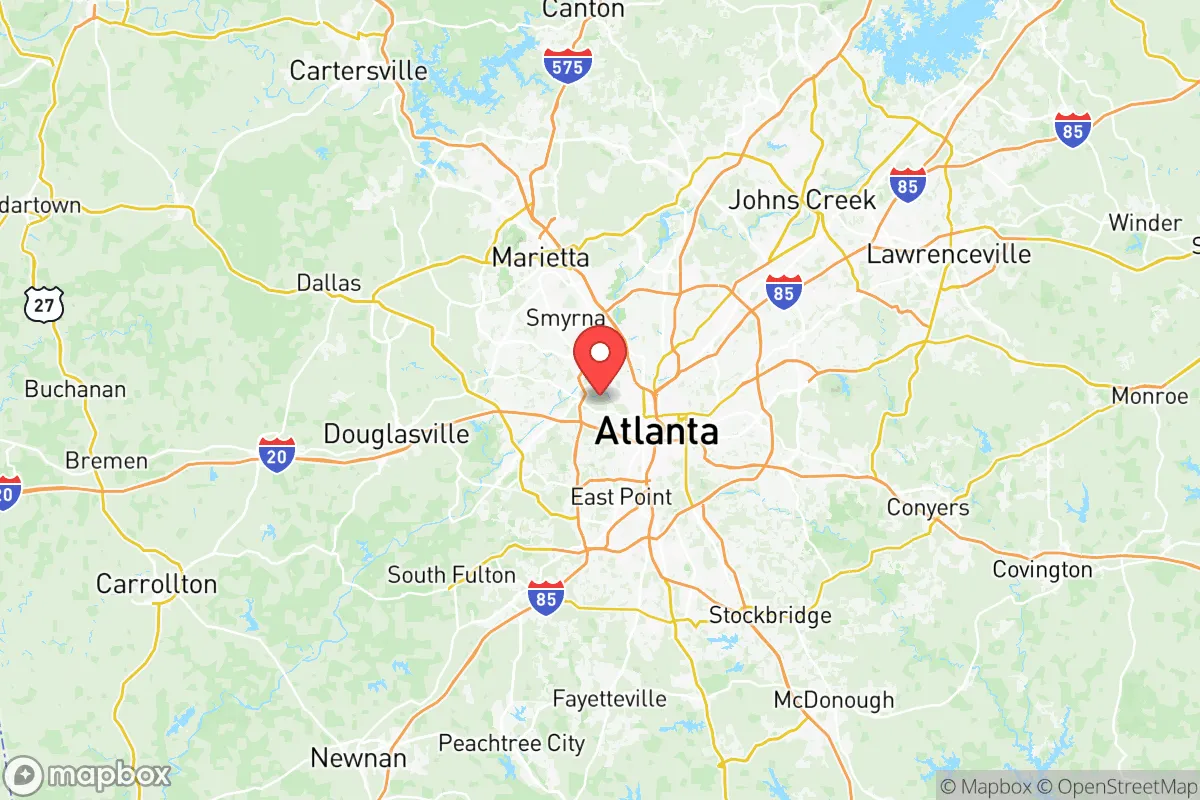
Fulton County, Georgia presents a complex personal sovereignty landscape where state-level protections for gun rights and parental authority coexist with a dense, heavily regulated urban core that can feel restrictive to those prioritizing independence. The autonomy environment varies dramatically within the county's 534 square miles, from the high-tax, high-regulation City of Atlanta to more permissive unincorporated areas and smaller towns like Alpharetta, Roswell, and Sandy Springs, each with its own local ordinances and enforcement culture. For a relocation-minded individual or family weighing personal freedom, the key is understanding that Fulton County is not a monolith — your experience of sovereignty will depend heavily on which specific jurisdiction you choose to call home.
Tax burden and regulatory posture across Fulton County
Fulton County carries a relatively heavy tax burden compared to surrounding counties like Cherokee or Forsyth, with a combined state and local sales tax rate of 8.9% in most areas and property tax rates that rank among the highest in Georgia. The county's total millage rate for unincorporated areas hovers around 31 mills, though this varies by city — Alpharetta and Johns Creek have slightly lower rates due to their own municipal services, while Atlanta's city taxes add significant additional millage. The regulatory posture is decidedly mixed: Georgia's state-level business climate is friendly, with a flat 5.39% corporate income tax and no state property tax, but Fulton County imposes its own layers of permitting, zoning, and occupational tax requirements that can feel burdensome. For example, starting a home-based business in unincorporated Fulton requires a business license and may trigger zoning compliance reviews, whereas in more rural areas of the state the process is often simpler. The county also enforces strict stormwater management and tree protection ordinances that can increase development costs and limit property use, particularly in the northern suburbs like Roswell and Sandy Springs.
Self-defense and gun law specifics in Fulton County
Georgia is a "constitutional carry" state as of 2022, meaning law-abiding adults 21 and older can carry a handgun openly or concealed without a permit anywhere in the state, including Fulton County. However, local implementation matters: the City of Atlanta has a history of more aggressive enforcement of weapons-related ordinances, and certain public spaces like the Hartsfield-Jackson Atlanta International Airport, MARTA transit stations, and government buildings are off-limits to firearms regardless of state law. Fulton County itself issues weapons carry licenses (WCLs) for those who want reciprocity with other states, and the process is shall-issue — the sheriff's office must approve applicants who meet state requirements. Stand-your-ground laws apply statewide, and there is no duty to retreat in any place where a person is lawfully present. That said, gun owners should be aware that Fulton County's dense population means more frequent encounters with law enforcement, and the political climate in Atlanta proper leans strongly toward firearm restrictions, with city council members occasionally proposing local ordinances that test the limits of state preemption laws. For those who prioritize gun rights, the northern Fulton cities like Milton and Alpharetta tend to have a more gun-friendly culture and less scrutiny from local authorities than inside the Atlanta perimeter.
Self-reliance and homesteading viability across Fulton County
Homesteading and off-grid living are challenging within Fulton County due to high land costs, restrictive zoning, and urban density, but viability varies significantly by location. Minimum lot sizes in unincorporated Fulton are typically one acre in the northern rural-residential zones, but many areas require larger parcels — for example, parts of the Chattahoochee Hill Country area in southwest Fulton allow lots as small as one acre but require adherence to strict conservation subdivision ordinances. The City of Atlanta and most inner suburbs like East Point and College Park have minimum lot sizes of 5,000 to 7,500 square feet, making serious homesteading impractical. Raising backyard chickens is legal in many Fulton County cities, including Atlanta (with a permit and limit of four hens), but livestock like goats or pigs are prohibited in most residential zones. Off-grid systems face significant hurdles: the county requires connection to municipal water and sewer where available, and solar panel installations must comply with building codes and HOA restrictions that are common in subdivisions. For those serious about self-reliance, the more rural pockets of south Fulton near Palmetto and the northern exurban fringe of Milton offer the best prospects, with larger parcels, fewer HOAs, and more lenient enforcement of agricultural activities — though even there, full off-grid independence is rare due to county health department requirements for septic systems and well water permits.
Personal liberties: parental rights, medical autonomy, speech, and property
Georgia law provides strong state-level protections for parental rights, including a 2022 law that allows parents to opt their children out of mask mandates and curriculum materials they find objectionable, and Fulton County schools generally comply with these provisions. Medical autonomy is more constrained within the county limits: while Georgia has no state-level vaccine passport mandate, Fulton County's health department and major hospital systems like Emory and Northside have their own vaccination policies that can affect access to care. The county's COVID-era mask and business restrictions were among the most stringent in the state, reflecting the political leanings of the Atlanta metro area. Free speech is protected under the First Amendment, but Fulton County's public spaces are subject to time, place, and manner restrictions that can limit demonstrations and leafleting in certain areas like the state capitol grounds and MARTA stations. Property rights are generally strong under Georgia law, but Fulton County's zoning and land-use regulations are more extensive than in rural counties — for instance, short-term rental properties like Airbnb are heavily regulated in Atlanta and many suburbs, requiring business licenses and occupancy limits. Homeowners associations are prevalent in Fulton County subdivisions, particularly in the northern cities, and their covenants can restrict everything from fence height to paint colors, which may feel intrusive to those accustomed to more rural autonomy.
Overall, personal sovereignty in Fulton County is best described as a trade-off: you gain access to Georgia's state-level protections for gun rights, parental authority, and property rights, but you operate within one of the most heavily regulated and taxed county governments in the state. For a conservative-leaning individual or family, the northern cities of Milton, Alpharetta, and Johns Creek offer the most favorable balance of low crime, good schools, and lighter local regulation, while the southern and western parts of the county near Palmetto and Union City provide more land and space at the cost of fewer services. Compared to deeply conservative and lightly regulated areas like Pickens County or Harris County, Fulton will feel restrictive; compared to similarly urbanized counties like DeKalb or Cobb, it is roughly comparable. The key takeaway is that Fulton County rewards careful neighborhood selection — your sovereignty experience will be shaped more by your specific city or HOA than by the county as a whole.

* Values derived from national, state, county, city and local statistics and may differ in a specific area. Last updated: 2026-07-08T02:38:01.000Z
Narrative content on this page is AI-generated and may contain mistakes. Verify any details that matter before acting on them.
ReloMaps may earn a commission from affiliate links at no extra cost to you.

