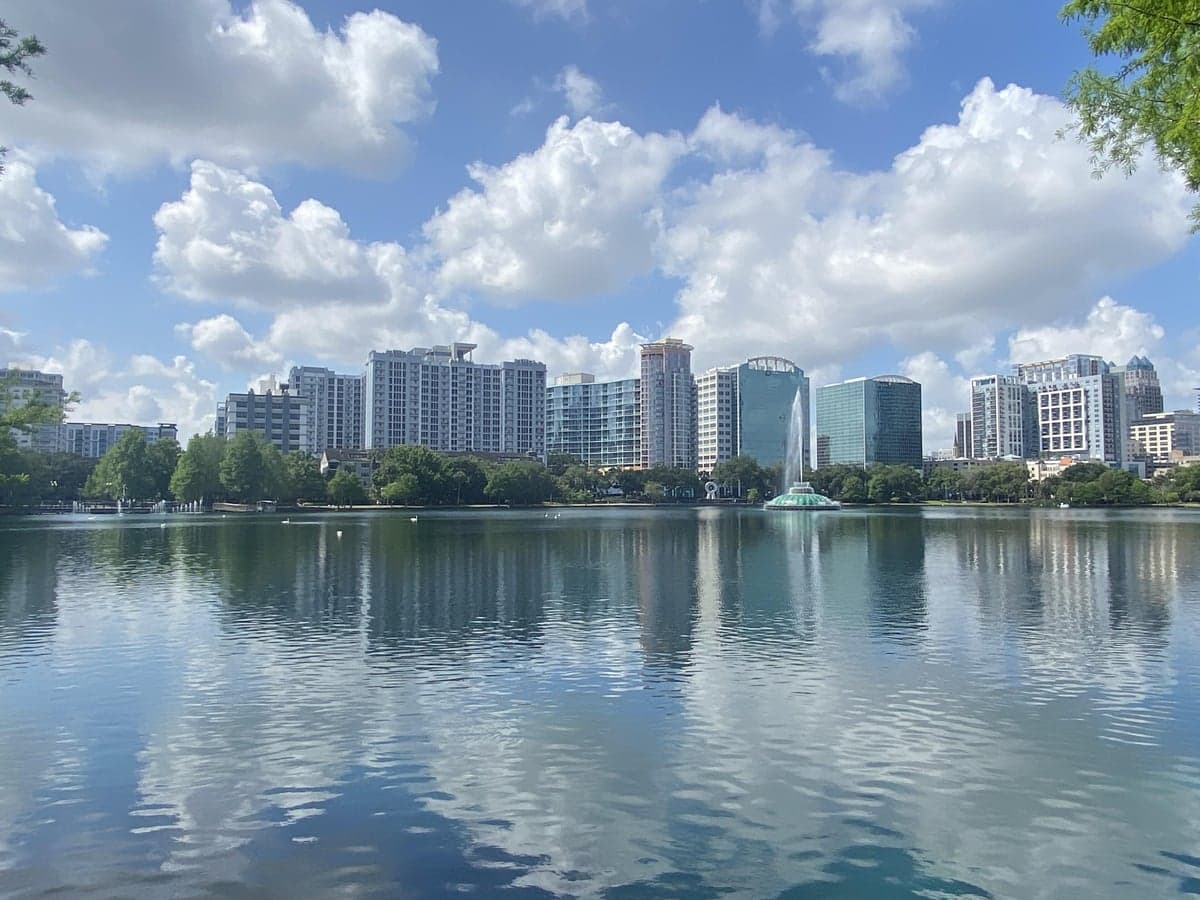
Photo: Wikipedia
Political ClimatePolitical Climate in Orange County
Showing district-level results — no local-only data available.
Local Political AnalysisPolitical Analysis of Orange County
Look, I’ve lived in Orange County my whole life, and I’ve watched it go from a place where you could just live your life without a lot of fuss to a place where the politics are getting harder to ignore. The Cook PVI here is D+4, which means the county leans Democrat by a moderate margin, but that’s a relatively recent shift. Ten, fifteen years ago, this was a swing county—you’d see a pretty even split in local races. Now, especially since the 2020 election, the progressive energy has really taken over the county commission and school board, and it’s not subtle. The trajectory is clearly leftward, and for those of us who value personal freedoms—like not having government tell you what to do with your property, your business, or your kids—that’s a real concern.
How it compares
Here’s the thing: Orange County is a blue island in a red state. The rest of Florida, FL, has a Cook PVI of R+5, meaning the state as a whole leans Republican by a solid margin. So you’ve got a real cultural and political split. Inside Orange County, the variation is stark. The city of Orlando itself is deep blue—think downtown, the Milk District, and College Park. But drive 20 minutes west to Ocoee or Winter Garden, and you’ll find precincts that vote reliably red. Apopka in the north is a mixed bag, with some swing precincts around the Wekiva area where local races can go either way. The southeastern part of the county, around Lake Nona, is trending blue as more young professionals move in, but it’s still more moderate than downtown. So while the county as a whole is D+4, your experience depends heavily on which side of the 408 you live on.
What this means for residents
For a conservative or even a moderate, living here means you’re constantly dealing with policies that feel like government overreach. The county commission has pushed through zoning changes that make it harder to run a small business out of your home, and the school board has embraced curriculum changes that prioritize social activism over core academics. Property taxes are high—around 1.1% of assessed value—and they keep going up to fund new programs you might not agree with. If you value personal freedom, like the right to choose your own healthcare or to send your kid to a school that matches your values, you’ll feel the squeeze. The local government is also aggressive on environmental regulations, which sounds good until they tell you what kind of grass you can plant or how many trees you can remove on your own land.
On the cultural side, Orange County is becoming more diverse and more urban, which brings both good and bad. The food scene is incredible, and there’s always something to do. But the progressive politics are seeping into everyday life—things like mask mandates that lasted longer than necessary, or vaccine passport talk that thankfully got shot down at the state level. The state government in Tallahassee often steps in to block the county’s more extreme ideas, like when the governor banned local vaccine mandates. That’s a relief, but it also means constant friction between local and state officials. If you’re looking for a place where government stays out of your way, Orange County is not that place anymore. But if you can find a pocket like Ocoee or Winter Garden, you can still carve out a life that feels a lot more like the Florida you remember.

State Political ClimatePolitical Climate in Florida
State Political AnalysisPolitical Environment in the State
Florida is a solidly Republican-leaning state with a Cook PVI of R+5, but don’t let that single number fool you—it’s a political battleground that has shifted dramatically over the past two decades. The state went from a classic purple swing state that decided the 2000 election by 537 votes to a reliable red stronghold, driven by a massive influx of conservative-leaning transplants from the Northeast and Midwest, as well as a growing Hispanic electorate that has moved right on economic and cultural issues. The dominant coalition is a mix of suburban families, rural conservatives, and a significant bloc of Cuban-American and Venezuelan-American voters in South Florida who prioritize anti-socialism and economic freedom. Over the last 10-20 years, the trajectory has been unmistakably redward, with Republicans now holding supermajorities in both chambers of the legislature and a trifecta in state government.
Urban vs. rural divide
The political map of Florida is a textbook study in the urban-rural split, but with a few unique twists. The major metros—Miami-Dade, Broward (Fort Lauderdale), and Palm Beach County—are the Democratic strongholds, with Miami-Dade being the most interesting case. Once a reliably Republican county thanks to Cuban-American voters, it has shifted left in presidential races due to younger, more progressive Hispanic voters, though it still elects conservative mayors and sheriffs. Meanwhile, the I-4 corridor, which runs through Tampa, Orlando, and Daytona Beach, is the classic swing region where statewide elections are won or lost. Tampa’s Hillsborough County and Orlando’s Orange County are blue-leaning, but the surrounding suburbs like Lakeland (Polk County) and Ocala (Marion County) are deep red. The Panhandle, from Pensacola to Tallahassee, is overwhelmingly conservative, with rural counties like Liberty and Calhoun routinely voting 80%+ Republican. The biggest shift has been in Southwest Florida—Lee County (Fort Myers) and Collier County (Naples) have gone from purple to deep red as retirees and families fleeing high-tax states have poured in. The Villages, a massive retirement community in Sumter County, is a political phenomenon in itself, with precincts regularly voting 70-80% Republican and serving as a bellwether for the state’s older conservative base.
Policy environment
Florida’s policy environment is a dream for conservatives who value limited government and personal freedom, at least compared to states like New York or California. There is no state income tax, which is the single biggest draw for relocating families and businesses. The regulatory posture is business-friendly, with a right-to-work law and minimal red tape for entrepreneurs. On education, Governor Ron DeSantis signed the Parental Rights in Education Act (HB 1557) in 2022, which prohibits classroom instruction on sexual orientation and gender identity in K-3, and the state has expanded school choice through the Family Empowerment Scholarship program, giving parents taxpayer-funded options for private or homeschool. Healthcare policy is mixed—Florida did not expand Medicaid under Obamacare, keeping the state’s budget lean, but it also has high private insurance costs. Election laws have been tightened with SB 90 (2021), requiring voter ID, limiting drop boxes, and restricting third-party ballot collection, which conservatives argue protects election integrity. The state also has a Castle Doctrine and Stand Your Ground law, which are strong protections for self-defense. However, there are areas of concern for liberty-minded residents: property taxes are relatively high (no income tax means the burden falls on property), and homeowners associations (HOAs) have broad power, which can feel like a mini-government in many suburban communities.
Trajectory & freedom
Florida is becoming more free in several key areas, but the trajectory is not without warning signs for those who prize individual liberty. The most significant expansion of freedom came with the passage of the Constitutional Carry law (HB 543) in 2023, which allows law-abiding adults to carry a concealed firearm without a permit—a major win for Second Amendment advocates. The state also passed the Individual Freedom Act (HB 7) in 2022, which restricts critical race theory in schools and workplaces, protecting free speech from compelled ideological training. On medical freedom, DeSantis signed a ban on COVID-19 vaccine mandates for private employers and government entities, and the state has aggressively fought federal mandates. However, there are concerning trends: the state has expanded its power to punish local governments that pass their own gun control or sanctuary city ordinances, which some see as a necessary check on local overreach but others view as a consolidation of state power. The biggest red flag for personal freedom is the state’s aggressive use of HB 1 (2023), which allows the governor to remove elected state attorneys who refuse to enforce certain laws—a move that critics argue undermines local democratic control. For a new resident, the overall direction is positive on economic and cultural freedom, but the state’s willingness to centralize power in Tallahassee should be watched closely.
Civil unrest & political movements
Florida has seen its share of political flashpoints, but the level of civil unrest is relatively low compared to states like Oregon or Minnesota. The most visible movements are on the right, with groups like Moms for Liberty gaining national attention for their school board activism, particularly in counties like Brevard and Sarasota, where they have successfully flipped school boards to conservative majorities. On the left, the Dream Defenders and other activist groups have organized protests in Tallahassee and Miami over racial justice issues, but these have been smaller and less disruptive than in other states. Immigration politics are a major flashpoint, especially in South Florida, where the state has bused migrants to sanctuary cities like Martha’s Vineyard and Sacramento as a protest against federal border policy. The state has also passed the Anti-Sanctuary City Law (SB 168), which requires local law enforcement to cooperate with ICE—a policy that has caused tension in Miami-Dade, which previously had a limited cooperation policy. Election integrity remains a hot-button issue, with the state conducting a high-profile investigation into voter fraud in 2022 that resulted in a few arrests but no widespread evidence of fraud. For a new resident, the political climate is passionate but generally civil—you’ll see plenty of yard signs and bumper stickers, but rarely the street-level chaos of Portland or Seattle.
Projection
Over the next 5-10 years, Florida is likely to become even more conservative as the demographic trends that have driven its red shift continue. The state is adding roughly 1,000 new residents per day, and the vast majority are coming from high-tax, high-regulation states like New York, New Jersey, and California. These transplants are not the progressive urbanites you might expect—they are often middle-class families, retirees, and small business owners who are fleeing the policies they disagree with. The Hispanic vote is also trending right, particularly among Venezuelan and Nicaraguan communities in Doral and Hialeah, who are deeply skeptical of socialism and have become a reliable Republican constituency. The biggest wildcard is climate change and insurance costs—if property insurance premiums continue to skyrocket (they have already doubled in some coastal areas), it could slow in-migration and create economic pressure that shifts the political conversation. But for now, the state is on a trajectory to become more like Texas: a deep red state with a booming economy, strong cultural conservatism, and a government that is willing to use its power to enforce those values. Someone moving in now should expect to find a state that is increasingly aligned with traditional conservative principles, but also one where the government is not shy about telling local communities what to do.
For a new resident, the bottom line is this: Florida offers a rare combination of low taxes, strong gun rights, parental control in education, and a growing economy that makes it one of the most attractive destinations for conservatives. But it is not a libertarian paradise—the state has high property taxes, powerful HOAs, and a government that is willing to override local control when it sees fit. If you value personal freedom and want to live in a place where your vote actually counts toward a conservative majority, Florida is a solid bet. Just be prepared for the humidity, the hurricanes, and the occasional political drama in Tallahassee.
* Values derived from national, state, county, city and local statistics and may differ in a specific area. Last updated: 2026-05-08T23:18:01.000Z
Narrative content on this page is AI-generated and may contain mistakes. Verify any details that matter before acting on them.
ReloMaps may earn a commission from affiliate links at no extra cost to you.

