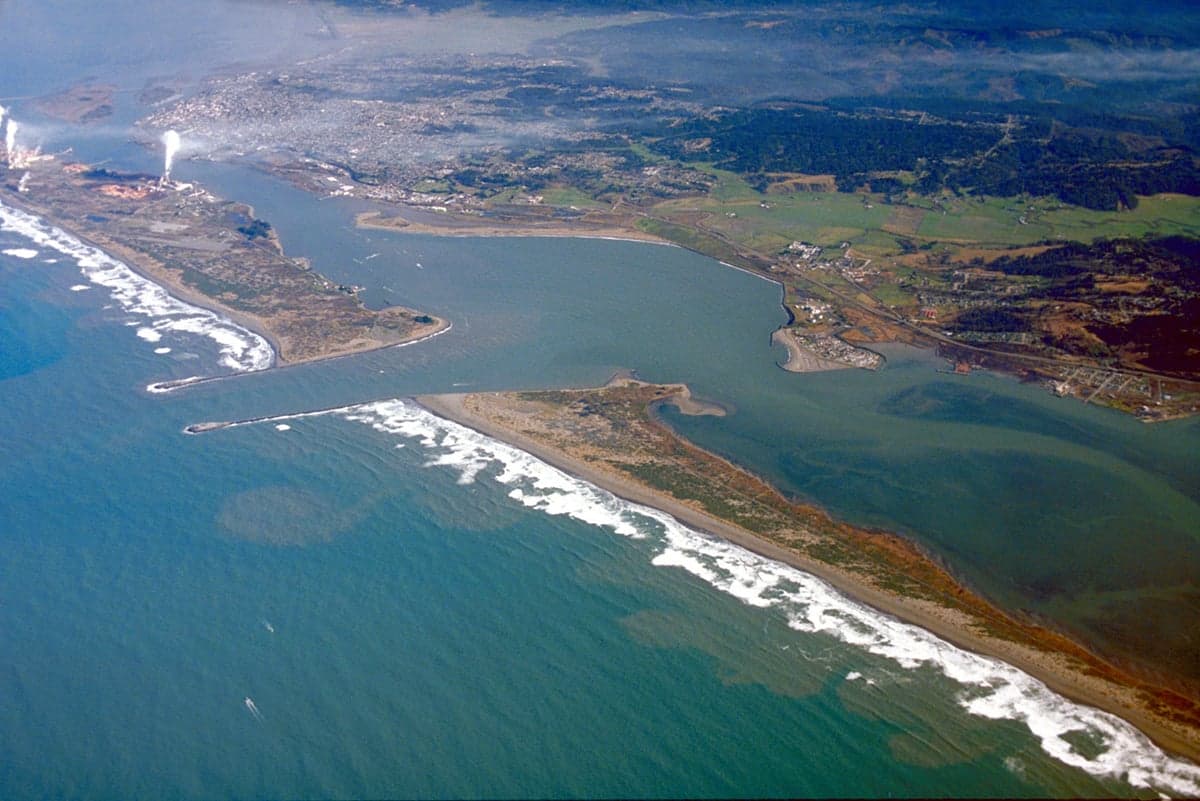
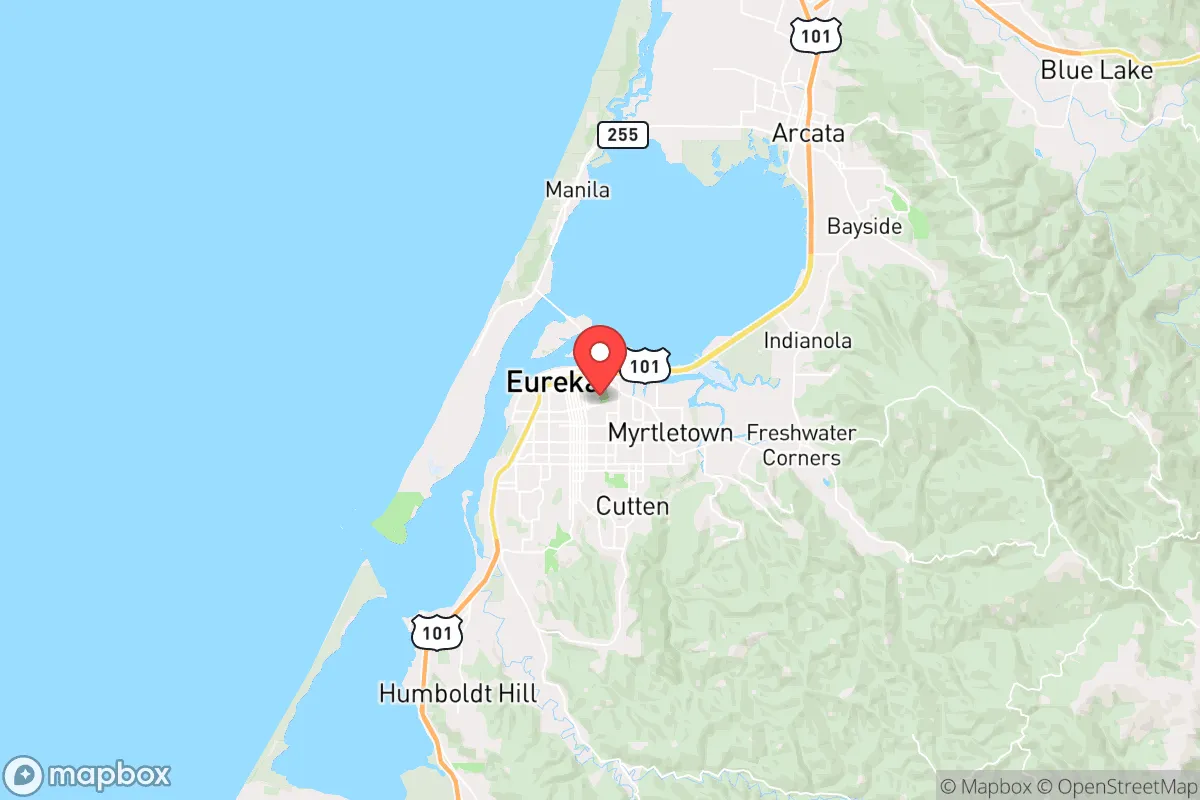
Photo: Wikipedia
Personal Sovereignty in Eureka, CA
Viable for self-reliance. Generally workable, though some barriers may limit total independence.
What does Personal Sovereignty tell us?
Personal Sovereignty measures your capacity for self-reliance and independence with minimal government friction. Higher scores mean fewer barriers between you and the way you want to live... but it assumes you have the space you need and good neighbors.
What does this tell us?
Personal Sovereignty measures your capacity for self-reliance and independence with minimal government friction. Higher scores mean fewer barriers between you and the way you want to live... but it assumes you have the space you need and good neighbors.
State Policy
Energy independence: Importer (33% of energy produced in-state)
Personal Liberty
Homesteading

Personal Liberty Analysis
Eureka, California, presents a complex sovereignty picture: the state’s heavy regulatory hand and tax structure sit in direct tension with the region’s remote geography, low population density, and a deeply ingrained frontier culture of self-reliance. For a relocation-minded individual or family weighing personal freedom, the analysis here is not about finding a libertarian enclave, but about understanding how much autonomy can be carved out within a high-burden state framework. The practical reality is that Humboldt County’s isolation and economic independence from Sacramento create more de facto personal latitude than the state’s statute books would suggest, but that latitude comes with significant financial and legal costs.
How the tax burden and regulatory climate shape daily autonomy
California’s tax burden is the single largest constraint on personal sovereignty in Eureka. The state’s top marginal income tax rate of 13.3% applies to income over roughly $1 million, but even a household earning a modest $100,000 faces a marginal rate near 9.3%, with the effective rate landing around 7-8% after deductions. Add to that a statewide sales tax base of 7.25% — Eureka’s local add-ons push the combined rate to 8.5% — and property taxes under Proposition 13 that cap annual increases at 2% but still assess at 1% of purchase price. For a family earning $120,000 annually, the combined state and local tax bite typically exceeds 11% of gross income, before federal taxes. That is roughly 3-4 percentage points higher than the national average and a tangible reduction in discretionary income that could otherwise fund savings, property, or business capital.
The regulatory posture in Eureka is a mixed bag. The city’s General Plan and coastal zoning ordinances, enforced through the California Coastal Commission, impose strict limits on coastal development, shoreline access, and even minor home modifications within the coastal zone. Permitting for a simple deck or fence can take 3-6 months and cost $2,000-$5,000 in fees and studies. However, the city’s small size — roughly 26,000 residents — means the municipal bureaucracy is thin compared to Bay Area or Southern California jurisdictions. Building permits for interior work are often issued within weeks, and the county’s Planning Department is known for a pragmatic, case-by-case approach rather than rigid code enforcement. The real regulatory weight comes from state-level agencies: the California Environmental Quality Act (CEQA) can add months and tens of thousands of dollars to any commercial or multi-unit residential project, and the state’s energy code (Title 24) mandates solar panels on new homes, adding $10,000-$15,000 to construction costs. For a single individual or family, the practical effect is that routine home maintenance and small-scale improvements remain manageable, but any significant construction or business startup carries a 20-30% cost premium and 6-12 month delay compared to a low-regulation state like Texas or Idaho.
Self-defense law and gun rights in Humboldt County
California’s firearm laws are among the most restrictive in the nation, and Eureka residents operate under those constraints. The state requires a Firearm Safety Certificate and a 10-day waiting period for all handgun purchases, bans the sale of new semiautomatic rifles with "assault weapon" features, and limits magazine capacity to 10 rounds. A concealed carry permit (CCW) in Humboldt County is issued at the sheriff’s discretion, but in practice the current sheriff’s office processes applications routinely, with a typical timeline of 60-90 days and a cost of roughly $200-$300 including training. The county’s rural character means that CCW issuance rates in Humboldt are significantly higher than the state average — approximately 3-4% of adult residents hold permits, versus under 1% in urban counties like Los Angeles or San Francisco. The sheriff’s office has historically treated self-defense as a legitimate reason for issuance, and the county’s remote communities — where law enforcement response times can exceed 20 minutes — make that posture a practical necessity.
Stand-your-ground laws do not exist in California; the state imposes a duty to retreat if safely possible before using deadly force. However, California’s Castle Doctrine does protect the use of force inside one’s home against an intruder, with no duty to retreat. The legal standard for self-defense outside the home requires a reasonable belief of imminent death or great bodily harm, and the burden of proof falls on the defender. For a relocation-minded individual, the key takeaway is that Eureka offers a permissive local enforcement culture for gun ownership and carry, but the legal framework remains state-controlled and unforgiving in edge cases. A defensive shooting that would be quickly cleared in Arizona or Montana could result in a lengthy investigation and potential charges in Humboldt County, particularly if the incident occurs in the city limits where the district attorney’s office is more prosecution-oriented than the rural sheriff’s department.
Self-reliance and homesteading viability: lot sizes, zoning, and off-grid feasibility
Humboldt County is one of the most viable regions in California for a self-reliant lifestyle, and Eureka serves as the urban anchor for that ethos. Within the city limits, standard residential lots range from 4,000 to 7,000 square feet, with older neighborhoods like Henderson Center and Cutten offering larger parcels of 8,000-12,000 square feet. Outside the city, in unincorporated areas like Freshwater, Jacoby Creek, and the surrounding hills, parcels of 1-5 acres are common and often priced between $80,000 and $200,000 — a fraction of comparable land in Sonoma or Marin counties. Zoning in the county’s agricultural and rural residential districts permits livestock, poultry, and small-scale farming as a matter of right, with no special use permit required for up to 10 animals on parcels of 2.5 acres or more. The county’s Right to Farm ordinance protects agricultural operations from nuisance complaints, which is a meaningful safeguard for someone raising goats, chickens, or running a market garden.
Off-grid feasibility is genuinely high in the region, but with caveats. The coastal climate — 40-60 inches of annual rainfall and frequent fog — makes solar power less reliable than in inland California, but the county’s many creeks and steep terrain offer micro-hydro opportunities for properties with year-round water flow. Rainwater catchment is legal for outdoor use without a permit, though potable systems require county approval. The county’s building code allows for owner-builder permits, meaning a homeowner can act as their own general contractor, and the permitting process for a simple dwelling on a rural parcel typically takes 3-6 months. Septic systems require a percolation test and county health department approval, which can be a hurdle on heavy clay soils common in the area. The most significant constraint is the California Energy Commission’s requirement that all new dwellings have a permanent energy source — effectively mandating grid connection or a professionally installed solar/battery system, which adds $15,000-$25,000 to an off-grid build. For those willing to navigate that requirement, the region’s mild climate (average highs of 60°F in summer, 50°F in winter) means heating and cooling loads are minimal, and a well-insulated home can be comfortable with a wood stove and modest supplemental heat.
Personal liberties: parental rights, medical autonomy, speech, and property
California’s state preemption laws limit local autonomy on several fronts that matter to sovereignty-minded individuals. Parental rights in education are a flashpoint: the state mandates that schools adopt curriculum frameworks that include LGBTQ+ content, and the California Healthy Youth Act requires comprehensive sexual health education in grades 7-12, with an opt-out provision for parents. School districts in Humboldt County, including Eureka City Schools, generally follow state mandates but have limited local discretion. Medical autonomy is similarly constrained — California mandates vaccination for school attendance (with medical and personal belief exemptions for some vaccines but not others), and the state’s reproductive health laws guarantee access to abortion and contraception without parental notification requirements for minors in certain circumstances. For a family seeking to opt out of state educational or medical mandates, the practical workaround is homeschooling, which is legal and lightly regulated in California — parents need only file a private school affidavit with the state and maintain attendance records, with no curriculum approval or testing requirements.
Speech and property rights are more favorable. California’s anti-SLAPP statute provides strong protections against frivolous lawsuits intended to chill free speech, and Humboldt County’s tradition of local activism — from environmental organizing to the cannabis industry — has fostered a culture where dissenting voices are normalized. Property rights are the weakest area: the California Coastal Commission exercises veto power over development within the coastal zone, and the state’s rent control laws (the Tenant Protection Act of 2019) cap annual rent increases at 5% plus inflation, which affects landlords but also signals a regulatory environment that prioritizes tenants’ interests over property owners’ autonomy. Eminent domain is rare in practice, but the state’s housing element mandates require cities to zone for multi-family housing, which can override local resistance to density. For a property owner, the practical effect is that you can use your land largely as you wish, but any change that increases housing density or alters the coastal environment will face state-level scrutiny.
Compared to the rest of California, Eureka and Humboldt County offer a meaningful degree of personal sovereignty — the rural geography, permissive local gun culture, and viable homesteading options create a lifestyle that is genuinely more self-directed than what is available in the state’s urban centers. But the comparison that matters for a relocation decision is national, and on that scale, Eureka sits in the middle of the pack. The tax burden and regulatory costs are real and persistent, and the state’s preemption on education, medical, and housing policy limits what local communities can do to carve out exceptions. For a single individual or family that values self-reliance and is willing to navigate California’s legal framework, Eureka offers a rare combination of affordability, natural resources, and cultural tolerance for independence. For those seeking maximum sovereignty with minimal state interference, states like Idaho, Montana, or Texas will deliver more freedom for less money — but they will not deliver the Pacific Ocean, the redwoods, or the particular brand of coastal frontier autonomy that Eureka provides.

* Values derived from national, state, county, city and local statistics and may differ in a specific area. Last updated: 2026-10-29T07:36:53.000Z
Narrative content on this page is AI-generated and may contain mistakes. Verify any details that matter before acting on them.
ReloMaps may earn a commission from affiliate links at no extra cost to you.

