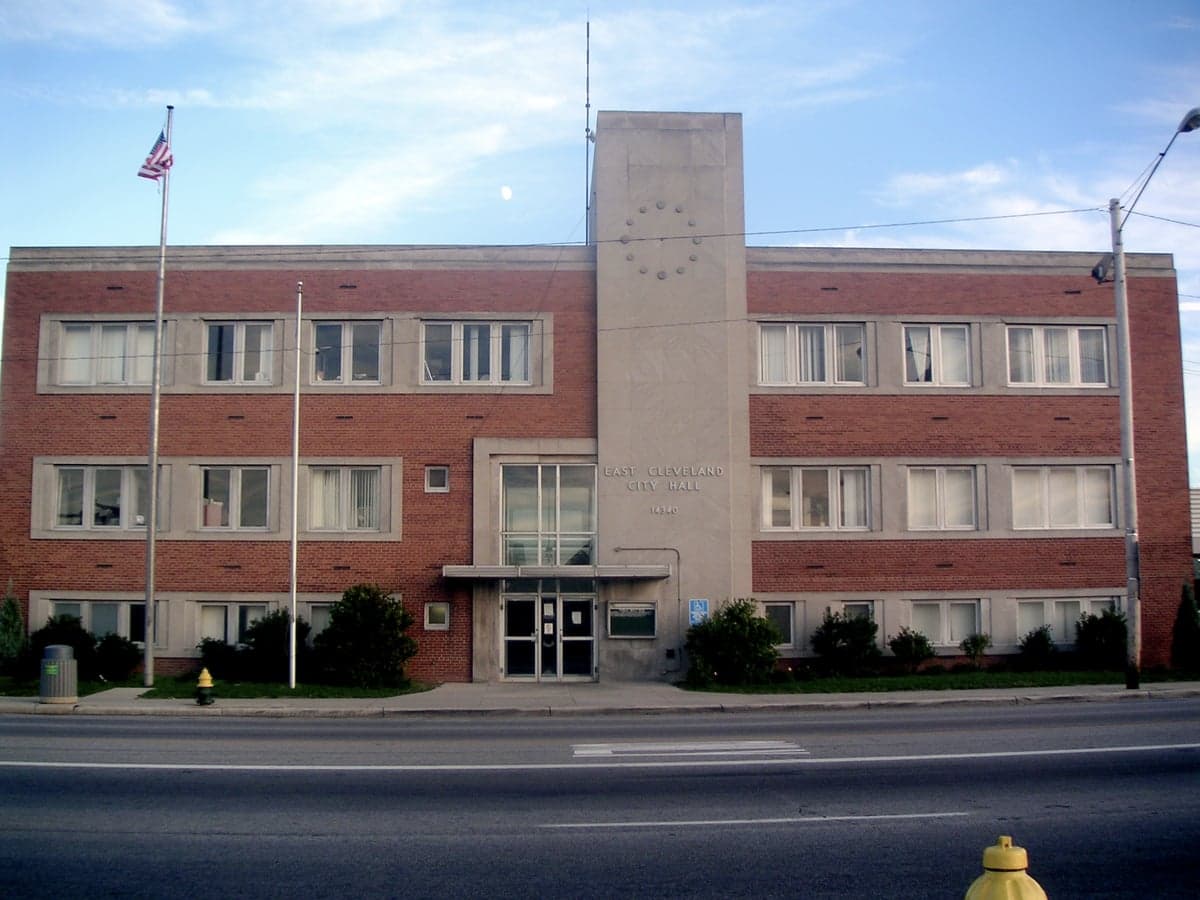
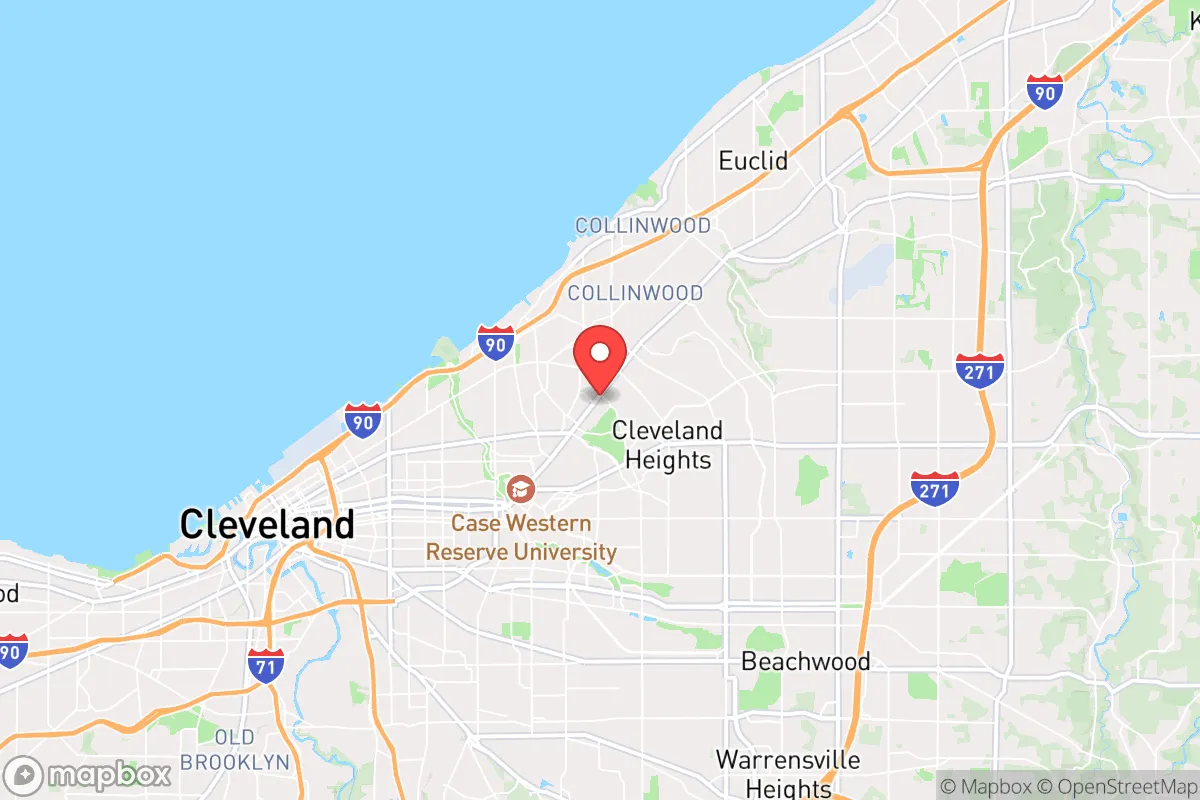
Photo: Wikipedia
Quality of Life in East Cleveland, OH
A high quality of life with strong walkability, manageable living costs, healthy neighborhood signals, and solid amenity access.
What does Quality of Life tell us?
Quality of Life blends cost of living, nearby amenities, socioeconomic signals, and neighborhood character. City-level scores represent the whole municipality; individual neighborhoods can differ.
What does this tell us?
Quality of Life blends cost of living, nearby amenities, socioeconomic signals, and neighborhood character. City-level scores represent the whole municipality; individual neighborhoods can differ.
Cost of Living
51% below national average
The Real Cost of Living in East Cleveland, OH for 2026
| Tier | Individual | Family (4) |
|---|---|---|
| Survival | $12k | $23k |
| Comfortable | $20k | $29k |
| Luxury | $41k+ | $64k+ |
| Elite (Top 5%) | $78k+ | $121k+ |
79%
The Area Signal
A metric tracking the socioeconomic signals of the area.
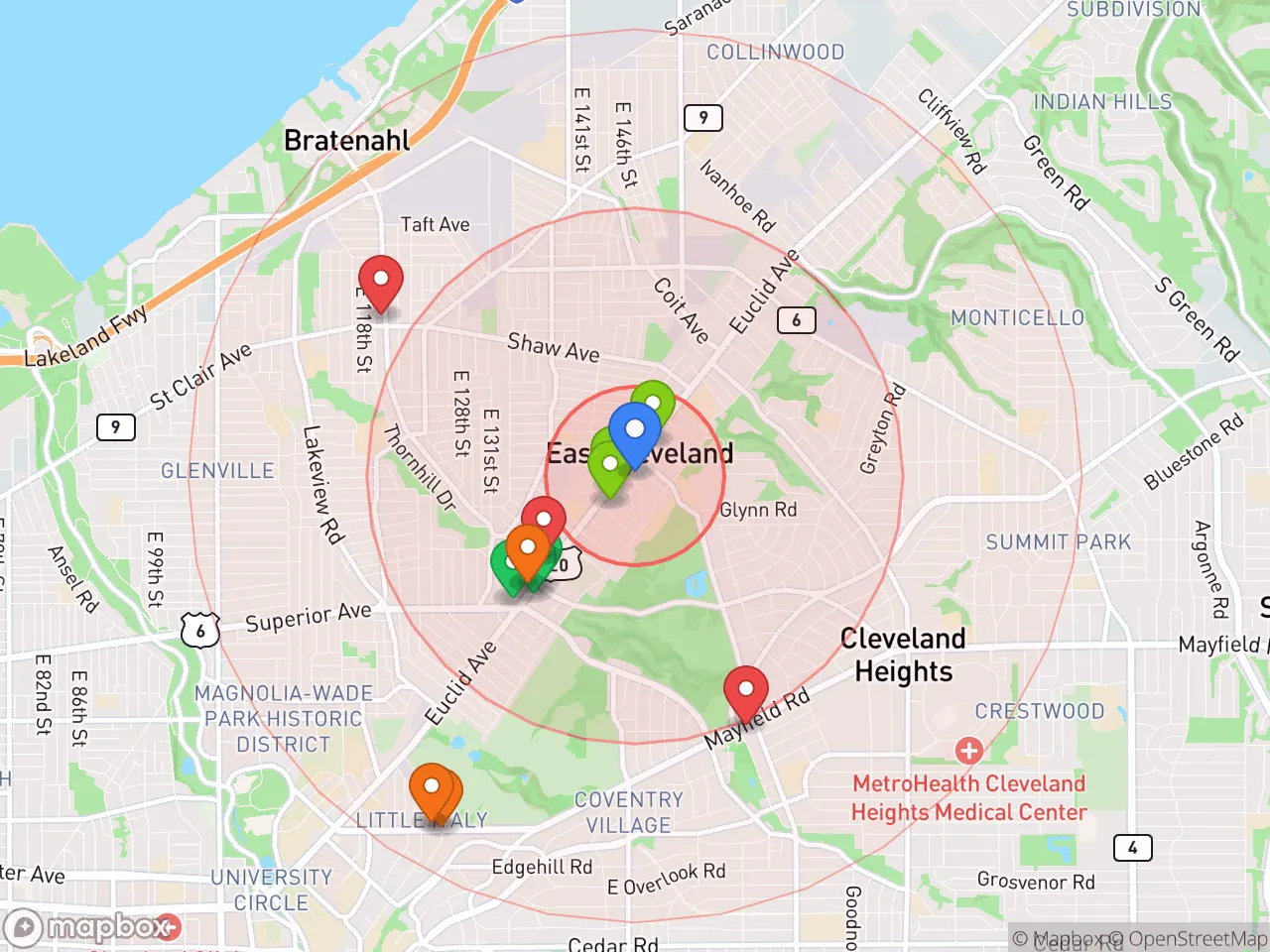
Hobbies
Explore the areaGroceries
6 within 10 miles
Gas
20 within 10 miles
Hospital
20 within 20 miles
Airport
Pittsburgh International Airport
Post Office
USPS — East Cleveland, OH
Critical Amenities
Quality-of-Life Analysis
East Cleveland, Ohio, is a low-income, predominantly Black suburb of Cleveland with a cost of living index of 49—roughly half the national average—making it one of the most affordable urban communities in the Greater Cleveland area. The population is characterized by a high proportion of renters, a median household income well below the state average, and a significant number of residents who have lived in the area for generations. While the city faces systemic economic challenges, its affordability and proximity to downtown Cleveland attract a mix of long-term residents, public-sector workers, and those seeking deeply discounted housing stock.
Cost of living, housing prices, and how East Cleveland compares to nearby suburbs
East Cleveland’s cost of living index of 49 is dramatically lower than the U.S. average of 100 and far below neighboring suburbs like Cleveland Heights (index ~85) or Shaker Heights (index ~95). The median home value sits at $68,900, compared to the Cuyahoga County median of roughly $180,000, meaning a buyer can purchase a house here for less than the down payment required in many surrounding communities. Median rent is $761 per month, well under the Cleveland metro average of about $1,100. However, these low prices reflect decades of population loss, high vacancy rates, and a property tax base that struggles to fund city services. The average commute of 24.3 minutes is slightly shorter than the national average of 26 minutes, and most residents drive to jobs in Cleveland proper, University Circle (home to the Cleveland Clinic and Case Western Reserve University), or industrial zones along the lakeshore. For renters and first-time buyers with very limited budgets, East Cleveland offers housing costs that are virtually unmatched in the region, but the trade-off includes older housing stock, higher crime rates, and fewer retail amenities than in pricier suburbs.
What daily life is like for families: schools, amenities, and neighborhood feel
Daily life in East Cleveland revolves around a tight-knit, walkable core near Euclid Avenue, though the city lacks the grocery stores, pharmacies, and sit-down restaurants found in more affluent suburbs. The East Cleveland City School District has faced state oversight and consistently low academic performance ratings, with many families opting for charter schools or open-enrollment options in Cleveland Heights or Shaker Heights. Parks like Shawnee Hills Park and the nearby Cleveland Metroparks’ Euclid Creek Reservation provide green space, but the city has limited recreational programming. The neighborhood feel is dense and urban, with many historic but aging single-family homes and apartment buildings. Residents rely heavily on the Greater Cleveland Regional Transit Authority (RTA) bus lines along Euclid Avenue and Superior Avenue, which connect to downtown Cleveland in about 20 minutes. The presence of the Cleveland Clinic’s main campus just south of the city boundary provides a major employment anchor, but the immediate commercial corridors along Euclid Avenue have high vacancy rates and few national chain retailers. For families, the lack of a full-service grocery store within city limits is a significant daily challenge, requiring a car trip to East Cleveland’s border with Cleveland Heights or to the Dave’s Marketplace on Euclid Avenue in Cleveland proper.
East Cleveland is best suited for budget-conscious renters, public-transit-dependent workers employed in Cleveland’s University Circle or downtown job hubs, and investors willing to take on the risks of a distressed housing market. It is not a typical suburban relocation destination for families seeking high-rated schools or abundant retail amenities. Those who thrive here are often deeply rooted in the community, value the low cost of entry, and are comfortable navigating a city with significant infrastructure and safety challenges. For anyone considering a move, a thorough in-person visit—especially during daytime and evening hours—and a close look at property condition, insurance costs, and school options are essential before committing.

Crime in East Cleveland, OH
Significantly higher crime rates than 90% of comparable U.S. locations.
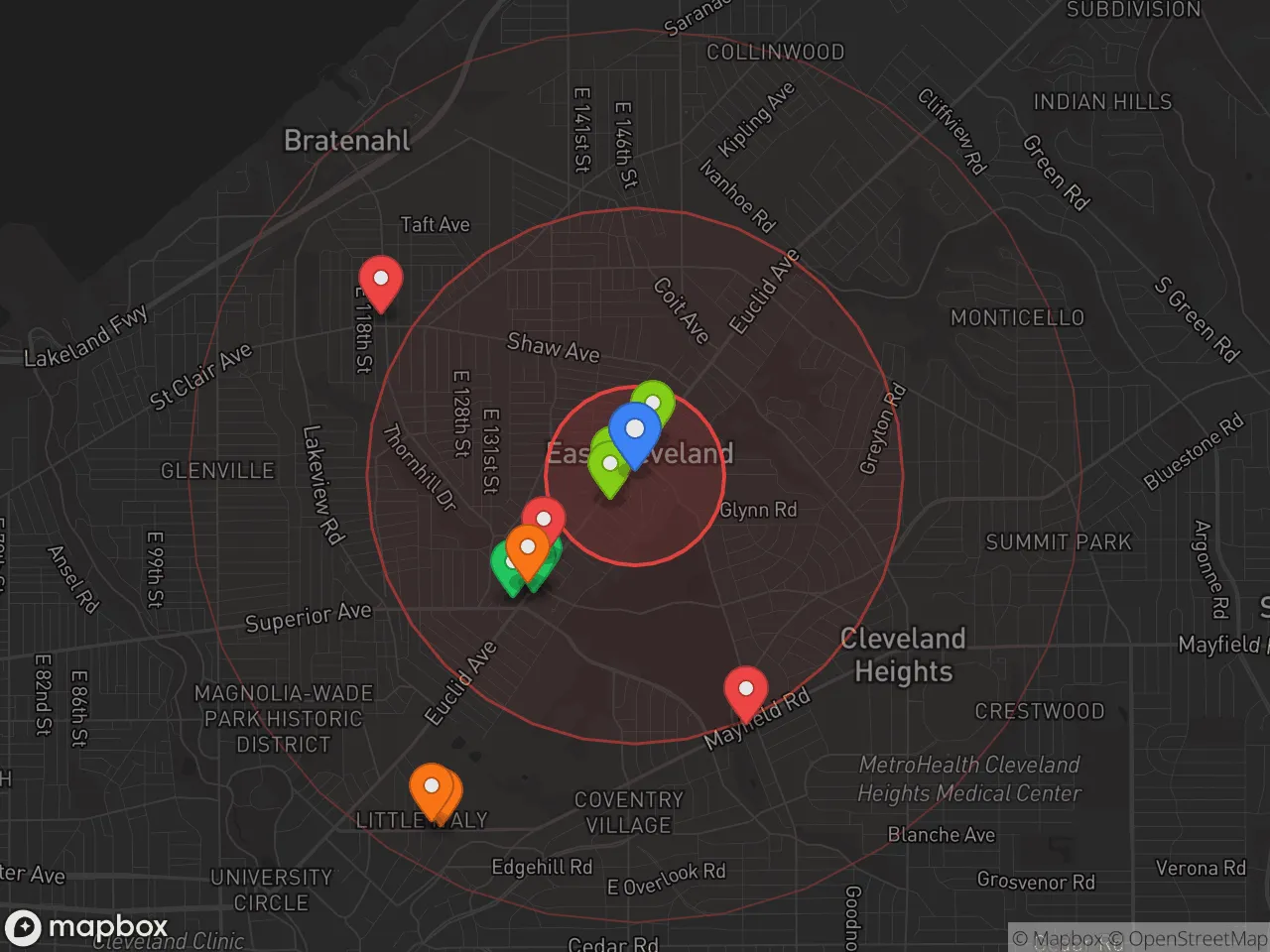
Violent CrimeViolent Crime Analysis
Property CrimeProperty Crime Analysis
Crime Analysis
East Cleveland, Ohio, faces one of the most severe public safety crises in the state, with violent crime rates more than four times the national average and property crime rates nearly double the U.S. norm. The city's 2024 crime data shows a violent crime rate of 1,712.9 incidents per 100,000 residents and a property crime rate of 2,952.4 per 100,000, placing it among the most dangerous small cities in the Greater Cleveland metropolitan area. These figures reflect a community grappling with systemic challenges, including a shrinking tax base, concentrated poverty, and a criminal justice system influenced by the broader progressive policies of Cuyahoga County.
Crime in context
East Cleveland's violent crime rate is 4.5 times higher than the U.S. average of 380 per 100,000 and roughly triple the Ohio state average of 310 per 100,000. Property crime in East Cleveland is also elevated, running about 1.8 times the national average of 1,954 per 100,000. For comparison, neighboring Cleveland proper reports a violent crime rate of approximately 1,100 per 100,000, while the affluent eastern suburb of Shaker Heights records rates below 200 per 100,000. The disparity is stark: East Cleveland, with roughly 17,000 residents, experiences a per-capita homicide rate that rivals much larger cities. A key contributing factor is the progressive prosecutorial approach in Cuyahoga County, where district attorneys and judges have increasingly prioritized diversion programs and reduced sentencing for violent offenders. While intended to reduce incarceration, this approach has been linked to higher recidivism and a perception among residents that the justice system does not hold repeat offenders accountable.
What residents experience
For those living in East Cleveland, the daily reality includes a high likelihood of being a victim of crime. The city's violent crime rate means a resident faces a 1 in 58 chance of being a victim of violent crime each year, compared to a 1 in 271 chance nationally. Property crime odds are roughly 1 in 34 annually. Aggravated assault accounts for the majority of violent incidents, but robbery and carjacking are also common, particularly along the Euclid Avenue corridor and near the city's border with Cleveland. Many residents report avoiding public transit stops after dark and relying on private vehicles for essential errands. The city's understaffed police department—with fewer than 30 sworn officers—struggles to respond to non-emergency calls in a timely manner, further eroding trust. The progressive policies of the Cuyahoga County Prosecutor's Office, which has declined to prosecute certain low-level drug and property offenses, have also led to a perception that theft and vandalism carry few consequences, emboldening property crime rings that operate across municipal lines.
Neighborhood-level variation is significant but limited. The western half of East Cleveland, near the Cleveland border and the I-90 corridor, tends to see the highest concentration of violent crime, particularly around the Superior Avenue and St. Clair Avenue intersections. The eastern neighborhoods, closer to the Euclid city line, have slightly lower violent crime rates but still experience property crime at levels well above the national average. The Forest Hills area, a small pocket of owner-occupied homes, reports fewer incidents than the rental-heavy central districts. However, no neighborhood in East Cleveland can be considered safe by national standards, and the city's overall trajectory remains concerning due to the combination of economic decline and a justice system that many residents feel prioritizes offender rehabilitation over public safety.
* Values derived from national, state, county, city and local statistics and may differ in a specific area. Last updated: 2026-06-16T10:00:30.000Z
Narrative content on this page is AI-generated and may contain mistakes. Verify any details that matter before acting on them.
ReloMaps may earn a commission from affiliate links at no extra cost to you.

