
Photo: Wikipedia
Political ClimatePolitical Climate in Duluth, GA
District shown is the primary district for this city’s centroid. Cities may span multiple districts.
Local Political AnalysisPolitical Analysis of Duluth, GA
Look, I’ve lived in Duluth long enough to remember when this town was a quiet, conservative-leaning suburb where folks mostly kept to themselves and let you live your life. Today, the political climate has shifted hard to the left. The Cook PVI now sits at D+27, meaning Duluth votes nearly 27 points more Democratic than the national average. That’s a massive swing from even a decade ago, driven largely by rapid population growth, an influx of out-of-state transplants, and a local government that’s increasingly comfortable with progressive policies. If you value limited government and personal freedoms, this is a place where you’ll need to keep a close eye on what’s happening at city hall.
How it compares
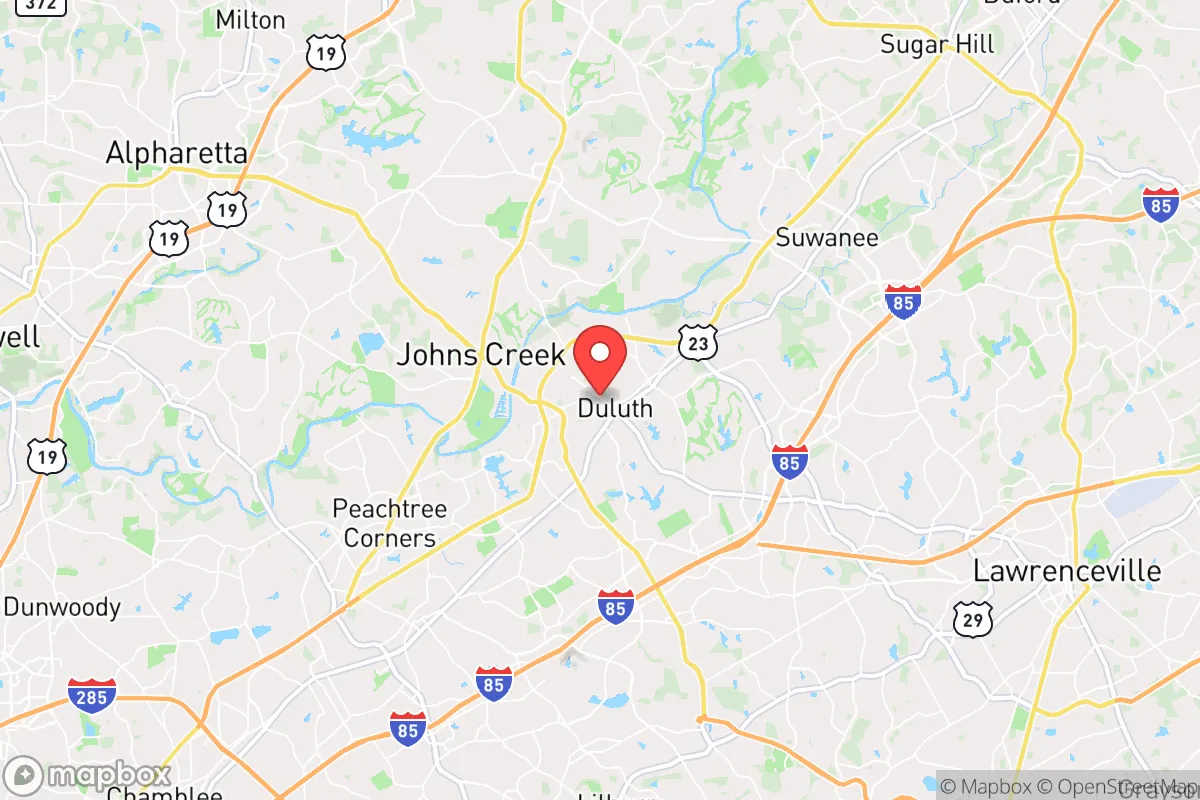
Duluth’s politics stand in stark contrast to the surrounding Gwinnett County suburbs that haven’t flipped as hard. Head just a few miles north to Suwanee or Buford, and you’ll find communities that still lean more conservative, with lower taxes and fewer zoning overreach stories. Even Lawrenceville, the county seat, has a more balanced mix. But Duluth? It’s become a progressive island, especially compared to Johns Creek to the west, which still has a Republican-leaning city council. The difference is night and day: Duluth’s elected officials have pushed for higher density housing mandates, expanded public spending on social programs, and stricter business regulations that make it harder for small, family-owned shops to survive. It’s not the same Duluth I grew up in.
What this means for residents
For anyone who values personal autonomy—whether it’s deciding how to use your property, choosing your child’s education, or keeping more of your paycheck—Duluth’s trajectory is concerning. The local government has shown a willingness to impose new fees and mandates, like stormwater utility taxes and inclusionary zoning requirements that force developers to include affordable housing units, which often drives up costs for everyone else. You’ll also see more public funds directed toward DEI initiatives and climate action plans, even as basic infrastructure like road maintenance lags. If you’re a gun owner, be aware that Gwinnett County has adopted stricter local ordinances on firearm storage and public carry in parks. And property taxes? They’ve climbed steadily, with no sign of slowing down, as the city expands its budget for programs that many residents didn’t ask for.
On the cultural side, Duluth has become a hub for progressive activism, with frequent protests and city council meetings dominated by agendas that prioritize collective goals over individual rights. The school board has also shifted left, pushing critical race theory-inspired curricula and gender identity policies that many parents find intrusive. If you want to raise your kids with traditional values or run a business without red tape, you’ll feel the pressure. Long-term, I see Duluth continuing down this path—more regulations, higher taxes, and less freedom. It’s a shame, because the town still has great parks and a strong sense of community among those who remember the old days. But if you’re considering a move here, just know what you’re signing up for.

State Political ClimatePolitical Climate in Georgia
State Political AnalysisPolitical Environment in the State
Georgia has shifted from a reliably Republican stronghold to a genuine battleground state over the past two decades, with the 2020 presidential election being decided by just under 12,000 votes and both Senate seats flipping Democratic in 2021. The state’s political landscape is now defined by a coalition of fast-growing, diverse suburban voters in metro Atlanta pulling left, while the rest of the state—particularly the rural south and northern mountain counties—holds firm as deeply conservative. For a conservative considering relocation, Georgia offers a mixed bag: low taxes and business-friendly policies in a state government that remains under Republican control, but with a cultural and electoral trajectory that demands close attention.
Urban vs. rural divide
The political map of Georgia is a tale of two worlds. Metro Atlanta, home to roughly 60% of the state’s population, is the engine of Democratic growth. The city of Atlanta itself is overwhelmingly liberal, but the real shift has been in the inner-ring suburbs. Gwinnett County, once a Republican stronghold, flipped blue in 2016 and has only deepened since, driven by an influx of diverse, college-educated professionals. Cobb County followed suit in 2020, and even Forsyth County—historically one of the most conservative in the nation—is showing cracks, with its Republican margins shrinking from 70% in 2012 to 58% in 2024. Meanwhile, the rural and exurban areas remain deeply red. Rome in Floyd County, Valdosta in Lowndes County, and Waycross in Ware County routinely deliver 70-80% Republican margins. The Savannah area (Chatham County) is a blue island on the coast, but the surrounding counties like Effingham and Bryan are solidly conservative. The Augusta metro is split—Richmond County is blue, but Columbia County is deep red. This urban-rural chasm means that statewide elections are now decided by a handful of suburban precincts in metro Atlanta, making Georgia a perpetual toss-up.
Policy environment
On paper, Georgia’s state-level policies are a conservative’s dream. The state has a flat income tax rate of 5.49%, which is being phased down to 4.99% by 2029. There is no state tax on Social Security income, and property taxes are relatively low, with a statewide homestead exemption. The regulatory environment is business-friendly, with Georgia ranking consistently in the top 10 for ease of doing business. Education policy has been a battleground: Governor Brian Kemp signed the Georgia Promise Scholarship Act in 2024, creating a $6,500 per-student education savings account for families in low-performing school districts—a major win for school choice advocates. However, the state’s healthcare landscape is a concern for conservatives. Georgia did not expand Medicaid under the Affordable Care Act, but it has a limited “Pathways to Coverage” program with work requirements, which has seen low enrollment. The state also has a robust constitutional carry law (permitless carry) that took effect in 2022, allowing law-abiding citizens to carry a concealed firearm without a license. Election integrity saw a major overhaul with the Election Integrity Act of 2021 (SB 202), which added voter ID requirements for absentee ballots, limited drop boxes, and restricted third-party ballot collection. This law has been heavily criticized by the left but remains in effect and has been upheld in court.
Trajectory & freedom
Georgia’s trajectory on personal freedom is a mixed bag. On the positive side for conservatives, the state has expanded gun rights significantly with permitless carry and has taken a strong stance on parental rights in education. The Parents’ Bill of Rights (SB 449), signed in 2022, gives parents the right to review instructional materials and opt their children out of lessons they find objectionable. The state also banned transgender surgeries and hormone therapy for minors in 2023 (SB 140), a move that has energized social conservatives. However, there are concerning trends. The state’s medical cannabis program remains extremely limited—only low-THC oil is legal, and there is no adult-use recreational marijuana. Property rights have been under pressure in some areas, particularly with local zoning battles in metro Atlanta suburbs over higher-density housing. The biggest freedom concern for many conservatives is the cultural and electoral shift in the suburbs. The influx of out-of-state migrants, particularly from California and New York, is changing the political character of places like Alpharetta and Milton. These newcomers often bring progressive voting habits, even if they move for lower taxes. The state’s six-week abortion ban (HB 481) remains in effect, but it is a constant flashpoint and could be vulnerable if Democrats ever win the governorship.
Civil unrest & political movements
Georgia has been a focal point for political activism on both sides. The 2020 election cycle saw massive protests in Atlanta following the death of George Floyd, with some demonstrations turning violent and leading to property damage in the city’s downtown and Buckhead areas. The “Stop the Steal” movement was also active, with large rallies at the state capitol in 2020 and 2021. Election integrity remains a hot-button issue; the 2021 audit of absentee ballots in Fulton County (Atlanta) was marred by allegations of mismanagement, though no widespread fraud was proven. Immigration politics are less visible than in border states, but Georgia has a strict SB 160 law from 2024 that requires law enforcement to cooperate with federal immigration authorities and penalizes sanctuary policies. There have been no serious secessionist movements, but there is a growing rural-urban cultural divide that manifests in local politics—for example, the push by some Buckhead residents to secede from Atlanta and form their own city, a movement that has gained traction but stalled in the legislature. The Georgia Republican Party remains internally fractured between establishment conservatives and more populist, Trump-aligned factions, which has led to contentious primaries.
Projection
Looking ahead five to ten years, Georgia is likely to become even more competitive, with a slight lean toward the left in statewide races if current demographic trends hold. The Atlanta suburbs will continue to diversify and grow, while rural areas will continue to depopulate. This means that a conservative moving to Georgia today should expect to live in a state where the governor’s mansion and legislature are likely to remain Republican for the near term, but where presidential elections will be toss-ups and Senate races will be nail-biters. The state’s in-migration is heavily skewed toward the metro Atlanta area, and while many of these newcomers are fleeing high-tax states, they do not always vote conservative. The wild card is whether the exurban and “second-tier” cities like Macon, Columbus, and Athens (home to the University of Georgia) will continue to trend left or stabilize. For now, Georgia offers a relatively free environment for conservatives, but the cultural and political winds are shifting, and the state is no longer a safe bet for long-term Republican dominance.
Bottom line for a new resident: If you’re moving to Georgia for lower taxes, gun rights, and a business-friendly climate, you’ll find plenty to like. But be prepared for a state that is politically divided and increasingly competitive. Choose your county wisely—if you want a reliably conservative community, look at Forsyth, Cherokee, or Hall counties. If you want to be near the action but in a more moderate environment, Paulding or Barrow counties might suit you. Avoid the core Atlanta metro if you want to avoid the progressive cultural shift. Georgia is still a good place for conservatives, but it’s no longer a lock—and that’s something to watch closely over the next decade.
* Values derived from national, state, county, city and local statistics and may differ in a specific area. Last updated: 2026-04-30T06:49:37.000Z
Narrative content on this page is AI-generated and may contain mistakes. Verify any details that matter before acting on them.
ReloMaps may earn a commission from affiliate links at no extra cost to you.

