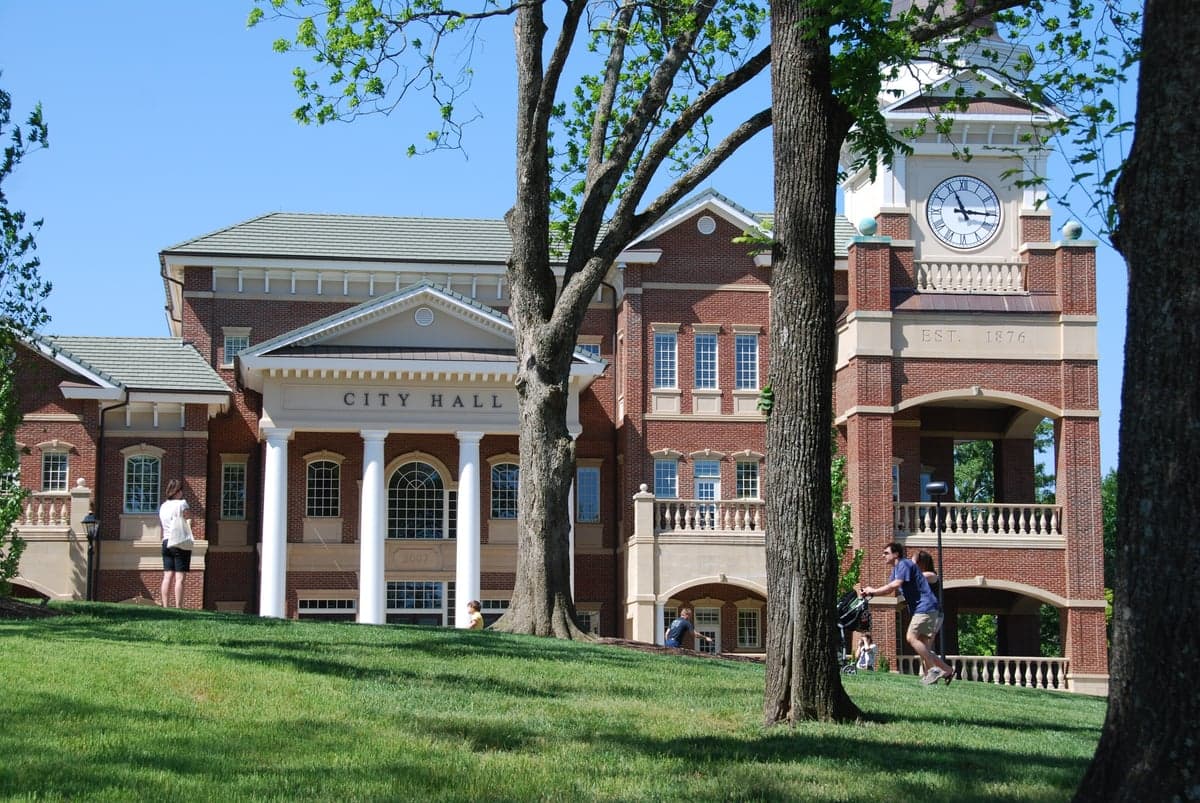
Photo: Wikipedia
Strategic Assessment of Duluth, GA
Meaningful friction. Expect exposure to either population pressure, blast zones, or natural disaster risk. Consider buying a retreat property.
What does the Strategic Assessment tell us?
Our Strategic Assessment grades tactical survivability of an area. Major population centers, military targets, fallout zones, natural disasters, and border exposure all drive risk — lower exposure means a more defensible position in a crisis.
This is heavily inspired by Joel Skousen's Strategic Relocation book. Highly recommended you checkout the book ($)What does this tell us?
Our Strategic Assessment grades tactical survivability of an area. Major population centers, military targets, fallout zones, natural disasters, and border exposure all drive risk — lower exposure means a more defensible position in a crisis.
This is heavily inspired by Joel Skousen's Strategic Relocation book. Highly recommended you checkout the book ($)Strategic Pillars

Key Distances
Regional Safe Places
Below is our recommended "safe zones" in Georgia and the surrounding area based on our strategic heuristics. For most people, it's unrealistic to live in a “safe zone” full-time due to work, family or other personal reasons. They tend to be more rural. However, many of these areas are perfect for second homes and retreat properties that double as a vacation home or even a short-term rental.
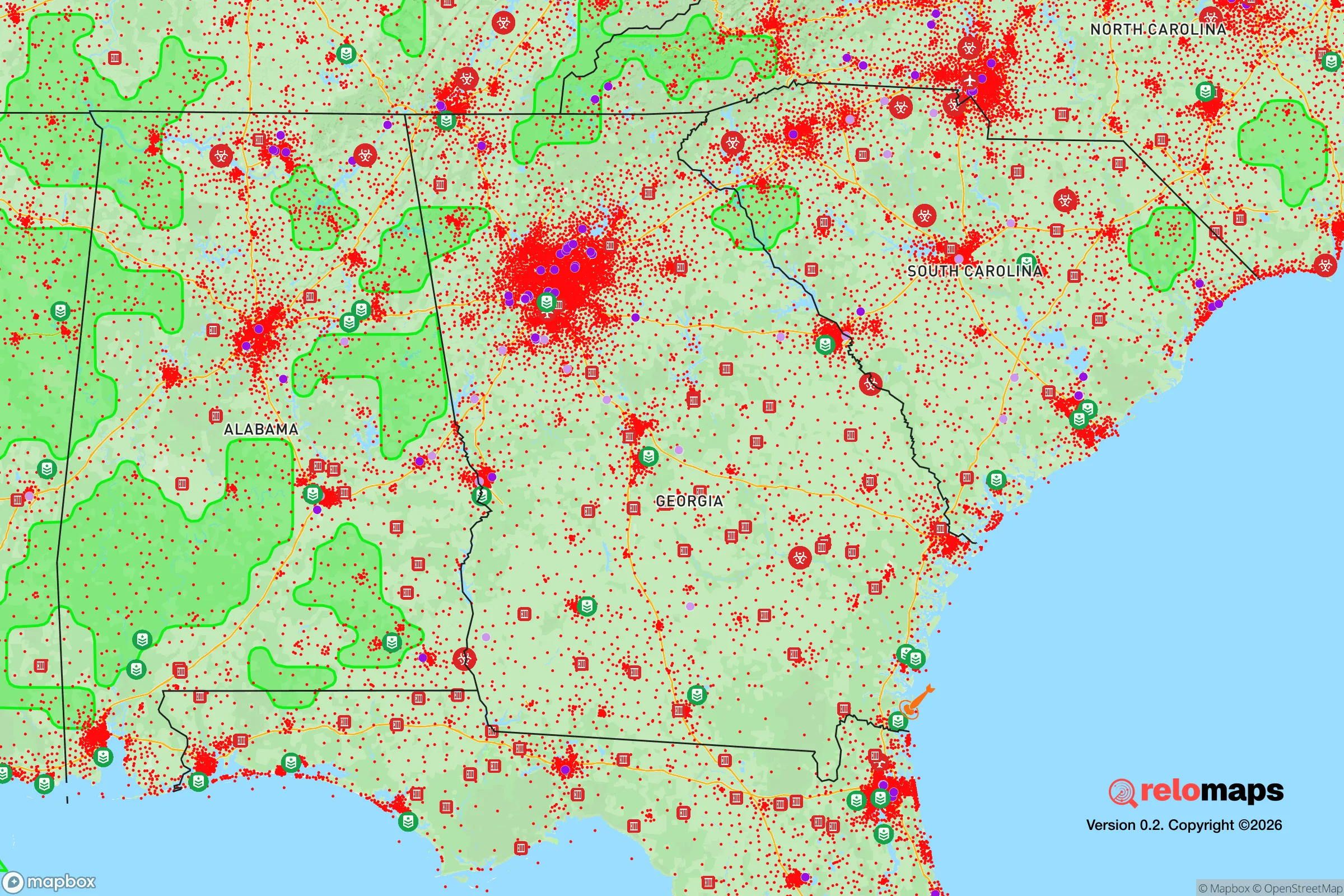
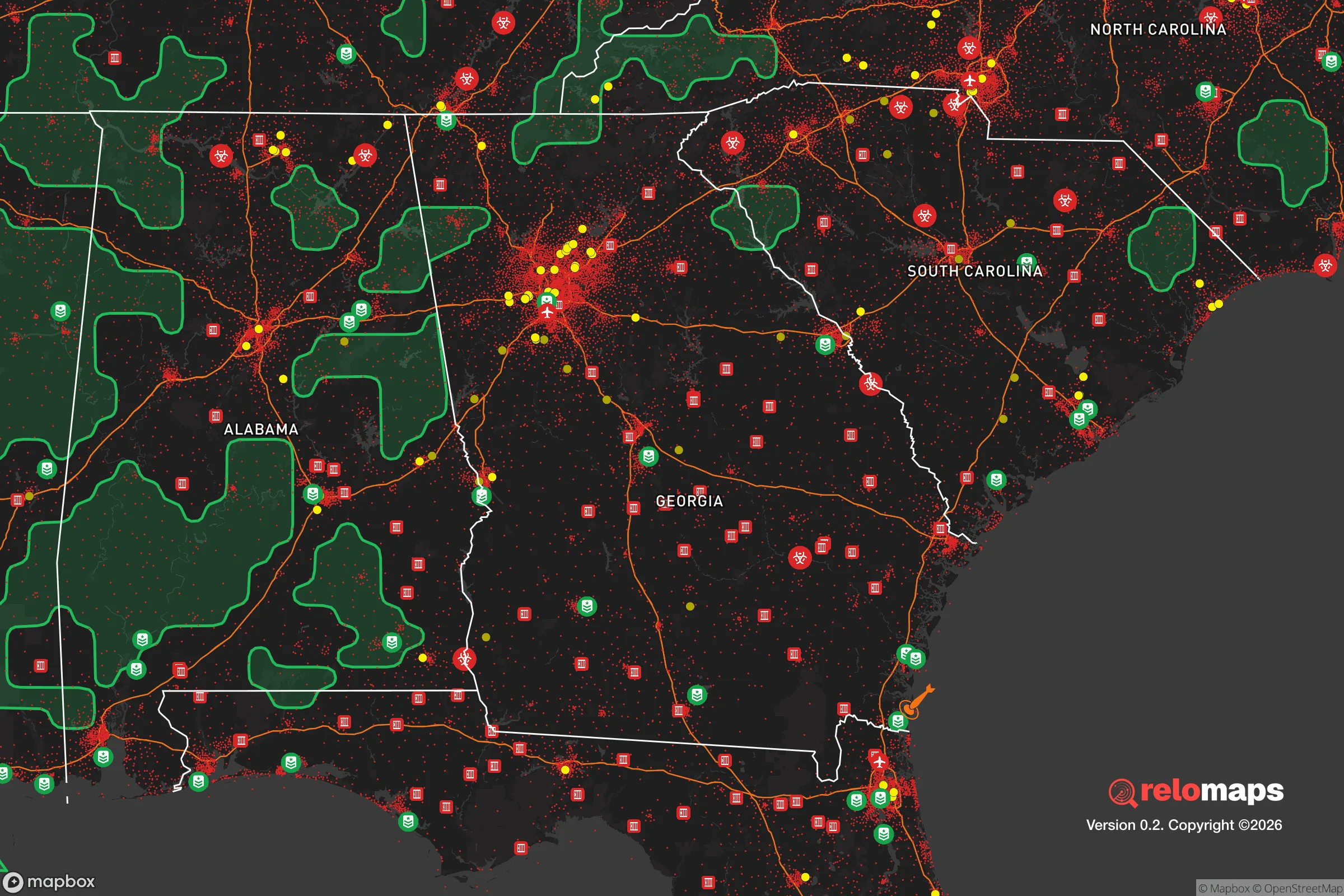


Important Note: For informational purposes only. This does not mean nothing bad ever happens in the green zones. Please use common sense. This is based on public data and modeled with AI. We tried to take a conservative approach but mistakes happen. We update this regularly as new information becomes available.
Solar Generator Recommendations
Backup power matters more here than in safer locations. We've picked three solar generators across budgets and capacity tiers — start with the budget unit if you only need a few essentials, or step up if you want to run a fridge and HVAC for days at a time.

Jackery Portable Power Station Explorer 300
Budget OptionPower on the Go: Weighing only 11 lbs, it's convenient to set up and store with book-sized foldable solar panels

BLUETTI Portable Power Station AC180
Designed for both indoor and outdoor scenarios, AC180 is highly capable as it has a robost capacity and continuous output power.

EF ECOFLOW DELTA Pro Ultra Power Station
Upgraded PickEcoFlow DELTA Pro Ultra is a whole-home energy system designed to grow with your family. Integrated with the Smart Home Panel 2, it scales to meet your evolving energy needs — keeping your home powered, intelligent, and secure through every stage of life.
We earn a commission, at no additional cost to you.
Strategic Assessment Analysis
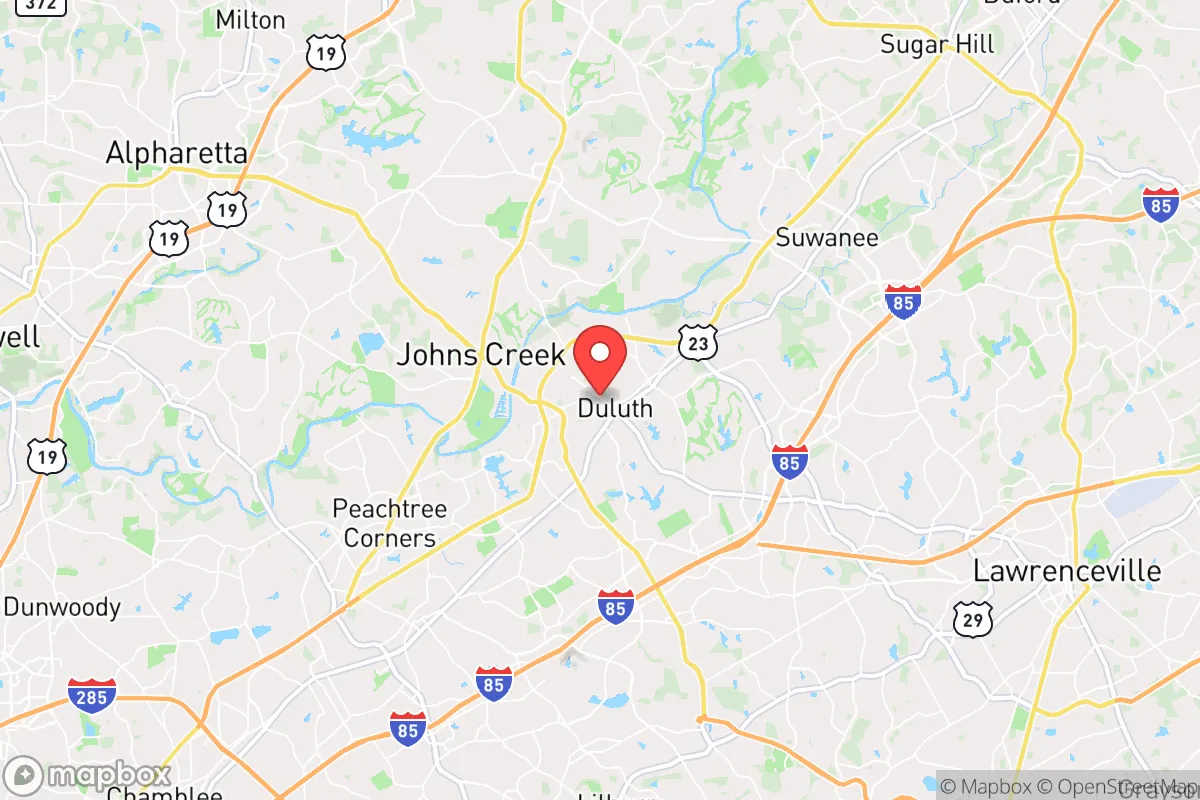
Duluth, Georgia, sits in a precarious but potentially advantageous position for those prioritizing long-term resilience and self-sufficiency. Located roughly 25 miles northeast of downtown Atlanta, it offers a buffer from the immediate chaos of a major metropolitan collapse while still providing access to critical supply chains and medical infrastructure. For the conservative prepper, the calculus here is about balancing proximity to resources against the undeniable risks of being within the blast radius—both literal and figurative—of a major urban center and its associated fallout targets.
Geographic position and natural advantages for long-term survival
Duluth’s location in Gwinnett County places it in the Piedmont region, a zone of rolling hills, clay soils, and abundant hardwood forests. The area is not prone to the catastrophic natural disasters that plague other parts of the country—no hurricanes, no earthquakes, no wildfires of the California variety. The climate is humid subtropical, with hot summers and mild winters, meaning a freeze is rarely a life-threatening event. The Chattahoochee River flows about 10 miles west, providing a major water source, though access is controlled by the National Recreation Area and state parks. More practically, the Lake Lanier reservoir, about 20 miles north, is the region’s primary water storage, and its proximity means that even during drought, the water table remains relatively high. For a relocator, the natural advantages are modest but real: defensible terrain in the form of wooded ridges, a growing season long enough for serious gardening (roughly 220 days), and a water supply that, while not pristine, is far more reliable than the arid West. The Georgia Piedmont is also rich in clay for building and, with some effort, can support small-scale agriculture if you’re willing to work the acidic soil.
Risks, exposures, and proximity to fallout-relevant landmarks
Here’s where the analysis gets sobering. Duluth is within 30 miles of Hartsfield-Jackson Atlanta International Airport, one of the busiest in the world and a primary target for any strategic strike or terrorist event. The city also sits near Interstate 85 and Georgia 316, major evacuation corridors that will become parking lots during any crisis. The Centers for Disease Control and Prevention (CDC) in Atlanta is a high-value target for biological or chemical attacks, and its proximity means any release—accidental or intentional—could drift northeast toward Gwinnett County. Additionally, the Chattahoochee River is a potential contamination vector if upstream dams or industrial sites are compromised. For the prepper, the biggest risk is not a direct hit but the secondary effects of a metropolitan collapse: mass refugee flows, supply chain breakdowns, and civil unrest. Duluth’s population of roughly 30,000 is dense by suburban standards, and the surrounding Gwinnett County has over 1 million people. In a grid-down scenario, this area will see significant looting and resource competition. The Georgia 400 and I-85 corridors will be chokepoints, and anyone without a secure, off-grid retreat will be at the mercy of the crowd.
Practical resilience for a relocator: food, water, energy, and defensibility
For the individual or family looking to establish a resilient foothold, Duluth offers a mixed bag. Water is the first concern. The municipal supply comes from the Chattahoochee and Lake Lanier, but in a prolonged outage, wells are the backup. Most suburban lots in Duluth are on city water, so a prepper should prioritize a property with a private well or at least a rainwater catchment system. The average annual rainfall is about 52 inches, so collection is feasible. Food is more challenging. The area is not agricultural; the best you’ll find is a few community gardens and farmers’ markets. For long-term food security, you’ll need to establish a garden, raise chickens (allowed in most of Duluth with restrictions), and build a network of local growers. The Gwinnett County Extension Office offers resources, but don’t expect to live off the land without serious effort. Energy is a bright spot. Georgia Power’s grid is relatively stable, but solar is viable here—the region gets about 4.5 peak sun hours per day. A modest off-grid solar setup with battery storage can power a fridge, lights, and communications. Defensibility is the weakest link. Duluth is a suburban grid of cul-de-sacs and strip malls. There are no natural chokepoints, no high ground, and no community fortifications. A prepper’s best bet is a home on a larger wooded lot, preferably with a basement and a clear line of sight to the street. The Gwinnett County Police are professional, but in a SHTF scenario, response times will be measured in hours, not minutes. The Georgia State Defense Force and local gun clubs offer some community resilience, but you’re largely on your own.
The overall strategic picture for Duluth is one of calculated risk. It is not a bug-out location; it is a buffer-zone suburb that offers access to Atlanta’s medical and logistical resources while being far enough out to avoid the worst of a direct strike. For the conservative relocator who values community, schools, and a relatively low crime rate (violent crime in Duluth is about 30% below the national average), it is a defensible choice—provided you have a plan. The key is to treat Duluth as a staging ground, not a final redoubt. Stockpile supplies, build a network of like-minded neighbors, and have a secondary retreat in the North Georgia mountains (about 90 minutes north) for when the city’s problems become your problems. The area’s resilience is average, but with preparation, it can be a solid base for weathering the storms ahead. Just don’t expect to ride out a major event in a subdivision without a well, a garden, and a rifle.

* Values derived from national, state, county, city and local statistics and may differ in a specific area. Last updated: 2026-04-30T06:49:37.000Z
Narrative content on this page is AI-generated and may contain mistakes. Verify any details that matter before acting on them.
ReloMaps may earn a commission from affiliate links at no extra cost to you.

