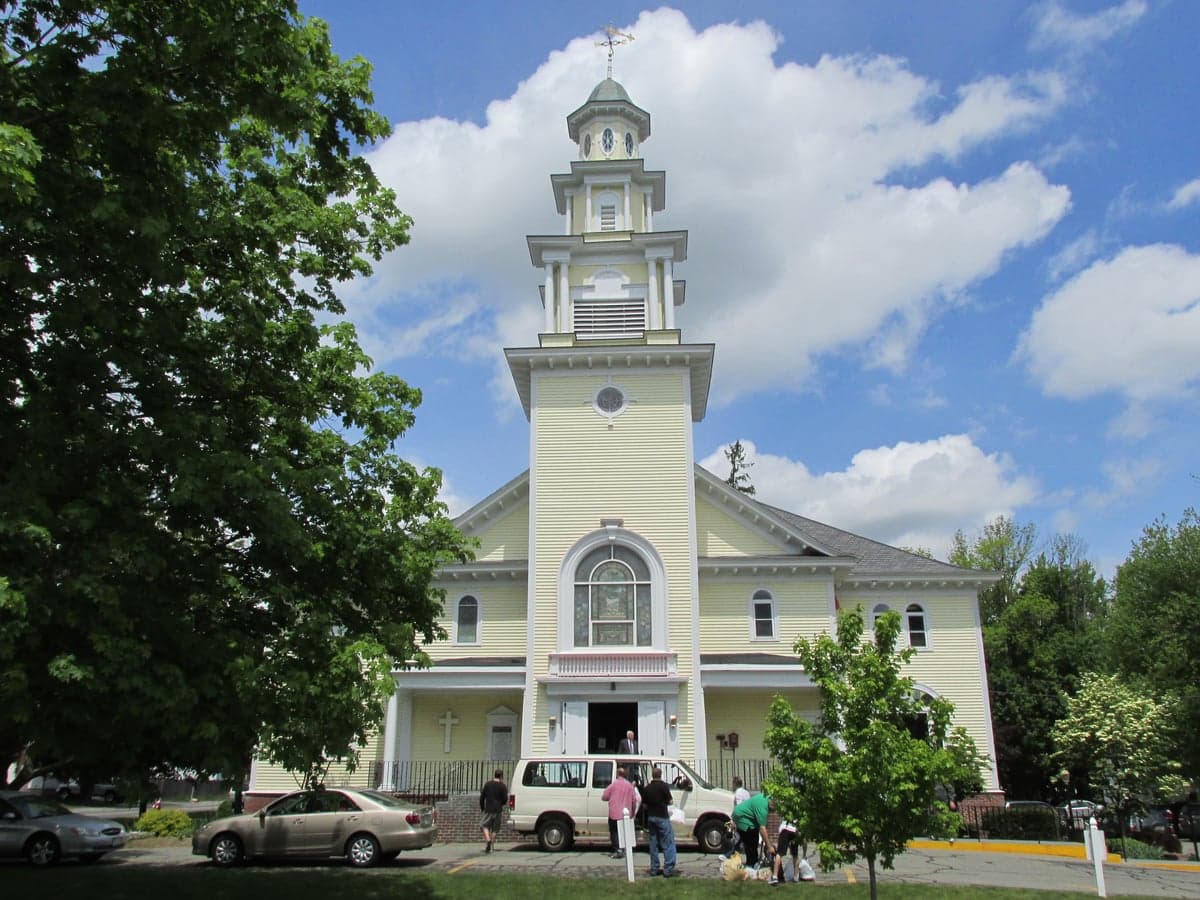
Photo: Wikipedia
Political ClimatePolitical Climate in Dracut, MA
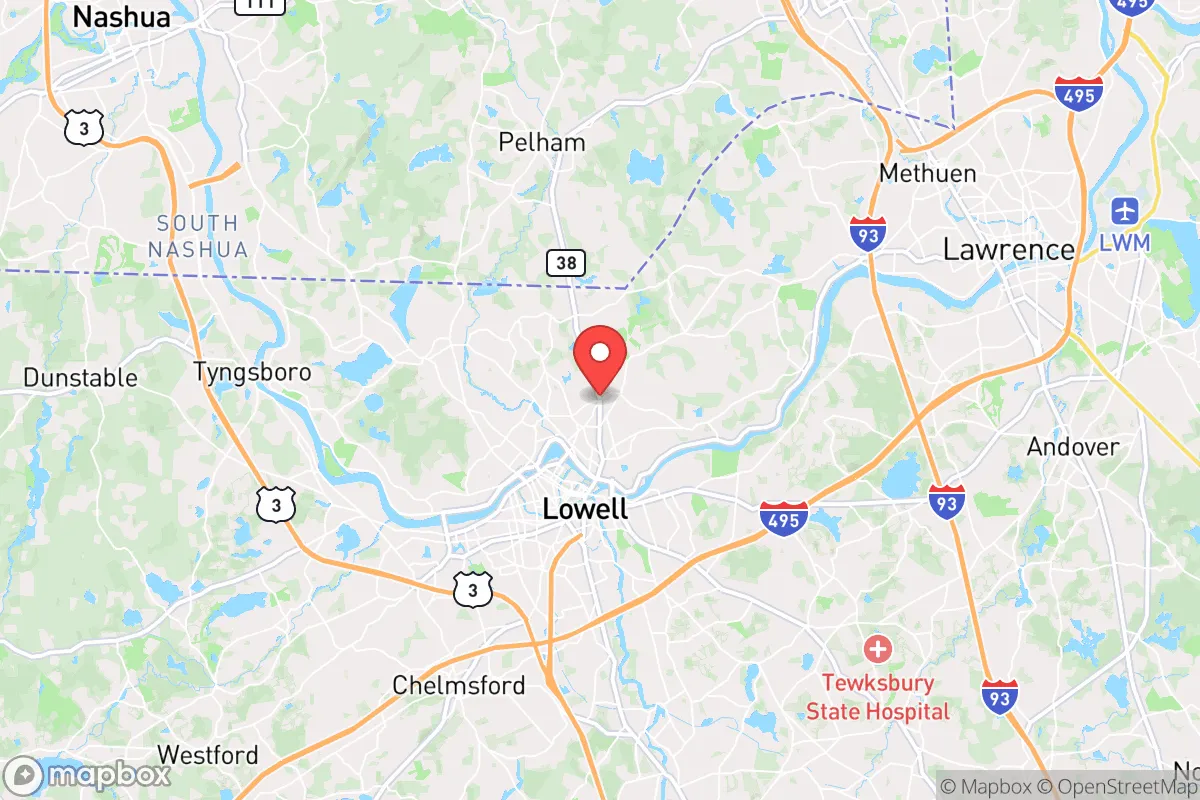
District shown is the primary district for this city’s centroid. Cities may span multiple districts.
Local Political AnalysisPolitical Analysis of Dracut, MA
Dracut leans reliably Democratic, but it’s not the deep-blue stronghold you might expect from a Massachusetts suburb. With a Cook PVI of D+11, the town is noticeably more moderate than the state as a whole, which sits at D+15. That four-point gap might sound small, but it translates into a real political split: Dracut often votes a few points to the right of the rest of the state, especially in down-ballot races. If you’ve lived here a while, you’ve seen the shift—this used to be a more conservative town, and while it’s still blue, it’s a lighter shade than Boston or Cambridge.
How it compares
Dracut’s D+11 PVI puts it squarely in the “lean Democratic” category, but it’s surrounded by towns that are either more liberal or more conservative. Just south, Lowell is a solid D+18—a classic mill city with a strong union and immigrant base that votes deep blue. Head east to Methuen, and you’re looking at D+9, slightly more conservative than Dracut. But the real contrast is north and west: towns like Pelham, NH (just over the border) lean Republican, while Tyngsborough and Dunstable are more purple, often swinging between parties in local elections. Dracut sits in a kind of political buffer zone—close enough to the liberal Merrimack Valley to feel the pull, but with enough old-school Yankee and working-class roots to keep things from going full progressive. In the 2024 presidential race, Dracut voted for the Democratic candidate by about 10 points, while the state overall went by 15. That’s a consistent pattern: Dracut is a bellwether for the state’s moderate wing.
What this means for residents
For a conservative resident, Dracut is a relatively comfortable place to live politically. You won’t feel like an outcast at the town meeting or the local diner—there’s a visible Republican presence, especially in the older neighborhoods and among small business owners. Local elections often feature competitive races, and the town has a history of electing moderate Republicans to the school committee and select board. For a liberal resident, the town is safe but not a bubble. You’ll encounter plenty of neighbors who disagree on taxes, development, and school funding, but the overall culture is civil—people tend to keep politics at the dinner table rather than on the front lawn. The practical effect of Dracut’s D+11 lean is that policy debates here are more pragmatic than ideological. The town’s budget, zoning, and school decisions tend to get hashed out with a focus on cost and local impact, not party lines. That’s a relief for anyone tired of national-level shouting matches.
Culturally, Dracut feels like a working-to-middle-class town that values its independence. You won’t find the same level of activism or protest culture as in Cambridge or Amherst. Instead, the political conversation revolves around property taxes, road repairs, and school quality—bread-and-butter stuff. The town’s proximity to New Hampshire also shapes its politics: many residents cross the border for tax-free shopping or even to live, which keeps local tax debates front and center. Over the long term, Dracut is likely to stay D+11 to D+13, inching slightly left as younger, more diverse families move in from Lowell, but never fully matching the state’s liberal tilt. For now, it’s a place where both conservatives and liberals can find their footing—just don’t expect either side to dominate the conversation.

State Political ClimatePolitical Climate in Massachusetts
State Political AnalysisPolitical Environment in the State
Massachusetts is one of the most reliably Democratic states in the country, with a Cook Partisan Voting Index of D+15, meaning it votes about 15 points more Democratic than the national average in presidential elections. The state hasn't voted for a Republican presidential candidate since Ronald Reagan in 1984, and the Democratic Party holds every statewide office, a supermajority in both legislative chambers, and all 11 U.S. House seats. Over the last 20 years, the shift has been toward the left, driven by the Boston metro area's growing population and influence, while the more conservative western and central parts of the state have seen their political weight shrink.
Urban vs. rural divide
The political map of Massachusetts is a study in contrasts. Greater Boston, including Suffolk County (Boston), Middlesex County (Cambridge, Somerville), and parts of Essex County, is the engine of the state's Democratic dominance. These areas vote overwhelmingly blue — Cambridge gave Biden 92% of the vote in 2020. The western part of the state, including Berkshire County and the city of Springfield, also leans Democratic, though with a more moderate, working-class flavor. The real Republican strongholds are in the central and southeastern regions: Plymouth County, Bristol County, and parts of Worcester County. Towns like Carver and Middleborough in Plymouth County voted for Trump by double digits. The Cape and Islands (Barnstable County) are swing areas, often splitting tickets between moderate Republicans and Democrats. The divide isn't just urban vs. rural — it's also about education and income. The areas around Boston with high concentrations of college graduates are the most liberal, while the more working-class, exurban towns are where Republicans still compete.
Policy environment
Massachusetts has a progressive policy environment that reflects its Democratic supermajority. The state income tax is a flat 5% (scheduled to drop to 4% in future years under a 2000 ballot measure), and the sales tax is 6.25%. Property taxes are relatively high, averaging about 1.2% of home value, but are set locally. The state has a robust regulatory framework, particularly around environmental and labor laws. It was the first state to legalize same-sex marriage (2004) and has strong anti-discrimination protections. Education is a top priority: Massachusetts consistently ranks first in the nation for K-12 performance, and it has a high concentration of private and parochial schools. Healthcare is heavily regulated, with near-universal coverage under the 2006 Romneycare law, which served as a model for the Affordable Care Act. Election laws are among the most accessible in the country: same-day voter registration, no-excuse mail-in voting, and early voting are all standard. The state also has a strong public records law and an independent judiciary.
Recent policy direction
Over the last five years, the legislature has moved aggressively on several fronts. In 2022, it passed the Massachusetts Gun Laws update, which banned "ghost guns," expanded background checks to private sales, and gave police more authority to seize firearms from individuals deemed a risk. The state also passed the Parentage Act in 2022, which modernized family law to recognize all types of families, including same-sex and non-biological parents. On education, the 2019 Student Opportunity Act committed an additional $1.5 billion in annual funding to under-resourced districts. In 2023, the legislature overrode Governor Maura Healey's veto to pass the Massachusetts Right to Repair Act, which expanded access to vehicle data for independent mechanics. On privacy, the state passed the Massachusetts Data Privacy Act in 2024, giving residents more control over how companies collect and use their personal data. On voting, the 2022 VOTES Act made mail-in voting permanent and expanded early voting. On the tax front, the 2023 Tax Relief Act cut the short-term capital gains tax rate and increased the estate tax threshold. The state also passed a Millionaire's Tax in 2022 (a 4% surtax on income over $1 million), which funds education and transportation. For conservatives, the gun laws and the high tax burden are significant concerns. For liberals, the state's direction on healthcare, education, and voting access is a positive. The state has not passed any major restrictions on abortion or transgender rights, and it remains a sanctuary state for undocumented immigrants.
Civil unrest & political movements
Massachusetts has a history of organized political activism, but it's generally more institutional than confrontational. The Boston Women's March in 2017 drew over 100,000 people, and the state has seen regular protests for climate action, racial justice, and immigrant rights. On the right, the Massachusetts Fiscal Alliance and local Republican clubs are active, but they operate in a minority position. The state's sanctuary policy — which limits local law enforcement cooperation with federal immigration authorities — has been a flashpoint, particularly in cities like Lawrence and Boston. In 2023, a controversy erupted over the state's emergency shelter system, which was overwhelmed by an influx of migrants, leading to tensions in some communities. There have been no major election integrity controversies in Massachusetts; the state's voting system is widely trusted. Secession or nullification rhetoric is virtually nonexistent. The most visible political flashpoints for a new resident would likely be local debates over housing development, school funding, and the cost of living.
Projection
Over the next 5-10 years, Massachusetts is likely to remain a solidly Democratic state, but the internal dynamics will shift. The Boston metro area will continue to grow, driven by the life sciences and tech sectors, reinforcing the state's liberal lean. The western and central parts of the state will continue to lose population and political influence. The Republican Party will remain competitive only in a handful of state legislative districts and in local races in the more conservative exurbs. The biggest wild card is the cost of living: if housing prices continue to rise, it could drive out younger families and moderate-income workers, potentially shifting the electorate even further toward the high-income, college-educated demographic that dominates Boston. A new resident moving in now should expect to find a state where the political conversation is dominated by issues like housing affordability, transportation infrastructure, and climate resilience, rather than the culture war battles that define politics in many other states.
For a conservative-leaning individual or family, moving to Massachusetts means accepting that you will be in a political minority. The state's tax burden is high, its gun laws are restrictive, and its social policies are progressive. However, the state also offers excellent public schools, a strong economy, and a high quality of life. For liberals, Massachusetts is a comfortable environment where your values are reflected in state policy. The bottom line: Massachusetts is a state where the political reality is stable and predictable, but it comes with a high price tag — both in taxes and in the cost of living. If you can afford it and you're comfortable with the political culture, it's a great place to live. If not, you may find yourself frustrated by the lack of political diversity and the high cost of everything.
* Values derived from national, state, county, city and local statistics and may differ in a specific area. Last updated: 2026-10-21T23:20:45.000Z
Narrative content on this page is AI-generated and may contain mistakes. Verify any details that matter before acting on them.
ReloMaps may earn a commission from affiliate links at no extra cost to you.

