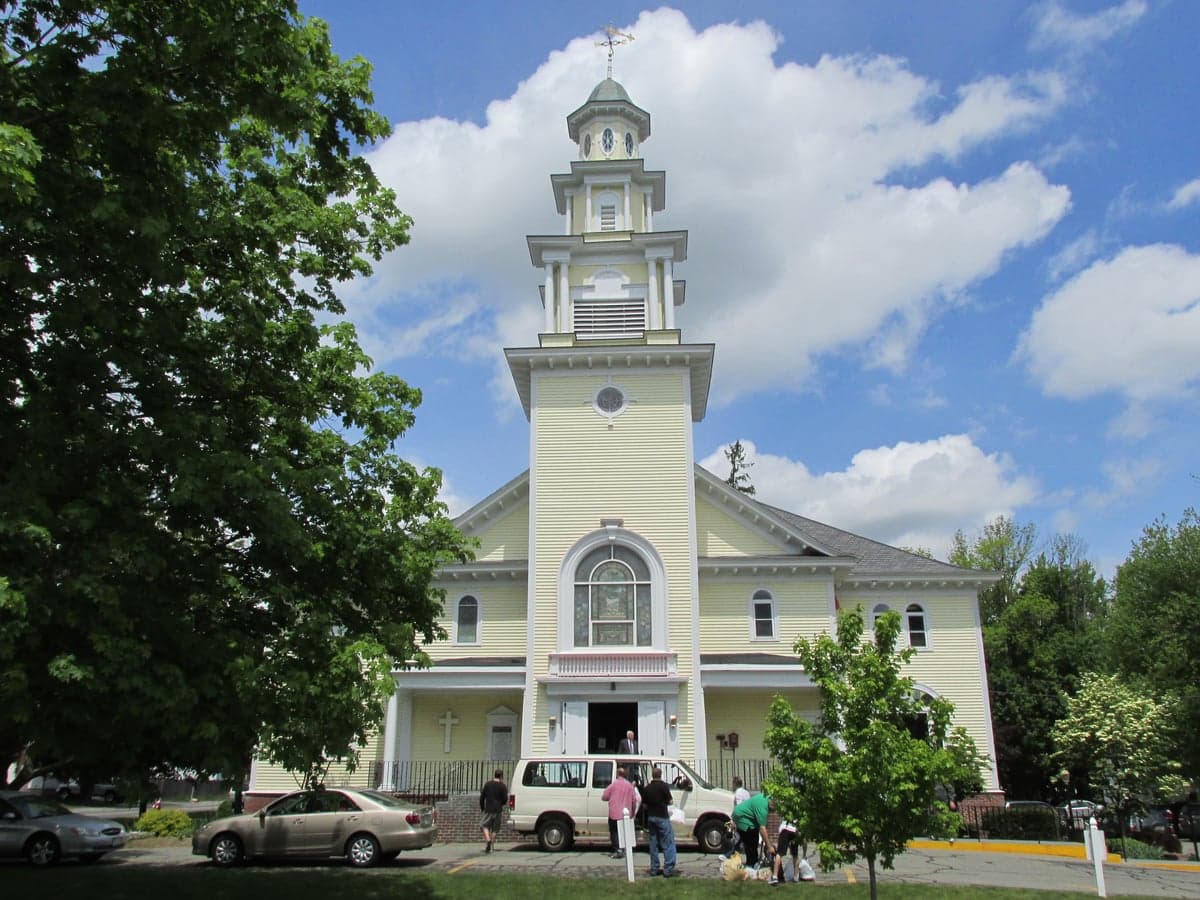
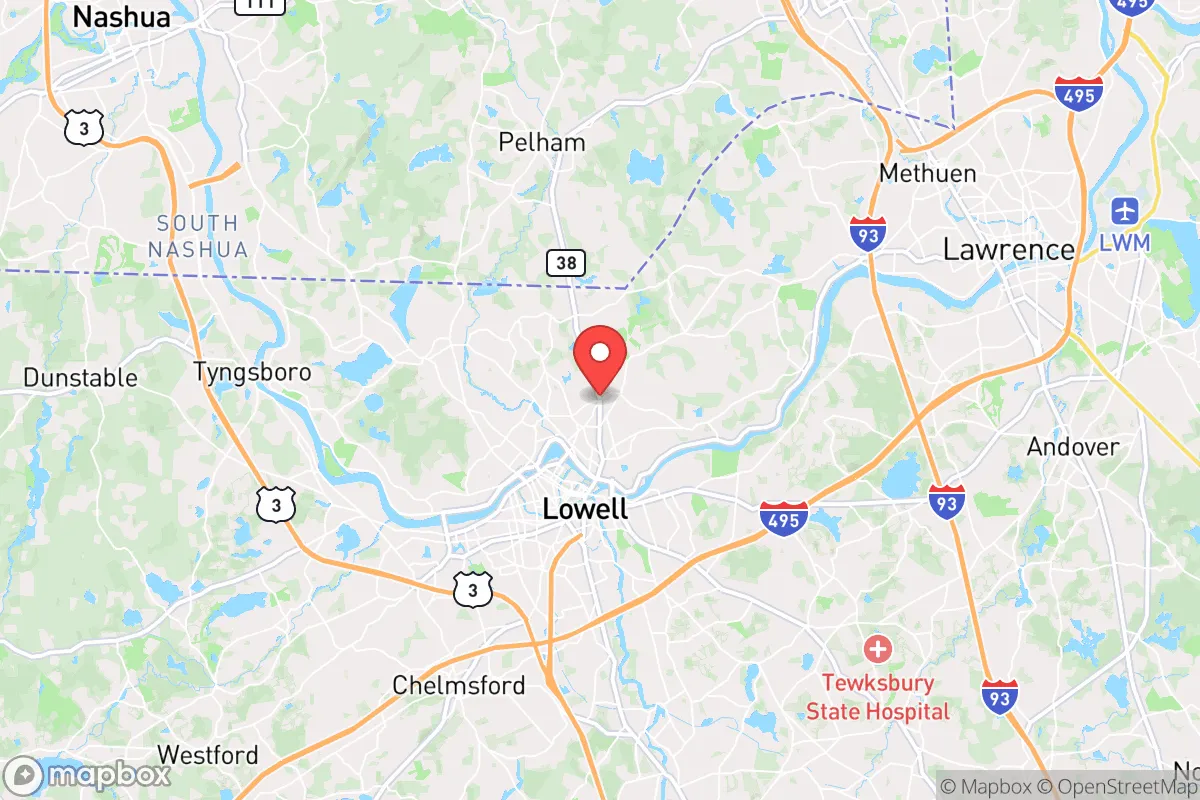
Photo: Wikipedia
Demographics of Dracut, MA
Affluence Level in Dracut, MA
A middle-class area roughly in line with national averages across income, home values, education, and employment.
People of Dracut, MA
The people of Dracut, Massachusetts today form a dense, family-oriented community of 114,799 residents, marked by a striking ethnic diversity that sets it apart from many neighboring Merrimack Valley towns. With a foreign-born population of 13.7%, Dracut is a place where long-standing Franco-American and Irish Catholic roots now share the landscape with large East and Southeast Asian, Hispanic, and Black communities. The city’s identity is distinctly suburban and working-to-middle class, with 29.9% of adults holding a college degree, and its neighborhoods reflect a layered history of industrial migration, suburban expansion, and recent international arrivals.
How the city was settled and grew
Dracut was originally part of the colonial land grants from nearby Chelmsford, incorporated in 1701 as an agricultural community. Its early settlers were primarily English Puritans who farmed the fertile lowlands along the Merrimack River, concentrating in what is now Collinsville, the oldest settled neighborhood, where 18th-century saltbox houses still stand. The first major demographic shift came in the 1840s and 1850s, when Irish immigrants fleeing the Great Famine arrived to build the Stony Brook Railroad and work in the textile mills of neighboring Lowell. They settled in Dracut Center, near the town common, and established St. Mary of the Assumption Church, which remains a community anchor. By the 1870s, French Canadians from Quebec began arriving in large numbers, drawn by mill jobs in Lowell and the chance to own farmland. They built tight-knit parishes in East Dracut and along the Lakeview Avenue corridor, where French was spoken in homes and stores well into the mid-20th century. A smaller wave of Polish and Italian immigrants followed around 1900, settling near the Varnum Avenue industrial district, but Dracut remained overwhelmingly white and Catholic through the 1960s.
Modern era (post-1965)
The 1965 Hart-Cellar Immigration Act, combined with the decline of Lowell’s mills, reshaped Dracut’s population dramatically. The first major post-1965 arrivals were Cambodian and Vietnamese refugees in the late 1970s and 1980s, fleeing the aftermath of the Vietnam War. They clustered in East Dracut and the Hildreth Street area, where affordable postwar ranches and split-levels offered entry into the American middle class. Today, East and Southeast Asian residents make up 18.4% of Dracut’s population, the largest non-white group, and their presence is visible in the Buddhist temples and Asian grocery stores along Lakeview Avenue. Hispanic migration accelerated in the 1990s and 2000s, primarily from Puerto Rico and the Dominican Republic, with families settling in the Mammoth Road corridor and the newer subdivisions near the Tyngsborough line. Black residents, now 10.1% of the population, arrived in two waves: African American families moving from Boston and Lowell for better schools and housing, and more recent immigrants from West Africa and Haiti, concentrated in the Bridgeman Street area. Indian subcontinent residents (2.6%) are a smaller but growing presence, many working in tech and healthcare, and tend to settle in the newer developments off Middlesex Road. The white population, now 44.2%, has aged in place in Collinsville and Dracut Center, while younger white families have largely moved to exurbs like Pelham, NH.
The future
Dracut’s population is projected to continue diversifying, though at a slower pace than in the 1990s and 2000s. The white share is declining steadily as older residents pass away or move out, while Hispanic and Asian communities are growing through both immigration and higher birth rates. The Indian subcontinent population, though small, is the fastest-growing segment, drawn by proximity to tech jobs in Lowell and Burlington. New development is concentrated in the Mammoth Road and Middlesex Road corridors, where townhouses and apartment complexes are absorbing younger, more diverse families. The city’s cultural identity is evolving from a quiet Franco-Irish suburb into a multi-ethnic, middle-class hub, with tensions around school funding and zoning occasionally surfacing but overall integration proceeding without major conflict. The next 10-20 years will likely see Dracut become a majority-minority city, with no single group dominating, and its neighborhoods becoming less ethnically clustered as second-generation families disperse into the postwar subdivisions.
For someone moving in now, Dracut offers a stable, family-oriented environment with good schools and easy access to Lowell and Boston, but it is not the homogenous community of its past. The city is becoming a genuinely multi-ethnic, middle-class suburb where Cambodian, Dominican, and Irish-American families live on the same streets, and where the old parish boundaries have given way to a more fluid, diverse social landscape. The bottom line: Dracut is a place in demographic transition, and new residents will find a community that is increasingly representative of 21st-century America.

* Values derived from national, state, county, city and local statistics and may differ in a specific area. Last updated: 2026-10-21T23:20:45.000Z
Narrative content on this page is AI-generated and may contain mistakes. Verify any details that matter before acting on them.
ReloMaps may earn a commission from affiliate links at no extra cost to you.

