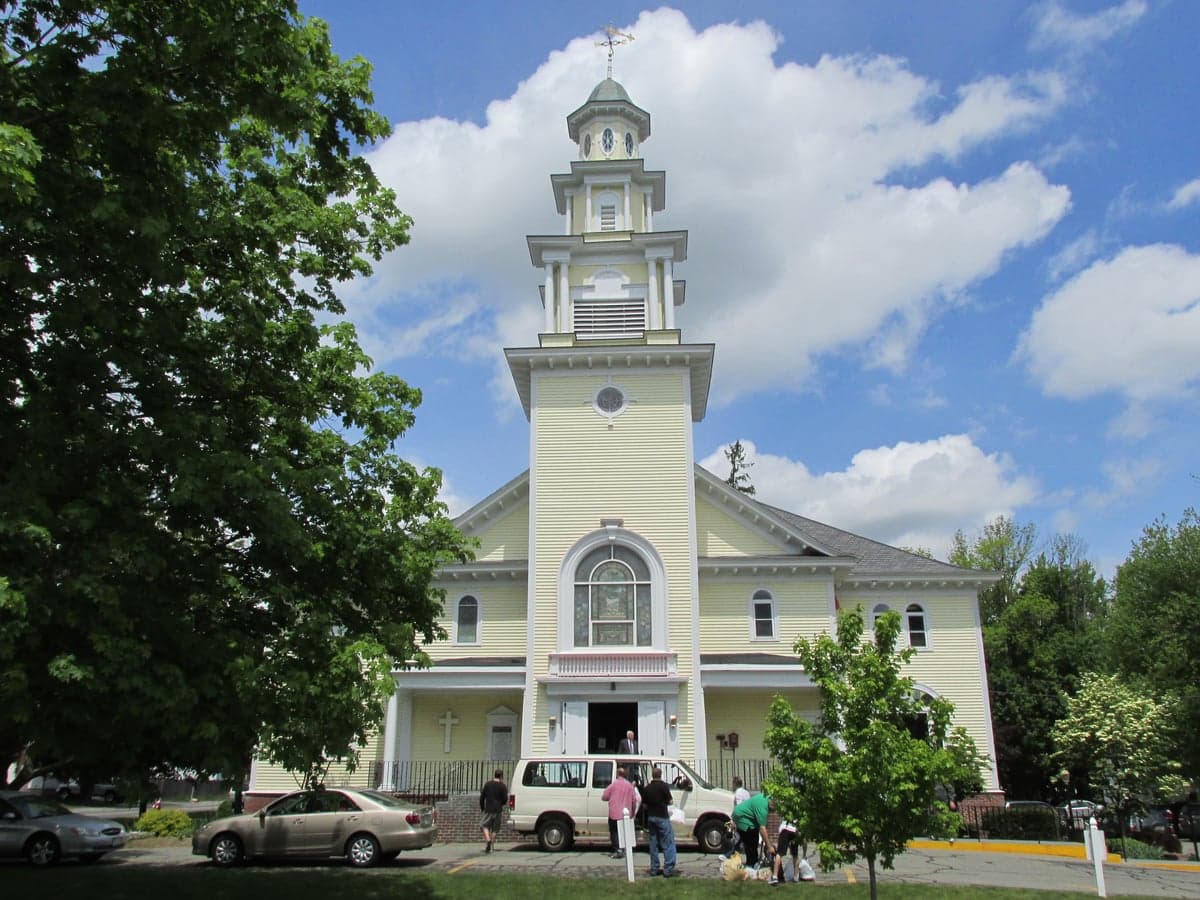
Photo: Wikipedia
Personal Sovereignty in Dracut, MA
Moderate friction. Expect trade-offs in some aspect of personal liberty and independence.
What does Personal Sovereignty tell us?
Personal Sovereignty measures your capacity for self-reliance and independence with minimal government friction. Higher scores mean fewer barriers between you and the way you want to live... but it assumes you have the space you need and good neighbors.
What does this tell us?
Personal Sovereignty measures your capacity for self-reliance and independence with minimal government friction. Higher scores mean fewer barriers between you and the way you want to live... but it assumes you have the space you need and good neighbors.
State Policy
Energy independence: Importer (5% of energy produced in-state)
Personal Liberty
Homesteading

Personal Liberty Analysis
Dracut, Massachusetts, offers a nuanced personal sovereignty environment that balances the state's progressive regulatory framework with a distinctly rural, self-reliant character. For individuals and families prioritizing autonomy, the town provides meaningful opportunities for self-defense, homesteading, and personal liberty, though these exist within the broader context of Massachusetts' higher tax burden and more restrictive gun laws. Understanding how Dracut's local culture and zoning interact with state-level policies is key to evaluating whether this community aligns with a freedom-first lifestyle.
Tax burden and regulatory posture in Dracut
Massachusetts is a high-tax state, and Dracut residents face the full weight of that reality. The state's income tax is a flat 5.0% on all earned income, with no local income tax. Property taxes in Dracut are moderate for the region, with a 2025 rate of approximately $13.50 per $1,000 of assessed value, which is below the state average of roughly $15.00. A median home valued at $500,000 would carry an annual tax bill of about $6,750. While not crushing, this is significantly higher than in neighboring New Hampshire, where property taxes average around $20 per $1,000 but there is no income or sales tax. Dracut's sales tax is the state's 6.25%, applied to most goods except groceries and clothing under $175. The regulatory environment is heavy-touch in areas like building permits, environmental restrictions, and vehicle inspections. Dracut enforces the state's strict Title 5 septic regulations, which can require costly upgrades during property sales. Zoning is relatively permissive for a Massachusetts suburb, with many parcels zoned for single-family homes on lots of one acre or larger, but any new construction or major renovation requires multiple permits and approvals from the building department and conservation commission. The town's regulatory posture is best described as "compliant with state mandates" rather than locally aggressive, but the cumulative effect is a higher administrative burden than in less regulated states.
Self-defense and gun law specifics in Dracut
Massachusetts has some of the most restrictive gun laws in the United States, and Dracut residents must navigate them carefully. The state requires a License to Carry (LTC) for any handgun possession, whether open or concealed carry. The LTC application process includes a background check, fingerprinting, a firearms safety course, and a personal interview with the local police chief. Dracut's police department is known for being reasonably efficient in processing LTC applications, typically issuing licenses within the state-mandated 40-day window, though delays can occur. The state's "may issue" framework gives chiefs discretion, but in practice, Dracut issues LTCs to qualified applicants without arbitrary denial. Magazine capacity is capped at 10 rounds, and the state's assault weapons ban prohibits many popular semi-automatic rifles. "Stand your ground" does not exist in Massachusetts; the state imposes a duty to retreat if safely possible before using deadly force in self-defense. Castle doctrine applies, meaning no retreat is required inside one's home, but the burden of proof remains on the defender. For those prioritizing self-defense, Dracut is workable but requires strict compliance with state law. The town's low violent crime rate (roughly 0.8 incidents per 1,000 residents in 2024) means most residents never need to test these laws, but the legal landscape is undeniably restrictive compared to states like New Hampshire or Texas.
Self-reliance and homesteading viability in Dracut
Dracut's rural character makes it one of the more viable communities in Greater Boston for self-reliance and homesteading. The town's zoning allows for agricultural uses on parcels of two acres or more, and many residents keep chickens, bees, and even small livestock like goats or sheep. Lot sizes in the town's rural districts typically range from one to three acres, providing enough space for substantial gardens, small orchards, and outbuildings. The town's Right to Farm bylaw protects agricultural activities from nuisance complaints, a critical safeguard for anyone raising animals or running a small farm. Off-grid living is legally challenging but not impossible. Massachusetts requires connection to the electrical grid for new construction, but existing homes can install solar panels with net metering. Rainwater collection is allowed for non-potable uses, and composting toilets are permitted under Title 5 if properly designed. The town's water table is high in many areas, making private wells feasible but requiring careful siting. Dracut's Middlesex County soil quality is generally good for gardening, with loamy soils in the eastern part of town. The growing season runs from mid-April to mid-October, roughly 160 days, suitable for most vegetables and some fruit trees. For those seeking a semi-self-sufficient lifestyle, Dracut offers a realistic middle ground: you can produce a significant portion of your own food and energy, but full off-grid independence is constrained by state building codes and utility requirements.
Personal liberties in Dracut: parental rights, medical autonomy, and property
Massachusetts law generally supports strong parental rights in education and healthcare decisions. Parents have the legal right to opt their children out of sex education and any curriculum they find objectionable, though the state's 2018 anti-bullying law requires schools to address gender identity issues, which has led to conflicts with some conservative families. Dracut Public Schools, with an enrollment of about 3,800 students, has a reputation for being responsive to parental concerns, but the district follows state mandates on curriculum and student records. Medical autonomy is mixed. Massachusetts has broad vaccine mandates for school attendance, with only medical exemptions allowed (no religious or philosophical exemptions). This is a significant consideration for families who oppose mandatory vaccination. The state also has a public health emergency law that allows the governor to impose restrictions, though this was used sparingly after 2021. On property rights, Dracut has a relatively light touch with zoning enforcement, focusing on health and safety violations rather than aesthetic disputes. The town does not have a historic district commission, so homeowners can modify their properties without design review. Short-term rentals like Airbnb are permitted but require a $100 annual registration and must comply with state occupancy taxes. Speech and assembly rights are fully protected under the First Amendment, and Dracut has no local ordinances restricting political signs or public gatherings beyond standard time, place, and manner regulations.
Overall, Dracut offers a moderate level of personal sovereignty relative to other Massachusetts communities, and a significantly lower level than in neighboring New Hampshire or most states in the South and Mountain West. The town's rural zoning, agricultural protections, and responsive police department create a workable environment for self-defense and homesteading, but the state's high taxes, restrictive gun laws, and vaccine mandates are real constraints. For a conservative-leaning individual or family who values autonomy but needs to remain in the Boston area for work or family, Dracut represents one of the better options within Massachusetts. Those for whom personal sovereignty is the highest priority should consider crossing the state line into New Hampshire, where the tax burden is lower, gun laws are more permissive, and vaccine mandates do not apply. Dracut is a compromise—a place where you can live a largely self-directed life, but within a framework that requires active compliance with state-level regulations.

* Values derived from national, state, county, city and local statistics and may differ in a specific area. Last updated: 2026-10-21T23:20:45.000Z
Narrative content on this page is AI-generated and may contain mistakes. Verify any details that matter before acting on them.
ReloMaps may earn a commission from affiliate links at no extra cost to you.

