Political ClimatePolitical Climate in Diamond Springs, CA
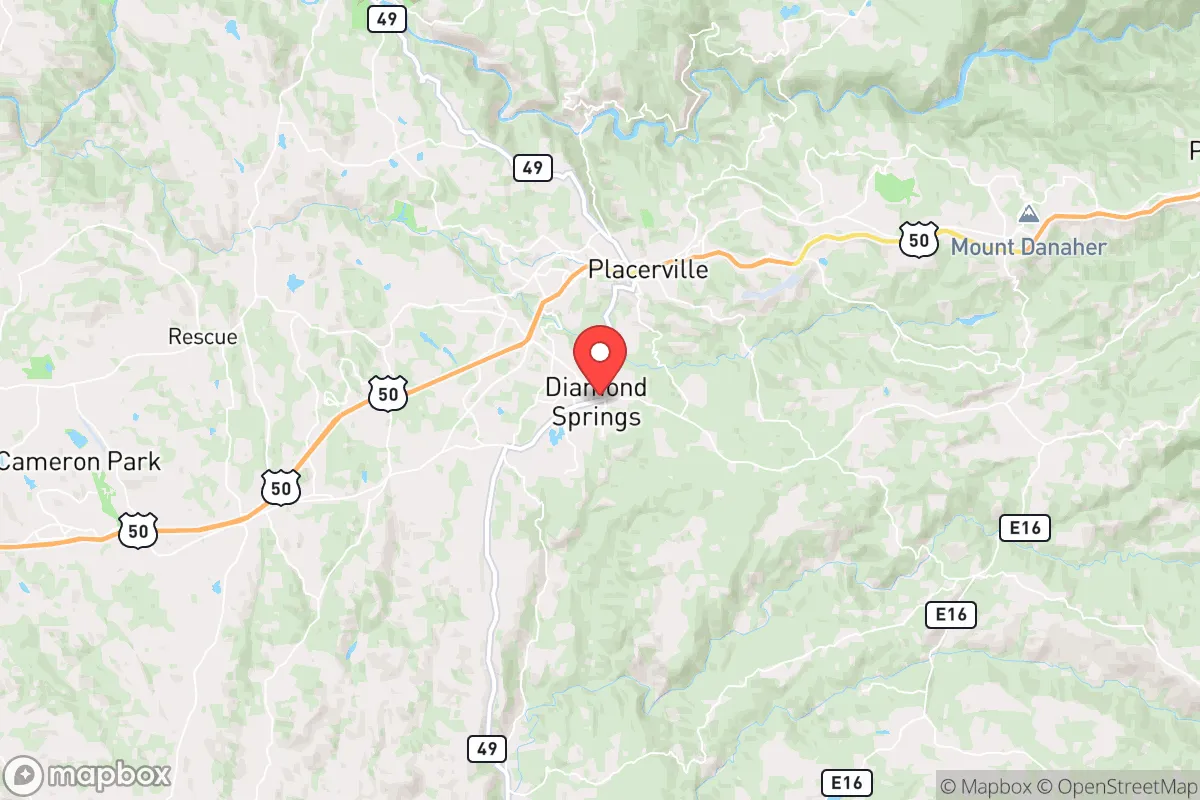
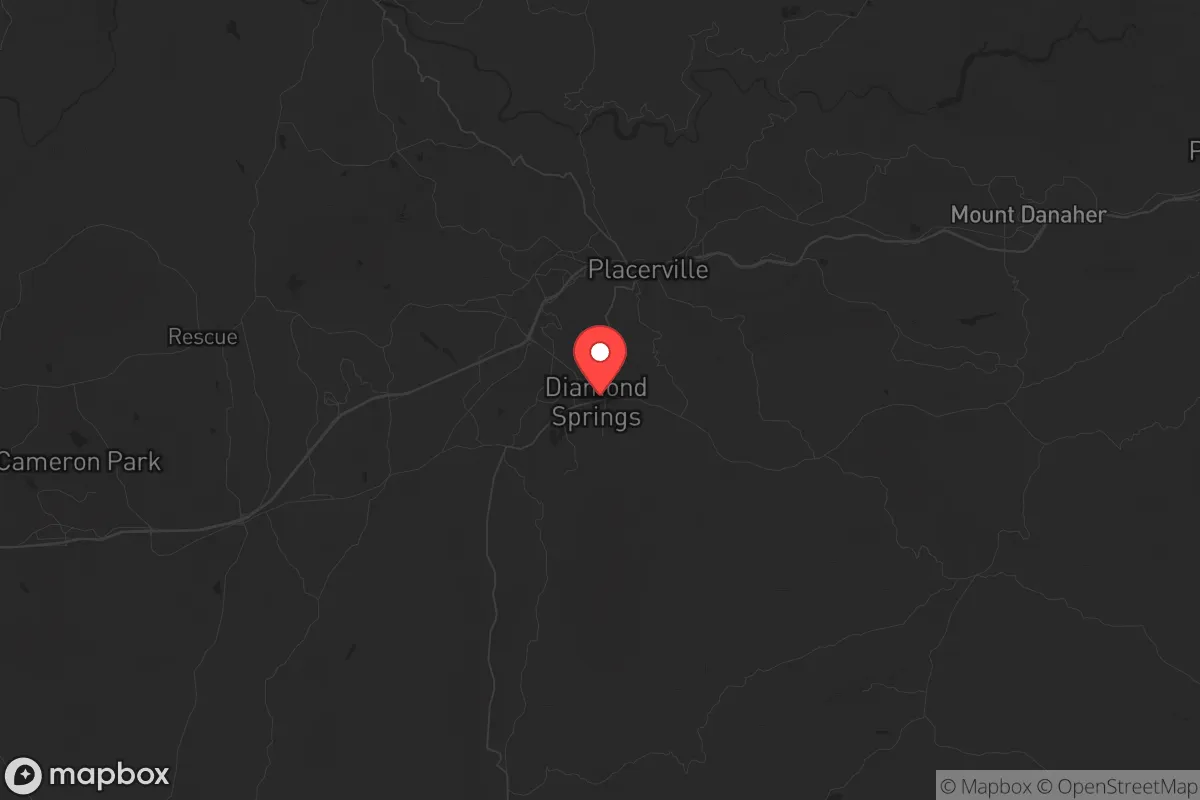
District shown is the primary district for this city’s centroid. Cities may span multiple districts.
Local Political AnalysisPolitical Analysis of Diamond Springs, CA
Diamond Springs sits in El Dorado County, and while the county as a whole has a rural, historically conservative character, the community itself leans clearly Democratic — a Cook PVI of D+16 puts it well to the left of the national average. That’s a bigger gap than you see in most of the Sierra foothills, and it’s been widening for a decade as Bay Area transplants and remote workers settle into the area. The trajectory points one direction: more blue, not less, especially as the county’s population grows and the old timber and mining economy fades further into the rearview.
How it compares
To understand Diamond Springs, you have to look at the immediate neighbors. Placerville, just a few miles north, is more evenly split — it’s the county seat, with a mix of government workers, retirees, and small-business owners who lean more moderate. Go further east toward Pollock Pines or Camino, and you’ll find much redder territory, where Trump signs still outnumber Harris signs by a wide margin in any given election cycle. The contrast is stark: Diamond Springs and the western slope of El Dorado County are becoming a Democratic island in a region that still votes Republican at the county level. The county went for Trump in 2024, but Diamond Springs itself and the surrounding unincorporated areas along Highway 49 consistently break for Democrats by double digits. Compared to the state as a whole, Diamond Springs is actually slightly less Democratic than California’s coastal metros — San Francisco and Oakland are D+40 or worse — but it’s significantly bluer than the rest of the Sierra foothills.
What this means for residents
For conservative residents, the practical reality is that they’re a minority in Diamond Springs proper, but they’re not isolated. The county supervisors are still majority-Republican, and the sheriff’s office and district attorney reflect that. Gun rights, property rights, and resistance to state housing mandates are live political issues here, and conservative voices still get a fair hearing at county board meetings. For liberal residents, the advantage is that local elections in Diamond Springs’ precincts tend to favor progressive candidates, and there’s a visible network of Democratic clubs and environmental groups active in the area. But the state’s top-down policies — from gas car bans to high-speed rail — are less popular here than in the Bay Area, so even Democratic voters in Diamond Springs tend to be more pragmatic than their coastal counterparts. The practical upshot: you’ll see both yard signs on the same street, and people generally get along, but the political conversation is more charged than it was 20 years ago.
What daily life is like politically
In practice, the political climate shapes daily life in subtle ways. The local school board and the county planning commission are where the real fights happen — over growth, water rights, and wildfire mitigation. Diamond Springs’ Democratic lean means the community tends to support funding for fire safety and environmental restoration, but there’s also a strong libertarian streak that resists new regulations. The biggest cultural distinction is the blend of old foothill independence with new suburban sensibilities. Longtime residents remember when this was a gold rush town with a single general store; now it’s a bedroom community for Sacramento, about 45 minutes away. That shift is the engine of the political change — and it’s not slowing down. Expect Diamond Springs to keep trending left, even as the surrounding county stays red, making it an increasingly interesting political microcosm in the Sierra foothills.

State Political ClimatePolitical Climate in California
State Political AnalysisPolitical Environment in the State
California is one of the most reliably Democratic states in the country, and it has moved further in that direction over the past two decades. Democrats hold every statewide office, both U.S. Senate seats, and a supermajority in both chambers of the Legislature; the last Republican to win a statewide race was Arnold Schwarzenegger in 2006, and the last Republican presidential candidate to carry California was George H.W. Bush in 1988. The coalition driving that lean is concentrated in the big coastal metros — Los Angeles County, the Bay Area, and San Diego — plus a growing share of Latino and Asian American voters inland. The 20-year arc is stark: in 2004 George W. Bush lost California by about 10 points; by 2020 and 2024 the Democratic margin had widened to roughly 29 and 20 points respectively, with the 2024 narrowing driven partly by Latino shifts in places like the Central Valley.
Urban vs. rural divide
The political map is essentially a coastline-versus-interior story. The Bay Area — San Francisco, Oakland, Berkeley, and Silicon Valley — is the most Democratic dense region in the state and supplies a huge share of statewide campaign money and progressive policy energy. Los Angeles and San Diego anchor the southern coast, with San Diego's coastal neighborhoods trending blue while its inland and northern reaches (Escondido, Oceanside) stay competitive. The interior runs the other way: the Central Valley (Fresno, Bakersfield, Modesto) is purple-to-red and culturally conservative, the Sierra foothills and rural north (Redding, Chico, the Mother Lode counties) are deep red, and Orange County — once the nation's archetypal Republican suburb — flipped to Democrats in 2016 and has stayed competitive since, though its coastal and inland halves now diverge sharply. Riverside and San Bernardino counties (the Inland Empire) are the fastest-growing and most genuinely swingy large counties in the state.
Policy environment
California's tax structure leans heavily on high earners: the top marginal income tax rate hits 13.3% (plus a 1% mental-health surcharge above $1 million), among the highest in the nation, while the state sales tax base rate is 7.25% before local add-ons. The regulatory posture is interventionist — aggressive environmental rules (the 2035 ban on new gasoline car sales, cap-and-trade), strict building and land-use codes, and a dense labor-law regime. On education, the state has pushed universal transitional kindergarten, ethnic-studies requirements in high school, and a 2024 law (AB 1955, the "SAFETY Act") barring districts from requiring staff to disclose a student's gender identity to parents without consent. Health care is expansive — Medi-Cal covers undocumented children and, as of 2024, most undocumented adults. Election law is vote-by-mail-by-default with same-day registration and automatic voter registration at the DMV.
Recent policy direction
The last several years have produced a dense stack of legislation a relocator should weigh. On guns, California has the nation's strictest regime — assault-weapons bans, a 10-day waiting period, red-flag laws, and a 2023 concealed-carry law (SB 2) that sharply restricted permits before courts partially blocked it. On speech and privacy, the state has strong consumer-privacy law (CCPA/CPRA) but also active content-moderation debates and a 2024 law (AB 2839) targeting deceptive AI-generated election content that drew a First Amendment challenge. On property and taxation, Proposition 13 still caps property-tax increases for long-term owners, but Proposition 19 (2020) narrowed inheritance breaks, and the 2024 passage of Proposition 36 stiffened penalties for theft and drug crimes — a notable tough-on-crime turn. On medical and bodily autonomy, California enshrined abortion rights in the state constitution (Prop 1, 2022) and expanded telehealth prescribing. On voting, the state has some of the most permissive ballot-access and mail-voting rules in the country.
Civil unrest & political movements
California has a long, visible protest culture on both sides. The left is organized and well-funded — environmental groups, labor (the 2023 fast-food-worker law and Hollywood strikes), and housing-justice coalitions. The right has its own flashpoints: the 2022 recall of San Francisco District Attorney Chesa Boudin, the recurring "State of Jefferson" secession talk in rural northern counties, and 2024's "Freedom Cities" movement, in which Huntington Beach and a handful of other municipalities passed resolutions refusing to enforce state sanctuary and gun laws. Immigration is a permanent fault line: California is a sanctuary state under SB 54 (2017), which limits local cooperation with federal immigration enforcement, and border-adjacent politics in San Diego and Imperial counties stay tense. Election-integrity disputes are lower-volume than in some states but not absent — county registrars have faced lawsuits over voter-roll maintenance, and the 2024 AI-deepfake law fight kept the issue in the news.
Projection
Over the next 5–10 years, expect California to stay solidly Democratic at the statewide level, but with two real shifts. First, continued out-migration — roughly 800,000 net residents left between 2020 and 2024, many to Texas, Arizona, and Nevada — is thinning the middle class and could modestly soften the Democratic margin, especially as Latino voters in the Inland Empire and Central Valley continue drifting toward Republicans. Second, the state is likely to keep tightening its progressive policy stack (climate, housing, labor) while also tacking toward the center on crime and public safety, as Prop 36 signaled. A new resident in 2035 should expect a state that is still blue, still expensive, still the national laboratory for progressive policy — but with more red-leaning suburbs and a louder internal argument about affordability and governance.
Bottom line for someone moving in: California is not a place where a conservative voter will feel politically at home at the state level, but it is far from monolithic — Orange County, the Inland Empire, the Central Valley, and the rural north offer genuinely conservative or swingy communities, and the state's policy environment is the most consequential thing you'll notice day to day, from taxes to gun rules to school curricula. Liberal residents will find the policy environment aligned with their values but should budget for the cost of living and the regulatory friction. Either way, come in with eyes open: the state's direction is set, the internal divides are real, and the practical experience of living here depends far more on which county you pick than on who wins Sacramento.
* Values derived from national, state, county, city and local statistics and may differ in a specific area. Last updated: 2026-11-03T19:09:43.000Z
Narrative content on this page is AI-generated and may contain mistakes. Verify any details that matter before acting on them.
ReloMaps may earn a commission from affiliate links at no extra cost to you.

