Quality of Life in Diamond Springs, CA
A high quality of life with strong walkability, manageable living costs, healthy neighborhood signals, and solid amenity access.
What does Quality of Life tell us?
Quality of Life blends cost of living, nearby amenities, socioeconomic signals, and neighborhood character. City-level scores represent the whole municipality; individual neighborhoods can differ.
What does this tell us?
Quality of Life blends cost of living, nearby amenities, socioeconomic signals, and neighborhood character. City-level scores represent the whole municipality; individual neighborhoods can differ.
Cost of Living
43% above national average
The Real Cost of Living in Diamond Springs, CA for 2026
| Tier | Individual | Family (4) |
|---|---|---|
| Survival | $26k | $49k |
| Comfortable | $79k | $117k |
| Luxury | $122k+ | $189k+ |
| Elite (Top 5%) | $144k+ | $223k+ |
71%
The Area Signal
A metric tracking the socioeconomic signals of the area.
Hobbies
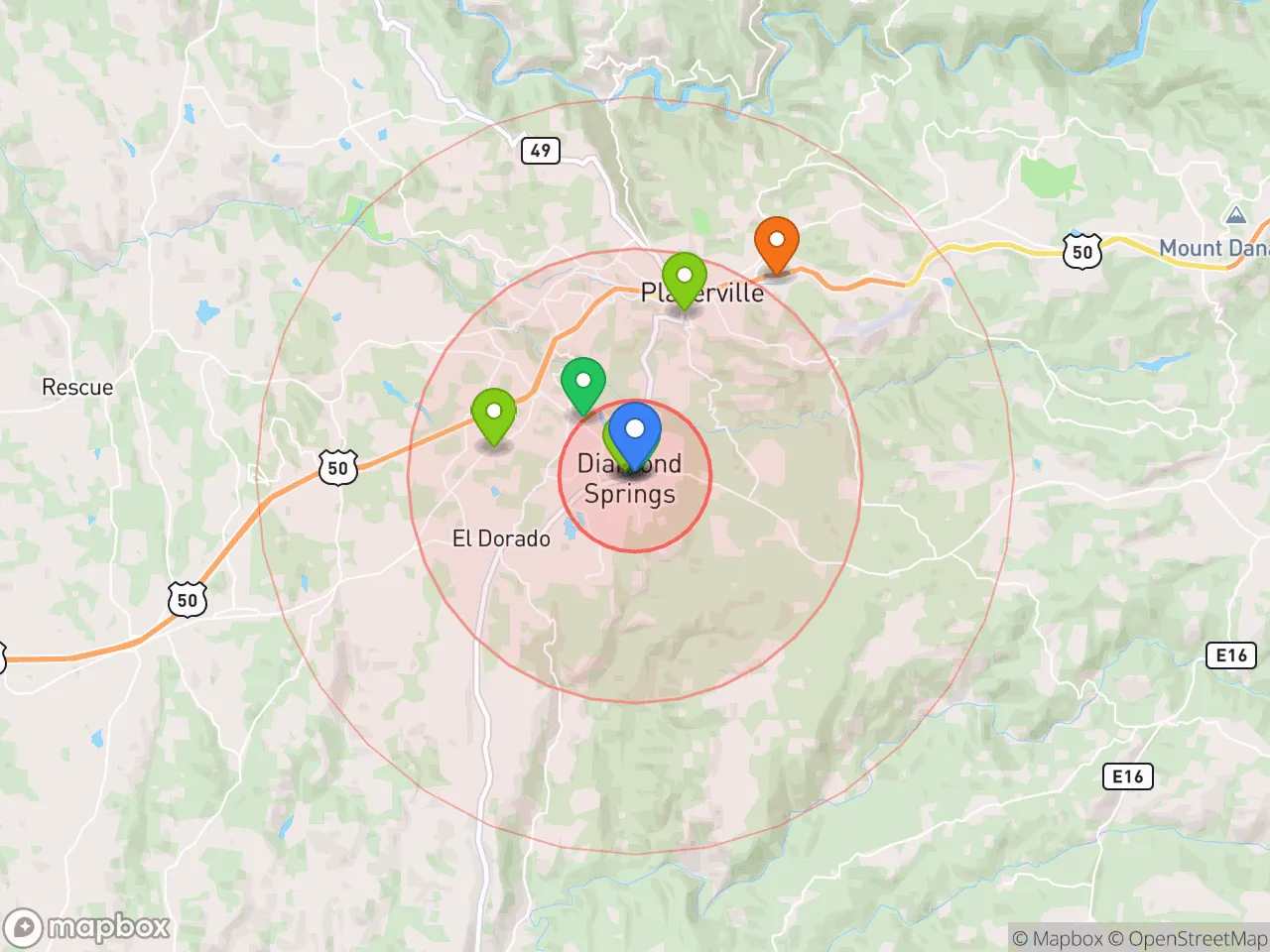
Explore the areaGroceries
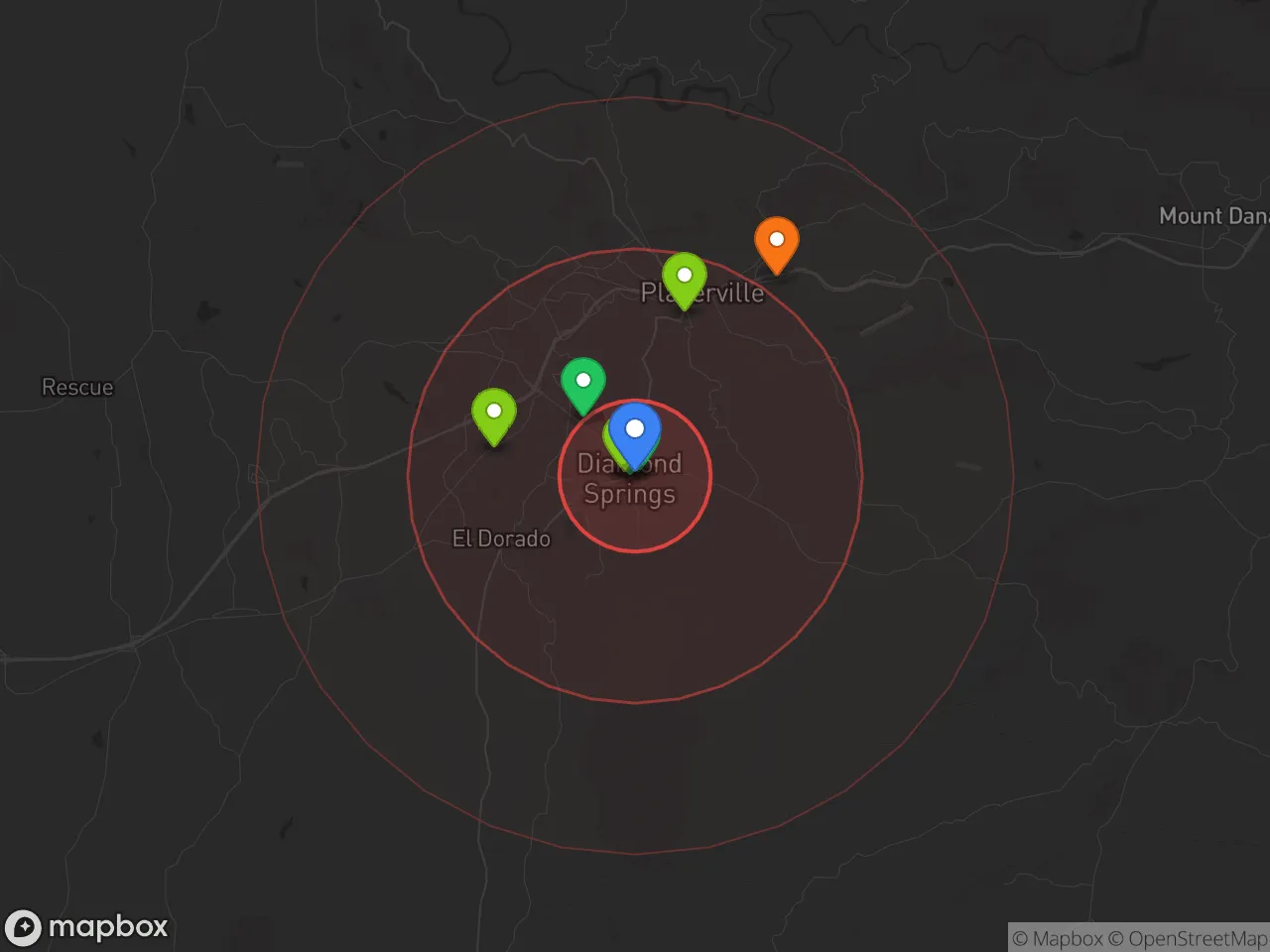
5 within 10 miles
Gas
20 within 10 miles
Hospital
4 within 20 miles
Airport
SAN — Oakland San Francisco Bay
Post Office
USPS — Diamond Springs, CA
Critical Amenities
Quality-of-Life Analysis
Diamond Springs, California, is a small, affluent foothill community in El Dorado County where the cost of living runs roughly 43% above the national average, a figure that reflects its desirability rather than its size. With a median home value of $409,000 and a median rent of $1,644, the area attracts a mix of established professionals, remote workers, and retirees who prioritize proximity to nature over urban convenience. The typical resident is someone who values the quiet, semi-rural rhythm of the Sierra Nevada foothills while still expecting the amenities and safety of a well-maintained California community.
Cost of living and housing affordability compared to Sacramento and Placerville
Diamond Springs sits in a peculiar affordability pocket: it is noticeably cheaper than the Bay Area suburbs to the west, yet more expensive than the flatlands of the Sacramento Valley. The composite cost-of-living index of 143 means everyday expenses—groceries, utilities, and healthcare—run about 43% higher than the U.S. norm, but that figure is tempered by housing costs that remain below the California coastal average. The median home value of $409,000 is roughly $100,000 less than the statewide median, making it an entry point for buyers priced out of Folsom or Roseville. Renters fare similarly, with a median rent of $1,644 that undercuts nearby Placerville's average by a few hundred dollars but still demands a household income around $65,000 to stay comfortably housed. Property taxes are held in check by Proposition 13, and there is no local sales tax surcharge beyond the county's base rate, which keeps the monthly carrying costs lower than the index alone suggests.
Daily life, schools, and amenities in the foothills
Daily life in Diamond Springs revolves around a slow, outdoors-oriented pace that is a deliberate contrast to the Sacramento metro's 40-minute-plus commutes. The average commute here is just over 21 minutes, a figure that reflects the many residents who work in Placerville (a 10-minute drive north) or in the healthcare and government sectors of El Dorado County. The community is served by the Buckeye Union School District, which consistently ranks among the top elementary districts in the Sacramento region, and by El Dorado High School for secondary education. Amenities are modest but sufficient: the nearby historic downtown of Placerville offers boutique shopping, farm-to-table restaurants, and the weekly farmers' market, while the American River and Sly Park Reservoir provide swimming, fishing, and hiking within a 20-minute radius. For daily errands, the Safeway and Raley's in Placerville cover groceries, and the larger big-box retail of Folsom is a 35-minute drive for anything else. The area has no major hospital, but Marshall Medical Center in Placerville handles emergencies, with UC Davis Medical Center in Sacramento as the regional trauma referral.
The people who thrive in Diamond Springs are those who see a 21-minute commute as a feature, not a compromise, and who trade walkable urban density for acreage, oak woodlands, and a community where neighbors know each other by name. It suits remote workers who need reliable internet (fiber is available in most neighborhoods), families who want top-rated schools without private-school tuition, and retirees who want a lower-cost foothill base than Grass Valley or Nevada City. Those who need nightlife, cultural institutions, or a diverse restaurant scene will find the area limiting, but for buyers and renters who prioritize space, safety, and the Sierra foothills lifestyle, Diamond Springs delivers a cost-effective version of California living that is increasingly rare.

Crime in Diamond Springs, CA
Higher crime rates than 58% of comparable U.S. locations.
Violent CrimeViolent Crime Analysis
Property CrimeProperty Crime Analysis
Crime Analysis
Diamond Springs, a small unincorporated community in El Dorado County, presents a mixed safety picture defined by property crime rates that significantly exceed national averages while violent crime remains closer to state norms. The community's location in the Sacramento metro area's outer fringe means its public safety is shaped by both local conditions and the broader regional criminal justice environment, which leans progressive. For prospective residents, the most pressing concern is property crime, which occurs at a rate of 1,821.5 incidents per 100,000 residents—roughly 40% higher than the national average—while violent crime sits at 434.9 per 100,000, a figure that warrants attention given the region's lenient prosecution trends.
Crime in context
Diamond Springs' violent crime rate of 434.9 per 100,000 is elevated compared to the national baseline of approximately 380 per 100,000, though it aligns closely with California's statewide average. The property crime rate, however, is the standout concern: at 1,821.5 per 100,000, it exceeds both the national figure (roughly 1,954 per 100,000 is the U.S. average, but Diamond Springs' number still places it above many comparable foothill communities) and reflects a persistent regional issue. El Dorado County as a whole has historically reported lower crime than Sacramento County, but Diamond Springs' proximity to Highway 49 and its role as a commuter hub for Placerville and Folsom make it a target for transient property offenders. When compared to nearby Placerville (which reports similar property crime density) and the more affluent communities of Cameron Park and El Dorado Hills, Diamond Springs ranks in the middle—safer than the urban core of Sacramento but noticeably less secure than its wealthier neighbors to the west.
What residents experience
For those living in Diamond Springs, the daily reality is less about random violence and more about opportunistic theft. Residents commonly report vehicle break-ins, package theft, and burglaries of outbuildings and sheds, particularly in areas near the commercial corridors along Pleasant Valley Road and Missouri Flat Road. The community's lack of a dedicated municipal police force—law enforcement is provided by the El Dorado County Sheriff's Office—means response times can be slower than in incorporated cities, and proactive patrols are limited. This is compounded by the regional justice system's approach: El Dorado County, while not as progressive as Sacramento County, still operates under California's broader criminal justice reforms, including Proposition 47, which reclassified many property crimes as misdemeanors. As a result, repeat offenders face minimal consequences, and residents frequently express frustration that known thieves cycle through the system without meaningful detention. The practical takeaway is that property crime is the dominant safety issue, and residents must take proactive measures—security cameras, neighborhood watch participation, and securing vehicles—to mitigate risk.
Neighborhood-level variation is modest but real. The eastern sections of Diamond Springs, closer to the Sierra foothills and larger lot sizes, see fewer incidents than the denser, older housing stock near the Highway 49/50 junction. The area around the Diamond Springs Hotel and the historic downtown core experiences more foot traffic and, consequently, more petty theft. For families considering relocation, the safest approach is to prioritize properties with good visibility, strong community ties, and proximity to the sheriff's substation on Forni Road. While Diamond Springs is not a high-violence community, its property crime rates and the lenient regional justice environment make it a location where vigilance is a necessary part of daily life.
* Values derived from national, state, county, city and local statistics and may differ in a specific area. Last updated: 2026-11-03T19:09:43.000Z
Narrative content on this page is AI-generated and may contain mistakes. Verify any details that matter before acting on them.
ReloMaps may earn a commission from affiliate links at no extra cost to you.

