Demographics of Diamond Springs, CA
Affluence Level in Diamond Springs, CA
A middle-class area roughly in line with national averages across income, home values, education, and employment.
People of Diamond Springs, CA
Diamond Springs, California, is a community of roughly 12,642 residents whose identity is rooted in a gold-mining past and a present defined by quiet, working-class stability. The population is predominantly White (72.1%) with a significant Hispanic minority (20.0%), a small East/Southeast Asian community (2.0%), and a negligible Black population (0.1%). Foreign-born residents make up just 3.9% of the populace, and about 26.1% hold a college degree, reflecting a blue-collar, family-oriented character that has remained remarkably consistent over the decades.
How the city was settled and grew
Diamond Springs' human history begins with the California Gold Rush of 1848-49, when placer gold was discovered in the creek beds of the Sierra Nevada foothills. The town's name itself derives from the "diamond" quartz crystals found alongside the gold. The original population was a transient, overwhelmingly male wave of Anglo-American prospectors, along with smaller numbers of Chinese miners who arrived in the 1850s and worked claims that had been abandoned by whites. These early Chinese settlers established a small enclave along what is now the historic core near Missouri Flat Road, though their presence was largely erased by the Chinese Exclusion Act of 1882 and subsequent displacement.
By the 1860s, as surface gold played out, Diamond Springs transitioned into a supply and milling town for the larger hard-rock mining operations in nearby Placerville. The population became more settled and family-oriented, with Cornish and Irish immigrants arriving to work in the quartz mills. The construction of the Central Pacific Railroad through the Sierra in the 1860s brought a wave of Italian and Portuguese laborers, some of whom stayed and established small farms in the surrounding valleys. These groups built modest homes in what is now the Old Town Diamond Springs district, centered on Pleasant Valley Road, and the Missouri Flat area, which became a commercial crossroads. The town remained a small, isolated foothill community through the early 20th century, with a population that barely exceeded 1,000 residents as late as 1950.
Modern era (post-1965)
The passage of the Immigration and Nationality Act of 1965 had little direct effect on Diamond Springs, as the town did not attract the new waves of Asian or Latin American immigration that transformed California's coastal cities. Instead, the modern era of Diamond Springs' population history is defined by domestic in-migration from the Sacramento metropolitan area, roughly 40 miles to the west. Beginning in the 1970s and accelerating through the 1990s, working-class families—many of them White and of second- or third-generation Gold Rush ancestry—moved to Diamond Springs seeking affordable housing and a rural lifestyle within commuting distance of Sacramento and the state government jobs in the capital.
This suburbanization wave concentrated in the Green Valley and Diamond Springs Ranch subdivisions, which were developed on former ranchland in the 1980s and 1990s. These are classic tract-home neighborhoods of three-bedroom, two-bath houses on quarter-acre lots, and they remain the demographic heart of the community today. A smaller but notable Hispanic population, largely of Mexican descent, grew during this same period as agricultural workers from the Central Valley moved into the area for work in the region's timber and quarrying industries. This community is most concentrated in the Gold Country Mobile Home Park and the older rental stock along Diamond Road, south of the historic downtown. The East/Southeast Asian population, at just 2.0%, is dispersed rather than concentrated, with no distinct ethnic enclave; these residents are primarily professionals employed in healthcare and engineering in Placerville or Sacramento.
The future
Diamond Springs is not becoming more diverse. The Hispanic share of the population has held steady at roughly 20% since 2010, while the White share has remained above 70%, and the East/Southeast Asian and Black populations are statistically negligible. The foreign-born share of 3.9% is less than half the California state average, indicating that international immigration is not a significant driver of population change. Instead, the community is aging: the median age is rising as younger residents leave for college and urban job markets, while retirees from the Sacramento area continue to move in for the lower cost of living and the foothill climate.
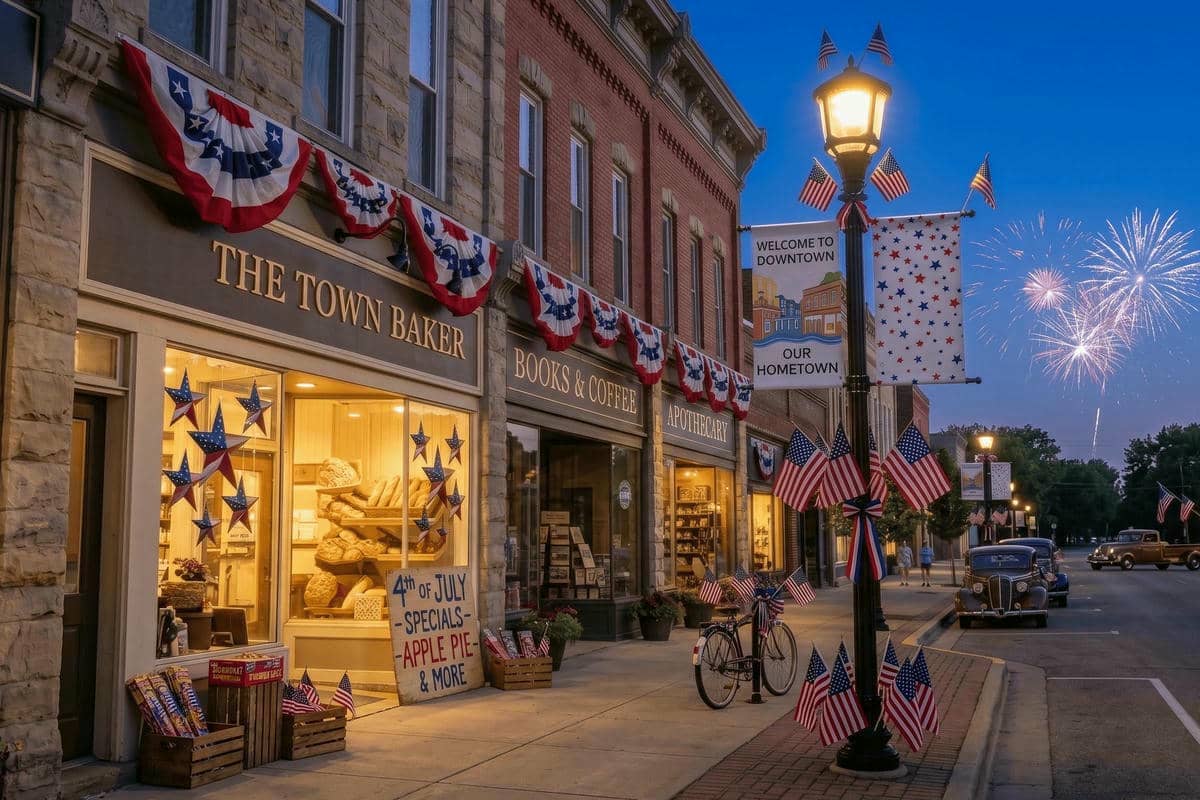
New residential development is limited by topography and county zoning, with most growth occurring as infill in the Missouri Flat commercial corridor, which has seen new retail and a handful of small-lot housing projects. The next 10-20 years will likely see a slow, modest population increase—perhaps 5-10%—driven by domestic migration from the Sacramento region, with the demographic profile remaining predominantly White and Hispanic. The cultural identity of Diamond Springs is likely to remain rooted in its Gold Rush heritage, celebrated through the annual Diamond Springs Community Festival and the preservation of Old Town's 19th-century storefronts.
For someone moving to Diamond Springs today, the bottom line is this: it is a stable, low-density, family-oriented community with a strong sense of local history and little demographic churn. The schools are part of the El Dorado Union High School District, and the community's character is best suited to those seeking a quiet, rural-suburban lifestyle rather than urban diversity or rapid change. The population is not shrinking, but it is also not transforming—it is a place where the people of the Gold Rush era would still recognize the character of their descendants.

* Values derived from national, state, county, city and local statistics and may differ in a specific area. Last updated: 2026-11-03T19:09:43.000Z
Narrative content on this page is AI-generated and may contain mistakes. Verify any details that matter before acting on them.
ReloMaps may earn a commission from affiliate links at no extra cost to you.

