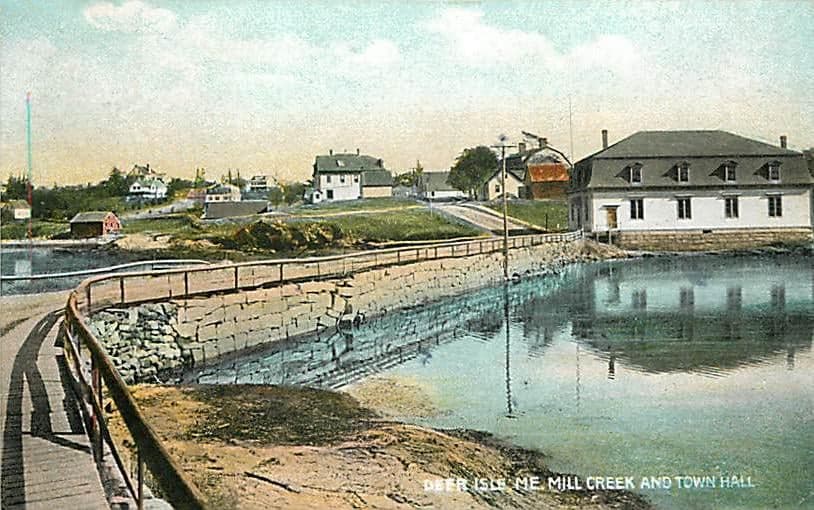
Photo: Wikipedia
Political ClimatePolitical Climate in Deer Isle, ME
District shown is the primary district for this city’s centroid. Cities may span multiple districts.
Local Political AnalysisPolitical Analysis of Deer Isle, ME
Deer Isle, Maine, is a place where the political tide runs noticeably redder than the rest of the state’s coastal reputation. With a Cook Political Report PVI of R+4, this island community in Hancock County leans Republican by a solid margin, a fact that often surprises newcomers expecting the deep-blue politics of Portland or even the more liberal enclaves of Blue Hill and Brooklin just across the bay. The trajectory here isn’t a dramatic swing, but a slow, steady consolidation of conservative voting patterns, driven by a mix of longtime fishing families, seasonal residents from out of state, and a growing number of remote workers who value the island’s quiet independence over any party label.
How it compares
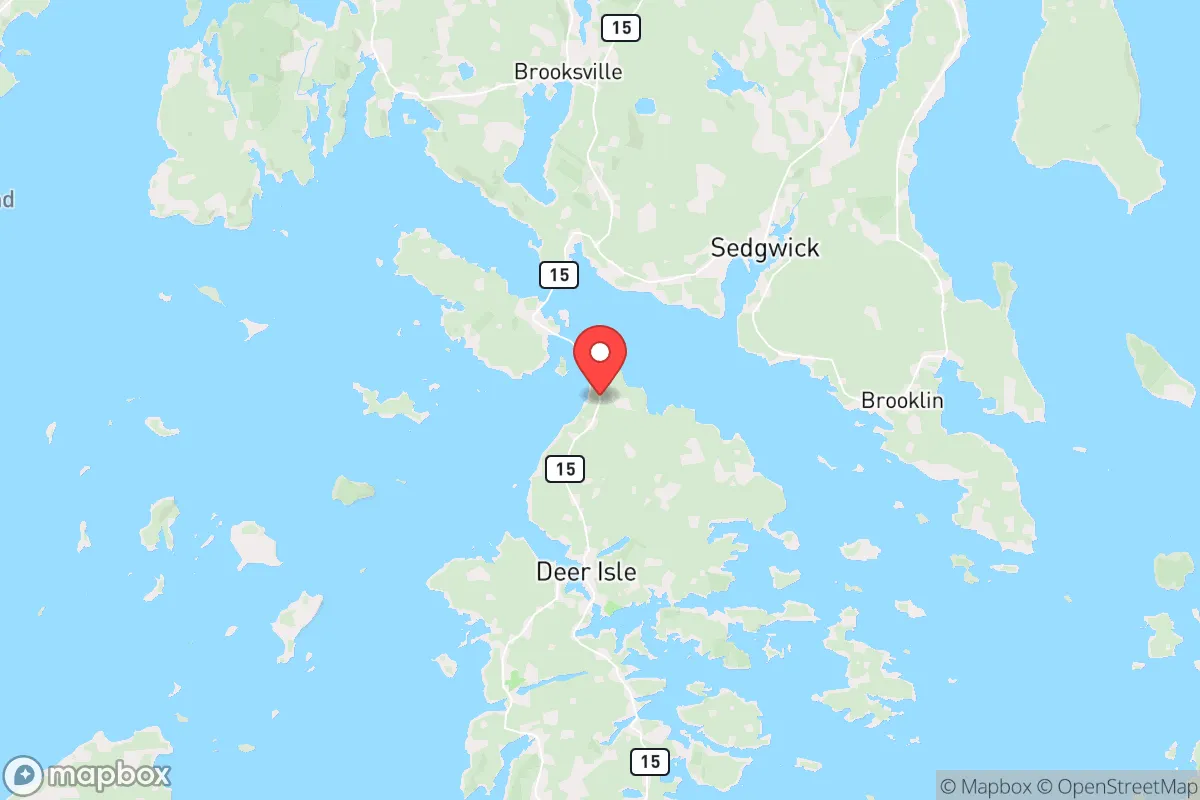
To understand Deer Isle’s politics, you have to look at the map. The island sits in Hancock County, which is a patchwork of contrasts: the college town of Ellsworth and the artsy peninsula of Blue Hill lean left, while the rural mainland towns like Sedgwick and Brooksville trend right. Deer Isle itself, along with neighboring Stonington, forms a conservative anchor in this coastal region. The R+4 PVI means the island votes about four points more Republican than the national average, which is a stark contrast to Maine’s overall status as a split state—Maine has no single Cook PVI because it’s one of only two states that allocates electoral votes by congressional district, and its 1st District (which includes Portland) is solidly Democratic while the 2nd District is strongly Republican. In practical terms, Deer Isle feels more like the 2nd District in its voting habits, even though it’s technically in the 1st. That’s a quirk that shapes local conversations: you’ll hear more talk about property taxes and fishing regulations than about national culture wars.
What this means for residents
For conservative residents, the R+4 lean means their views are the default in local town meetings and school board decisions. The island’s select board and budget votes tend to reflect a fiscal conservatism—keeping taxes low, resisting new spending, and prioritizing infrastructure like the Deer Isle Bridge and the town dock over social programs. For liberal residents, it means being in the minority, but not an isolated one. Blue Hill and Brooklin are just a 20-minute drive away, and many Deer Isle liberals cross the bridge for social circles, progressive church groups, and the arts scene at the Haystack Mountain School of Crafts. In practice, the political climate is less about partisan warfare and more about a live-and-let-live ethos. The island’s year-round population of roughly 2,000 swells in summer, and that seasonal influx—many from Massachusetts and New York—tends to vote more liberally, which can shift the balance in close local races. But the permanent residents, many of whom have deep roots in lobstering and boatbuilding, hold the line on the island’s conservative character.
What this means for residents
What sets Deer Isle apart politically is its fierce localism. This isn’t a place where national party labels drive daily life. The biggest political fights here are about the working waterfront, the cost of heating oil, and whether to allow short-term rentals that squeeze out year-round housing. The island’s R+4 lean is less about Trump or Biden and more about a shared suspicion of outside control—whether that’s state mandates from Augusta or federal fishing quotas. That’s why you’ll find a Republican selectman and a Democratic harbormaster working side by side without drama. The cultural distinction is that Deer Isle is a working community, not a bedroom suburb. The politics are practical, rooted in the sea and the seasons, and that’s unlikely to change anytime soon. If anything, the trend is toward more of the same: a conservative-leaning island that values its independence, its lobsters, and its quiet, stubborn way of life.

State Political ClimatePolitical Climate in Maine
State Political AnalysisPolitical Environment in the State
Maine has shifted from a classic swing state to a reliably Democratic-leaning state over the past two decades, though it remains one of the most politically independent-minded places in New England. The state has voted for the Democratic presidential nominee in every election since 1992, but its unique blend of libertarian-leaning rural voters, Franco-American working-class communities, and progressive coastal enclaves keeps the margin closer than in neighboring Vermont or Massachusetts. The 2024 race saw Kamala Harris carry the state by roughly 7 points, a slight tightening from Joe Biden’s 9-point win in 2020, reflecting a broader national trend that has made Maine’s rural-urban divide more pronounced than ever.
Urban vs. rural divide
The political map of Maine is essentially a story of two distinct regions separated by geography and economics. The southern coastal corridor—anchored by Portland, the state’s largest city, and extending through Brunswick, Bath, and Biddeford—is the Democratic engine room. Cumberland County alone, home to Portland and its suburbs, cast nearly a quarter of the state’s total votes in 2024, and it delivered a 30-point margin for Harris. This area has grown steadily over the past decade, fueled by an influx of out-of-state transplants from Massachusetts and New York, many of whom work in healthcare, education, or the growing remote-work sector.
Outside that corridor, the state is a different political animal. The vast interior and northern reaches—Bangor, Lewiston, Presque Isle, and the sprawling unorganized territories of Aroostook and Piscataquis counties—lean Republican, often by double digits. These are working-class communities built around forestry, paper mills, potato farming, and fishing, where voters are culturally conservative but historically skeptical of both parties. The Second Congressional District, which covers all of this territory, has flipped between parties repeatedly in recent cycles, going for Donald Trump in 2016 and 2020 before narrowly electing a Republican congressman in 2022 and then a Democrat in 2024. It’s the kind of district where a candidate’s stance on the Second Amendment or energy policy can matter more than their party label.
The wildcard is Augusta and the mid-coast region, which includes towns like Camden and Rockland. These areas have trended Democratic in recent cycles but retain a strong independent streak, often electing unenrolled candidates to local office. Maine is one of only two states that uses ranked-choice voting for federal elections, a system that has tended to benefit moderate candidates and punish extreme partisans on both sides.
Policy environment
Maine’s policy environment is a study in contradictions. The state has no sales tax on most goods, which keeps the overall tax burden competitive with many southern states, but it makes up for that with a progressive income tax that tops out at 7.15% and some of the highest property taxes in the nation. The average effective property tax rate hovers around 1.2%, and in rural towns like Dover-Foxcroft or Houlton, that burden can feel heavier because home values are lower and services are spread thin.
On regulation, Maine is a mixed bag. The state has a strong environmental regulatory framework, particularly around coastal development and land use, which can frustrate property owners looking to build or expand. However, it remains one of the most permissive states in the country for gun owners—no permit is required to carry a concealed firearm, and the state has a “shall issue” framework for those who do seek permits. Education policy is locally controlled, with school districts setting their own curricula, though the state has moved toward universal pre-K and increased funding for career and technical education centers in places like Sanford and Waterville.
Recent policy direction
The last five years have seen Maine’s Democratic-controlled legislature push a distinctly progressive agenda, but with notable limits. In 2023, the state passed a paid family and medical leave program funded by a payroll tax, set to phase in through 2026. It also expanded Medicaid under the Affordable Care Act in 2019, a move that had been blocked by a Republican governor for years until voters approved it by referendum. On energy, Maine has aggressively pursued wind power, including the controversial offshore floating wind project in the Gulf of Maine, which has drawn opposition from fishing communities in Stonington and Lubec who worry about impacts on lobster grounds.
On the liberty spectrum, Maine’s record is more nuanced than its reputation suggests. The state passed a “red flag” law in 2019 allowing courts to temporarily seize firearms from individuals deemed a danger to themselves or others, but it has not banned any class of firearms, and the 2024 legislative session saw a bipartisan bill to strengthen self-defense protections for homeowners. Parental rights in education have become a flashpoint, with the state rejecting a school-choice voucher program in 2023 but allowing individual districts to adopt their own policies on curriculum transparency. On medical freedom, Maine was one of the first states to legalize recreational marijuana via referendum in 2016, and it has a robust medical cannabis program, but it also mandates childhood vaccination for school attendance with limited exemptions.
Civil unrest & political movements
Maine is not a state known for street-level political violence, but it has seen its share of organized activism. The 2020 racial justice protests in Portland were large for the city’s size, drawing thousands, and they led to a contentious debate over defunding the police that ultimately resulted in modest reforms rather than cuts. On the right, the Second Amendment community is well-organized, with gun-rights groups successfully defeating a proposed assault weapons ban in the legislature in 2023. The state has also seen a growing libertarian presence, particularly in rural areas, where the Libertarian Party regularly fields candidates and occasionally wins local races in towns like Ellsworth and Belfast.
Immigration has become a visible flashpoint, particularly in Lewiston, which saw a significant influx of Somali refugees beginning in the early 2000s. The city has largely absorbed the new population, but tensions occasionally surface, and the state’s status as a “sanctuary” jurisdiction—where local law enforcement does not cooperate with federal immigration detainers—has drawn criticism from conservative groups. Election integrity has been a quieter issue here than in many states, with ranked-choice voting generally accepted by both parties, though the 2020 election saw a small but vocal group of activists question mail-in ballot procedures in York County.
Projection
Looking ahead to the next decade, Maine’s political trajectory points toward continued Democratic dominance in statewide races, but with a growing rural backlash that could keep the Second District competitive. The state’s population is aging faster than almost any other, and in-migration from out of state—particularly to the southern coast—is likely to reinforce the Democratic lean. However, the influx of remote workers and retirees from red states could introduce a more conservative strain to areas like Oxford Hills and the Belgrade Lakes region, which have seen housing prices surge and new residents arrive with different political expectations.
The wildcard is the state’s energy transition. If offshore wind and the proposed transmission corridor from Quebec to Massachusetts succeed, they could bring jobs and revenue to rural counties that have been bleeding population for decades. If they fail, those same counties will continue to feel left behind, and the rural-urban divide will only widen. A new resident moving to Maine in 2026 should expect a state that remains politically competitive at the margins, with a legislature that will likely stay Democratic but a governor’s race in 2026 that could be closer than recent cycles suggest.
For a conservative relocating to Maine, the practical reality is that you’ll find a state where your gun rights are respected, your property rights are generally protected, and your taxes are manageable—but where your vote for statewide office will likely be in the minority. For a liberal, Maine offers a government that is responsive to progressive priorities on healthcare and the environment, but you’ll need to accept that rural communities will push back on cultural issues. The state’s independent streak means that neither side gets everything it wants, and that’s perhaps the most honest thing to say about Maine’s political climate: it rewards engagement, punishes extremism, and remains stubbornly its own place.
* Values derived from national, state, county, city and local statistics and may differ in a specific area. Last updated: 2026-09-05T23:41:10.000Z
Narrative content on this page is AI-generated and may contain mistakes. Verify any details that matter before acting on them.
ReloMaps may earn a commission from affiliate links at no extra cost to you.

