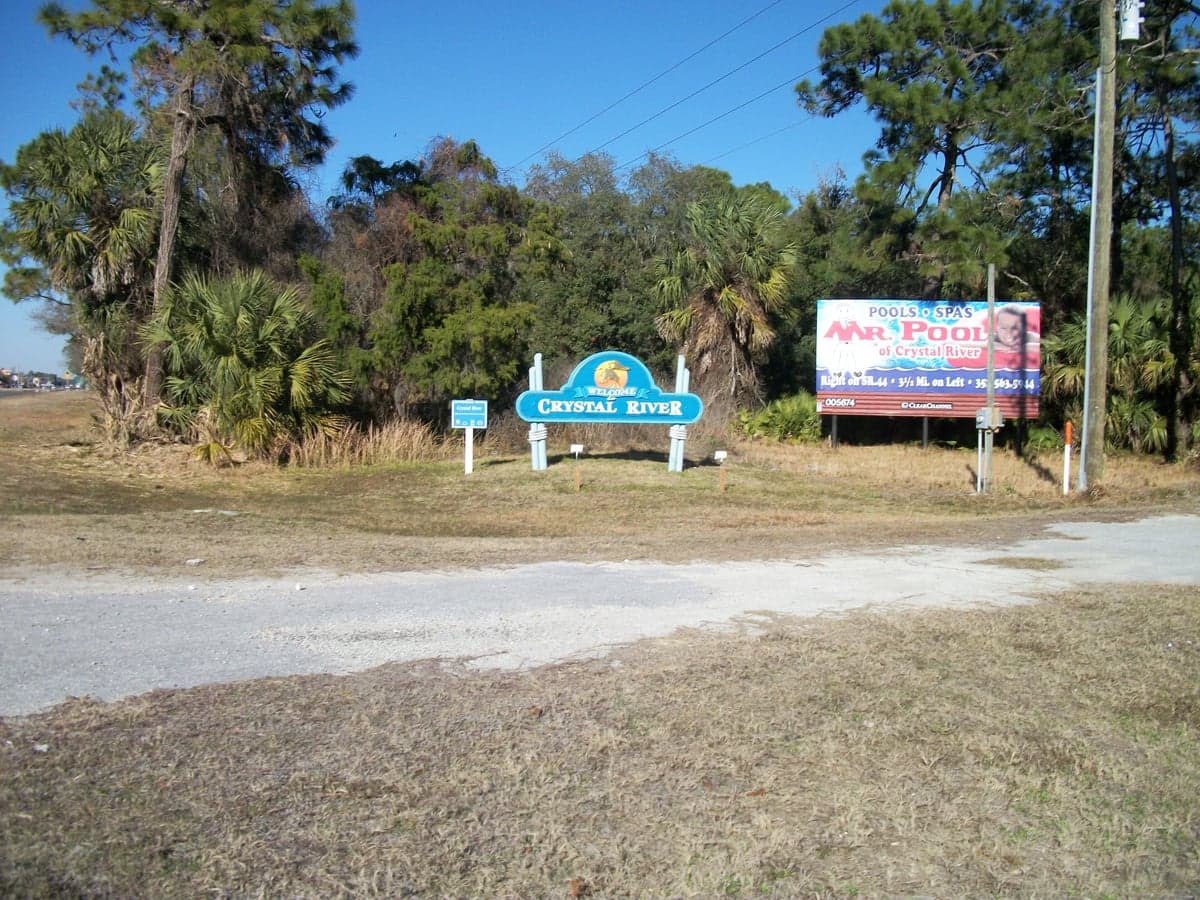
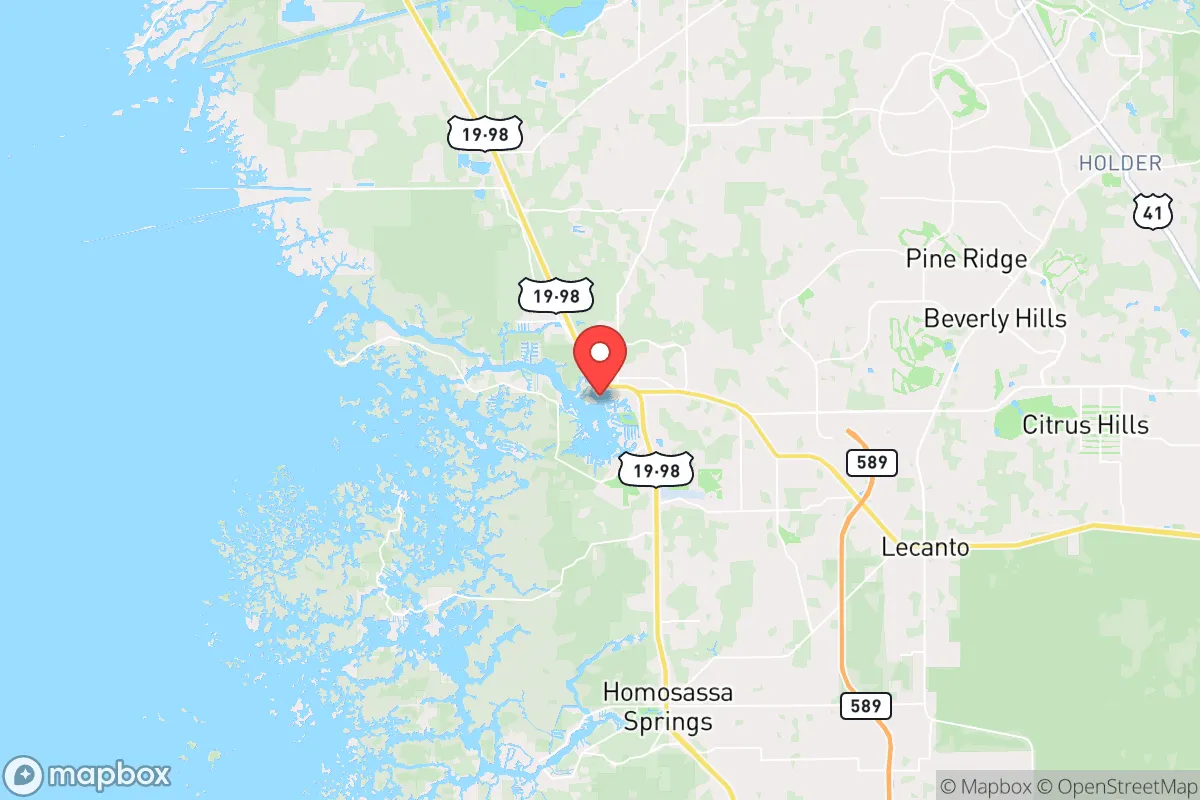
Photo: Wikipedia
Political ClimatePolitical Climate in Crystal River, FL
District shown is the primary district for this city’s centroid. Cities may span multiple districts.
Inherited from parent state — no local data available.
Political rankings in Florida
- Most Conservative Cities in Florida
- Most Liberal Cities in Florida
- Best Liberal-Leaning Towns in the South
- Safest Liberal-Leaning Towns in the South
- Safest Conservative-Leaning Towns in the South
- Safest Liberal-Leaning Towns on the East Coast
- Safest Conservative-Leaning Towns on the East Coast
- Affordable Small Towns for Conservatives
- Most Conservative Counties in Florida
- Most Liberal Counties in Florida
Local Political AnalysisPolitical Analysis of Crystal River, FL
Crystal River leans heavily conservative, and that’s been the case for as long as anyone around here can remember. The city sits in Citrus County, which has voted Republican by wide margins in every presidential election since 2000, and the 2024 cycle was no different—Donald Trump carried the county with roughly 68% of the vote, a spread of about 38 points over Kamala Harris. That’s not an outlier; it’s a continuation of a long-term trend. The local Republican Executive Committee is active, and you’ll see plenty of yard signs and bumper stickers around town, especially in the older, more established neighborhoods near the waterfront. But it’s not a monolith—there’s a quieter but persistent Democratic presence, centered mostly around retirees from the Northeast and a handful of younger families moving in for the outdoor lifestyle. The trajectory here is toward deeper red, driven by an influx of conservative-leaning retirees from other states and a local economy tied to tourism, fishing, and construction—industries that tend to lean right politically.
How it compares
Compared to Florida as a whole, Crystal River is significantly more conservative. The state of Florida has become a reliably Republican stronghold in recent cycles—Trump won it by about 13 points in 2024—but that statewide number includes major urban and suburban counties like Miami-Dade, Broward, and Orange, which are Democratic strongholds. Citrus County, by contrast, has no major city and no large Democratic base. The closest urban center, Ocala in Marion County, is also deeply red, but Gainesville—about 70 miles northeast—is a liberal island anchored by the University of Florida. Within Citrus County itself, the political contrast is subtle: the unincorporated areas and smaller towns like Homosassa and Inglis lean even further right than Crystal River proper, while the city’s small downtown core and waterfront neighborhoods show slightly more political diversity. The Cook PVI for Florida is not officially calculated at the county level, but Citrus County’s voting patterns put it in the same league as the state’s most conservative rural counties, like Okaloosa or Santa Rosa in the Panhandle.
What this means for residents
For conservative residents, Crystal River feels like a comfortable fit. Local government is dominated by Republicans, and the county commission, school board, and city council all lean right. That means lower taxes relative to the state average—Citrus County’s property tax rate is about 7.5 mills, below Florida’s median—and a general resistance to new regulations on development, fishing, or land use. For liberal residents, the reality is more about finding community in a minority. There’s a small but active Democratic club in the county, and the local library and a few coffee shops in the historic district serve as informal gathering spots. But don’t expect progressive policy wins at the local level: the county has declined to adopt a human rights ordinance that would protect LGBTQ+ residents from discrimination in housing and employment, and public discussions around growth management often prioritize property rights over environmental concerns. That said, the political climate here is not hostile in a personal sense—most people are neighborly regardless of party, and political arguments at the grocery store or boat ramp are rare. The bigger tension is generational: older, long-time residents tend to be more conservative and skeptical of newcomers, while younger transplants—many drawn by the springs and the low cost of living—often bring more moderate or liberal views.
Culturally, Crystal River stands apart from the rest of Florida in a few notable ways. The city’s identity is deeply tied to the Crystal River National Wildlife Refuge and the manatee population, which creates a unique policy dynamic: even in a conservative area, there’s broad bipartisan support for environmental protections around the springs and the river. That’s not the case in, say, the Panhandle or the Lake Okeechobee region, where environmental regulations are often viewed with suspicion. Another distinction is the absence of a strong evangelical political influence—churches are present, but the local Republican party is more focused on fiscal conservatism and property rights than on social issues. That makes the political climate here feel less intense than in parts of North Florida or the rural Panhandle. Looking ahead, the near-term future likely means more of the same: continued conservative dominance at the ballot box, but with a slow demographic shift as more out-of-state buyers move in. If that trend accelerates, Crystal River could see a gradual moderation over the next decade, but it would take a major shift in migration patterns to turn Citrus County purple.

State Political ClimatePolitical Climate in Florida
State Political AnalysisPolitical Environment in the State
Florida has transformed from a quintessential swing state into a solidly Republican-leaning powerhouse over the past decade, with the GOP now holding a supermajority in both legislative chambers and every statewide elected office. The shift has been dramatic: as recently as 2012, the state was decided by less than one percentage point in the presidential race, but by 2024, Donald Trump carried it by over 13 points. This realignment is driven by a massive influx of conservative-leaning domestic migrants from the Northeast and Midwest, combined with a growing Hispanic electorate in places like Miami-Dade that has moved sharply rightward. For a relocator, the practical takeaway is that Florida’s political center of gravity is now firmly right-of-center, and state policy reflects that reality more consistently than at any point in the last generation.
Urban vs. rural divide
The political geography of Florida is a textbook case of the urban-rural split, but with a few crucial twists. The reliably blue strongholds are the dense, diverse urban cores: Miami-Dade County (though it has shifted right by double digits since 2020), Broward County (Fort Lauderdale), and Orange County (Orlando) remain Democratic bastions, along with the college town of Alachua County (Gainesville) and Leon County (Tallahassee). Meanwhile, the sprawling suburban and exurban counties that ring these metros — like St. Johns County (St. Augustine), Lee County (Fort Myers), and Sarasota County — have become deeply red. The Panhandle, from Pensacola to Panama City, is among the most conservative regions in the entire country. The most interesting political story in Florida right now is the shift in Miami-Dade: once a Democratic firewall, it voted for Trump in 2024, driven by Cuban-American and Venezuelan-American voters who respond strongly to the GOP’s anti-socialism messaging. For a new resident, this means you can find a politically like-minded community in almost any part of the state, but the character of that community will vary wildly — a liberal family will feel at home in downtown Orlando or South Miami, while a conservative family will find their people in The Villages or Naples.
Policy environment
Florida’s policy environment is defined by a low-tax, low-regulation posture that has been aggressively expanded under Governor Ron DeSantis. There is no state income tax, which is the single biggest draw for many relocators, and the corporate tax rate has been cut to 5.5%. Property taxes are local and vary, but the state’s homestead exemption and Save Our Homes cap on assessment increases keep them manageable for long-term residents. The regulatory climate is business-friendly, with a right-to-work law and a tort reform package passed in 2023 that capped attorney fees and limited lawsuit damages. On education, Florida was a national leader in school choice, with the 2023 expansion of the Family Empowerment Scholarship making nearly all students eligible for state-funded private school tuition. The state also passed the Parental Rights in Education Act (often called "Don't Say Gay") and the Stop WOKE Act, which restricted classroom instruction on sexual orientation and critical race theory. Healthcare policy is mixed: Florida did not expand Medicaid under the ACA, leaving roughly 800,000 residents in the coverage gap, but the state has invested heavily in mental health and addiction services. Election laws have been tightened, with restrictions on drop boxes, voter ID requirements, and limits on third-party ballot collection. For a conservative relocator, this policy mix is broadly appealing; for a liberal one, it will require significant adjustment, particularly around education and healthcare access.
Recent policy direction
The last three years have seen an unprecedented flurry of legislation that has reshaped the state’s legal landscape across nearly every dimension a relocator might care about. On gun rights, Florida became a permitless carry state in 2023, allowing concealed carry without a license, while also raising the minimum age to purchase a firearm to 21 and maintaining a three-day waiting period — a compromise that keeps the state solidly pro-Second Amendment but not as permissive as some Western states. Parental rights were strengthened through the aforementioned education laws and a 2024 bill that banned minors from creating social media accounts without parental consent. On speech and privacy, the state has taken an aggressive posture against social media platforms, passing a law that prohibits them from deplatforming political candidates (currently tied up in court). Medical and bodily autonomy is a flashpoint: Florida banned abortion after six weeks in 2024, with exceptions for rape, incest, and the life of the mother, and the state Supreme Court upheld the ban while also allowing a ballot measure on abortion rights to go before voters in November 2024 (which ultimately failed to reach the 60% threshold). Property rights were strengthened through the "Live Local Act," which preempts local zoning to allow affordable housing development on commercial land, and through a 2024 law that limits homeowners' associations' ability to restrict solar panels and clotheslines. On voting, the state has purged non-citizens from voter rolls and requires a strict photo ID at the polls. The overall direction is clear: Florida is moving toward a model of maximum individual liberty in economic and self-defense matters, with tighter restrictions on social and medical issues.
Civil unrest & political movements
Florida has seen its share of political flashpoints, but large-scale civil unrest has been relatively contained compared to states like Oregon or Minnesota. The most visible protests in recent years have centered on abortion rights, with organized demonstrations at the state capitol and in cities like Tampa and Miami following the six-week ban. Immigration politics are a constant undercurrent: Governor DeSantis made national headlines for flying migrants from Texas to Martha's Vineyard in 2022, and the state passed a sweeping anti-sanctuary law (SB 1718) in 2023 that requires hospitals to ask about immigration status and invalidates out-of-state driver's licenses for undocumented immigrants. This has created a palpable tension in agricultural communities like Immokalee and Homestead, where immigrant labor is essential but the legal environment has become more hostile. On the right, the "Free Florida" movement has been energized by the state's COVID-19 response — DeSantis kept businesses open and schools in-person longer than almost any other state — and by the perceived overreach of federal health mandates. Election integrity remains a live issue: the state created a new Office of Election Crimes and Security in 2022, which has prosecuted a small number of cases of alleged voter fraud, though critics argue it has chilled legitimate voting. A new resident will notice that political bumper stickers and yard signs are common, but actual street-level conflict is rare — Florida politics is more of a culture war fought through legislation than through protests.
Projection
Looking ahead five to ten years, Florida’s political trajectory is likely to continue its rightward drift, but the pace may slow as the state becomes more demographically diverse. The in-migration from blue states shows no signs of stopping — Florida gained over 300,000 new residents in 2024 alone — and these newcomers tend to be older, wealthier, and more conservative than the national average. However, the state’s growing Puerto Rican population in Central Florida (around Orlando) leans Democratic, and the generational shift among younger voters in the suburbs could eventually moderate the GOP’s dominance. The biggest wild card is climate change: as insurance costs skyrocket and sea-level rise becomes more tangible in coastal communities like Miami Beach and St. Petersburg, the state’s pro-growth, low-regulation model may face pressure to adapt. For now, the expectation is that Florida will remain a Republican stronghold at the state level, with the Democratic Party reduced to a rump presence in the legislature. A relocator moving in now should expect that the policy direction of the last five years — on taxes, education, guns, and abortion — will be locked in for the foreseeable future, with incremental further moves to the right on immigration and election laws.
For a new resident, the bottom line is that Florida offers a stable, predictable political environment that is overwhelmingly conservative in its policy outputs, even if the population is more diverse than the stereotype suggests. If you are a conservative, you will find a state government that shares your priorities on taxes, education, and individual liberty, and you will be surrounded by millions of like-minded neighbors. If you are a liberal, you will find vibrant blue cities and suburbs where your values are shared, but you will have to accept that state-level policy will consistently run against your preferences on most major issues. Either way, the state’s political culture is less about daily conflict and more about a settled consensus — Florida knows what it is, and it is not changing course anytime soon.
* Values derived from national, state, county, city and local statistics and may differ in a specific area. Last updated: 2026-11-20T05:20:32.000Z
Narrative content on this page is AI-generated and may contain mistakes. Verify any details that matter before acting on them.
ReloMaps may earn a commission from affiliate links at no extra cost to you.

