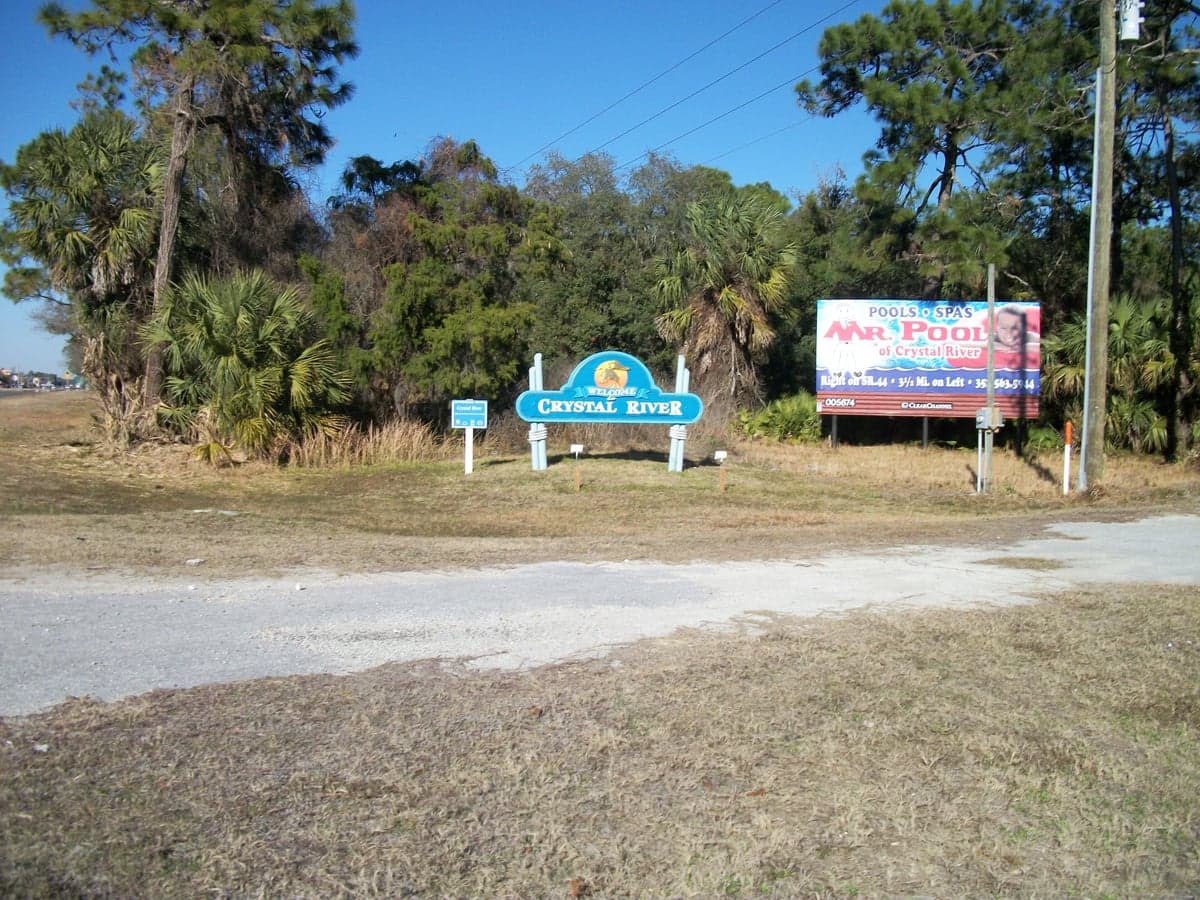
Photo: Wikipedia
Strategic Assessment of Crystal River, FL
Workable tactical position. Some exposure to population density or targets, but generally defensible in a crisis.
What does the Strategic Assessment tell us?
Our Strategic Assessment grades tactical survivability of an area. Major population centers, military targets, fallout zones, natural disasters, and border exposure all drive risk — lower exposure means a more defensible position in a crisis.
This is heavily inspired by Joel Skousen's Strategic Relocation book. Highly recommended you checkout the book ($)What does this tell us?
Our Strategic Assessment grades tactical survivability of an area. Major population centers, military targets, fallout zones, natural disasters, and border exposure all drive risk — lower exposure means a more defensible position in a crisis.
This is heavily inspired by Joel Skousen's Strategic Relocation book. Highly recommended you checkout the book ($)Strategic Pillars
Key Distances
Regional Safe Places
Below is our recommended "safe zones" in Florida and the surrounding area based on our strategic heuristics. For most people, it's unrealistic to live in a “safe zone” full-time due to work, family or other personal reasons. They tend to be more rural. However, many of these areas are perfect for second homes and retreat properties that double as a vacation home or even a short-term rental.

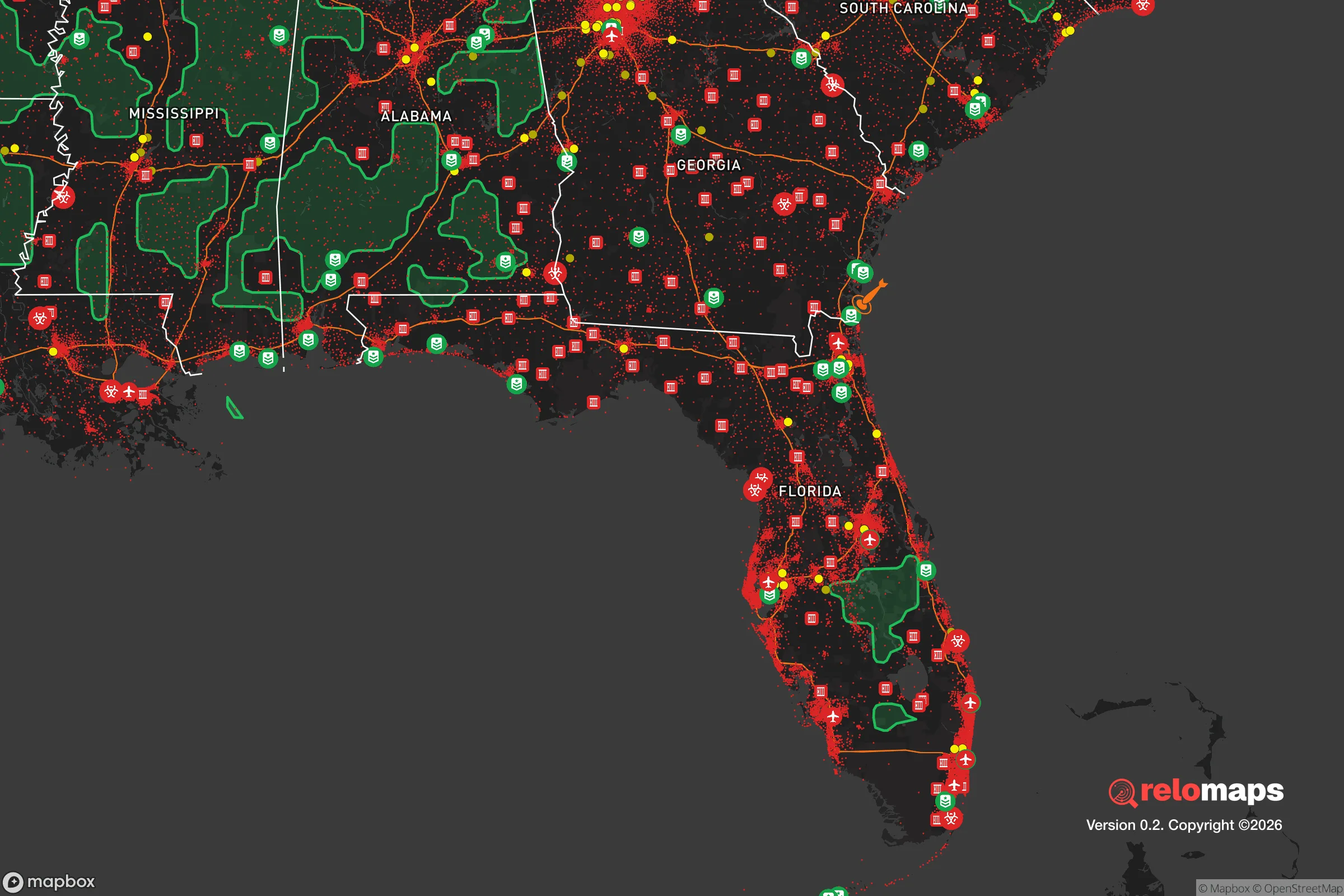


Important Note: For informational purposes only. This does not mean nothing bad ever happens in the green zones. Please use common sense. This is based on public data and modeled with AI. We tried to take a conservative approach but mistakes happen. We update this regularly as new information becomes available.
Solar Generator Recommendations
Backup power matters more here than in safer locations. We've picked three solar generators across budgets and capacity tiers — start with the budget unit if you only need a few essentials, or step up if you want to run a fridge and HVAC for days at a time.
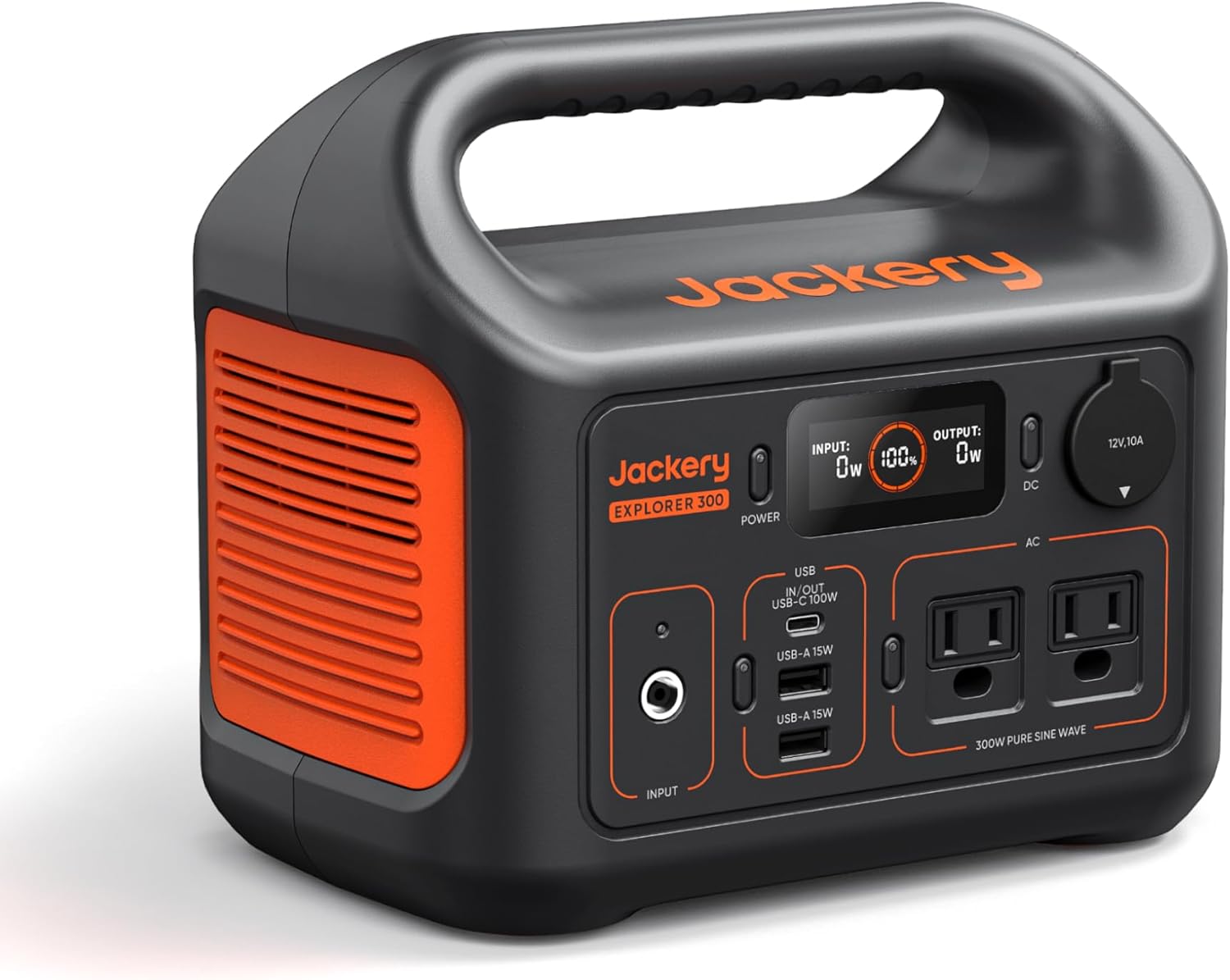
Jackery Portable Power Station Explorer 300
Budget OptionPower on the Go: Weighing only 11 lbs, it's convenient to set up and store with book-sized foldable solar panels

BLUETTI Portable Power Station AC180
Designed for both indoor and outdoor scenarios, AC180 is highly capable as it has a robost capacity and continuous output power.

EF ECOFLOW DELTA Pro Ultra Power Station
Upgraded PickEcoFlow DELTA Pro Ultra is a whole-home energy system designed to grow with your family. Integrated with the Smart Home Panel 2, it scales to meet your evolving energy needs — keeping your home powered, intelligent, and secure through every stage of life.
We earn a commission, at no additional cost to you.
Strategic Assessment Analysis
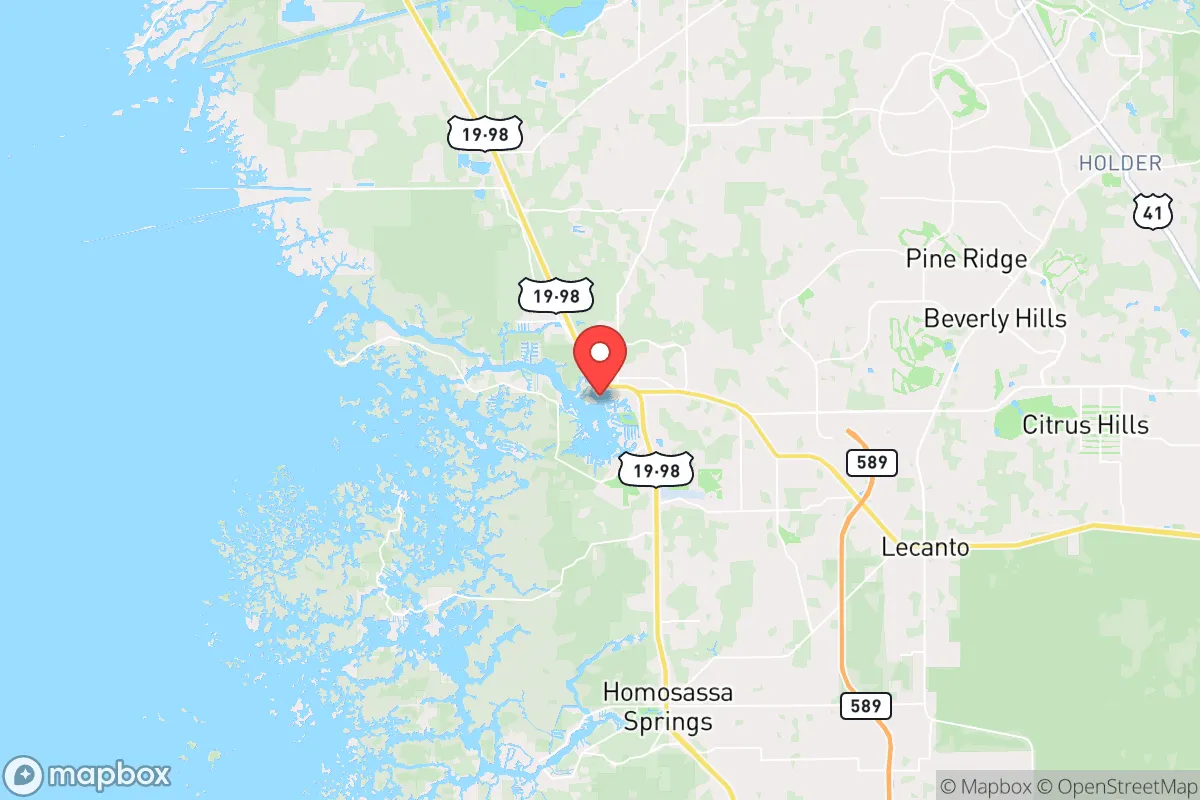
Crystal River, Florida, occupies a distinctive strategic position on the Gulf Coast that balances genuine natural advantages with real-world exposure to both environmental and man-made risks. For the relocator weighing disaster readiness and self-sufficiency, this small city of roughly 3,200 year-round residents offers a mix of coastal access, inland buffer, and relative isolation from the densest population corridors—but it is not without vulnerabilities that demand clear-eyed assessment. The area’s resilience profile is shaped by its location roughly 70 miles north of Tampa and 20 miles west of the sprawling Ocala National Forest, placing it at a crossroads of marine resources and inland retreat options.
Geographic position and natural advantages for self-sufficiency
Crystal River sits on the Gulf of Mexico at the mouth of the Crystal River itself, a spring-fed system that provides a reliable freshwater source independent of municipal infrastructure. The city is part of Citrus County, which has a population density of roughly 120 people per square mile—low by Florida standards and significantly less than the Tampa Bay metro area to the south. This lower density translates into more space for private well water, septic systems, and solar panel placement, all of which are practical advantages for a household aiming to reduce dependence on centralized grids. The surrounding landscape is a mix of coastal marshes, limestone karst, and pine flatwoods, offering multiple microenvironments for foraging, hunting, and small-scale agriculture. The presence of the Crystal River National Wildlife Refuge and the adjacent Chassahowitzka National Wildlife Refuge means large tracts of protected land that buffer development and preserve natural water filtration and wildlife corridors. For the relocator, the ability to draw water directly from a spring-fed river—Crystal River’s three main springs produce over 300 million gallons of fresh water daily—is a tangible asset that few coastal towns can match. The area’s elevation averages 10 to 15 feet above sea level, which is modest but higher than many Gulf Coast communities, and the interior portions of Citrus County rise to 50–70 feet, providing viable higher-ground options within a short drive.
Risk exposure: hurricanes, storm surge, and proximity to critical infrastructure
No Gulf Coast location escapes hurricane risk, and Crystal River’s position makes it vulnerable to both direct storm impacts and the secondary effects of storm surge. The city lies in a zone that has experienced major hurricanes, including the 2024 season’s Hurricane Helene, which brought significant storm surge and wind damage to the area. The National Hurricane Center’s storm surge maps show that much of Crystal River’s coastal fringe is in a Category 1–3 surge zone, meaning that low-lying neighborhoods near the river and the Gulf are at risk of inundation during a direct hit. However, the city’s location on the relatively shallow and protected waters of the Crystal River estuary reduces the fetch for wave buildup compared to open-beach communities like Clearwater or Sarasota. The more pressing concern for the strategic relocator is the proximity of the Crystal River Nuclear Plant, located just 7 miles south of the city center. This decommissioned plant—officially retired in 2013—still contains spent fuel stored on-site in dry casks, making it a potential target for both natural disasters and man-made incidents. While the facility is monitored and secured, its presence adds a layer of risk that a self-sufficiency-minded relocator should weigh. Additionally, the city lies roughly 60 miles from MacDill Air Force Base in Tampa, a major military installation that could be a secondary target in a conflict scenario. The combination of a nuclear storage site and proximity to a strategic military asset means that Crystal River is not as far from fallout-relevant landmarks as its small-town feel might suggest. For the relocator seeking true isolation from high-value targets, the interior of Citrus County—east of U.S. 19 and toward the Withlacoochee State Forest—offers a better buffer than the coastal strip itself.
Practical resilience: food, water, energy, and defensibility for a relocator
For the household focused on day-to-day self-sufficiency, Crystal River provides a workable baseline that requires deliberate supplementation. The spring-fed water system is the standout asset: private wells in the area typically tap into the Floridan Aquifer at depths of 100–200 feet, producing clean water with minimal treatment. The Crystal River itself is fishable year-round, with species including redfish, trout, and snook, and the surrounding waters support blue crab and oyster harvesting. For food production, the area’s growing season runs from March through November, allowing for two full crop cycles of warm-weather vegetables. The soil in the coastal zone is sandy and requires amendment, but inland areas have more loamy soils suitable for raised-bed gardening. Citrus County has a robust agricultural extension service and a strong network of local farmers’ markets, which can help a newcomer build knowledge and supply chains. Energy resilience is more challenging: the local power grid is served by Duke Energy Florida, and outages during hurricane season are common, often lasting 3–7 days after a major storm. Solar is viable—the region averages 240 sunny days per year—but homeowners must factor in hurricane-rated mounting systems and battery storage to maintain power during grid failures. Natural gas is available in parts of Crystal River but not universally, so propane tanks for cooking and heating are a practical backup. Defensibility is a mixed picture: the coastal neighborhoods are accessible by multiple roads, including U.S. 19 and State Road 44, which means evacuation routes can become congested. However, the interior areas east of the city offer a network of rural roads and dead-end lanes that provide natural chokepoints and privacy. The Withlacoochee State Forest, covering over 150,000 acres, lies just 15 miles east and offers a vast, sparsely populated buffer zone that could serve as a retreat area if coastal conditions deteriorate. For the relocator, the practical takeaway is that Crystal River’s resilience is strongest in water and moderate in food, but energy and defensibility require proactive investment and site selection away from the immediate coast.
The overall strategic picture for Crystal River is one of qualified opportunity. The city offers genuine natural advantages—reliable spring-fed water, low population density, and access to both marine and inland resources—that make it a viable base for a self-sufficient household. But those advantages come with real exposures: hurricane risk, the nearby nuclear storage site, and proximity to Tampa’s military infrastructure mean that the area is not a true off-grid sanctuary. For the relocator who chooses a home east of U.S. 19, invests in solar and battery backup, and develops a working knowledge of the local ecosystem, Crystal River can serve as a resilient coastal outpost. It is not the most isolated location in Florida, but it is far more practical than the dense metro corridors to the south, and its water resources alone put it ahead of most Gulf Coast alternatives. The key is to treat Crystal River as a base with options—not a final redoubt, but a place from which you can move inland or hunker down depending on the nature of the threat.

* Values derived from national, state, county, city and local statistics and may differ in a specific area. Last updated: 2026-11-20T05:20:32.000Z
Narrative content on this page is AI-generated and may contain mistakes. Verify any details that matter before acting on them.
ReloMaps may earn a commission from affiliate links at no extra cost to you.

