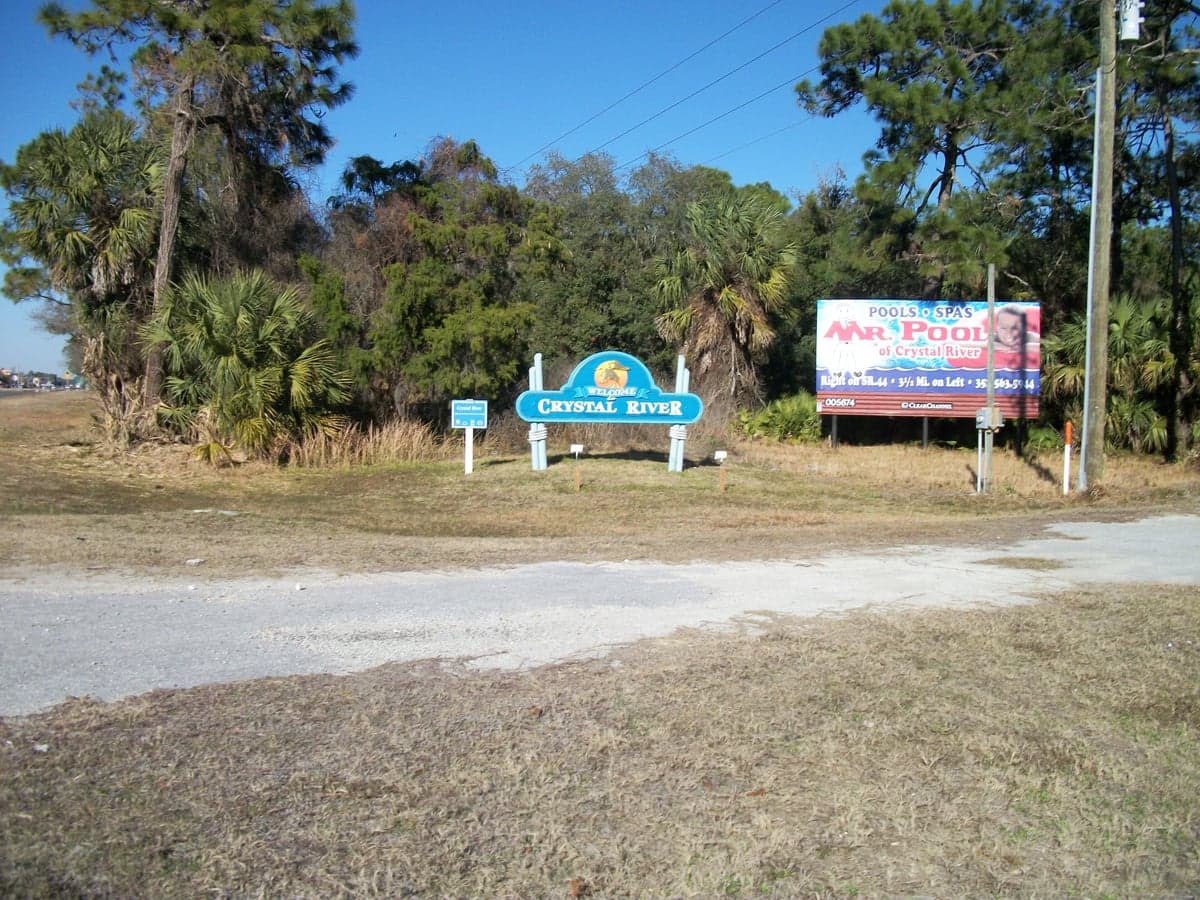
Photo: Wikipedia
Personal Sovereignty in Crystal River, FL
Viable for self-reliance. Generally workable, though some barriers may limit total independence.
What does Personal Sovereignty tell us?
Personal Sovereignty measures your capacity for self-reliance and independence with minimal government friction. Higher scores mean fewer barriers between you and the way you want to live... but it assumes you have the space you need and good neighbors.
What does this tell us?
Personal Sovereignty measures your capacity for self-reliance and independence with minimal government friction. Higher scores mean fewer barriers between you and the way you want to live... but it assumes you have the space you need and good neighbors.
State Policy
Energy independence: Importer (12% of energy produced in-state)
Personal Liberty
Homesteading

Personal Liberty Analysis
Crystal River, Florida, offers a notably high degree of personal sovereignty, shaped by Florida’s broader state-level commitment to limited government, low taxation, and strong individual rights. For a relocation-minded individual or family who prioritizes autonomy, the area provides a legal and regulatory environment that generally defers to personal choice in matters of self-defense, property use, and family decision-making, while maintaining a light-touch approach to business and daily life. This analysis breaks down the specific dimensions of personal freedom in Crystal River, from tax burden to homesteading feasibility, to help you assess whether the area aligns with your independence-focused priorities.
Tax burden and regulatory posture: how Florida’s policies affect your wallet and daily life
Crystal River benefits from Florida’s famously low-tax structure, which directly enhances personal financial sovereignty. There is no state income tax, meaning every dollar you earn stays in your pocket — a significant advantage for both single earners and families. Property taxes in Citrus County are moderate, with an effective rate around 0.85% of assessed value, slightly below the national average. For homeowners, Florida’s Save Our Homes amendment caps annual assessed value increases at 3% (or the rate of inflation, whichever is lower), providing long-term predictability and protection against tax spikes. The regulatory posture in Crystal River is generally light-touch. Citrus County does not impose overly burdensome business licensing or zoning restrictions on most residential properties, though coastal development and waterfront construction do face state-level environmental oversight. For a self-reliant individual, this means fewer bureaucratic hurdles for starting a home-based business, renting out property, or making improvements to your land compared to more heavily regulated states in the Northeast or West Coast.
Self-defense and gun law specifics: what you can legally do to protect yourself and your family
Florida is a strong Second Amendment state, and Crystal River reflects that culture. Florida is a permitless carry state as of 2023, meaning any law-abiding adult 21 or older can carry a concealed firearm without a permit. Open carry is generally restricted, but concealed carry without a permit is fully legal. For those who want a permit for reciprocity with other states, the process is straightforward: a background check and a short training course. Florida’s Stand Your Ground law is among the strongest in the nation — there is no duty to retreat in any place where you have a legal right to be, and you may use deadly force if you reasonably believe it is necessary to prevent imminent death or great bodily harm to yourself or others. Castle Doctrine protections also apply to your home, vehicle, and occupied vessel. Crystal River’s local law enforcement generally respects these rights, and gun ownership is common and socially accepted. For a family concerned with self-defense, the legal framework here provides clear, robust protections for personal safety decisions.
Self-reliance and homesteading viability: lot sizes, zoning, and off-grid feasibility in Citrus County
Crystal River and the surrounding Citrus County area offer genuine opportunities for self-reliant living, though with some practical constraints. Residential lot sizes in unincorporated areas commonly range from half an acre to several acres, providing enough space for substantial gardens, small orchards, or livestock like chickens and goats. Zoning in rural parts of Citrus County is permissive for agricultural uses, including beekeeping, raising poultry, and keeping horses on parcels of one acre or more. Off-grid feasibility is moderate: while Florida’s building codes require connection to septic systems (no composting toilets without special permits), solar panels are widely permitted and net metering is available through local utilities like Duke Energy and Citrus County Electric Cooperative. Rainwater collection is legal for outdoor use, and wells are common on larger properties, reducing dependence on municipal water. However, full off-grid living — disconnecting from the power grid entirely — is technically possible but complicated by insurance requirements and local building codes that mandate minimum square footage and structural standards. For a family seeking a semi-self-sufficient lifestyle with a garden, some livestock, and reduced utility bills, Crystal River’s regulatory environment is accommodating without being permissive to the point of lawlessness.
Personal liberties: parental rights, medical autonomy, speech, and property protections
Florida has become a national leader in codifying certain personal liberties, and Crystal River residents benefit directly from these state-level protections. Parental rights in education are strongly protected under Florida law, including the Parental Bill of Rights (Fla. Stat. § 1014.04), which affirms that parents have the fundamental right to direct the upbringing, education, and healthcare of their minor children. Homeschooling is straightforward to establish — parents simply file a notice of intent and maintain a portfolio of student work, with no mandatory testing requirements unless the parent chooses an umbrella program. Medical autonomy is more nuanced: Florida has not expanded Medicaid and does not have a state-level individual mandate, so you are free to choose your own healthcare coverage or go without, though the federal individual mandate penalty was eliminated in 2019. Florida’s COVID-era executive orders and subsequent legislation (e.g., SB 252) have restricted mask and vaccine mandates by businesses and government entities, reinforcing individual choice in medical decisions. Free speech is robustly protected under both the U.S. and Florida constitutions, and Crystal River’s small-town culture generally respects diverse viewpoints. Property rights are strong: Florida’s Private Property Rights Protection Act (the Bert J. Harris Jr. Act) allows landowners to seek compensation if government regulation reduces property value by more than a certain threshold, providing a check against overreach by local planning boards.
Overall, Crystal River offers a sovereignty profile that ranks among the highest in the Southeast for individuals and families who value low taxes, strong self-defense laws, and a permissive regulatory environment for self-reliant living. Compared to areas in the Northeast or West Coast, the trade-offs are clear: you gain financial freedom and personal autonomy, while accepting a warmer climate with hurricane risk and a more rural pace of life. For a relocation-minded reader who prioritizes independence over convenience, Crystal River represents a solid, freedom-respecting choice within Florida’s already liberty-friendly framework.

* Values derived from national, state, county, city and local statistics and may differ in a specific area. Last updated: 2026-11-20T05:20:32.000Z
Narrative content on this page is AI-generated and may contain mistakes. Verify any details that matter before acting on them.
ReloMaps may earn a commission from affiliate links at no extra cost to you.

