Political ClimatePolitical Climate in South Central Connecticut Planning Region County
Showing district-level results — no local-only data available.
Local Political AnalysisPolitical Analysis of South Central Connecticut Planning Region County
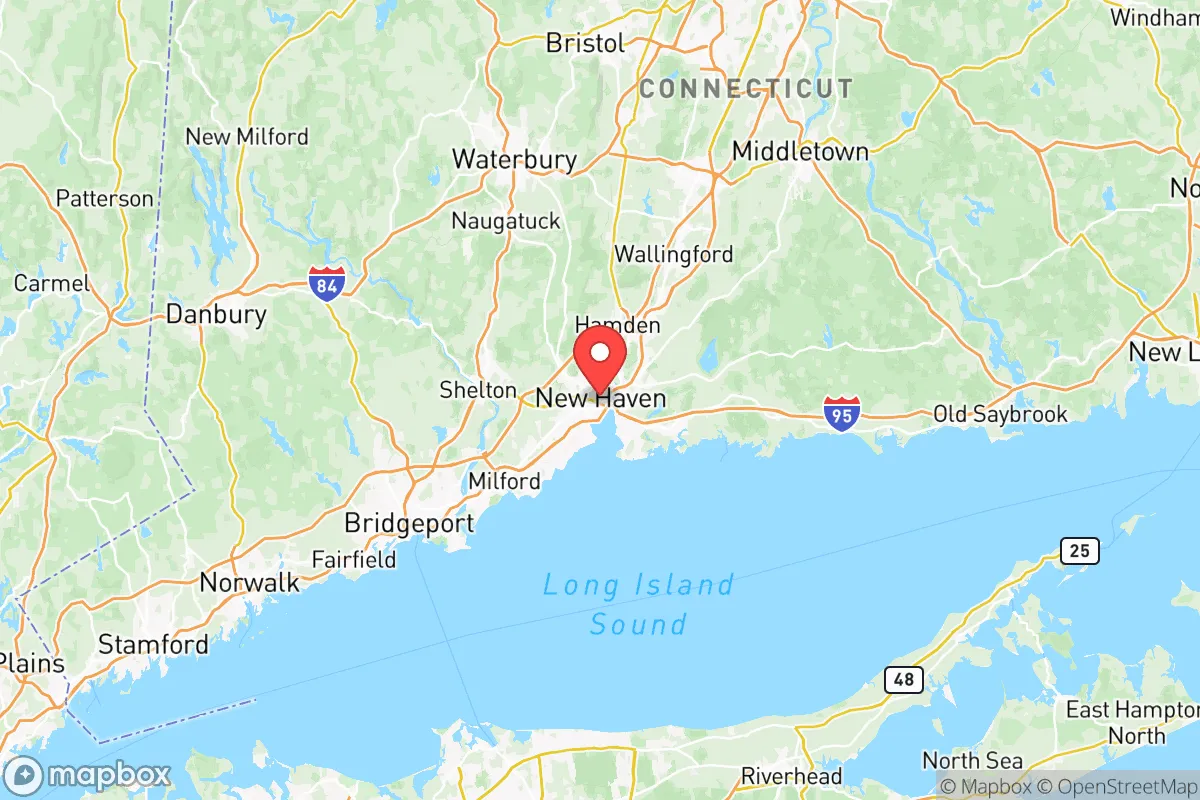
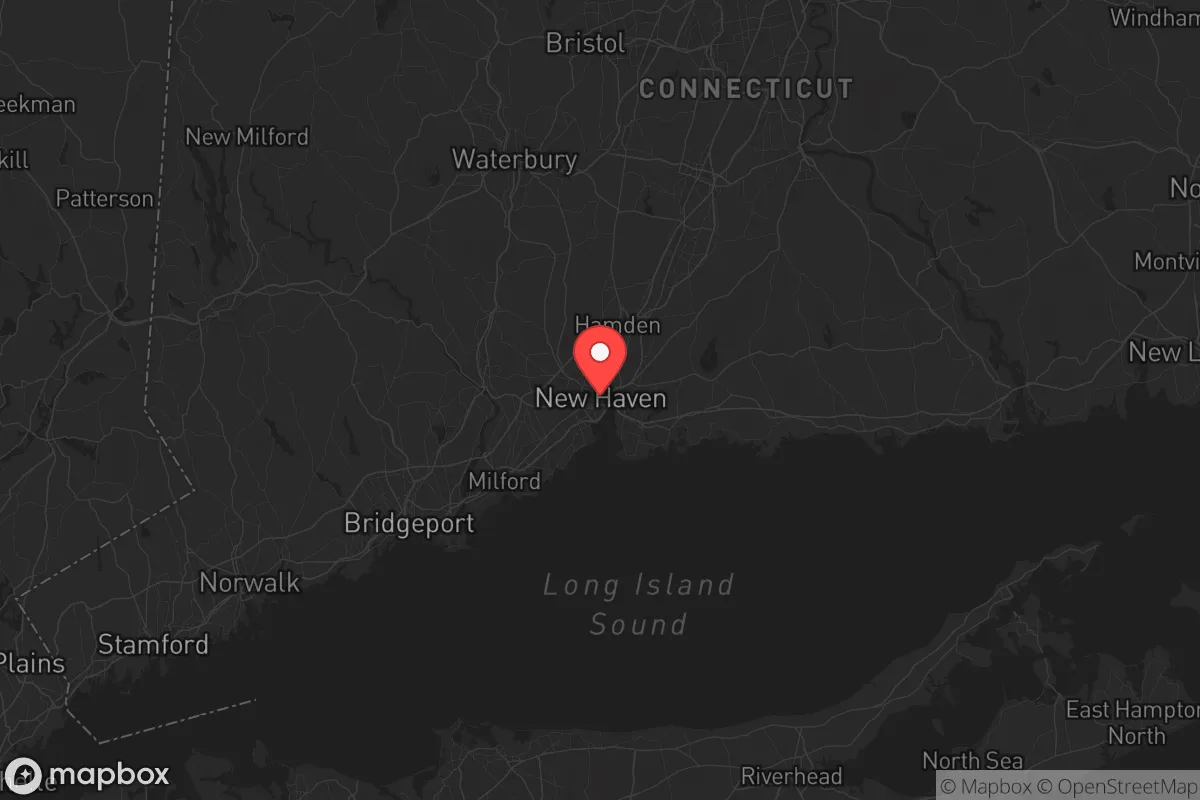
South Central Connecticut Planning Region, anchored by New Haven, is a solidly Democratic area with a Cook PVI of D+8, matching the state of Connecticut as a whole. This means the region votes about eight points more Democratic than the national average in presidential elections, a trend that has held steady for the past decade. The political center of gravity is in New Haven itself, a deep-blue city where Democrats routinely win by 50-point margins, but the county's overall lean is moderated by more conservative-leaning suburbs and rural towns that keep it from being as lopsided as Hartford or Bridgeport.
How it compares
At first glance, South Central Connecticut looks like a microcosm of the state: both have a D+8 PVI, and both have seen a slow but steady Democratic drift since the 1990s. But the comparison masks real internal variation. In the 2024 presidential election, New Haven delivered a 75-point margin for the Democratic candidate, while the town of Bethany in the county's northwest corner went Republican by 12 points. The swing precincts are in places like Hamden and West Haven, where moderate voters in the suburbs can flip a race by a few hundred votes. Unlike the state as a whole, which has a more uniform Democratic tilt outside of Litchfield County, South Central Connecticut has a sharper urban-suburban divide. The city of New Haven is a Democratic stronghold, but the surrounding towns—like Guilford, Madison, and Branford—are more competitive, often voting Republican in local races while backing Democrats at the presidential level.
What this means for residents
For a conservative resident, living in South Central Connecticut means accepting that your vote for president or U.S. Senate is unlikely to change the outcome, but your local vote matters a lot. Town council races in places like North Haven or Wallingford are genuinely competitive, and Republicans have held the mayor's office in Milford as recently as 2023. For a liberal resident, the region's Democratic lean means you're in the majority, but you'll still encounter plenty of neighbors who disagree—especially on issues like taxes and school funding. The practical effect is that policy debates in the region are less about whether to be progressive or conservative and more about how progressive to be. For example, New Haven's push for rent control and sanctuary city status has been a flashpoint, while suburban towns like Orange have resisted similar measures.
Cultural and policy distinctions
The biggest cultural distinction in South Central Connecticut is the tension between New Haven's urban, university-driven politics and the more traditional, family-oriented values of the outer suburbs. New Haven is home to Yale University, which brings a constant influx of liberal, often transient residents who shape the city's politics around housing, policing, and environmental issues. In contrast, towns like Cheshire and Durham are more focused on property taxes, school budgets, and maintaining rural character. This divide plays out in policy: the region has seen heated debates over affordable housing mandates (the state's 8-30g law) and regional transit plans, with New Haven pushing for more density and suburbs pushing back. Over the long term, the region is likely to stay D+8 or even drift slightly left as New Haven's influence grows, but the suburban resistance to urban-style policies will keep local politics lively for years to come.

State Political ClimatePolitical Climate in Connecticut
State Political AnalysisPolitical Environment in the State
Connecticut is a solidly Democratic state with a Cook PVI of D+8, meaning it typically votes about eight points more Democratic than the national average. The state hasn't voted for a Republican presidential candidate since George H.W. Bush in 1988, and Democrats currently hold every statewide office, both U.S. Senate seats, and a supermajority in the state House. Over the last 10-20 years, the state has shifted leftward, driven by the growing influence of its wealthy, educated suburbs and the decline of its once-competitive industrial towns, though a stubborn Republican base holds on in the rural northeast and northwest corners.
Urban vs. rural divide
The political map of Connecticut is a classic tale of three regions. The Gold Coast — towns like Greenwich, Stamford, and Darien in Fairfield County — used to be reliably Republican, but they've swung hard to the left as Wall Street commuters and corporate transplants have made them some of the most Democratic suburbs in the nation. Stamford itself is now a Democratic stronghold, with the city council dominated by progressives. Hartford and New Haven are deep blue urban centers, with the former being one of the poorest cities in the country and the latter a classic college town dominated by Yale. The rural northeast — towns like Killingly, Plainfield, and Thompson in Windham County — is the state's Republican heartland, where voters feel culturally and economically disconnected from the coastal elite. Litchfield County in the northwest is more mixed, with wealthy lake towns like Litchfield itself leaning Democratic and working-class hill towns like Torrington and Winsted leaning Republican. The suburbs of New Haven and Hartford — places like Glastonbury, Simsbury, and Madison — are now reliably blue, having flipped from purple to solid Democratic over the past two decades.
Policy environment
Connecticut's policy environment is among the most progressive in the nation, with a tax burden that consistently ranks in the top five highest in the country. The state has a progressive income tax with a top marginal rate of 6.99%, a sales tax of 6.35%, and some of the highest property taxes in the U.S., especially in wealthy suburbs. The regulatory posture is business-friendly in name but burdensome in practice, with high energy costs and strict environmental rules. Education policy is a mixed bag: the state has some of the best public schools in the country (especially in the suburbs), but also some of the worst in the cities, with a massive achievement gap. Healthcare is heavily regulated, with a state-run exchange and strict insurance mandates. Election laws are among the most liberal: no-excuse absentee voting, early voting (passed in 2023), and automatic voter registration are all in place. The state also has a strict gun control regime, including a ban on "assault weapons" and high-capacity magazines, and a permit-to-purchase system for handguns.
Recent policy direction
The last few years have seen a flurry of legislation that will matter to anyone considering a move. On gun and self-defense law, the state passed a 2023 law banning the open carry of firearms and raising the minimum age to purchase a long gun to 21, making it one of the strictest states in the country. Parental and education rights have been a flashpoint: the state passed a law in 2021 requiring public schools to include LGBTQ+ history in the curriculum, and in 2023, it passed a law prohibiting school districts from requiring teachers to notify parents if a student changes their gender identity — a direct response to the "parental rights" movement. On speech and privacy, the state has a strong data privacy law (the Connecticut Data Privacy Act) that gives residents control over their personal data, but it also has a law criminalizing "hate speech" that critics say chills free expression. Medical and bodily autonomy is fully protected: abortion is legal up to viability, and the state passed a 2022 law protecting out-of-state patients and providers from prosecution. Property rights are constrained by strict zoning laws in many suburbs, though the state passed a 2023 law (the "Fair Share" housing bill) that forces towns to allow more multi-family housing. Taxation remains high, but the state has made modest moves to reduce the burden on retirees, including a 2023 law that exempts more pension and 401(k) income from state tax. Voting and ballot access has been expanded significantly, with early voting and no-excuse absentee ballots now permanent fixtures.
Civil unrest & political movements
Connecticut is not a hotbed of civil unrest, but it has seen its share of political movements. The Black Lives Matter protests in 2020 were large and mostly peaceful, particularly in Hartford and New Haven, and led to the passage of a police accountability bill in 2020 that banned chokeholds and created a new independent oversight body. On the right, the Second Amendment sanctuary movement has been active, with over 50 towns passing resolutions opposing the state's gun laws, though these are symbolic and have no legal force. The immigration politics are relatively calm: Connecticut is a "sanctuary state" by law (since 2013), meaning local police cannot detain someone solely based on immigration status, but there is no major flashpoint like in border states. Election integrity controversies have been minimal, though some Republican towns have pushed for stricter voter ID laws, which have been rejected by the Democratic majority. The most visible flashpoint for a new resident would likely be the debate over local zoning, which has become a proxy war between suburban homeowners who want to preserve their town's character and state officials pushing for more affordable housing.
Projection
Over the next 5-10 years, Connecticut is likely to become even more Democratic, driven by the continued in-migration of affluent, educated professionals from New York City and other blue states, who are drawn to the state's excellent schools and proximity to Manhattan. The Republican base in the rural northeast and northwest will continue to shrink as those towns age and lose population. The state's fiscal challenges — a massive unfunded pension liability and a shrinking workforce — will force difficult choices, but the political consensus is likely to remain in favor of higher taxes on the wealthy to fund generous public services. The "Fair Share" housing law will slowly change the character of some suburbs, but the pace will be glacial due to local opposition. A new resident moving in now should expect to find a state that is increasingly progressive on social issues, with a high cost of living and a tax burden that won't ease, but with excellent public services, especially in education and healthcare.
For a conservative-leaning relocator, the bottom line is that Connecticut is a deeply blue state where your vote will rarely matter in statewide elections, but where you can find like-minded communities in the rural northeast and northwest. You'll pay high taxes and live under strict gun laws, but you'll also get some of the best schools in the country, a low crime rate in most suburbs, and a stable, well-run state government. For a liberal relocator, Connecticut is a dream: a state that actively protects abortion rights, LGBTQ+ rights, and voting access, with a strong social safety net and a commitment to progressive values. Either way, the state's political reality is stable, predictable, and unlikely to change dramatically anytime soon.
* Values derived from national, state, county, city and local statistics and may differ in a specific area. Last updated: 2026-07-23T19:46:24.000Z
Narrative content on this page is AI-generated and may contain mistakes. Verify any details that matter before acting on them.
ReloMaps may earn a commission from affiliate links at no extra cost to you.

