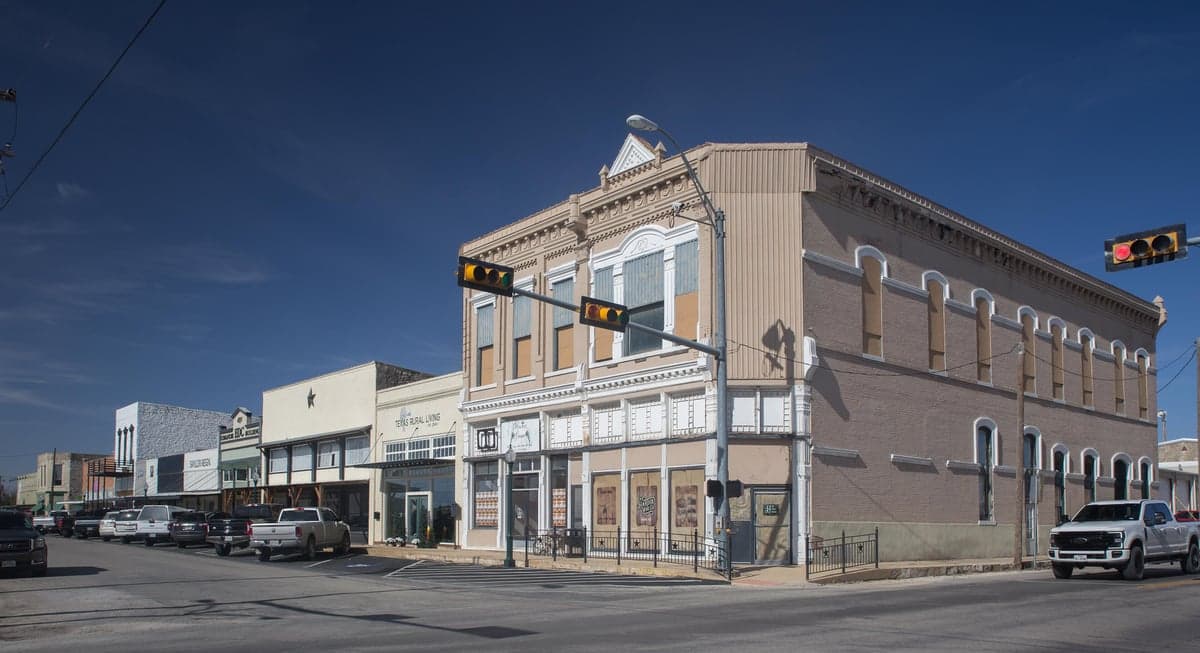
Photo: Wikipedia
Political ClimatePolitical Climate in Comanche, TX
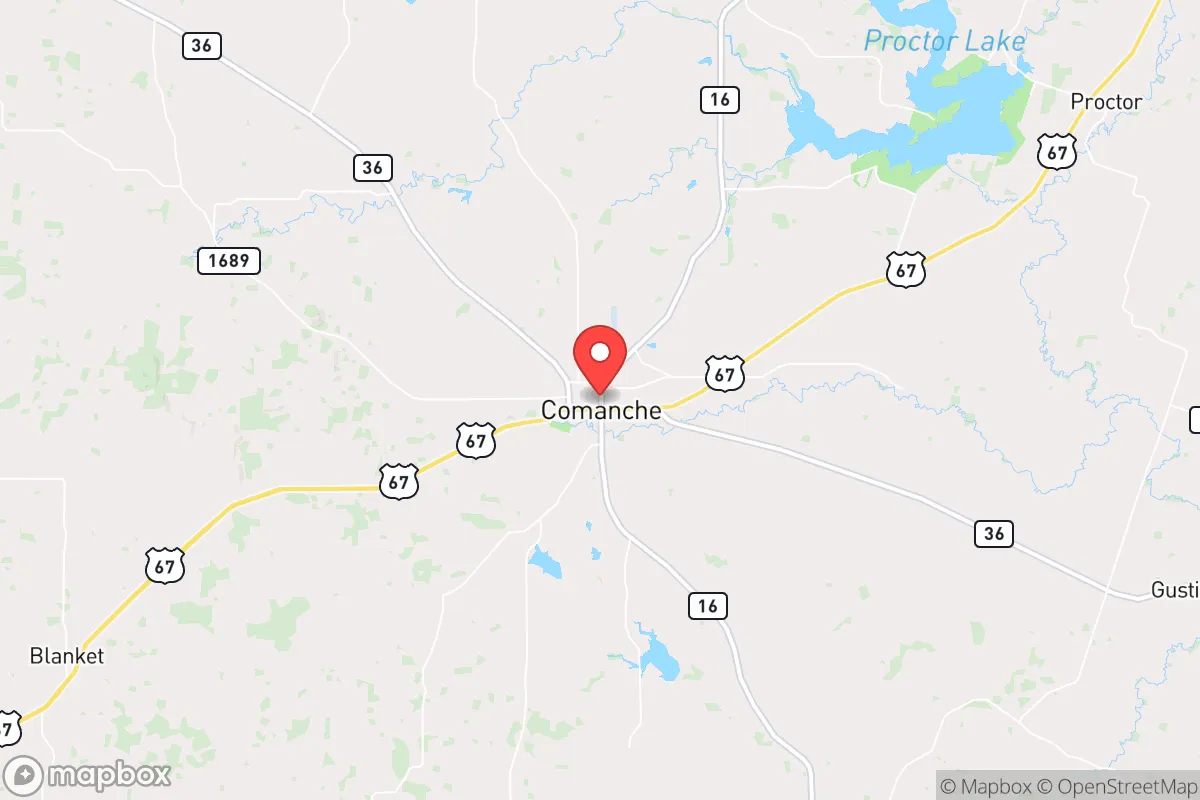
District shown is the primary district for this city’s centroid. Cities may span multiple districts.
Local Political AnalysisPolitical Analysis of Comanche, TX
Comanche, Texas, is about as solidly conservative as it gets in the Lone Star State, and that’s not changing anytime soon. The area sits in a Cook PVI of R+18, which is a full 14 points more Republican than the state of Texas as a whole (R+4). That gap isn’t just a number—it reflects a deep, lived-in culture where folks still believe in minding their own business and keeping the government out of their personal lives. You don’t see the kind of political drift here that you might in places like Austin or even nearby San Angelo; Comanche has stayed the course for decades, and the trajectory is holding steady.
How it compares
When you stack Comanche up against the rest of Texas, the difference is stark. The state as a whole has been trending slightly more competitive—R+4 still leans red, but you can feel the pull from urban centers like Dallas, Houston, and especially Austin, where progressive policies on taxes, property rights, and personal freedoms are creeping in. Comanche, by contrast, is a world apart. Drive an hour east to Brownwood or an hour west to Stephenville, and you’ll find similar conservative values, but even those towns have seen a bit more political churn in recent years. Comanche remains a bastion where the old-school Texas ethos—low taxes, limited regulation, and a healthy skepticism of federal overreach—is still the norm. The surrounding county, Comanche County, voted over 80% for the Republican presidential candidate in 2024, which is about as red as it gets. Compare that to Travis County (Austin), which went over 70% Democrat, and you see the cultural and political canyon between Comanche and the state’s progressive hubs.
What this means for residents
For someone living here, the political climate translates directly into daily life. You’re not dealing with the kind of government overreach that’s become common in blue-leaning areas—no heavy-handed zoning rules, no aggressive tax hikes for social programs you didn’t vote for, and no pressure to conform to the latest progressive orthodoxy. Property rights are respected, gun ownership is a given, and the local school board isn’t pushing curriculum that makes you question what your kids are learning. That said, there’s a quiet concern among long-time residents that the state’s overall shift—even if still red—could eventually trickle down. The R+4 rating for Texas means the state is closer to a toss-up than it was 20 years ago, and that worries folks who’ve seen what happens when progressive ideas get a foothold. The hope is that Comanche’s deep-rooted conservatism acts as a buffer, but you can’t ignore the fact that state-level policies on things like property taxes and energy regulation are starting to feel more intrusive than they used to.
One thing that sets Comanche apart is its cultural resistance to change. While other parts of Texas have embraced things like sanctuary city policies or expanded Medicaid, Comanche holds the line. The local economy is still driven by agriculture and small business, not tech or government contracts, so there’s less incentive to cater to outside interests. If you’re looking for a place where the government stays out of your way and the political winds don’t shift with every election cycle, this is it. But keep an eye on the long term—if Texas continues its slow march toward purple, even a place like Comanche might feel the pressure. For now, though, it’s one of the last strongholds where you can still live free without someone in a government office telling you how to do it.

State Political ClimatePolitical Climate in Texas
State Political AnalysisPolitical Environment in the State
Texas has been a reliably Republican state for decades, with a Cook PVI of R+4, but the political landscape is far from monolithic. The dominant coalition is a mix of rural conservatives, suburban moderates, and a growing number of transplants from blue states, creating a dynamic where the GOP still holds all statewide offices but faces increasing pressure in fast-growing suburbs. Over the last 10-20 years, the state has shifted from a solid red stronghold to a more competitive environment, with Democrats making gains in the suburbs while Republicans have consolidated power in rural areas and small towns.
Urban vs. rural divide
The political map of Texas is starkly divided. The major metros—Houston, Dallas, San Antonio, and Austin—are Democratic strongholds, with Austin being the most liberal city in the state. In 2024, Harris County (Houston) voted for Democrats by a 15-point margin, while Dallas County went +18 Democratic. Meanwhile, rural West Texas and the Panhandle are deeply Republican; Lubbock and Amarillo routinely vote 70-80% GOP. The real battleground is the suburbs: Collin County (north of Dallas) flipped from +18 Republican in 2016 to +5 Republican in 2024, while Fort Bend County (southwest of Houston) went from +6 Republican in 2012 to +8 Democratic in 2024. The Rio Grande Valley, once a Democratic stronghold, has shifted right—Starr County voted for Trump in 2024 after supporting Democrats by 60 points in 2012. This urban-rural split means a new resident's experience depends heavily on where they settle.
Policy environment
Texas maintains a low-tax, low-regulation posture that appeals to conservatives. There is no state income tax, and property taxes are high (averaging 1.6% of home value) but capped by Proposition 4 (2023), which increased the homestead exemption to $100,000. The regulatory environment is business-friendly, with no state-level minimum wage above the federal $7.25 and no state-level OSHA plan. Education policy is a flashpoint: the state passed HB 3979 (2021) and SB 3 (2023) to restrict how race and gender are taught in public schools, and the 2023 school voucher bill (SB 8) failed but remains a priority. Healthcare is mixed—Texas has the highest uninsured rate in the nation (18%), and the state has refused Medicaid expansion under the ACA. Election laws tightened with SB 1 (2021), which limited mail-in voting, banned drive-through voting, and empowered poll watchers. For a conservative, the policy environment is broadly favorable, though property taxes and school funding debates remain sore points.
Trajectory & freedom
Texas has moved in a more freedom-oriented direction on several fronts, but with notable exceptions. On gun rights, the state enacted permitless carry (HB 1927) in 2021, allowing adults to carry handguns without a license. On parental rights, HB 18 (2023) requires parental consent for minors to access certain online content, and SB 14 (2023) banned gender-affirming care for minors. On speech, the state passed HB 20 (2023) to restrict social media platforms from moderating content based on viewpoint. However, medical freedom took a hit with the 2021 abortion ban (SB 8), which prohibits abortion after six weeks and allows private lawsuits, and the 2023 near-total ban (HB 1280). Property rights remain strong, with no statewide zoning and limited eminent domain abuse. The trajectory is toward more personal liberty on guns, education, and speech, but less on medical choices—a trade-off conservatives must weigh.
Civil unrest & political movements
Texas has seen significant political activism from both sides. The 2020 Black Lives Matter protests in Austin and Dallas were large and occasionally violent, leading to property damage and a police funding debate. On the right, the "Save Our Children" movement mobilized around school curriculum and library books, leading to book bans in Keller and Granbury ISDs. Immigration politics are front and center: Governor Abbott's Operation Lone Star (2021) deployed state troopers and National Guard to the border, bused migrants to blue cities, and passed SB 4 (2023) allowing state law enforcement to arrest suspected illegal immigrants. Secession rhetoric, while fringe, gained traction after the 2020 election, with the Texas Nationalist Movement pushing for a referendum. Election integrity remains a hot topic—SB 1 was passed in response to 2020 concerns, and audits in Harris County found minor discrepancies but no widespread fraud. A new resident will see visible border security operations and heated local school board meetings.
Projection
Over the next 5-10 years, Texas will likely remain Republican but become more competitive. In-migration from California and New York—about 1,000 people per day—is shifting the suburbs leftward, while rural areas are depopulating. The Hispanic vote, which made up 30% of the electorate in 2024, is trending right, especially in the Valley. If the GOP can hold the suburbs and keep the rural base energized, Texas stays red. But if Democrats continue to flip counties like Collin and Fort Bend, the state could become a toss-up by 2032. The policy environment will likely see a school voucher bill pass, further property tax cuts, and continued border security funding. A new resident moving in now should expect a state that is still conservative but with growing pockets of progressive influence, especially in the cities and inner suburbs.
For a conservative moving to Texas, the bottom line is this: you'll find a state that broadly respects your values on taxes, guns, and education, but you'll need to pick your county carefully. The rural areas and exurbs offer the most aligned political culture, while the urban cores and close-in suburbs are increasingly blue. Pay attention to local school board races and property tax rates—those will affect your daily life more than state-level politics. Texas is still a freedom-friendly state, but the freedom is not uniform, and the political winds are shifting. Choose your community wisely, and you'll find a place that feels like home.
* Values derived from national, state, county, city and local statistics and may differ in a specific area. Last updated: 2026-05-13T17:09:54.000Z
Narrative content on this page is AI-generated and may contain mistakes. Verify any details that matter before acting on them.
ReloMaps may earn a commission from affiliate links at no extra cost to you.

