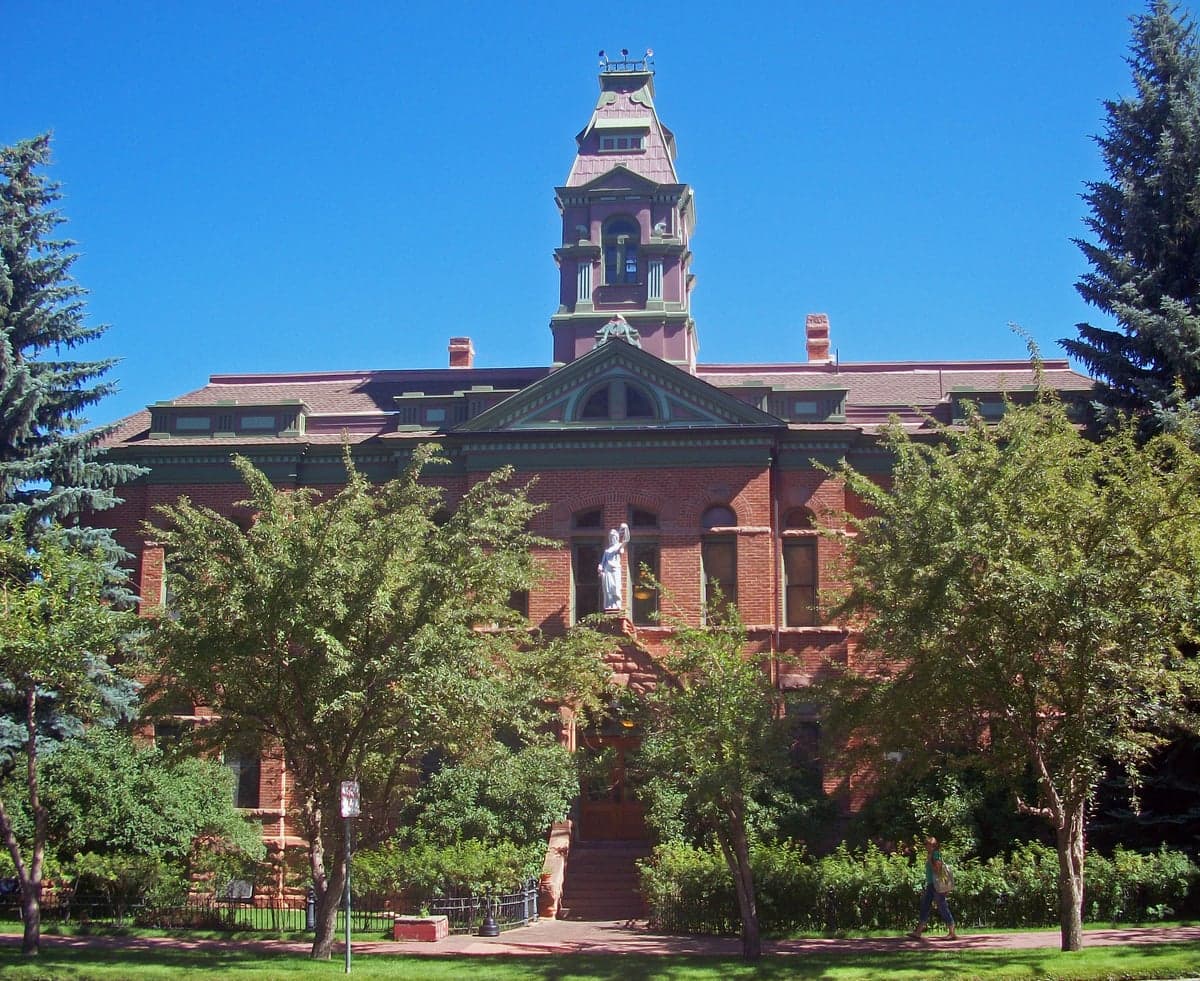
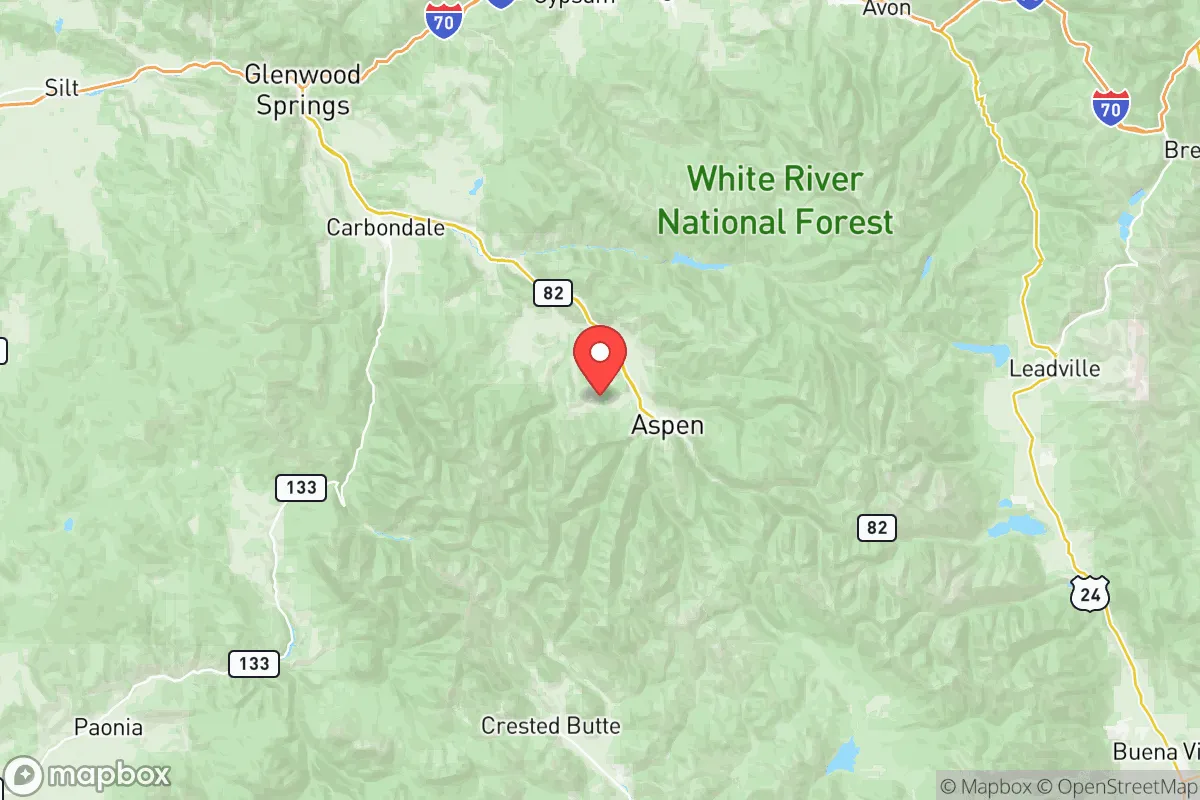
Photo: Wikipedia
Political ClimatePolitical Climate in Pitkin County
Showing district-level results — no local-only data available.
Local Political AnalysisPolitical Analysis of Pitkin County
Pitkin County is one of the most politically unique places in Colorado, and if you’re looking at it through a simple red-blue lens, you’ll miss the whole story. The county’s Cook Partisan Voting Index (PVI) is R+5, which on paper makes it look like a reliably Republican area, but that number is heavily shaped by the rural, high-elevation precincts outside of Aspen. In reality, the county is a deep blue island surrounded by a red sea, with the town of Aspen and its immediate suburbs—like Woody Creek and Snowmass Village—voting overwhelmingly Democratic in every recent election, often by margins of 70% or more. Meanwhile, the more remote communities like Redstone, Marble, and the Crystal River Valley lean conservative, and the unincorporated areas around Carbondale (which is actually in Garfield County but culturally tied to Pitkin) show a mix of libertarian and moderate Republican tendencies. The county’s overall R+5 rating is a statistical artifact of those rural precincts outweighing the dense, liberal population centers in the valley floor.
How it compares
When you stack Pitkin County against Colorado as a whole, the contrast is stark. Colorado’s statewide Cook PVI is D+6, meaning the state leans Democratic by a moderate margin, driven by the Front Range urban corridor from Denver to Fort Collins. Pitkin County, despite being home to one of the wealthiest and most liberal towns in the state (Aspen), is rated R+5 because its vast, sparsely populated backcountry precincts vote reliably red. That’s a 11-point swing to the right compared to the state average. For context, while Colorado has been trending blue since the 2010s—flipping Senate seats and presidential votes—Pitkin County’s internal politics have remained a tug-of-war between the progressive, environmentally-focused Aspen base and the more traditional, property-rights-oriented rural residents. The result is a county that votes for Democratic presidential candidates (Biden won Pitkin by 18 points in 2020) but elects local officials who often run as independents or moderate Republicans, especially in the sheriff’s office and county commission races.
What this means for residents
For liberal residents, especially those in Aspen and Snowmass, the political climate feels like a progressive bubble: strong local support for climate action, affordable housing initiatives, and public land preservation. You’ll find town council meetings where the debate is about how fast to ban single-use plastics, not whether to do it. For conservative residents in places like Redstone or Marble, the experience is different—they often feel outnumbered in countywide votes but find their voices amplified in state-level Republican primaries and in the county’s more rural districts. The practical effect is a county government that tries to balance both worlds: strict land-use regulations and environmental protections (popular in Aspen) with a hands-off approach to ranching and mining in the backcountry. The biggest tension point is housing policy, where Aspen’s push for dense, subsidized development clashes with rural residents’ preference for low-density, private-property solutions.
Culturally, Pitkin County stands apart from the rest of Colorado in a few key ways. The county has some of the strictest short-term rental regulations in the state, a direct result of Aspen’s housing crisis, and it was one of the first in Colorado to adopt a plastic bag ban and a local sales tax on single-use items. The local Democratic Party is unusually active and well-funded, but the county also has a strong tradition of libertarian-leaning independents who reject both major parties. If you’re moving here, expect local politics to feel more like a small-town debate about land use and water rights than a national culture war—but with the money and intensity of a resort community. The trajectory is toward continued blue dominance in Aspen, with the rural precincts holding steady red, meaning the county’s overall R+5 rating is likely to persist as long as the backcountry population doesn’t shrink.

State Political ClimatePolitical Climate in Colorado
State Political AnalysisPolitical Environment in the State
Colorado is a solidly Democratic-leaning state with a Cook PVI of D+6, but that number masks a deeply divided political landscape that has shifted dramatically over the past two decades. The state was a classic purple battleground as recently as the early 2000s, voting for George W. Bush in 2004 before swinging hard to the left — Barack Obama won it by 9 points in 2008, and the margin has only widened since, with Joe Biden carrying the state by 13 points in 2020. The dominant coalition today is a mix of Denver-metro suburbanites, young transplants from other states, and a growing Latino population, all of which have pushed the state's politics leftward even as rural and exurban areas have become more reliably Republican.
Urban vs. rural divide
The political map of Colorado is a textbook case of the urban-rural split. The Denver-Aurora-Lakewood metro area, home to roughly 60% of the state's population, is the engine of Democratic power — Denver County itself routinely votes 80%+ Democratic, while surrounding suburban counties like Jefferson, Arapahoe, and Adams have moved from swing to solidly blue over the last decade. Boulder County is even further left, a liberal stronghold anchored by the University of Colorado. On the other side, the state's rural and mountain regions are deeply Republican: El Paso County (Colorado Springs) is the conservative anchor, voting +15 R in 2024, while the Eastern Plains counties like Yuma, Kit Carson, and Prowers routinely go 75-80% Republican. The Western Slope is more mixed — Mesa County (Grand Junction) is reliably red, but resort counties like Pitkin (Aspen) and Summit (Breckenridge) have trended blue as wealthy second-home owners and service workers have reshaped the electorate. The most telling recent shift is in once-purple Larimer County (Fort Collins), which voted for George W. Bush in 2004 but has voted Democratic in every presidential election since, and Weld County (Greeley), which remains Republican but has seen its margins shrink as the Denver exurbs expand northward.
Policy environment
Colorado's policy environment reflects its Democratic tilt, but with a moderation that surprises many newcomers. The state has a flat income tax rate of 4.4% (reduced from 4.55% via Proposition 116 in 2020), and the Taxpayer's Bill of Rights (TABOR) — a 1992 constitutional amendment — still constrains state spending and requires voter approval for tax increases, though it has been weakened by court rulings and ballot measures over the years. Property taxes are relatively low compared to the national average, but the state's regulatory posture is decidedly progressive: Colorado has some of the strictest environmental regulations in the Mountain West, including a 2024 law requiring 100% renewable electricity by 2040. Education policy is a mixed bag — the state has strong school choice laws, including charter schools and open enrollment, but per-pupil funding ranks near the bottom nationally, and the 2023 "School Finance Act" attempted to address inequities without raising taxes. Healthcare is dominated by the state-run Connect for Health Colorado exchange, and the state expanded Medicaid under the Affordable Care Act. Election laws are among the most accessible in the country: Colorado conducts all-mail voting, offers same-day voter registration, and has automatic voter registration through the DMV, which conservatives argue opens the door to fraud but which the state's Republican secretary of state (as of 2023) has defended as secure.
Recent policy direction
The last five years have seen Colorado move decisively left on a range of issues that matter to relocators. On gun and self-defense law, the state passed a 2023 law raising the minimum age to purchase any firearm to 21, a 2024 law requiring a 10-day waiting period for all gun purchases, and a 2024 "safe storage" law that imposes criminal penalties for leaving firearms accessible to minors — all of which have drawn legal challenges from gun-rights groups. Parental and education rights have been a flashpoint: the 2023 "Parental Rights in Education" bill (HB23-1235) was defeated, but the state did pass a 2024 law requiring school districts to notify parents of any changes to a student's gender identity or pronoun use, a compromise that satisfied neither side. On medical and bodily autonomy, Colorado has gone further than most states: it codified abortion rights into state law in 2022 (HB22-1279), passed a 2023 law protecting providers who perform abortions on out-of-state patients, and in 2024 enacted a constitutional amendment (Proposition 131) establishing a right to abortion up to fetal viability. Property rights have been squeezed by a 2023 law limiting short-term rentals in resort communities and a 2024 "just cause" eviction law that makes it harder for landlords to remove tenants. Taxation has seen a modest conservative win: the 2024 "Property Tax Relief Act" (SB24-233) temporarily reduced assessment rates after a 2023 ballot measure (Proposition HH) was rejected by voters. Voting and ballot access remains a partisan battleground: the 2024 "Election Integrity Act" (SB24-210) added signature verification requirements and banned private funding of election administration, a response to the 2020 Zuckerberg-funded grants that conservatives had criticized.
Civil unrest & political movements
Colorado has been a hotbed of political activism on both sides. The 2020 George Floyd protests in Denver were among the largest in the country, with several nights of property damage and a controversial police response that led to a 2021 consent decree with the state attorney general. On the right, the 2014 "Bundys" standoff in Bunkerville, Nevada, had echoes in Colorado's own 2016 occupation of the Malheur National Wildlife Refuge by a group that included Colorado activists, and the state has a well-organized "Three Percenters" militia presence, particularly in El Paso and Weld counties. Immigration politics have been tense: Denver became a sanctuary city in 2017, and in 2023-2024, the city saw a surge of migrants bused from Texas, straining shelter systems and sparking a backlash that led to a 2024 city ordinance limiting bus drop-offs without prior notice. Election integrity controversies have been persistent: the 2020 election saw Trump-aligned activists challenge results in several counties, and a 2022 "audit" of Dominion voting machines in Mesa County by a Republican clerk led to her indictment and conviction for official misconduct. The state's political movements are visible in everyday life — you'll see "Let's Go Brandon" flags on pickup trucks in Colorado Springs and "In This House We Believe" yard signs in Denver, often within the same hour-long drive.
Projection
Over the next 5-10 years, Colorado's Democratic lean is likely to deepen, but not uniformly. The Denver metro area continues to attract young, college-educated transplants from California, Texas, and the Midwest, and the state's population is projected to grow by another 500,000 by 2035, with most of that growth concentrated in the Front Range. This will push the Cook PVI further left — D+8 or D+9 by 2030 is plausible. However, the rural and exurban backlash is also real: counties like El Paso and Weld are becoming more Republican as they absorb conservative refugees from blue cities, and the Eastern Plains are likely to remain deeply red. The wild card is the Western Slope, where resort counties are trending blue but energy-dependent counties like Garfield and Rio Blanco are holding red. For a conservative relocator, the practical reality is that Colorado will continue to pass progressive legislation on guns, abortion, and environmental regulation, but the state's TABOR constraints and flat tax mean it won't become California — property taxes will stay relatively low, and the state's budget will remain constrained. For a liberal relocator, the state will continue to be a policy leader on climate and reproductive rights, but the cost of living — especially housing in the Front Range — will remain a serious barrier.
For anyone moving to Colorado, the bottom line is this: you are choosing a state where your vote will matter more in local and state-level races than in presidential elections, where the political culture varies dramatically depending on whether you land in Denver, Colorado Springs, or Grand Junction, and where the policy environment is increasingly shaped by the Denver metro's priorities. If you're conservative, you can find a comfortable home in El Paso County or the Eastern Plains, but you'll be fighting a losing battle at the state level. If you're liberal, you'll find the state's policies aligned with your values, but you'll pay a premium for housing and deal with a growing affordability crisis. Either way, Colorado's politics are a reflection of its geography — a state of islands, not a monolith.
* Values derived from national, state, county, city and local statistics and may differ in a specific area. Last updated: 2026-06-21T12:47:17.000Z
Narrative content on this page is AI-generated and may contain mistakes. Verify any details that matter before acting on them.
ReloMaps may earn a commission from affiliate links at no extra cost to you.

