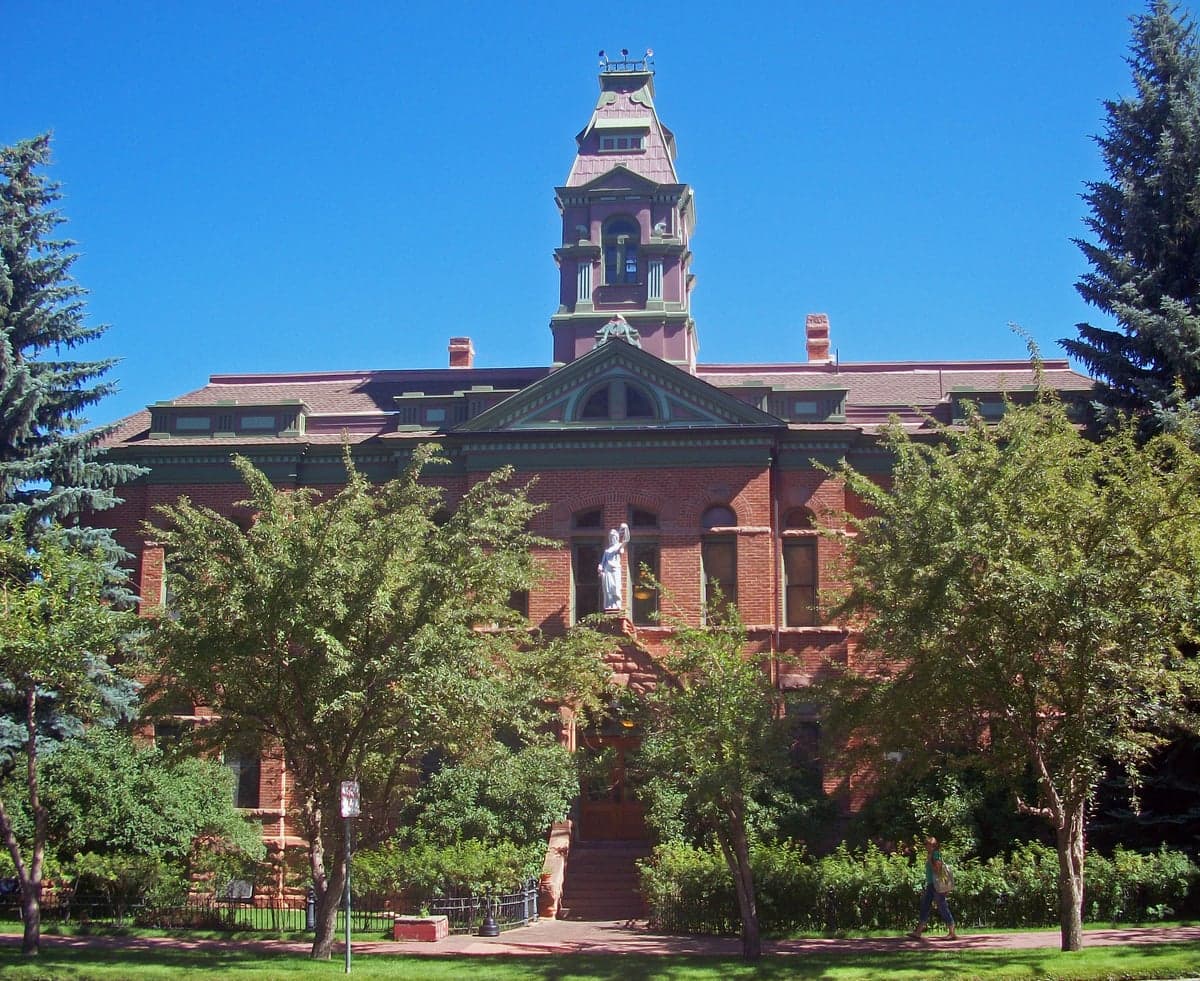
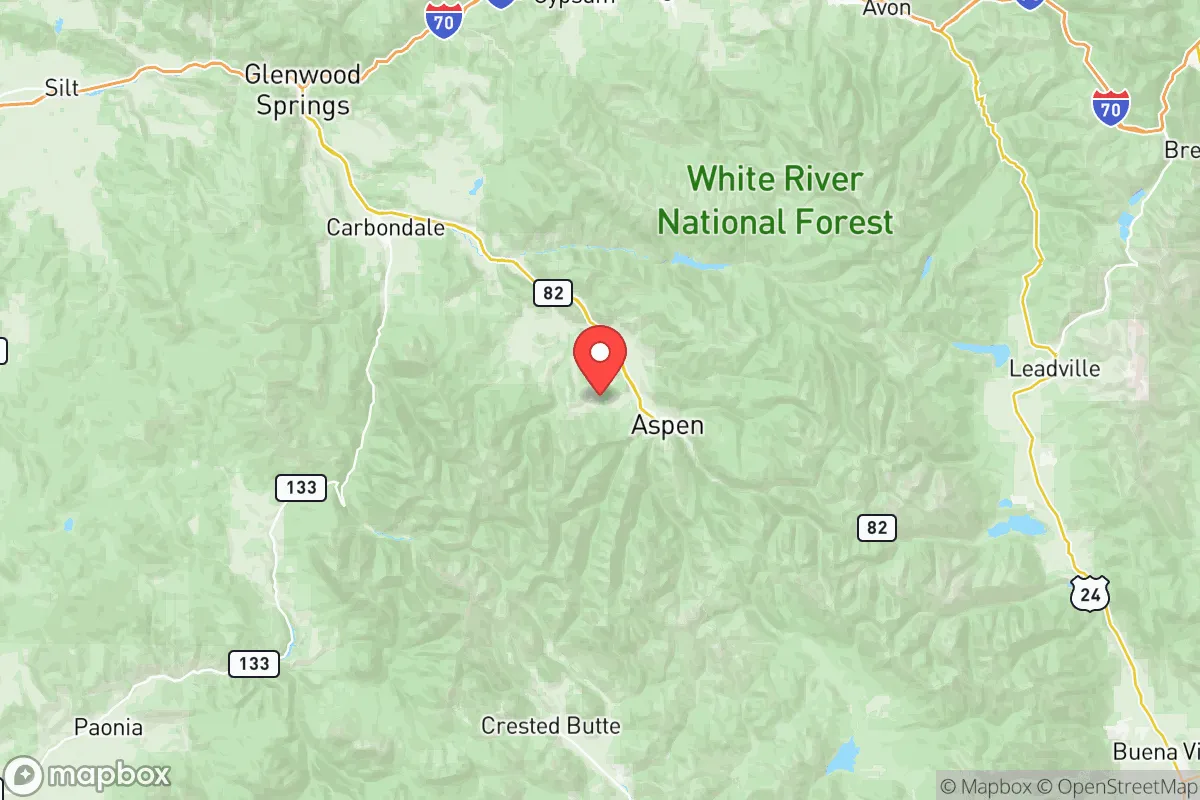
Photo: Wikipedia
Personal Sovereignty in Pitkin County
Viable for self-reliance. Generally workable, though some barriers may limit total independence.
What does Personal Sovereignty tell us?
Personal Sovereignty measures your capacity for self-reliance and independence with minimal government friction. Higher scores mean fewer barriers between you and the way you want to live... but it assumes you have the space you need and good neighbors.
What does this tell us?
Personal Sovereignty measures your capacity for self-reliance and independence with minimal government friction. Higher scores mean fewer barriers between you and the way you want to live... but it assumes you have the space you need and good neighbors.
State Policy
Energy independence: Net exporter (110% of energy produced in-state)
Personal Liberty
Homesteading

Personal Liberty Analysis
Pitkin County, Colorado, presents a complex personal sovereignty environment where the state's broad constitutional protections for individual rights intersect with some of the most stringent local land-use and regulatory frameworks in the Rocky Mountain region. For the autonomy-minded individual or family, the trade-off is stark: expansive personal liberties in areas like self-defense and medical choice, paired with a highly restrictive local government that exercises deep control over property, development, and daily life. The county's character is not uniform—the regulatory posture in the incorporated city of Aspen differs markedly from the unincorporated hamlets of Redstone, Meredith, and the rural Fryingpan River Valley, creating a patchwork of autonomy that requires careful navigation.
Tax burden and regulatory posture in Pitkin County
Colorado's state-level tax environment is favorable for personal sovereignty, with a flat income tax rate of 4.4% and a property tax assessment rate for residential real estate of 6.7% (among the lowest in the nation). However, Pitkin County layers on significant local costs. The county's total mill levy—combining county, school district, and special district taxes—can push effective property tax rates higher than the state average, particularly in high-value areas like Aspen and Snowmass Village. More impactful than taxes is the regulatory posture. Pitkin County enforces some of Colorado's most restrictive land-use codes, including a strict 35-foot building height limit, expansive wildfire mitigation requirements, and a transferable development rights (TDR) program that caps density. In unincorporated areas like Old Snowmass and the Capitol Creek Valley, building permits can take 6-12 months and require extensive environmental review. The county's Growth Management Quota system, while not currently active, remains a regulatory tool that signals a deep-seated preference for controlled development over individual property rights. For a reader accustomed to rural autonomy, this represents a significant constraint on what you can do with your own land.
Self-defense and gun law specifics in Pitkin County
Colorado is a "shall-issue" state for concealed carry permits, and Pitkin County generally follows state law without the additional restrictions seen in some Front Range counties. The county sheriff's office issues permits to qualified applicants, and there are no local ordinances banning open carry in unincorporated areas. However, the town of Aspen has enacted ordinances that restrict firearms in municipal buildings and parks, and the city council has passed resolutions supporting state-level magazine capacity limits. The practical reality is that gun culture in Pitkin County is less visible than in rural Colorado counties to the west and south. In towns like Carbondale (which straddles Garfield and Pitkin counties) and the unincorporated community of Woody Creek, firearm ownership is more normalized, while Aspen's social environment is less accommodating to open carry. Stand-your-ground laws apply statewide, and Colorado's preemption statute prevents local governments from banning firearms entirely, but the cultural pressure in the upper Roaring Fork Valley can make gun ownership feel like a private matter rather than a public right. For the self-defense-minded individual, the legal framework is sound, but the social climate varies significantly by location within the county.
Self-reliance and homesteading viability in Pitkin County
Homesteading and off-grid living face substantial headwinds in Pitkin County due to zoning and building code requirements. Minimum lot sizes in the county's rural zones are typically 35 acres, which preserves open space but makes small-scale homesteading economically prohibitive for most. The county requires all dwellings to have approved water and wastewater systems, and off-grid power systems must meet building code standards—there is no blanket exemption for solar-only or generator-only homes. In the remote Fryingpan River Valley, some long-time residents have maintained off-grid cabins, but new construction faces rigorous permitting. The communities of Redstone and Meredith offer slightly more flexibility, with older properties that predate current codes, but any substantial renovation triggers full code compliance. The county's strict wildfire mitigation codes require defensible space and fire-resistant materials, adding cost to any building project. For the self-reliant individual seeking to grow food, keep livestock, or live with minimal utility dependence, the regulatory environment is a significant barrier. The state's right-to-farm laws provide some protection for agricultural uses, but Pitkin County's planning department has broad discretion to limit what constitutes "agricultural" activity on residential parcels.
Personal liberties in Pitkin County: parental rights, medical autonomy, speech, and property
Colorado's state constitution provides strong protections for individual liberties, and Pitkin County generally does not add local restrictions in areas of medical autonomy or speech. Parental rights in education are governed by state law, and the county's school districts—Aspen School District and Roaring Fork School District—have not adopted the kind of parental notification policies seen in more conservative areas. Medical autonomy is robust at the state level, with Colorado protecting access to reproductive healthcare and medical marijuana, and Pitkin County does not impose local restrictions on either. Free speech protections are standard under the First Amendment, and the county's public forums—including the Pitkin County Commissioners' meetings—are generally open, though the county has faced criticism for limited public comment periods on land-use decisions. Property rights are where personal liberty faces the most constraint. The county's strict land-use regulations, combined with high property values (median home price in Aspen exceeds $4 million), mean that property ownership is effectively limited to high-net-worth individuals or those who inherited land. For the average family seeking to buy land and build a home with minimal government interference, Pitkin County is among the most restrictive jurisdictions in Colorado.
Overall, Pitkin County offers a mixed sovereignty profile that requires clear-eyed trade-offs. The state-level legal framework supports self-defense, medical choice, and limited taxation, but the local regulatory environment imposes some of the most restrictive land-use controls in the state. For the autonomy-minded individual, the unincorporated areas of the county—particularly the rural valleys around Redstone, Meredith, and the Fryingpan—offer more breathing room than Aspen or Snowmass Village, but nowhere in Pitkin County approaches the personal sovereignty available in less-regulated Colorado counties like Hinsdale, Mineral, or Rio Grande. The county's natural beauty and recreational access are world-class, but the price of entry includes surrendering significant control over what you can do with your property. For a reader who prioritizes maximum personal freedom and minimal government interference, Pitkin County is best understood as a high-cost, high-regulation environment where autonomy is exercised primarily through lifestyle choice rather than property rights.

* Values derived from national, state, county, city and local statistics and may differ in a specific area. Last updated: 2026-06-21T12:47:17.000Z
Narrative content on this page is AI-generated and may contain mistakes. Verify any details that matter before acting on them.
ReloMaps may earn a commission from affiliate links at no extra cost to you.

