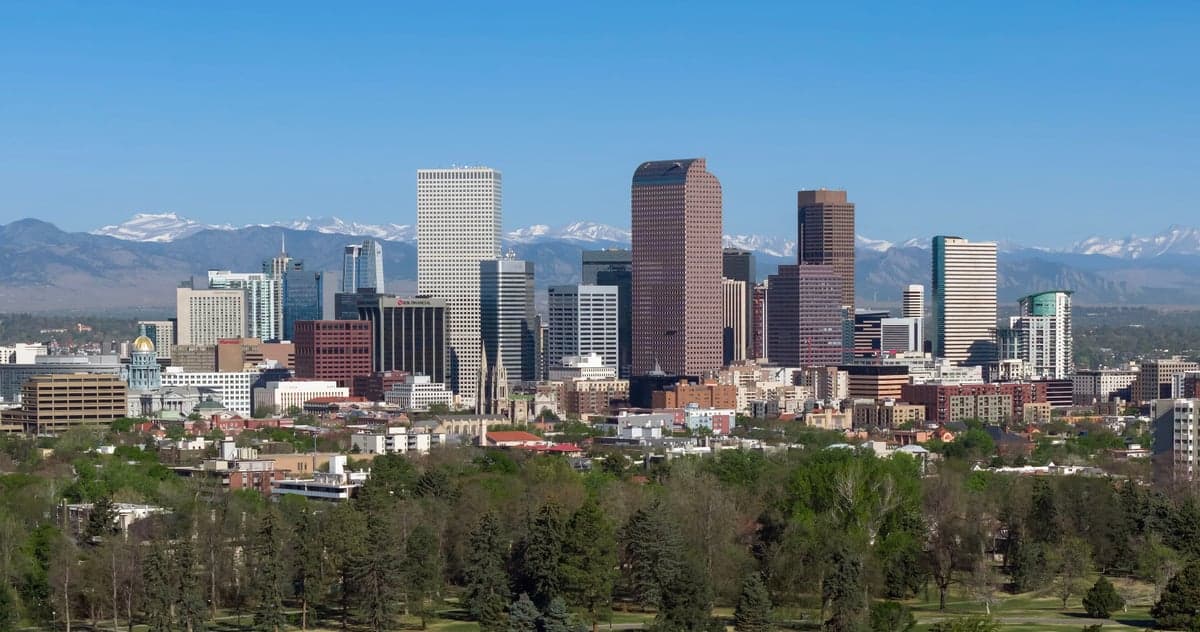
Photo: Wikipedia
Personal Sovereignty in Denver County
Viable for self-reliance. Generally workable, though some barriers may limit total independence.
What does Personal Sovereignty tell us?
Personal Sovereignty measures your capacity for self-reliance and independence with minimal government friction. Higher scores mean fewer barriers between you and the way you want to live... but it assumes you have the space you need and good neighbors.
What does this tell us?
Personal Sovereignty measures your capacity for self-reliance and independence with minimal government friction. Higher scores mean fewer barriers between you and the way you want to live... but it assumes you have the space you need and good neighbors.
State Policy
Energy independence: Net exporter (110% of energy produced in-state)
Personal Liberty
Homesteading

Personal Liberty Analysis
Denver County presents a complex personal sovereignty environment where state-level preemption creates a baseline of individual rights, but county and municipal codes layer on significant restrictions that directly impact autonomy. The county's regulatory posture is among the densest in Colorado, with Denver proper enforcing strict land use, business licensing, and building codes that limit self-reliant living, while outlying areas like Montbello and Green Valley Ranch offer slightly more breathing room due to lower population density and less aggressive code enforcement. For a conservative-leaning individual or family weighing relocation, the trade-off is clear: Denver County provides urban amenities and legal protections under state law, but at the cost of heavy local oversight that constrains property use, self-defense options, and off-grid feasibility.
Tax burden and regulatory posture in Denver County
Colorado's Taxpayer's Bill of Rights (TABOR) keeps state-level tax increases difficult, but Denver County imposes its own burdens. The combined state and county sales tax rate in Denver is 8.81%, one of the highest in the state, and property taxes are moderate at roughly 0.55% of assessed value—though recent reassessments have pushed effective rates higher for homeowners. The regulatory posture is decidedly heavy: Denver's zoning code runs over 1,000 pages, requiring permits for everything from fence heights to home-based businesses. Areas like Cherry Creek and Washington Park face the strictest enforcement, while East Colfax and Sun Valley see more informal compliance due to lower city resource allocation. Business licensing is mandatory for nearly all commercial activity, and short-term rental regulations cap licenses at 1,000 citywide, limiting entrepreneurial flexibility. Compared to neighboring counties like Douglas or Elbert, Denver's regulatory touch is significantly heavier, making it less attractive for those seeking minimal government interference in daily commerce.
Self-defense and gun law specifics in Denver County
Colorado is a shall-issue state for concealed carry permits, and Denver County issues them to residents who pass a background check and complete a training course—no county-specific restrictions beyond state law. However, Denver's city ordinances create additional hurdles: open carry is effectively banned within city limits, and firearms are prohibited in all city-owned buildings, parks, and recreation centers. The county sheriff's office processes permits within the statutory 90-day window, but applicants report occasional delays. For self-defense outside the home, the state's "Make My Day" law provides strong castle doctrine protections, but Denver's dense urban environment means defensive firearm use in public is subject to more scrutiny than in rural counties. Neighborhoods like Five Points and Capitol Hill have higher crime rates, making self-defense a practical concern, but the city's political climate leans heavily toward gun control—Denver City Council has passed multiple resolutions supporting state-level magazine capacity limits and universal background checks. For a gun owner, the legal framework is workable but far from permissive compared to areas like Parker or Castle Rock in Douglas County.
Self-reliance and homesteading viability in Denver County
Denver County's urban density makes traditional homesteading nearly impossible. Minimum lot sizes in most residential zones are 6,000 square feet, but actual lots in established neighborhoods like Berkeley or Congress Park average 4,000-5,000 square feet, leaving little room for gardens or livestock. The city's zoning code prohibits chickens in most residential areas (with a limited pilot program for backyard hens in select neighborhoods), and beekeeping requires a permit. Off-grid living is effectively illegal: all residential structures must connect to municipal water and sewer, and solar panels require building permits and utility interconnection agreements. Areas like Montbello and Green Valley Ranch have larger lots (up to 7,000 square feet) and slightly more lenient enforcement, but still fall under Denver's unified development code. For serious self-reliance—raising animals, growing substantial food, or living without utility hookups—Denver County is a poor fit. The county's water rights are fully allocated, and rainwater collection is limited to 110 gallons per property under state law, further constraining independent water sourcing. Homesteading viability is essentially zero within Denver proper; the closest viable areas are in Adams County or Arapahoe County suburbs like Aurora, where lot sizes and zoning are more permissive.
Personal liberties in Denver County: parental rights, medical autonomy, speech, and property
Parental rights in Denver County are generally protected under state law, but local school board policies can create friction. Denver Public Schools (DPS) has a progressive curriculum that includes comprehensive sex education and LGBTQ+ inclusive materials, which some conservative families find conflicts with their values. Opt-out provisions exist but require active parental intervention. Medical autonomy is mixed: Colorado protects access to reproductive healthcare and medical marijuana, but Denver County enforces strict licensing for alternative medicine practitioners and has banned conversion therapy for minors. Free speech is robust in public spaces—Denver's Civic Center Park is a traditional protest venue—but the city has faced lawsuits over permit requirements for large gatherings, and noise ordinances restrict amplified speech in residential areas after 10 PM. Property rights are the most constrained liberty: Denver's rent control ban (state-level) prevents local rent stabilization, but the city's inclusionary housing ordinance requires developers to set aside a percentage of units as affordable, effectively limiting what property owners can do with their land. Historic preservation districts in neighborhoods like Baker and Whittier impose additional restrictions on exterior modifications. Compared to less regulated counties, Denver's personal liberties are strongest in speech and medical choice, but weakest in property control and parental educational authority.
Overall, Denver County ranks low on personal sovereignty relative to other Colorado areas. The state's preemption laws provide a floor of rights—concealed carry, TABOR tax limits, medical freedom—but the county's dense regulatory overlay in zoning, business licensing, and property use creates a heavy-touch environment. For a conservative-leaning individual or family prioritizing autonomy, Denver County is a compromise: you get urban infrastructure and legal protections, but at the cost of significant local oversight. Areas like Elbert County or Teller County offer far greater self-reliance, while Douglas County provides a middle ground with lower taxes and looser zoning. Denver County is best suited for those who value city amenities and are willing to navigate its regulatory maze, rather than those seeking maximum personal freedom in land use, self-defense, or off-grid living.

* Values derived from national, state, county, city and local statistics and may differ in a specific area. Last updated: 2026-06-27T15:39:16.000Z
Narrative content on this page is AI-generated and may contain mistakes. Verify any details that matter before acting on them.
ReloMaps may earn a commission from affiliate links at no extra cost to you.

