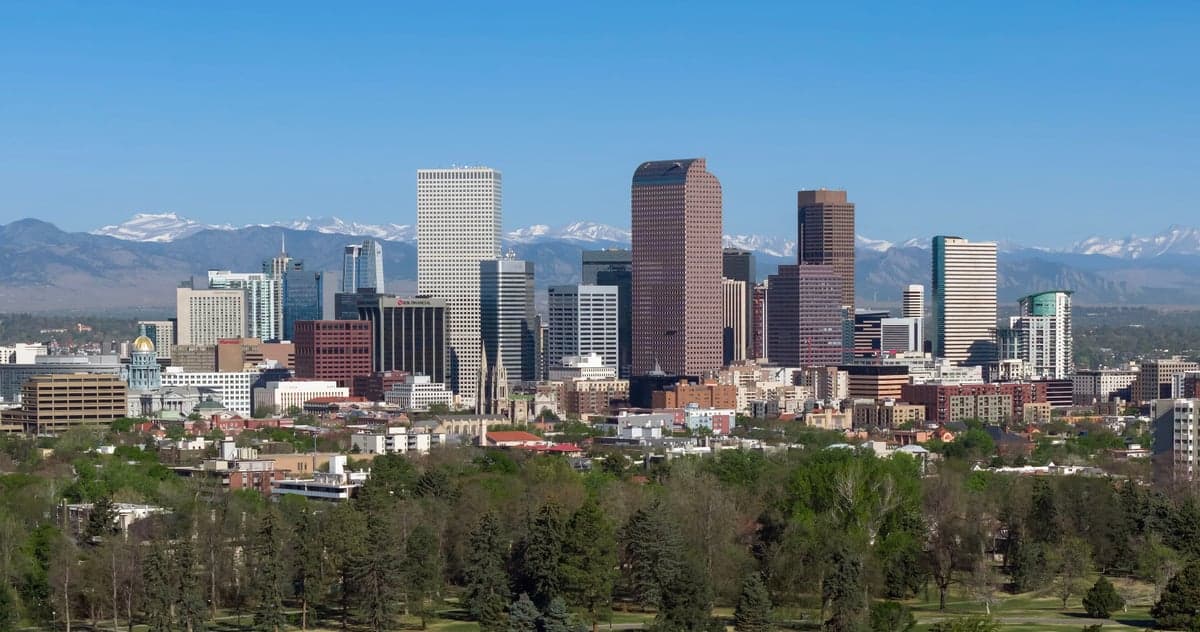
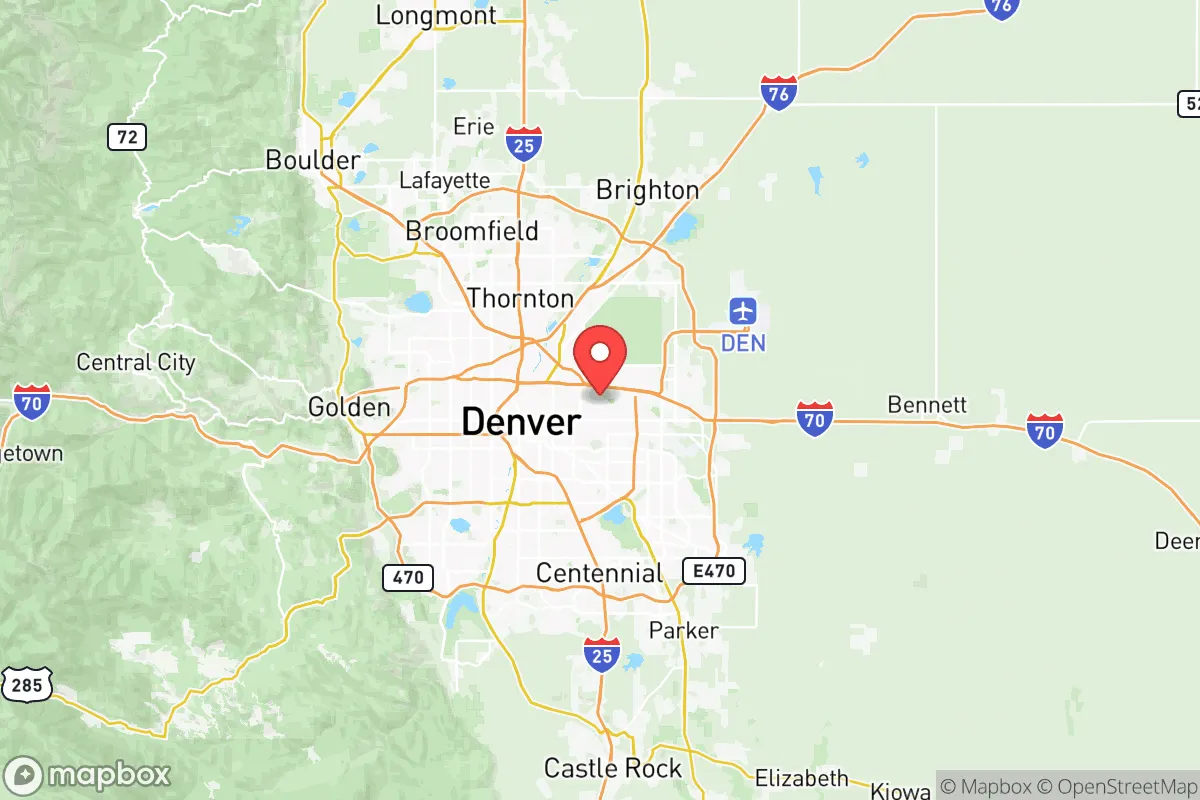
Photo: Wikipedia
Quality of Life in Denver County
A livable area that tracks near national norms for affordability, walkability, and neighborhood health.
What does Quality of Life tell us?
Quality of Life measures an area by evaluating factors like cost of living, nearby amenities, country club access, airport proximity, socioeconomic signals and neighborhood character. For large states, this is a general average — quality of life can vary dramatically between metro areas, suburbs, and rural communities within the same state.
What does this tell us?
Quality of Life measures an area by evaluating factors like cost of living, nearby amenities, country club access, airport proximity, socioeconomic signals and neighborhood character. For large states, this is a general average — quality of life can vary dramatically between metro areas, suburbs, and rural communities within the same state.
Cost of Living
75% above national average
55%
The Real Cost of Living in Denver County for 2026
| Tier | Individual | Family (4) |
|---|---|---|
| Survival | $28k | $53k |
| Comfortable | $114k | $168k |
| Luxury | $166k+ | $257k+ |
| Elite (Top 5%) | $221k+ | $343k+ |
Quality-of-Life Analysis
Denver County, Colorado, is unique among U.S. counties because it is consolidated with the City and County of Denver, meaning there are no separate townships or unincorporated rural areas within its borders. This urban county offers a spectrum of quality-of-life options that shifts from high-density downtown living to quieter, older residential neighborhoods, drawing everyone from young professionals and remote workers to long-time families and creatives. The entire county is defined by an urban environment, but its distinct neighborhoods provide vastly different daily experiences, from the 24-hour energy of LoDo to the tree-lined calm of Harvey Park.
Largest town(s) & population centers
Denver County is a single municipality: the City and County of Denver. With a population exceeding 700,000, daily life here is defined by its downtown core and surrounding urban neighborhoods. The Central Business District (CBD) and LoDo (Lower Downtown) are the county’s epicenter for nightlife, sports at Coors Field and Ball Arena, and high-rise apartment living. Professionals and young transplants are drawn to these walkable, transit-rich areas with direct access to the RTD light rail. Capitol Hill and Uptown offer a mix of historic Victorian homes and newer mid-rises, appealing to a diverse crowd of artists, students, and service workers due to slightly lower rents. Cherry Creek and Washington Park represent the upper end of urban living within the county, featuring high-end shopping at the Cherry Creek Shopping Center and the sprawling 165-acre Washington Park, attracting affluent families and established professionals seeking green space without leaving the city grid.
Smaller towns & rural pockets
Because Denver County is 100% urbanized, it contains no smaller towns or rural pockets in the traditional sense. However, its chartered boundaries encompass several formerly independent communities that now function as distinct neighborhoods with their own small-town character. Montclair, bordering Aurora, feels like a quiet village with a central park and low-density bungalows. Berkeley and Sloan’s Lake in northwest Denver offer a neighborhood-centric vibe around the 177-acre Sloan’s Lake, with local breweries and a slower pace than downtown. Harvey Park in southwest Denver was developed as a post-war planned community and retains a suburban feel with mid-century ranch homes and larger lots. These areas lack the farmland or open range found in adjacent counties (like Jefferson or Adams), providing instead a semi-suburban experience within city limits.
Cost & lifestyle range
The cost-of-living index in Denver County is 175 (75% above the U.S. average), but this number masks significant variation between neighborhoods. On the high end, Cherry Creek and Wash Park command median home values well above the countywide median of $586,700, often exceeding $800,000 for a single-family home. Rents here push $2,500-$3,000 for a two-bedroom, attracting high-income professionals and legacy wealth. On the more accessible end, Westwood, Villa Park, and parts of Sun Valley in west-central Denver offer median rents closer to $1,770 (the county average) and home prices in the $400,000-$500,000 range for older condos and fixer-uppers, drawing first-time homebuyers and immigrant communities. The average commute is just 25.4 minutes, a key advantage county-wide—even those in more affordable neighborhoods like Harvey Park can reach downtown in under 20 minutes by car or bus. Lifestyle amenities scale with cost: Cherry Creek residents have Michelin-referenced restaurants and luxury grocers, while Westwood residents rely on family-run taquerias and community centers, though all share access to Denver’s parks, bike lanes, and cultural institutions.
Denver County is best suited for individuals and families who want an urban lifestyle with no compromise on access, convenience, and cultural density. Those who thrive here are comfortable with a tight housing market and high living costs but value a 25-minute commute, walkable blocks, and a diverse social fabric. The county lacks the suburban quiet or rural land of its neighbors—it is unapologetically a city—making it ideal for people who prioritize career opportunity, nightlife, and public transit over acreage or silence. First-time buyers willing to explore older neighborhoods farther from downtown, and affluent professionals who can afford Cherry Creek or LoDo, both find a livable niche within this single, dense jurisdiction.

Crime in Denver County
Crime rates similar to the national median for U.S. locations.
Violent CrimeViolent Crime Analysis
Property CrimeProperty Crime Analysis
Crime Analysis
Denver County, Colorado, which is coterminous with the City and County of Denver, presents a mixed safety profile that demands close scrutiny from potential residents. While the city offers vibrant urban amenities, its crime rates — particularly for property offenses — significantly exceed both state and national averages, raising concerns about daily security. The county recorded a violent crime rate of 427.5 per 100,000 residents and a property crime rate of 2,175.8 per 100,000, figures that place it among the higher-risk urban centers in the Rocky Mountain region.
Crime in context
To understand Denver's safety landscape, it is essential to compare its statistics against broader benchmarks. The national violent crime rate for 2023-2024 hovers around 380 per 100,000, meaning Denver's rate is roughly 12% higher. The property crime rate is even more alarming: the national average sits near 1,950 per 100,000, making Denver's rate about 11.6% higher than the U.S. figure. When compared to the state of Colorado, which has a violent crime rate of approximately 370 per 100,000 and a property crime rate of 2,100 per 100,000, Denver still exceeds both. However, the gap narrows for property crime, suggesting that Denver's suburban neighbors like Aurora and Lakewood also struggle with similar theft and burglary issues. Notably, Colorado Springs and Boulder report lower violent crime rates, underscoring that Denver's urban density and socioeconomic pressures drive its elevated numbers.
What residents experience
For those living in Denver County, the crime experience is heavily shaped by property offenses. Auto theft, package theft, and residential burglary are common complaints, particularly in neighborhoods with high foot traffic and limited off-street parking. Areas like Capitol Hill, Five Points, and RiNo (River North) see frequent property crime incidents, while violent crime — though less common — clusters around specific corridors such as Colfax Avenue and the East Colfax neighborhood. The Denver Police Department has implemented targeted patrols and community outreach, but residents often report slow response times for non-emergency property crimes. A significant factor contributing to the crime environment is the progressive judicial philosophy of the Denver District Attorney's Office. Under current leadership, the office has emphasized diversion programs, reduced sentencing for nonviolent offenders, and a general reluctance to prosecute certain property crimes. Critics argue that this approach, while sympathetic to offenders, has led to a revolving-door justice system where repeat offenders are quickly returned to the streets, undermining public safety and victim confidence. This ideological stance is particularly concerning for residents in neighborhoods like Montbello and Westwood, where property crime rates are highest.
Neighborhood-level variation
Despite the county-wide averages, safety varies dramatically by neighborhood. Safer enclaves include Washington Park, Cherry Creek, and Hilltop, where violent crime is rare and property crime is lower due to private security and higher home values. Conversely, areas like Sun Valley, Villa Park, and East Colfax experience higher concentrations of both violent and property crime. The Denver Police Department's crime mapping tool shows that the downtown core, including LoDo (Lower Downtown), sees elevated theft and assault rates, driven by nightlife and transient populations. For families and professionals, choosing a neighborhood with a strong neighborhood watch and proximity to police substations can mitigate risk. However, the overarching concern remains the county's lenient prosecutorial policies, which many residents believe embolden criminals and erode the deterrent effect of law enforcement. Until the judicial approach shifts toward prioritizing victim rights and public safety, Denver County will likely continue to struggle with crime rates that outpace both state and national norms.
* Values derived from national, state, county, city and local statistics and may differ in a specific area. Last updated: 2026-06-27T15:39:16.000Z
Narrative content on this page is AI-generated and may contain mistakes. Verify any details that matter before acting on them.
ReloMaps may earn a commission from affiliate links at no extra cost to you.

