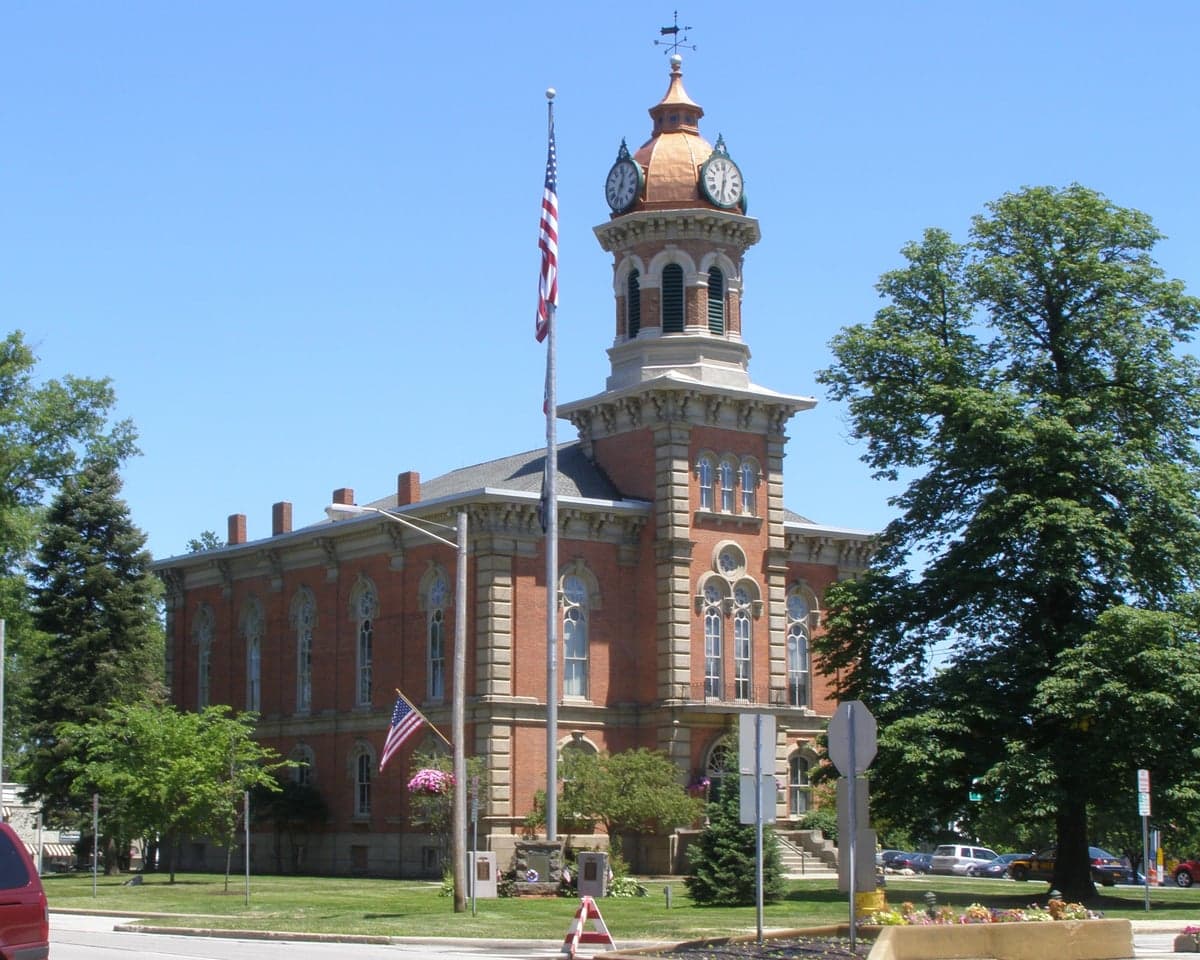
Photo: Wikipedia
Political ClimatePolitical Climate in Chardon, OH
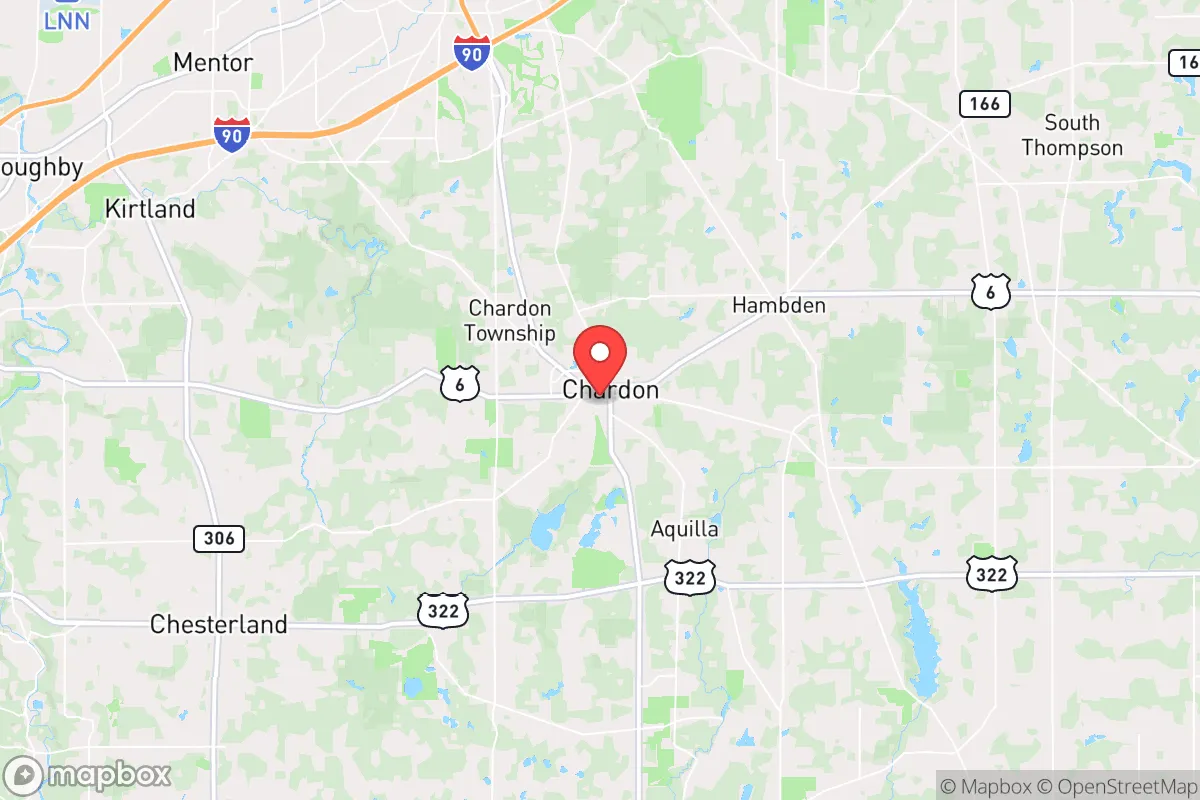
District shown is the primary district for this city’s centroid. Cities may span multiple districts.
Local Political AnalysisPolitical Analysis of Chardon, OH
Chardon has long been a reliably conservative stronghold, and that hasn't changed. The city sits in Geauga County, which is one of the most Republican-leaning counties in the entire state, and the local Cook PVI of R+9 reflects a deeper shade of red than the state's overall R+5. If you've been around here for a while, you know that this isn't a recent shift—it's been the character of the place for decades. The area's politics are rooted in a strong sense of local control, fiscal conservatism, and a general skepticism of rapid change. While the national mood has swung back and forth, Chardon's political trajectory has been remarkably stable, with Republican candidates routinely winning by comfortable margins in both local and national elections.
How it compares
The difference between Chardon's R+9 and Ohio's R+5 might not sound huge on paper, but in practice it's a real gulf. Drive twenty minutes west into Lake County, and you'll hit places like Willoughby or Painesville, which are more competitive and have a stronger Democratic presence, especially in the more urbanized lakefront communities. Head south into Portage County, and you'll find a similar mix, with Kent and Ravenna offering a more purple political landscape thanks to the university influence. Chardon, by contrast, feels like a different world politically. The local Republican Party is well-organized and deeply embedded in the community, and it's rare to see a contested race where a Democrat has a real shot. This isn't a place where political signs are evenly split—you'll see a sea of red, with the occasional blue sign tucked away on a side street. The comparison to the state as a whole is simple: Chardon is a core part of the GOP's base in Ohio, while the state itself has to balance that with the more moderate and liberal votes coming out of Cuyahoga County and the major cities.
What this means for residents
For conservative residents, this political climate is a comfortable fit. Local policies tend to align with their values—lower taxes, a focus on law and order, and a school board that leans traditional. You'll find that local government is responsive to conservative concerns, and there's a strong sense that your vote actually counts because it's part of a winning coalition. For liberal residents, the reality is different. You're likely in the minority, and you'll need to be comfortable with that. That doesn't mean you can't be involved—there are active Democratic clubs and progressive groups in the county—but you won't see your preferred candidates winning many local races. The upside is that the community is generally civil; people know their neighbors, and political disagreements rarely turn into personal feuds. You can still have a good life here, but you'll be navigating a landscape where your political views are the exception, not the rule.
One cultural distinction that sets Chardon apart is its deep-rooted sense of local identity. This isn't a bedroom community that just votes Republican—it's a place where the county fair, the maple syrup festival, and the local diner are central to daily life. The political conservatism here is less about national culture wars and more about a practical, "we know what works for us" attitude. You'll see that in the way the city handles zoning, development, and school funding—it's cautious, deliberate, and resistant to outside pressure. For both conservatives and liberals, that means the pace of change is slow, and the community's character is fiercely protected. If you're looking for a place where politics is a quiet, stable backdrop rather than a daily battleground, Chardon delivers that—but only if you're comfortable with the fact that the backdrop is overwhelmingly red.

State Political ClimatePolitical Climate in Ohio
State Political AnalysisPolitical Environment in the State
Ohio is a classic battleground state that has shifted from a true purple swing state to a solidly Republican lean over the past decade, now carrying a Cook PVI of R+5. The state voted for Donald Trump by 8 points in both 2016 and 2020, and by a similar margin in 2024, marking a decisive break from its longtime bellwether status where it picked the winner in every presidential election from 1964 to 2020. The shift is driven by a combination of working-class white voters in the Appalachian southeast and rural northwest moving hard right, while the Columbus and Cleveland metros have become Democratic strongholds, but not enough to offset the rural and exurban gains for the GOP.
Urban vs. rural divide
The political map of Ohio is a stark study in contrasts. The three major metros—Cleveland, Columbus, and Cincinnati—anchor the Democratic vote, with Cuyahoga County (Cleveland) delivering a 2-to-1 margin for Democrats and Franklin County (Columbus) trending bluer each cycle. Cincinnati's Hamilton County has flipped from purple to reliably blue in presidential years. Meanwhile, the rural and exurban counties tell a different story. Places like Delaware County (north of Columbus) have gone from swing to deep red, voting for Trump by 20+ points in 2024. The Appalachian counties in the southeast, such as Belmont and Jefferson, have swung hard right, while the northwestern agricultural counties like Mercer and Auglaize are among the most Republican in the nation. The suburbs of Lake County (east of Cleveland) and Warren County (north of Cincinnati) have also moved right, solidifying the GOP's structural advantage. The only real blue outposts outside the major cities are college towns like Athens (home to Ohio University) and Yellow Springs, which vote overwhelmingly Democratic.
Policy environment
Ohio's policy environment reflects its rightward shift, though it retains some moderate features. The state has a flat income tax rate of 3.5% as of 2025, down from a progressive top rate of nearly 5% a decade ago, and the state sales tax is 5.75% plus local add-ons. Property taxes are moderate but vary widely by district. The state is a "right-to-work" state in practice, though not by law, and has a Republican-controlled legislature and governor's office that have consistently pushed for deregulation and business-friendly policies. Education policy has been a flashpoint: the state has a robust school voucher program (the EdChoice system) that has expanded significantly under Governor Mike DeWine, allowing public funds to follow students to private and religious schools. Healthcare is a mixed bag—Ohio expanded Medicaid under the Affordable Care Act in 2014, but the state has also imposed work requirements and other restrictions on the program. Election laws have tightened: the state passed voter ID requirements in 2023 (SB 23) that require a photo ID to vote in person, and absentee ballot deadlines have been shortened. Early voting remains available, but the window has been narrowed.
Recent policy direction
The last five years have seen Ohio move decisively in a conservative direction on multiple fronts. On gun rights, the state enacted permitless carry (constitutional carry) in 2022 (HB 227), allowing any adult who can legally possess a firearm to carry it concealed without a license. Stand-your-ground laws have been on the books since 2008. On education and parental rights, the state passed the "Parents' Bill of Rights" (HB 8) in 2023, requiring schools to notify parents of any changes in a student's health or well-being and restricting instruction on sexual orientation and gender identity in K-3. The state also banned transgender athletes from participating in girls' sports (HB 61, 2023) and restricted gender-affirming care for minors (HB 68, 2024), though that law is currently tied up in court. On speech and privacy, Ohio has not passed a broad social media censorship law like Florida or Texas, but it has considered bills targeting "divisive concepts" in public universities. On medical and bodily autonomy, the state passed a six-week abortion ban (the "Heartbeat Bill") in 2019, which took effect after the Dobbs decision in 2022. However, voters overwhelmingly approved a constitutional amendment in November 2023 (Issue 1) that enshrines abortion rights up to fetal viability, effectively overturning the legislative ban. This was a major rebuke to the GOP supermajority and shows that on some social issues, the electorate is more moderate than the legislature. Property rights have been strengthened with a 2021 law limiting eminent domain for economic development. On voting and ballot access, the 2023 voter ID law (SB 23) is the most significant change, requiring a photo ID for in-person voting and reducing the absentee ballot application window from 90 days to 45 days.
Civil unrest & political movements
Ohio has seen its share of political flashpoints. The 2020 protests in Columbus and Cleveland over George Floyd's murder were large but largely peaceful, though there were instances of property damage and looting in downtown Columbus. The state has a strong and visible anti-abortion movement, particularly in the rural and suburban areas, but the 2023 Issue 1 victory for abortion rights showed that the pro-choice coalition is also well-organized and motivated. Immigration politics have been relatively quiet compared to border states, but there have been localized controversies, such as the 2023 proposal in Springfield to declare the city a "sanctuary city" for immigrants, which was ultimately rejected by the city commission. The "election integrity" movement has been active, with Republican Secretary of State Frank LaRose purging voter rolls and pushing for stricter ID laws, while Democrats have accused the state of voter suppression. There have been no serious secession or nullification movements in Ohio, though some rural counties have passed symbolic resolutions asserting local control over gun laws and health mandates. The most visible political movement in recent years has been the union-led opposition to the 2011 anti-collective bargaining law (SB 5), which was repealed by voters in a 2011 referendum—a reminder that Ohio's labor movement, while diminished, still has political muscle.
Projection
Over the next 5-10 years, Ohio is likely to remain a Republican-leaning state, but the margin may narrow slightly as the Columbus metro continues to grow and diversify. The Columbus region is adding population faster than any other part of the state, and its Democratic lean is intensifying. Meanwhile, the rural counties that have driven the GOP's gains are aging and losing population, which could eventually erode the Republican advantage. The 2023 abortion rights amendment showed that on certain social issues, the electorate is more moderate than the legislature, and future ballot initiatives on marijuana legalization (which passed in 2023) and minimum wage increases could continue to draw cross-party support. However, the state's political geography is deeply entrenched, and the GOP's structural advantages in the state legislature (due to gerrymandering) and in the rural-heavy electoral map are unlikely to change dramatically. A new resident moving to Ohio in 2026 should expect a state where Republicans control most levers of power, but where Democratic strongholds in the cities and suburbs provide a real counterweight, and where direct democracy through ballot initiatives can override the legislature on high-salience issues.
For a new resident, the bottom line is that Ohio offers a politically mixed environment where your experience will vary dramatically depending on where you live. If you're a conservative, you'll find a state government that largely aligns with your views on taxes, guns, and education, and you'll feel at home in most suburbs and rural areas. If you're a liberal, you'll find strong communities in Columbus, Cleveland, and Cincinnati, and you'll have the ballot initiative process as a check on the legislature. The state is not a deep-red monolith—it's a purple state that has tilted red, but with enough blue in the cities to keep things interesting. The practical takeaway: choose your county carefully, because the political culture of Delaware County is very different from Franklin County, and that difference will shape your daily life more than the state-level PVI ever will.
* Values derived from national, state, county, city and local statistics and may differ in a specific area. Last updated: 2026-06-16T09:56:04.000Z
Narrative content on this page is AI-generated and may contain mistakes. Verify any details that matter before acting on them.
ReloMaps may earn a commission from affiliate links at no extra cost to you.

