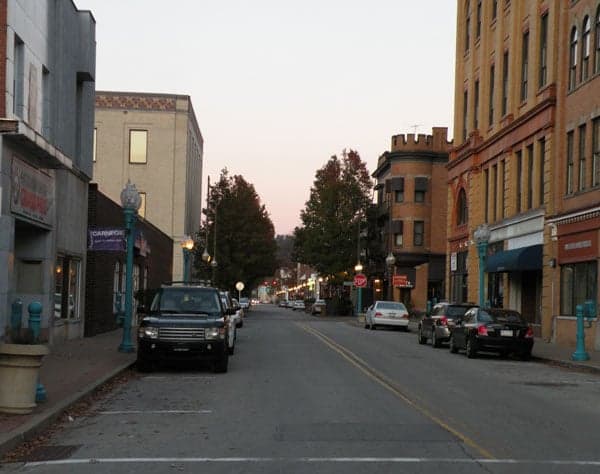
Photo: Wikipedia
Political ClimatePolitical Climate in Carnegie, PA
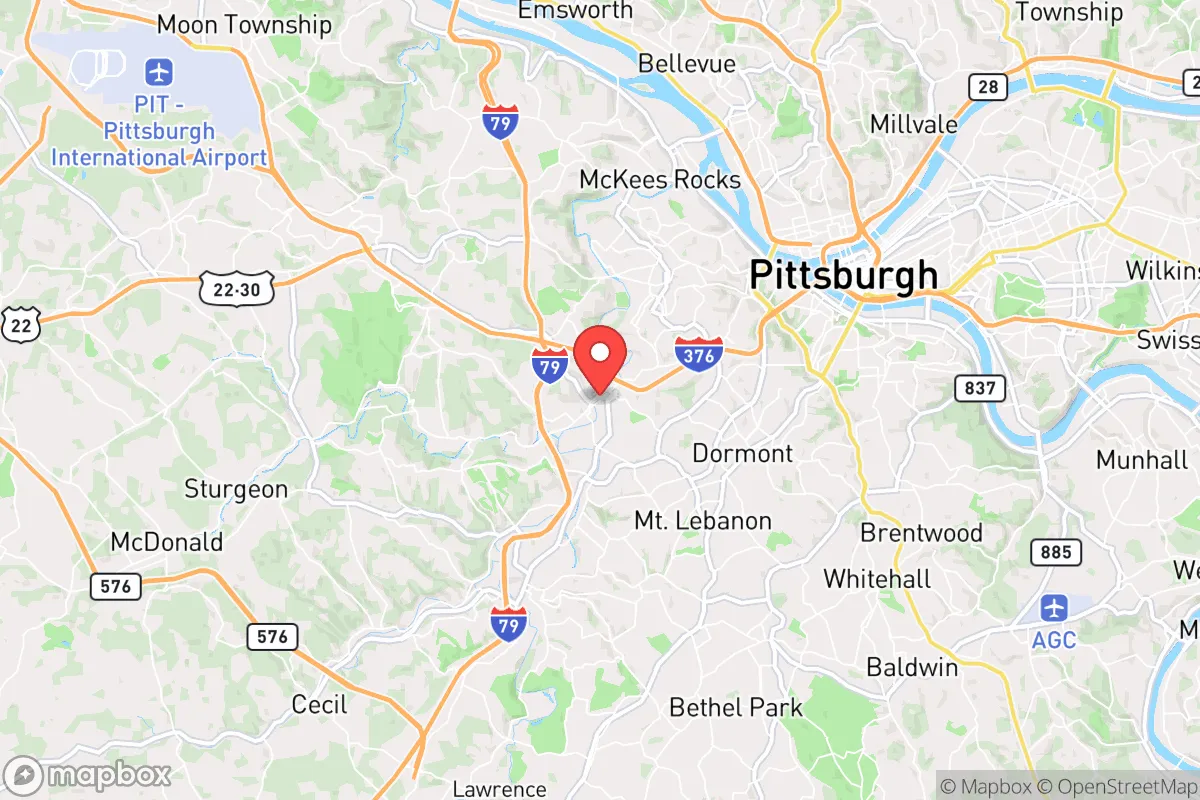
District shown is the primary district for this city’s centroid. Cities may span multiple districts.
Local Political AnalysisPolitical Analysis of Carnegie, PA
Carnegie, PA leans reliably Democratic, with a Cook Partisan Voting Index (PVI) of D+3, meaning it votes about three points more Democratic than the national average. That’s a noticeable shift from the surrounding state of Pennsylvania, which sits at a dead-even PVI of EVEN, making it one of the most competitive swing states in the country. Over the last decade, Carnegie has held steady as a blue dot in a purple region, with local elections often decided by margins that reflect its working-class roots and growing commuter population. If you’ve been around here long enough, you’ve seen the old steel town character mix with younger families moving in from Pittsburgh, and that blend keeps the politics more progressive than the surrounding suburbs but less so than the city core.
How it compares
Carnegie’s D+3 lean puts it to the left of most of Allegheny County’s western suburbs, but it’s not as deep blue as Pittsburgh proper, which sits at roughly D+15. Drive ten minutes east into the city and you’ll find a much more liberal electorate; head west toward Robinson Township or South Fayette, and you’ll hit areas that lean Republican or are more evenly split. The contrast is sharpest with nearby Washington County, just south, which trends red by about R+10. In Carnegie, you’ll see more Democratic yard signs and local candidates running unopposed in primaries, while just a few miles away in Bridgeville or Heidelberg, the races are tighter. The state-level EVEN rating means Carnegie’s vote matters more in statewide elections—your ballot here helps offset the redder rural counties, making the borough a small but consistent piece of Pennsylvania’s swing-state math.
What this means for residents
For liberal residents, Carnegie feels like a comfortable place to live—local government tends to align with progressive priorities on issues like public transit funding, zoning for mixed-use development, and support for the Carnegie Library and community centers. Conservative residents aren’t shut out, though; the borough still has a strong tradition of fiscal caution and a no-nonsense attitude about local services, and you’ll find plenty of neighbors who vote Republican in state races. The real tension isn’t between neighbors but between Carnegie and the state legislature, where Harrisburg’s Republican majorities often override local ordinances on things like gun laws or tax policy. That dynamic means both sides have to engage—liberals push for local control, conservatives focus on state-level representation. In practice, the borough council tends to be pragmatic, focusing on potholes, police coverage, and keeping the business district alive rather than wading into culture wars.
Culturally, Carnegie stands out for its strong sense of place—the annual Carnegie Arts Festival, the historic Andrew Carnegie Free Library & Music Hall, and the tight-knit business district along Main Street all reflect a community that values its identity. Policy-wise, the borough has been more willing than its neighbors to invest in public transit connections to Pittsburgh, with the 31 bus line and the upcoming Bus Rapid Transit project getting local support. That’s a subtle but real distinction from surrounding towns that lean more car-centric and skeptical of regional planning. For anyone moving here, the political climate means you get a reliably blue local government in a purple state, with all the practical trade-offs that come with it—more community investment, less ideological friction day-to-day, but a constant awareness that the state-level politics can shift the ground under your feet.

State Political ClimatePolitical Climate in Pennsylvania
State Political AnalysisPolitical Environment in the State
Pennsylvania is the ultimate swing state, with a Cook PVI of EVEN that perfectly captures its razor-thin partisan balance. Over the past 20 years, the state has shifted from a reliable blue firewall in presidential elections to a true battleground, flipping from Obama in 2008 and 2012 to Trump in 2016, then back to Biden in 2020 by just over 80,000 votes. The dominant coalitions are a shrinking but still potent union-and-urban Democratic base centered on Philadelphia and Pittsburgh, facing off against a growing, energized Republican coalition fueled by the exurban and rural "T" that runs through the center and north of the state. For a relocator, this means your experience of Pennsylvania politics will depend almost entirely on which of the state's 67 counties you land in.
Urban vs. rural divide
The political map of Pennsylvania is a story of two worlds. The southeastern corner, anchored by Philadelphia and its collar counties like Montgomery and Delaware, is the engine of the Democratic vote, delivering margins that can offset massive GOP wins elsewhere. In 2020, Philadelphia County alone gave Biden a 460,000-vote advantage. On the western end, Pittsburgh and Allegheny County are similarly blue, though with a more moderate, union-flavored Democratic tradition. The vast middle of the state — places like Centre County (home to Penn State) and Erie County on the lake — are the true bellwethers, often flipping with the national tide. The Republican strongholds are the rural "T": the northern tier along the New York border, the central spine, and the south-central counties like York and Lancaster. Lancaster County, once a reliably red bastion, has shown signs of purpling as it grows and diversifies, while Luzerne County in the northeast became a national symbol of the blue-collar shift to Trump. The suburbs of Philadelphia, particularly Bucks and Chester counties, have moved sharply left over the last decade, turning from swing areas into solid Democratic territory.
Policy environment
Pennsylvania's policy landscape reflects its divided government. The state has a flat personal income tax rate of 3.07%, one of the lowest in the nation, and a sales tax of 6% (8% in Philadelphia and Allegheny County). Property taxes are a major issue, varying wildly by school district and often cited as a burden by homeowners. The regulatory posture is mixed: the state has a robust oil and gas industry in the Marcellus Shale, but also imposes an impact fee rather than a severance tax, a compromise that frustrates both environmentalists and some fiscal conservatives. Education policy is a perennial battleground, with a recent court ruling declaring the state's school funding system unconstitutional, which will likely drive tax and spending debates for years. On election law, Pennsylvania has no-excuse mail-in voting (passed with bipartisan support in 2019 but now fiercely partisan), voter ID is required only for first-time voters, and the state has automatic voter registration at DMVs. For a conservative relocator, the lack of a strict voter ID law and the ease of mail-in voting may be concerns; for a liberal one, the system is relatively accessible.
Recent policy direction
The last few years have seen Pennsylvania lurch in contradictory directions, depending on which party holds the governor's mansion and the legislature. Under Democratic Governor Josh Shapiro, elected in 2022, the state has moved toward expanding liberties in some areas while tightening in others. On gun and self-defense law, Pennsylvania is a "shall issue" state for concealed carry, with no permit required for open carry (except in Philadelphia), and it has preemption laws that prevent local municipalities from enacting their own gun restrictions — a major win for gun rights advocates. However, Shapiro has pushed for universal background checks and "red flag" laws, which have stalled in the Republican-controlled legislature. On parental and education rights, the state has seen fierce battles over school curriculum and library books, with conservative parents in districts like Central Bucks and Pennridge organizing to challenge LGBTQ-inclusive materials and critical race theory, while the Shapiro administration has generally supported inclusive policies. Medical and bodily autonomy is a flashpoint: abortion remains legal up to 24 weeks, and Shapiro has pledged to veto any further restrictions, while also signing an executive order protecting out-of-state abortion seekers. On property rights, the state's lack of a severance tax on natural gas extraction is a boon for landowners in the Marcellus Shale region, but pipeline disputes and eminent domain fights are common. Voting and ballot access remains the most contentious issue, with the legislature and governor deadlocked over proposals for stricter voter ID and signature verification, while the state Supreme Court has repeatedly expanded mail-in ballot access.
Civil unrest & political movements
Pennsylvania has been a stage for some of the most visible political flashpoints in the country. The 2020 election aftermath saw massive protests in Philadelphia and Pittsburgh, with both "Stop the Steal" rallies and counter-protests. The state was ground zero for election integrity controversies, with Republican legislators holding public hearings and calls for forensic audits that never materialized. Immigration politics are less heated than in border states, but Philadelphia is a self-declared sanctuary city, which has drawn criticism from conservative lawmakers who have tried to pass a ban on such policies. The antivaccine and medical freedom movement is strong in rural and exurban areas, with large protests at the state capitol in Harrisburg during the pandemic. On the left, the Moms for Liberty movement has been countered by progressive parent groups in the Philadelphia suburbs. A new resident will notice the political divide most acutely in the "blue slash red" yard sign wars during election season, and in the starkly different news coverage on local TV stations depending on which side of the Susquehanna you're on.
Projection
Over the next 5-10 years, Pennsylvania is likely to remain a battleground, but the demographic trends favor a slow shift toward the Democrats. The Philadelphia suburbs are growing and diversifying, while the rural counties are aging and shrinking. In-migration from blue states like New York and New Jersey is accelerating this trend in the southeast, while the northern tier and southwest continue to lose population. However, the Republican Party is making inroads with working-class voters in the exurbs and small cities like Scranton and Erie, which could offset some of the suburban losses. The wild card is the state's growing Hispanic population, concentrated in places like Reading and Allentown, which is not reliably Democratic and could be a swing bloc. For a relocator, expect the policy fights to intensify: property tax reform, school funding, and election laws will dominate the headlines. The state will likely remain divided government for the foreseeable future, meaning no single party will be able to enact a sweeping agenda.
For a new resident, the bottom line is that Pennsylvania offers a genuine swing-state experience. If you're a conservative, you'll find strong gun rights, low income taxes, and a vibrant rural and exurban culture, but you'll also live under a Democratic governor who can veto your legislative priorities. If you're a liberal, you'll have sanctuary cities, abortion protections, and strong unions, but you'll face a Republican legislature that blocks most of your agenda. The practical takeaway is to choose your county carefully — your daily political reality will be shaped more by whether you're in Montgomery County or Bedford County than by the state as a whole. Pennsylvania is not a place where you can ignore politics; it's a place where politics is a constant, visible, and often exhausting part of life.
* Values derived from national, state, county, city and local statistics and may differ in a specific area. Last updated: 2026-10-21T15:18:14.000Z
Narrative content on this page is AI-generated and may contain mistakes. Verify any details that matter before acting on them.
ReloMaps may earn a commission from affiliate links at no extra cost to you.

