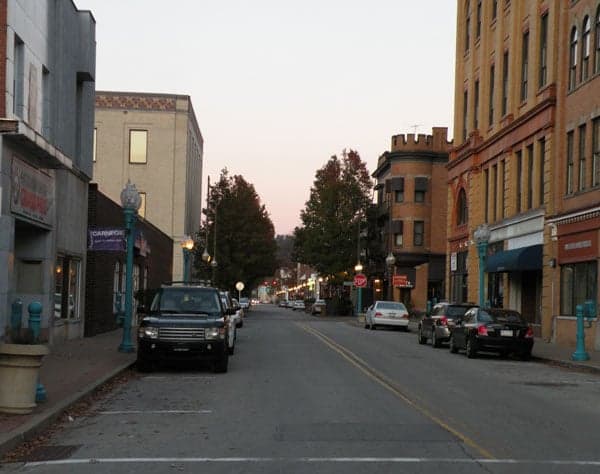
Photo: Wikipedia
Demographics of Carnegie, PA
Affluence Level in Carnegie, PA
A below-average socioeconomic profile. Incomes, home values, and educational attainment trail the U.S., with higher poverty and unemployment.
People of Carnegie, PA
The people of Carnegie, Pennsylvania today form a dense, historically rooted community of 8,015 residents, characterized by a strong white majority (79.5%) alongside a notable Black population (9.9%) and smaller but established Hispanic (3.0%), Indian-subcontinent (1.8%), and East/Southeast Asian (1.2%) communities. With 35.7% of adults holding a college degree, the borough sits at a crossroads of working-class heritage and growing professional-class influence, shaped by its industrial past and proximity to Pittsburgh. Distinct neighborhood identities—from the brick rowhouses of the Mansfield Heights district to the quieter streets of Idlewood—reflect the layered settlement patterns of European immigrants, internal migrants, and recent international arrivals.
How the city was settled and grew
Carnegie was incorporated in 1894, named after industrialist Andrew Carnegie, and its early growth was driven entirely by the steel and railroad industries. The original population was overwhelmingly European immigrant: Irish and German laborers built the first homes in the Carnegie Proper core near the railroad depot, while Italian and Polish families later concentrated in the Mansfield Heights neighborhood, climbing the hill above the mills. The Chartiers Valley provided the transportation corridor—first the canal, then the Pennsylvania Railroad—that made Carnegie a key stop for workers heading to the Jones & Laughlin Steel mills in Pittsburgh and the local foundries. By 1910, the borough had swelled past 10,000 residents, with dense two- and three-story frame houses packed along narrow streets. The Idlewood section, developed slightly later, attracted a mix of skilled tradesmen and small business owners who built larger single-family homes on wider lots. These neighborhoods remain the physical backbone of the borough, with many families still occupying houses built by their great-grandparents.
Modern era (post-1965)
The post-1965 period brought significant demographic change, though Carnegie's transformation was more gradual than in many Rust Belt towns. The 1965 Hart-Cellar Act opened immigration from Asia and Latin America, but Carnegie's foreign-born share today stands at just 2.9%—lower than the national average—indicating that international migration has been modest. Instead, the most notable shift has been domestic: Black families, many moving from Pittsburgh's Hill District and East End neighborhoods, began settling in the Carnegie Proper and lower Mansfield Heights areas during the 1970s and 1980s, drawn by affordable housing stock and proximity to the city. Today, the Black population of 9.9% is concentrated in these older, denser blocks near the commercial core. The Indian-subcontinent community (1.8%) and East/Southeast Asian community (1.2%) are smaller and more dispersed, with families often choosing the newer housing stock in the Idlewood and Chartiers View sections. The Hispanic population (3.0%) has grown steadily since 2000, with families settling in both Carnegie Proper and the western edge near the Heidelberg border. Suburbanization hollowed out some of the borough's commercial district in the 1970s and 1980s, but the core neighborhoods never experienced the severe depopulation seen in nearby mill towns—Carnegie's population has held relatively steady, fluctuating between 7,500 and 8,500 since 1960.
The future
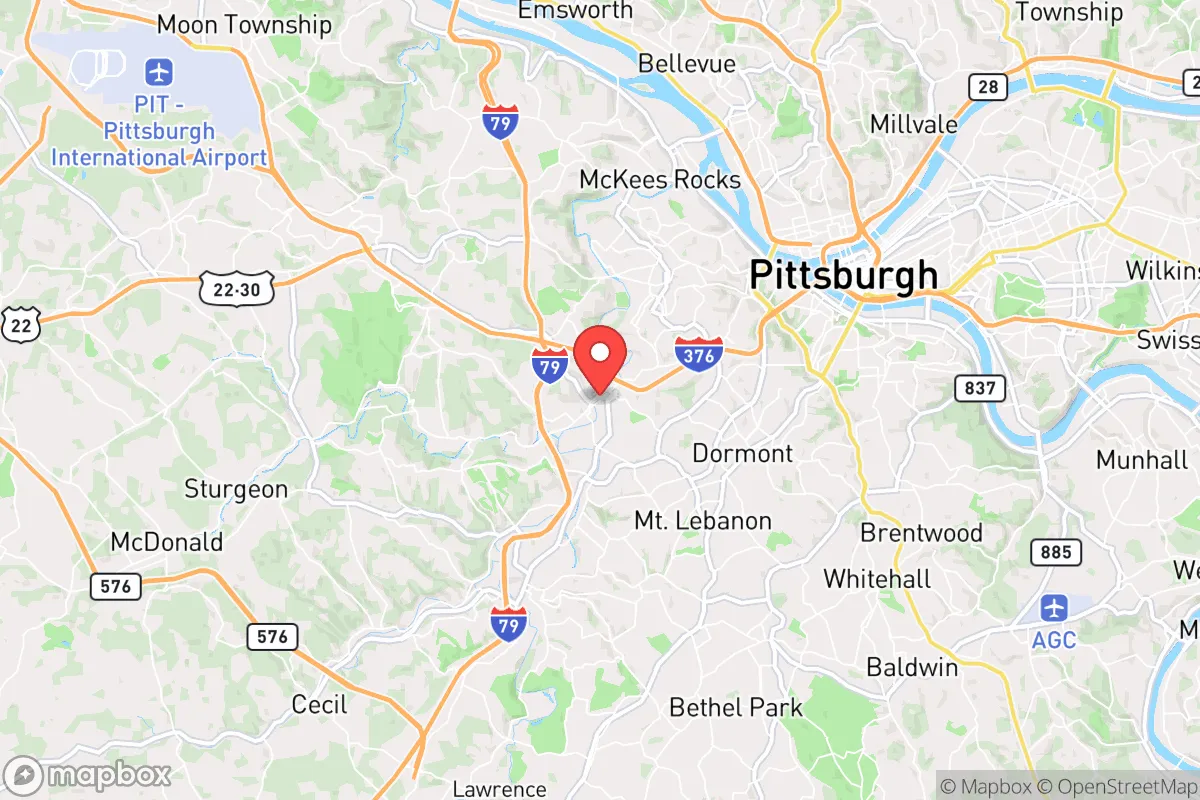
Carnegie's population is slowly diversifying, though the white share (79.5%) remains dominant and is projected to decline only modestly over the next decade. The borough's location—just 10 minutes from downtown Pittsburgh and served by the T light-rail line—is attracting younger professionals and families priced out of the city's East End neighborhoods. These new arrivals are gravitating toward the Idlewood and Chartiers View areas, where larger homes and yards offer suburban space with urban proximity. The Indian-subcontinent and East/Southeast Asian populations are likely to grow as these professional-class households seek affordable alternatives to Pittsburgh's pricier suburbs like Mount Lebanon and Upper St. Clair. The Black and Hispanic populations are expected to remain stable or grow slightly, with new families continuing to settle in the more affordable Carnegie Proper and Mansfield Heights sections. The borough's cultural identity is evolving from a purely white ethnic, blue-collar enclave into a more mixed-income, multi-ethnic community—but the pace of change is slow, and the working-class character of the older neighborhoods remains intact.
For someone moving in now, Carnegie offers a dense, walkable borough with real neighborhood character, affordable housing, and a population that is diversifying gradually rather than rapidly. The community retains its historic identity while slowly absorbing new groups, and the next 10-20 years will likely see continued modest diversification, especially among professional-class families drawn by the transit connection to Pittsburgh. It is not a place of dramatic demographic upheaval, but of steady, incremental change—a stable choice for buyers who want urban proximity without the volatility of a rapidly gentrifying neighborhood.

* Values derived from national, state, county, city and local statistics and may differ in a specific area. Last updated: 2026-10-21T15:18:14.000Z
Narrative content on this page is AI-generated and may contain mistakes. Verify any details that matter before acting on them.
ReloMaps may earn a commission from affiliate links at no extra cost to you.

