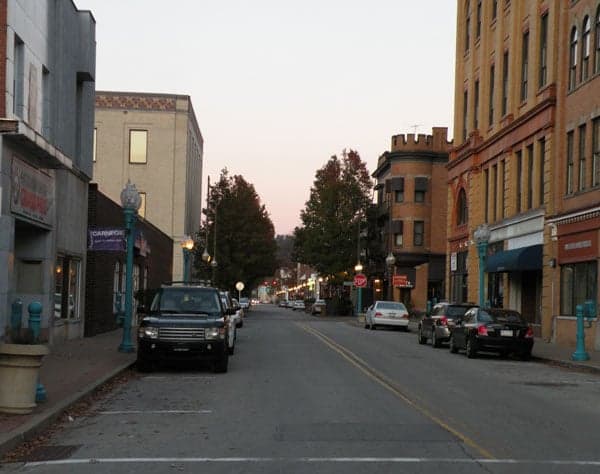
Photo: Wikipedia
Personal Sovereignty in Carnegie, PA
Strong independent fundamentals that actively favor personal liberty and low regulation.
What does Personal Sovereignty tell us?
Personal Sovereignty measures your capacity for self-reliance and independence with minimal government friction. Higher scores mean fewer barriers between you and the way you want to live... but it assumes you have the space you need and good neighbors.
What does this tell us?
Personal Sovereignty measures your capacity for self-reliance and independence with minimal government friction. Higher scores mean fewer barriers between you and the way you want to live... but it assumes you have the space you need and good neighbors.
State Policy
Energy independence: Net exporter (150% of energy produced in-state)
Personal Liberty
Homesteading

Personal Liberty Analysis
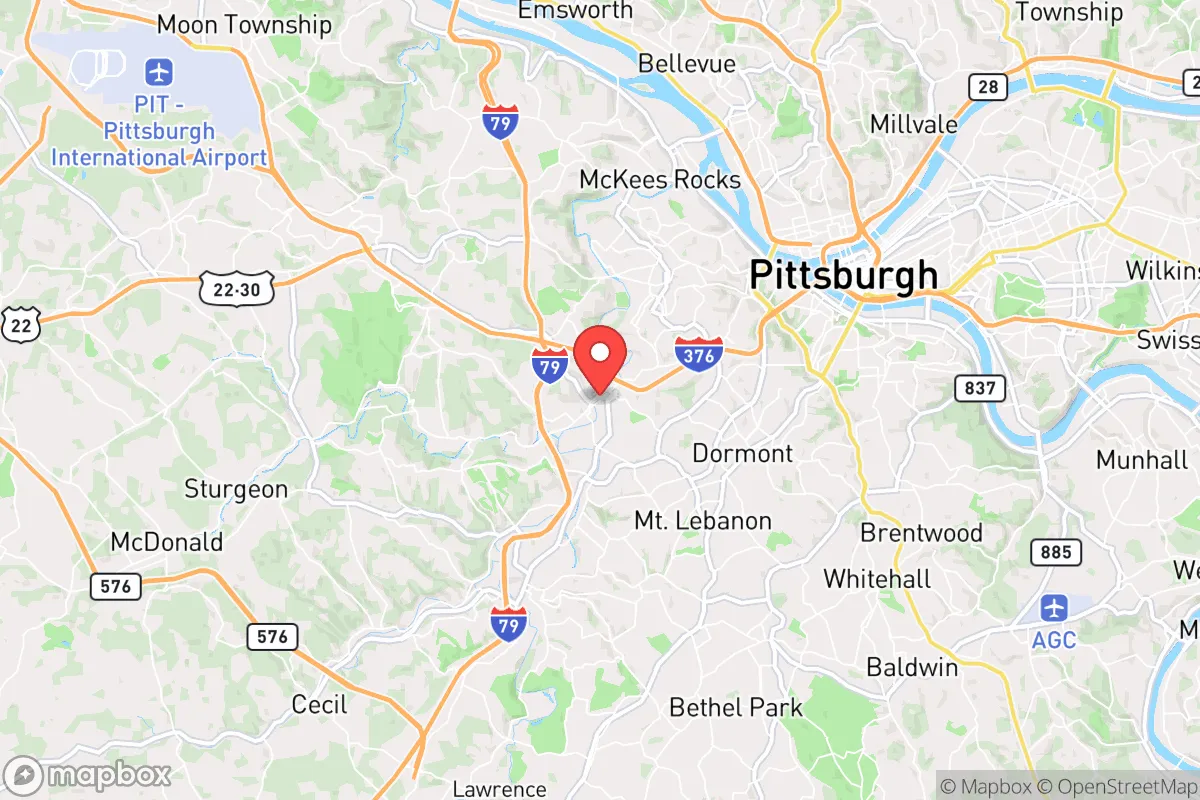
Carnegie, Pennsylvania, offers a mixed personal sovereignty environment that reflects both the state’s historical independence and its modern regulatory framework. Located just outside Pittsburgh, this borough of roughly 8,000 residents provides a suburban setting where individual autonomy is shaped by Pennsylvania’s relatively permissive gun laws, moderate tax burden, and a regulatory posture that leans toward local control in some areas while maintaining state-level oversight in others. For those prioritizing personal freedom, Carnegie presents a workable balance—neither a libertarian haven nor a heavily restrictive jurisdiction—where the key question is how much day-to-day independence you can carve out within existing structures.
Tax burden and regulatory posture in Carnegie and Allegheny County
Pennsylvania’s overall tax burden ranks near the middle nationally, and Carnegie reflects that with a combined state and local income tax rate of roughly 3.07% (state flat tax) plus a local earned income tax of about 1% for borough residents. Property taxes in Allegheny County are higher than the state average, with Carnegie’s millage rate around 25 mills, translating to roughly $2,500 annually on a $100,000 home. The state’s lack of a sales tax on groceries and clothing helps offset some costs, but the real estate tax burden is a factor for homeowners. Regulatory posture in Carnegie is typical for a Pennsylvania borough: zoning and building codes are enforced locally, with the state handling environmental and business licensing. Pennsylvania is not a right-to-work state, which means union presence can influence local labor markets, but for small businesses and independent contractors, the licensing requirements are straightforward—no county-level business privilege tax beyond a modest fee. The regulatory environment is best described as moderate: not aggressively burdensome, but with enough layers (state liquor control, vehicle inspections, professional licensing) that it doesn’t qualify as light-touch.
Self-defense and gun law specifics in Carnegie and Pennsylvania
Pennsylvania is a shall-issue state for concealed carry permits, meaning Carnegie residents can obtain a License to Carry Firearms (LCF) with a clean background check and no subjective “good cause” requirement. The process is handled by the Allegheny County Sheriff’s office, with permits typically issued within 45 days. Open carry is legal without a permit in most of the state, including Carnegie, except during declared emergencies or in Philadelphia. The state preempts local firearm ordinances, so Carnegie cannot enact its own bans or restrictions beyond state law. Stand-your-ground laws apply in Pennsylvania, with no duty to retreat in any place where the individual is legally present. Castle doctrine protections extend to homes, vehicles, and workplaces. Magazine capacity is not restricted, and there is no state-level assault weapons ban. For self-defense-minded residents, Carnegie offers a solid legal framework: the ability to carry, defend oneself, and own standard firearms without local interference. The main practical limitation is proximity to Pittsburgh, where some businesses and public transit facilities post no-gun signs, but these carry no force of law unless you refuse to leave when asked.
Self-reliance and homesteading viability in Carnegie
Carnegie is a densely built borough with typical lot sizes of 0.1 to 0.25 acres, which limits large-scale homesteading. Most residential zoning permits vegetable gardens, small fruit trees, and backyard chickens (hens only, no roosters), but livestock like goats or pigs are not allowed within borough limits. Off-grid living is not feasible here: the borough requires connection to municipal water and sewer, and building codes mandate grid-tied electrical systems for new construction. Solar panels are permitted but must comply with local zoning and historic district guidelines in certain neighborhoods. Rainwater collection for outdoor use is allowed, but potable rainwater systems are not recognized by state plumbing codes. For those seeking serious self-reliance—acreage for animals, private wells, septic systems, or full energy independence—Carnegie is not the right fit. However, the surrounding rural areas of Washington and Westmoreland counties, within a 20- to 30-minute drive, offer larger parcels (1-5 acres common) with fewer restrictions. Many Carnegie residents who prioritize self-reliance live in the borough for work access and maintain a secondary property or garden plot outside town. The borough’s farmers market and proximity to local farms partially offset the lack of homesteading space, but this is fundamentally a suburban environment where self-reliance means gardening and DIY skills, not land-based independence.
Personal liberties in Carnegie: parental rights, medical autonomy, speech, and property
Pennsylvania law generally respects parental rights in education, with a robust homeschooling statute that requires a notarized affidavit and annual evaluation but no curriculum approval by the district. Carnegie is served by the Carlynton School District, which has a standard policy of accommodating homeschooled students for extracurricular activities. Medical autonomy is more constrained: Pennsylvania has a statewide vaccine mandate for school attendance (with medical and religious exemptions), and the state’s COVID-era emergency powers have been rolled back, but the legal framework for medical choice remains moderate. Speech and assembly rights are protected under both state and federal constitutions, with no notable local restrictions beyond standard public order ordinances. Property rights are generally strong, though the borough’s zoning code includes typical suburban regulations on setbacks, fence heights, and parking. There is no county-level rent control, and short-term rentals (Airbnb) are permitted with a zoning permit. The most notable liberty concern for some residents is Pennsylvania’s vehicle inspection requirement (annual safety and emissions), which is more intrusive than states without inspections. Overall, Carnegie’s personal liberties environment is solidly average for the Northeast: no extreme restrictions, but also no standout protections beyond what state law provides. Parental rights and property rights are well-established, while medical autonomy and speech face the same legal landscape as the rest of Pennsylvania.
Compared to other areas in the Pittsburgh region, Carnegie offers a middle-ground sovereignty profile. It is more restrictive than rural townships in Washington County, where zoning is lighter and homesteading is possible, but significantly less restrictive than Pittsburgh proper, where firearm preemption is tested more frequently and business regulations are denser. For a relocation audience that values personal freedom, Carnegie works best as a base where you can exercise self-defense rights, garden, homeschool, and run a small business without major friction, while accepting that full off-grid independence or zero-regulation living requires moving farther out. The borough’s real advantage is its balance: proximity to urban employment without sacrificing the legal framework for individual autonomy that Pennsylvania provides. If your priority is maximum sovereignty, look to the surrounding counties; if you need a practical suburban compromise with solid baseline freedoms, Carnegie delivers.

* Values derived from national, state, county, city and local statistics and may differ in a specific area. Last updated: 2026-10-21T15:18:14.000Z
Narrative content on this page is AI-generated and may contain mistakes. Verify any details that matter before acting on them.
ReloMaps may earn a commission from affiliate links at no extra cost to you.

