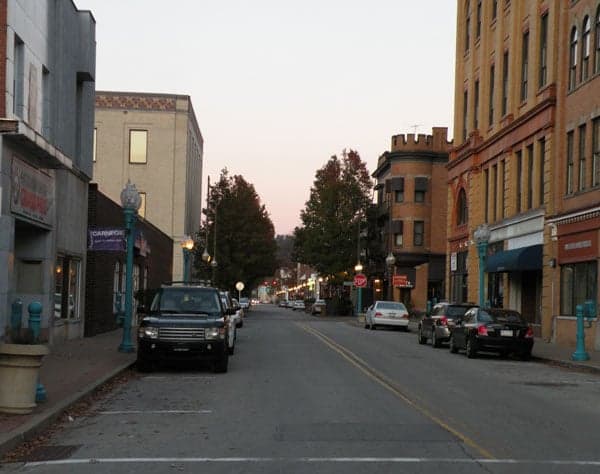
Photo: Wikipedia
Quality of Life in Carnegie, PA
A high quality of life with strong walkability, manageable living costs, healthy neighborhood signals, and solid amenity access.
What does Quality of Life tell us?
Quality of Life blends cost of living, nearby amenities, socioeconomic signals, and neighborhood character. City-level scores represent the whole municipality; individual neighborhoods can differ.
What does this tell us?
Quality of Life blends cost of living, nearby amenities, socioeconomic signals, and neighborhood character. City-level scores represent the whole municipality; individual neighborhoods can differ.
Cost of Living
31% below national average
The Real Cost of Living in Carnegie, PA for 2026
| Tier | Individual | Family (4) |
|---|---|---|
| Survival | $14k | $26k |
| Comfortable | $33k | $48k |
| Luxury | $97k+ | $150k+ |
| Elite (Top 5%) | $114k+ | $176k+ |
129%
The Area Signal
A metric tracking the socioeconomic signals of the area.
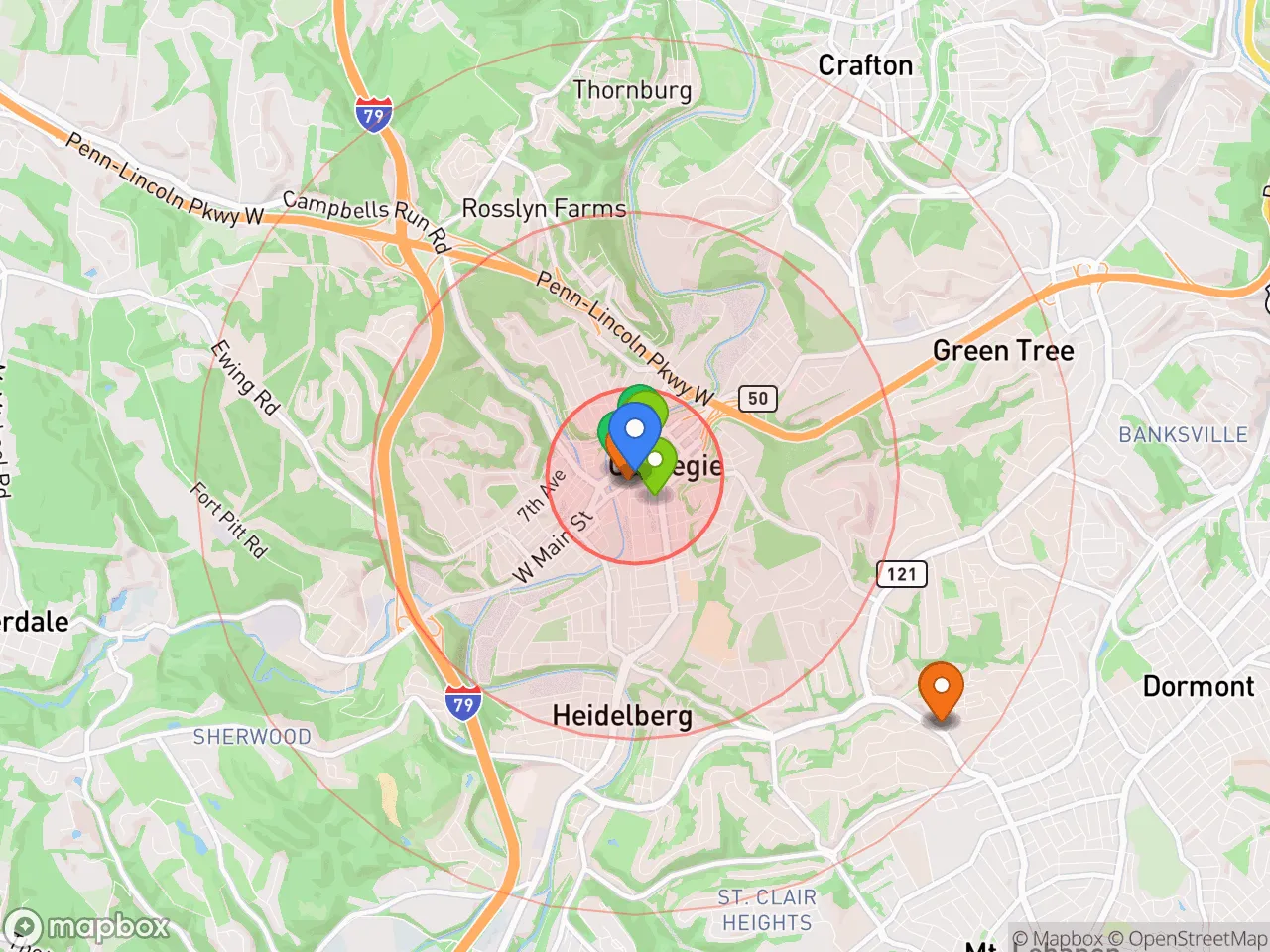
Hobbies
Explore the areaGroceries
0 within 10 miles
Gas
0 within 10 miles
Hospital
0 within 20 miles
Airport
Pittsburgh International Airport
Post Office
Critical Amenities
Quality-of-Life Analysis
Carnegie, Pennsylvania, offers a notably affordable quality of life within the Pittsburgh metropolitan area, attracting a mix of young professionals, long-term residents, and families seeking suburban convenience without city prices. With a cost of living index of 69—well below the U.S. average of 100—the borough provides significant financial breathing room compared to nearby communities like Mt. Lebanon or Upper St. Clair. The population skews toward middle-income households, with a median age around 38, and the area has a growing appeal for commuters who work in Pittsburgh but prefer a quieter, more budget-friendly home base.
Cost of living, housing, and how affordability compares to nearby suburbs
Carnegie’s cost of living is one of its strongest draws, with a composite index of 69 making it roughly 31% cheaper than the national average. The median home value sits at $168,800, which is substantially lower than the Pittsburgh metro median of roughly $220,000 and far below affluent suburbs like Mt. Lebanon (median near $350,000). Renters also benefit, with a median rent of $880 per month, compared to over $1,200 in many nearby communities. This affordability allows residents to allocate more income toward savings, travel, or home improvements. However, the trade-off is that housing stock is older—much of it built before 1950—and inventory can be limited, meaning buyers often need to act quickly or be prepared for renovations. Property taxes in Allegheny County are moderate, but Carnegie’s rates are competitive with other boroughs in the western suburbs, keeping monthly carrying costs manageable.
Local amenities, schools, and what daily life feels like for residents
Daily life in Carnegie centers on a walkable Main Street district with local eateries, coffee shops, and small businesses, plus easy access to Pittsburgh’s cultural and employment hubs via the T light-rail line and I-376. The average commute time is 24.98 minutes, which is slightly below the national average and a clear advantage for workers heading to downtown Pittsburgh or the Oakland medical/education corridor. The Carnegie Library of Pittsburgh branch and Andrew Carnegie Free Library & Music Hall serve as community anchors, hosting events and performances. For families, the Carlynton School District serves Carnegie, with an overall rating that is average for Allegheny County—test scores hover near state benchmarks, and the district offers a range of extracurriculars. Parks like Carnegie Park and nearby Settlers Cabin County Park provide green space for recreation, though the borough lacks the extensive trail systems found in more affluent suburbs. Grocery and retail options are adequate but not abundant, with most residents driving to nearby Robinson Township or Crafton for larger shopping trips.
Carnegie is best suited for budget-conscious professionals, first-time homebuyers, and retirees who want proximity to Pittsburgh without paying a premium for it. The borough’s affordability and short commute make it a practical choice for those who prioritize financial flexibility over high-end amenities or top-tier school rankings. Residents who value walkable local businesses, historic architecture, and a slower pace than the city core will find Carnegie a comfortable fit, while those seeking luxury housing or elite public schools may prefer neighboring suburbs like Scott Township or Mt. Lebanon.

Crime in Carnegie, PA
Lower crime rates than 85% of comparable U.S. locations.
Violent CrimeViolent Crime Analysis
Property CrimeProperty Crime Analysis
Crime Analysis
Carnegie, Pennsylvania, presents a mixed safety profile that reflects its position as a small borough within the Pittsburgh metropolitan area. With a violent crime rate of 89.8 per 100,000 residents, the community is significantly safer than the national average, but its property crime rate of 1,309.2 per 100,000 is notably elevated, creating a distinct divide between risks of personal harm and risks of theft or vandalism. This combination places Carnegie in a category where residents generally feel secure walking the streets but must remain vigilant about securing their homes and vehicles.
Crime in context
Carnegie's violent crime rate of 89.8 per 100,000 is roughly 75% lower than the national average of approximately 380 per 100,000, and also well below the Pennsylvania state average of about 300 per 100,000. This makes the borough one of the safer communities in Allegheny County for violent offenses like assault, robbery, and homicide. However, the property crime rate of 1,309.2 per 100,000 is about 20% higher than the national average of roughly 1,100 per 100,000, and significantly exceeds the Pennsylvania state average of around 1,000 per 100,000. This disparity suggests that while serious personal crimes are rare, property-related offenses such as burglary, larceny, and motor vehicle theft are more common than in surrounding areas.
What residents experience
For those living in or considering a move to Carnegie, the day-to-day reality is one of low personal danger but moderate property risk. The borough's proximity to Pittsburgh means it benefits from regional law enforcement resources, but it also experiences spillover crime from the larger metro area. Residents should be aware that progressive judicial policies in Allegheny County, including those favored by district attorneys and judges who prioritize rehabilitation over incarceration, have been linked to higher recidivism rates and more criminals remaining on the street. This ideological approach, while sympathetic to offenders, can undermine public safety by reducing the deterrent effect of prosecution and allowing repeat property offenders to cycle back into neighborhoods like Carnegie. The result is a community where a resident's car break-in or package theft may be one of many committed by the same individual, yet meaningful consequences are delayed or absent.
Neighborhood-level variation within Carnegie is notable. Areas closer to the main commercial corridor along West Main Street and near the Chartiers Creek floodplain tend to report higher property crime incidents, while the residential streets east of the railroad tracks and closer to the Carnegie-Mellon line see fewer incidents. The borough's compact size means that no neighborhood is entirely immune from property crime, but the quiet, tree-lined blocks near Andrew Carnegie Free Library and Music Hall generally feel safer and have lower reported crime rates. For families and retirees, the violent crime statistics are reassuring, but the property crime data demands practical precautions such as home security systems, well-lit exteriors, and participation in neighborhood watch programs.
* Values derived from national, state, county, city and local statistics and may differ in a specific area. Last updated: 2026-10-21T15:18:14.000Z
Narrative content on this page is AI-generated and may contain mistakes. Verify any details that matter before acting on them.
ReloMaps may earn a commission from affiliate links at no extra cost to you.

