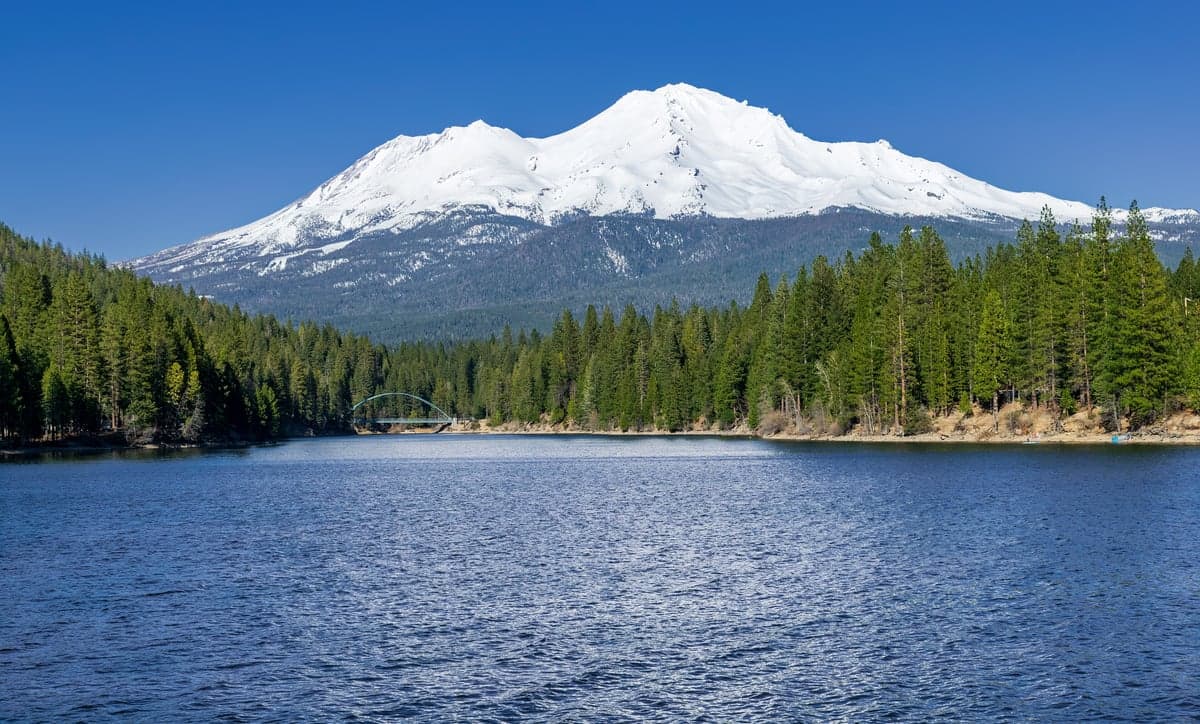
Photo: Wikipedia
Political ClimatePolitical Climate in Siskiyou County
Showing state-level results — no local-only data available.
Local Political AnalysisPolitical Analysis of Siskiyou County
Siskiyou County is one of California’s most reliably Republican regions, a rural stronghold where registered Republicans outnumber Democrats by roughly 2-to-1 in most precincts. The county hasn’t backed a Democratic presidential candidate since Lyndon Johnson’s 1964 landslide, and in 2024, Donald Trump carried it with over 65% of the vote — a margin of about 35 points over Kamala Harris. That’s a stark contrast to the state as a whole, which gave Harris a 20-point win, making Siskiyou one of the deepest red counties in a deeply blue state.
How it compares to California
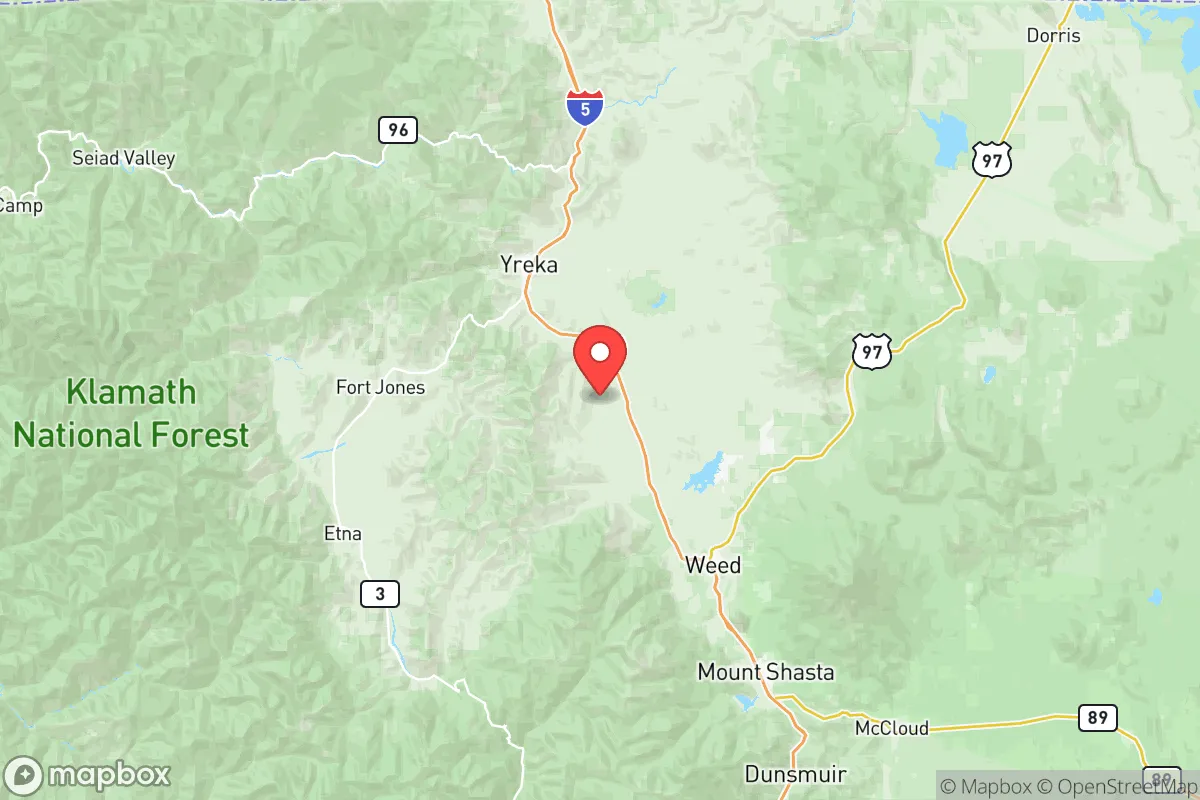
The gap between Siskiyou and the rest of California isn’t just about party registration — it’s about political culture. While the state’s coastal metros vote overwhelmingly Democratic, Siskiyou’s politics are shaped by timber, ranching, and water rights, issues that have made the county a flashpoint for anti-Sacramento sentiment. The county’s Board of Supervisors has repeatedly passed resolutions opposing state gun laws and sanctuary policies, and in 2021, the county briefly declared itself a “Second Amendment sanctuary.” That’s a world away from the Bay Area or Los Angeles, where those same state laws enjoy broad support. The political divide is visible even within the county: the small cities of Yreka and Weed are the most Democratic-leaning precincts, while unincorporated areas like Fort Jones, Etna, and Dorris vote overwhelmingly Republican. The swing precincts are mostly around Mount Shasta, where a mix of retirees, outdoor recreationists, and a small but vocal progressive community keeps races closer — though even there, Republicans usually win by single digits.
What this means for residents
For conservative residents, Siskiyou’s lean means local government is generally aligned with their views — sheriffs are pro-Second Amendment, county officials push back on state mandates, and property rights are taken seriously. But it also means living under state laws they didn’t vote for, from high fuel taxes to strict environmental regulations on logging and agriculture. For liberal residents, the reality is the opposite: they often feel politically isolated, but they do find community in places like Mount Shasta and Dunsmuir, where progressive candidates occasionally win city council seats. The practical effect is that local elections are often decided in the primary, since the Republican nominee is usually a shoo-in in November. That said, the county has seen a slow demographic shift — an influx of remote workers and retirees from the Bay Area has nudged some precincts leftward, particularly around Mount Shasta City, but the change is incremental and hasn’t flipped any countywide races.
Culturally, Siskiyou is defined by its independence more than its partisanship. The county has a long history of resisting both Sacramento and Washington, from the 1941 “State of Jefferson” movement to modern-day secessionist talk that still surfaces at county board meetings. That frontier mentality cuts across party lines — many Democrats here are as skeptical of federal land management as Republicans, especially when it comes to the Klamath River dam removal or wildfire policy. In practice, this means the county’s politics are less about national culture wars and more about local control: who gets to decide how the forest is logged, how the river is managed, and how much the state can dictate local zoning. For newcomers, the biggest adjustment isn’t the red-blue split — it’s learning that in Siskiyou, the most heated arguments are usually between neighbors, not parties, and they’re just as likely to be about water rights as about presidential politics.

State Political ClimatePolitical Climate in California
State Political AnalysisPolitical Environment in the State
California is a solidly Democratic state, with a partisan lean of roughly D+20 in statewide elections, but that headline number hides a deeply fractured political geography. Over the last 20 years, the state has moved from a competitive battleground (Republicans held every statewide office as recently as 2006) to a one-party dominant system, driven by the coastal metros of Los Angeles, San Francisco, and San Diego, while the vast interior — the Central Valley, the Inland Empire, and the far north — has trended harder toward the GOP. The practical result is a state where Democrats control every lever of power, but where a significant minority of voters (roughly 35-40% of the electorate) feel increasingly unrepresented by Sacramento.
Urban vs. rural divide
The political map of California is essentially a tale of three regions. The coastal corridor — from San Francisco down through Los Angeles and into San Diego — is the engine of the Democratic majority. Los Angeles County alone casts about a quarter of the state's votes and delivers margins of 30-40 points for Democrats. San Francisco and Oakland are among the most liberal jurisdictions in the nation, routinely voting 85-90% Democratic. San Diego is more moderate but still leans blue, with the city itself voting Democratic while the northern suburbs like Oceanside and Vista have become competitive or lean Republican.
Inland, the picture flips dramatically. The Central Valley — places like Bakersfield, Fresno, and Modesto — is now reliably Republican in federal races, with margins of 10-20 points in many districts. The Inland Empire (Riverside and San Bernardino counties) has become the state's key swing region; it voted for Obama twice, then flipped hard to Trump in 2020 and 2024, with San Bernardino County going Republican by a narrow margin in the last cycle. The far northern counties — Siskiyou, Modoc, Lassen — are deeply red, often voting 70-80% Republican, and have become hotbeds of secessionist rhetoric. The state's most politically distinct suburb is probably Orange County, once the heart of California conservatism, which flipped to Democratic in 2018 and has stayed there, though its northern cities like Yorba Linda and Huntington Beach remain staunchly Republican.
Policy environment
California's policy environment is defined by its tax structure and regulatory posture. The state has the highest top marginal income tax rate in the nation at 13.3%, plus a 1.1% payroll tax for disability insurance. Property taxes are capped at 1% of assessed value under Proposition 13, but the state's effective sales tax rates often exceed 10% in major cities. The regulatory climate is the most stringent in the country: the California Environmental Quality Act (CEQA) is routinely used to block housing and infrastructure projects, and the state's energy regulations have driven utility costs to among the highest in the nation. On education, California spends roughly $20,000 per pupil but ranks in the bottom third nationally on test scores, a paradox that reflects the influence of the teachers' unions in Sacramento. Healthcare is heavily regulated, with the state operating its own insurance exchange (Covered California) and moving toward a single-payer system in the long term. Election laws are among the most permissive in the nation: universal mail-in voting, same-day registration, and no voter ID requirement.
Recent policy direction
The last five years have seen California double down on its progressive trajectory. On guns, the state has some of the strictest laws in the nation — a 10-day waiting period, a ban on most semiautomatic rifles with detachable magazines, and a 2023 law (SB 2) that prohibits carrying firearms in nearly all public places, which is currently tied up in federal litigation. On parental rights, the state passed AB 1955 in 2024, which prohibits schools from notifying parents if a child changes their gender identity — a direct reversal of the parental notification movement sweeping red states. On speech, AB 2655 and AB 2839 (2024) target "deepfake" political content and require large platforms to remove election misinformation, raising free speech concerns. On privacy, the California Privacy Rights Act (CPRA) gives residents broad data control rights, but the state has also expanded surveillance powers, including a 2023 law allowing police to use drones for crowd monitoring. On property rights, the state has aggressively pursued rent control (AB 1482 caps annual increases at 5% plus inflation) and has made it harder to evict tenants. On medical freedom, California mandates COVID-19 vaccinations for schoolchildren (with no personal belief exemption) and has banned most private vaccine mandates from being challenged. On taxes, the state passed a wealth tax proposal in 2024 that would impose an annual 1% levy on net worth above $50 million, though it faces legal challenges.
Civil unrest & political movements
California has a long history of political protest, and the last decade has been no exception. The 2020 George Floyd protests in Los Angeles and Oakland resulted in billions in property damage and led to a "defund the police" movement that saw the Los Angeles Police Department's budget cut by $150 million, though much of that was later restored. The state's sanctuary policies — SB 54 prohibits local law enforcement from cooperating with federal immigration authorities — have made it a flashpoint in the national immigration debate. The secessionist movement, centered in the far north and parts of the Central Valley, has gained traction but remains fringe; the "State of Jefferson" proposal has no realistic path to success. More visible to a new resident is the homelessness crisis, which has spawned its own political movement: voters in Los Angeles approved Measure HHH in 2016 and Measure ULA in 2022 (a "mansion tax" on properties over $5 million), but the crisis has worsened, and recall efforts against progressive district attorneys in San Francisco and Los Angeles have succeeded, signaling voter fatigue with the left's approach to public safety.
Projection
Over the next 5-10 years, California's Democratic dominance is likely to persist, but the margins will narrow. The state is losing population — roughly 500,000 residents net out-migration since 2020 — and those leaving skew conservative and middle-class. The people moving in are disproportionately young, college-educated, and liberal, which reinforces the coastal Democratic base. However, the Inland Empire and Central Valley are growing faster than the coast, and those regions are trending Republican. The 2026 gubernatorial race will be a test: the Democratic primary is crowded, and a moderate candidate could win the general by a smaller margin than recent cycles. The state's fiscal situation is precarious — a projected $70 billion deficit over the next two years — which will force painful cuts to programs that have defined the progressive agenda. A new resident moving in now should expect a state that remains firmly blue but increasingly divided between a wealthy, liberal coast and a struggling, conservative interior, with Sacramento's policy direction likely to moderate slightly out of fiscal necessity.
For a new resident, the bottom line is this: California offers unmatched natural beauty, economic opportunity, and cultural diversity, but it comes with the highest tax burden in the nation, the most restrictive regulatory environment, and a political culture that is unapologetically progressive. If you lean conservative, you will find like-minded communities in the Central Valley, the Inland Empire, and the far north, but you will be voting against the majority in nearly every statewide election. If you lean liberal, you will find a state that largely shares your values, but you will also contend with the consequences of those policies — high housing costs, homelessness, and a struggling public school system. Either way, California is not a place for political moderates who want to be left alone; it is a state where politics is inescapable, and your vote — and your tax dollars — will be part of a grand, ongoing experiment in progressive governance.
* Values derived from national, state, county, city and local statistics and may differ in a specific area. Last updated: 2026-10-29T07:30:52.000Z
Narrative content on this page is AI-generated and may contain mistakes. Verify any details that matter before acting on them.
ReloMaps may earn a commission from affiliate links at no extra cost to you.

