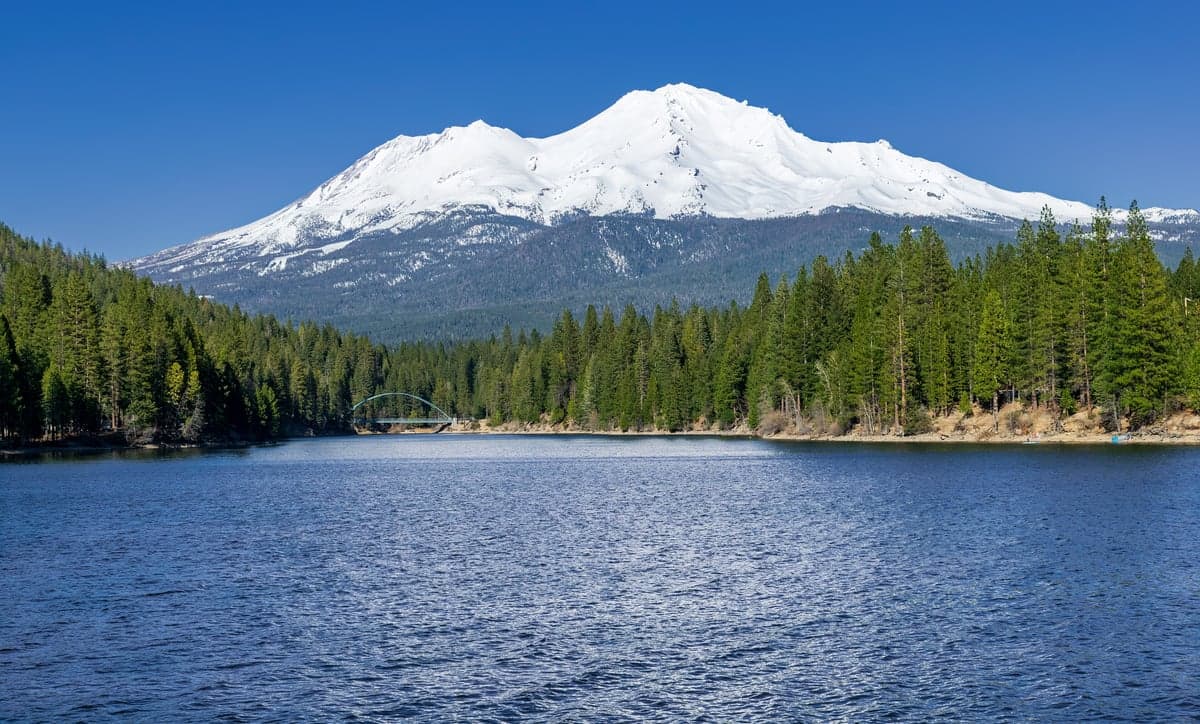
Photo: Wikipedia
Demographics of Siskiyou County
Affluence Level in Siskiyou County
A below-average socioeconomic profile. Incomes, home values, and educational attainment trail the U.S., with higher poverty and unemployment.
People of Siskiyou County
The people of Siskiyou County, California today are a predominantly white, rural population of 43,834 spread across a high-desert and mountain landscape larger than some states. With a foreign-born share of just 2.3% — roughly one-fifth the national average — this is one of California's least ethnically diverse counties, where 74.2% of residents identify as white and 13.1% as Hispanic. The county's identity is rooted in a succession of extraction booms — fur, gold, timber, and agriculture — each leaving a distinct imprint on towns like Yreka, Weed, and Mount Shasta that still shapes who lives here and why.
Settlement & growth (pre-1960)
Long before any European arrival, the region was home to several distinct Native nations, including the Karuk, Yurok, Hupa, and Modoc peoples, who had inhabited the Klamath River canyon and the high lava plains for millennia. The Modoc people's resistance to forced removal culminated in the Modoc War of 1872–73, fought largely in the lava beds south of Tulelake — a conflict that ended with the execution of Captain Jack and the removal of most surviving Modoc to Oklahoma. Today, the Karuk Tribe is one of the largest in California, with its tribal headquarters in Happy Camp and a significant presence in Orleans and Somes Bar along the Klamath River.
The first sustained non-Native presence came with fur trappers in the 1820s and 1830s, but the county's population story truly begins with the California Gold Rush of 1851. Prospectors poured into the Scott Valley and the Salmon River drainage, and the town of Yreka sprang up almost overnight after placer gold was discovered at the base of Black Mountain. The county seat, incorporated in 1857, grew from a mining camp of a few hundred to a supply and government hub for thousands of miners working the Klamath, Scott, and Salmon rivers. Nearby Hawkinsville, now a ghost town, was a bustling Chinese mining community in the 1850s and 1860s, reflecting the significant Chinese presence in early Siskiyou — a population that built many of the county's early roads and ditches before being driven out by exclusionary laws in the 1880s.
By the 1870s and 1880s, the gold had thinned, and the county's future shifted to agriculture and timber. Irish and German immigrants took up ranching in the Scott Valley around Fort Jones and Etna, drawn by the same lush meadows that had sustained the Shasta people for centuries. The completion of the Central Pacific Railroad through the Siskiyou Pass in 1887 opened the region to large-scale logging, and the town of Weed was founded in 1901 as a company town for the Long-Bell Lumber Company, named after its founder, Abner Weed. Italian and Portuguese immigrants arrived to work the mills and the growing fruit orchards around Happy Camp and the Klamath River valley, while a smaller wave of Basque sheepherders settled in the high country near Dorris and Macdoel.
The early 20th century brought the Klamath Reclamation Project, which drained the Tule Lake basin and turned it into some of the most productive farmland in the state. This drew a wave of Dust Bowl migrants from Oklahoma and Arkansas in the 1930s, who came to work the new potato and onion fields around Tulelake and Merrill. During World War II, the Tule Lake Relocation Center interned over 18,000 Japanese Americans — the largest of the ten internment camps — and after the war, a small number of Japanese families remained in the area, though most dispersed to coastal cities. The county's population peaked at roughly 44,000 in the 1940s and stayed flat through the 1950s as timber and agriculture reached their maximum employment.
Modern era (post-1965)
The 1965 Hart-Cellar Act, which abolished national-origin quotas, had a minimal direct effect on Siskiyou County — unlike coastal California, this region never saw large-scale immigration from Asia or Latin America. The county's foreign-born population today stands at just 2.3%, and the largest immigrant group is Hispanic, primarily Mexican-origin farmworkers who began arriving in the 1970s and 1980s to work the harvests in the Scott Valley and the Tulelake Basin. These families concentrated in Yreka, Mount Shasta, and the unincorporated communities of Grenada and Montague, where they form a visible and growing presence in the agricultural workforce and in the local Catholic parishes.
The more consequential demographic shift of the modern era has been domestic out-migration. The collapse of the timber industry in the 1980s and 1990s, driven by federal logging restrictions and mill closures, cost the county thousands of jobs and sent the population into a slow decline from its 1980 peak of roughly 44,300. Weed lost nearly a third of its population after the Roseburg Forest Products mill closed in 1997, and the town has struggled to reinvent itself ever since. Meanwhile, the 1970s and 1980s brought a quieter but steady influx of back-to-the-land migrants and retirees drawn by the dramatic beauty of Mount Shasta and the Trinity Alps, settling in the towns of Mount Shasta, Dunsmuir, and the rural areas around Etna and Fort Jones. This wave brought a distinctly countercultural and New Age presence to Mount Shasta, creating a cultural tension with the county's older ranching and logging communities that persists today.
The 2020 census data shows a county that is 74.2% white, 13.1% Hispanic, 1.6% Black, and 1.3% East/Southeast Asian, with a small Indian-subcontinent population of 0.3%. The Black population, though small, has deep roots — descendants of the African American railroad workers and soldiers who served at the now-closed Camp Tulelake — while the East/Southeast Asian community is a mix of old Chinese-heritage families, Japanese Americans who returned after internment, and a newer wave of Filipino and Vietnamese healthcare workers at Fairchild Medical Center in Yreka. The county's college-educated share of 23.1% lags the state average of roughly 35%, reflecting the blue-collar economic base and the out-migration of young people who leave for college and do not return.
The future
Siskiyou County is slowly becoming more diverse, but the pace is glacial compared to the rest of California. The Hispanic share of the population has grown from roughly 8% in 2000 to 13.1% today, driven by natural increase and continued agricultural migration, and this trend is expected to continue — demographers project the Hispanic share could reach 18–20% by 2040. The white population is aging and declining in absolute numbers, as the county's median age of 47.8 years is among the highest in the state, and young adults continue to leave for job markets in Redding, Medford, and the Bay Area. The East/Southeast Asian and Indian populations are likely to remain small but may grow modestly as healthcare and remote-work professionals are drawn to the area's low housing costs and outdoor recreation.
The most significant wildcard is climate-driven migration. The county has seen a modest influx of domestic migrants since 2020, particularly from the Bay Area and Sacramento, drawn by housing prices that remain a fraction of coastal California's and by the region's relatively mild summer temperatures compared to the Central Valley. However, the increasing frequency of wildfire — the 2014 Boles Fire destroyed over 150 homes in Weed, and the 2021 Lava Fire threatened Mount Shasta — may temper this trend. The county's cultural identity is likely to remain bifurcated: the conservative ranching and timber communities of Yreka, Dorris, and Tulelake, and the more liberal, outdoors-oriented enclaves of Mount Shasta and Dunsmuir, with the growing Hispanic population increasingly bridging both worlds through schools, churches, and the agricultural economy.
For someone moving to Siskiyou County today, the bottom line is this: you are entering a place that is whiter, older, and more conservative than California as a whole, but that is slowly diversifying through Hispanic growth and climate-driven domestic migration. The county offers a genuine small-town, low-cost, high-nature lifestyle, but it comes with trade-offs — limited healthcare, long distances to major cities, and a cultural divide between its historic resource-extraction communities and its newer amenity migrants. The people here are shaped by a century and a half of boom-and-bust extraction, and the next chapter will be written by whoever chooses to stay and build in a place where the population is stable, the landscape is vast, and the future is genuinely uncertain.

* Values derived from national, state, county, city and local statistics and may differ in a specific area. Last updated: 2026-10-29T07:30:52.000Z
Narrative content on this page is AI-generated and may contain mistakes. Verify any details that matter before acting on them.
ReloMaps may earn a commission from affiliate links at no extra cost to you.

