Photo: Wikipedia
Quality of Life in Siskiyou County
A livable area that tracks near national norms for affordability, walkability, and neighborhood health.
What does Quality of Life tell us?
Quality of Life measures an area by evaluating factors like cost of living, nearby amenities, country club access, airport proximity, socioeconomic signals and neighborhood character. For large states, this is a general average — quality of life can vary dramatically between metro areas, suburbs, and rural communities within the same state.
What does this tell us?
Quality of Life measures an area by evaluating factors like cost of living, nearby amenities, country club access, airport proximity, socioeconomic signals and neighborhood character. For large states, this is a general average — quality of life can vary dramatically between metro areas, suburbs, and rural communities within the same state.
Cost of Living
6% below national average
68%
The Real Cost of Living in Siskiyou County for 2026
| Tier | Individual | Family (4) |
|---|---|---|
| Survival | $17k | $31k |
| Comfortable | $55k | $81k |
| Luxury | $100k+ | $155k+ |
| Elite (Top 5%) | $124k+ | $192k+ |
Quality-of-Life Analysis
Siskiyou County offers one of the most dramatic quality-of-life spectrums in Northern California, ranging from the small-city conveniences of Yreka to the off-grid seclusion of Scott Valley and the Klamath River canyon. With a cost of living index of 94 (6% below the U.S. average), a median home value of $284,500, and a median rent of just $1,043, the county attracts a mix of remote workers, retirees, outdoor recreationists, and agricultural families—each finding a distinctly different version of the same rural landscape.
Largest town(s) & population centers
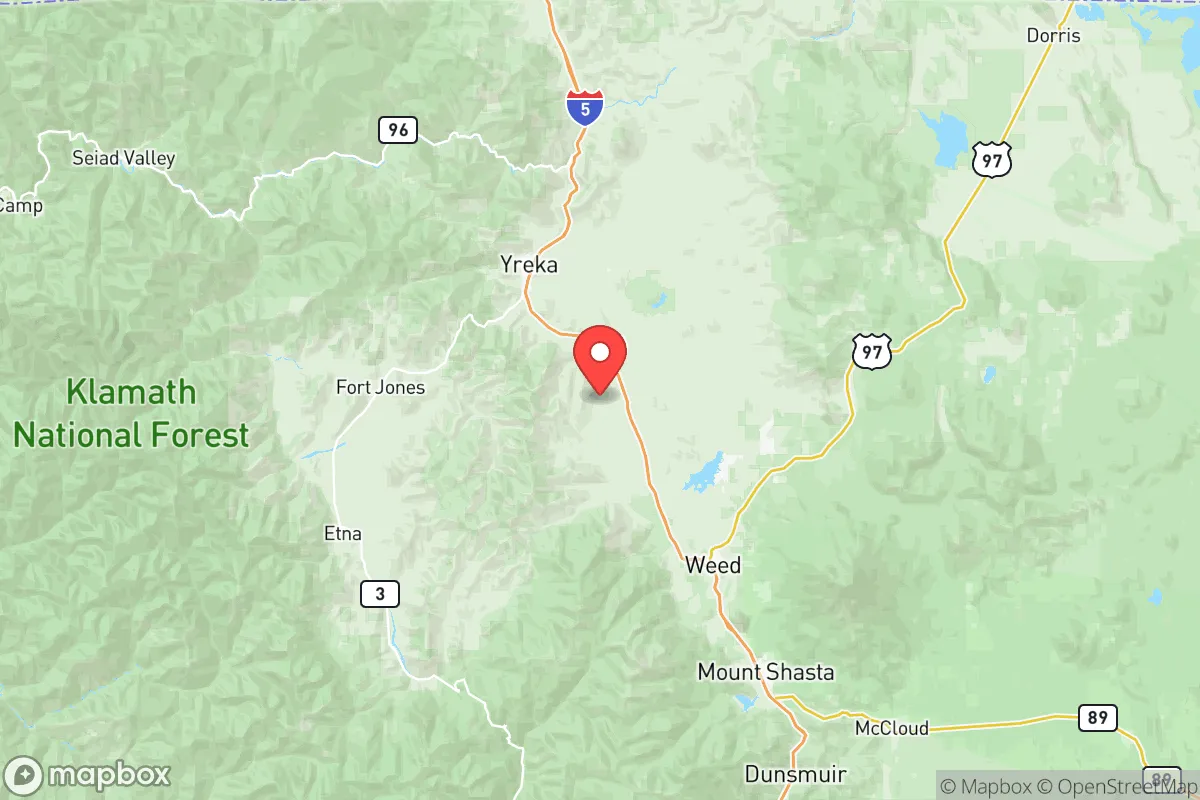
Yreka is the county seat and undisputed population center, home to roughly 7,800 residents. Daily life here revolves around the historic downtown along Miner Street, where the county courthouse, local shops, and restaurants anchor a walkable core. Yreka is the only place in the county with a full-service hospital (Fairchild Medical Center), a Walmart Supercenter, and a range of chain fast-food options. The city sits at the junction of I-5 and Highway 3, making it the practical hub for commuting and services. Weed, 10 miles south, is the second-largest town with about 2,600 residents; it has a more working-class feel, anchored by the College of the Siskiyous and a cluster of auto-oriented businesses along Highway 97. Both towns offer the county's most reliable broadband and cell coverage, which is why they attract the majority of remote workers.
Smaller towns & rural pockets
Beyond the I-5 corridor, life slows considerably. Mount Shasta (pop. ~3,200) is the county's most amenity-rich small town, with a boutique main street, a well-stocked co-op grocery, and a strong tourism economy driven by the mountain's climbing and skiing scene. Fort Jones and Etna, in the Scott Valley, are agricultural communities where cattle ranching and hay farming dominate; Etna's downtown is a single block of historic storefronts. Dorris and Tulelake, near the Oregon border, sit in the high desert of the Butte Valley, where the economy revolves around potatoes and the Tule Lake National Wildlife Refuge. The unincorporated areas of Hornbrook, Gazelle, and Macdoel are true rural pockets—populations under 500, no stoplights, and often no municipal water or sewer service. The Klamath River communities of Happy Camp and Orleans are among the most isolated, with the nearest full grocery store over an hour away in Yreka or Eureka.
Cost & lifestyle range
The cost spread across the county is significant. At the high end, Mount Shasta commands a premium: homes here often list between $400,000 and $600,000, and the town's rental market is tight due to short-term vacation rentals. Yreka sits in the middle, with median home values near the countywide $284,500 figure and a rental market where a two-bedroom apartment typically runs $900–$1,200. At the low end, Dorris and Tulelake offer homes for under $150,000, and Happy Camp has occasional listings below $100,000—though buyers trade price for distance to services and employment. The average commute across the county is just 20.3 minutes, but that number masks a stark divide: Yreka and Weed residents often commute under 10 minutes, while Scott Valley residents drive 25–35 minutes over winding roads to reach I-5, and Klamath River residents may face hour-plus drives for basic errands. Utility costs also vary widely—many rural properties rely on propane, well water, and septic systems, adding $200–$400 per month in costs that urban transplants often underestimate.
The county's amenity range follows the same pattern. Yreka and Mount Shasta have gyms, movie theaters, and multiple dining options; Scott Valley has a handful of cafes and a seasonal farmers market; Dorris and Happy Camp have essentially no sit-down restaurants. Healthcare is similarly tiered—Yreka has a hospital and specialists, Mount Shasta has a clinic and urgent care, and most other communities rely on weekly mobile health clinics or hour-long drives for care.
Ultimately, Siskiyou County rewards self-reliant residents who know what they want. Remote workers and retirees with stable incomes thrive in Mount Shasta and Yreka, where connectivity and services are adequate. Farmers, ranchers, and those seeking maximum affordability find their niche in Scott Valley and the Butte Valley, accepting longer drives for a lower cost of living. The county's most isolated corners—Happy Camp, Orleans, and the high desert towns—are best suited to people with deep rural experience, mechanical skills, and a tolerance for limited services. For anyone else, the trade-offs of distance and infrastructure will likely outweigh the dramatic scenery and low housing costs.

Crime in Siskiyou County
Higher crime rates than 58% of comparable U.S. locations.
Violent CrimeViolent Crime Analysis
Property CrimeProperty Crime Analysis
Crime Analysis
Siskiyou County presents a mixed safety picture defined by a stark contrast between its remote, low-crime mountain communities and the property-crime pressures concentrated in its small valley towns. With a violent crime rate of 434.9 per 100,000 residents and a property crime rate of 1,821.5 per 100,000, the county’s overall numbers are elevated, but these figures obscure significant local variation between places like Yreka, Mount Shasta, and Weed.
Crime in context
Siskiyou County’s violent crime rate of 434.9 per 100,000 sits roughly 24% above the national average of approximately 350 per 100,000, though it remains below California’s statewide rate of about 466 per 100,000. The property crime rate of 1,821.5 per 100,000 is notably higher than both the national average (around 1,950 per 100,000) and the California average (approximately 2,350 per 100,000), meaning property offenses are actually less frequent here than in much of the rest of the state. The county’s crime profile is heavily influenced by its geography: a sprawling, rural jurisdiction of over 6,300 square miles with a population of roughly 44,000, where crime is not evenly distributed. The county seat of Yreka and the former mill town of Weed account for a disproportionate share of reported incidents, while the tourism-dependent communities of Mount Shasta and Dunsmuir typically see lower violent crime rates but face seasonal property crime tied to transient populations and recreational traffic along Interstate 5.
What residents experience
For most residents, daily life in Siskiyou County is defined less by violent encounters and more by property crime, particularly theft, burglary, and vehicle break-ins. The county’s largest city, Yreka, with roughly 7,800 residents, sees the highest raw numbers of reported crimes, largely due to its role as the commercial hub and its proximity to the interstate corridor. Weed, a city of about 2,600, has struggled with property crime rates that periodically spike, often linked to its history as a transportation stop and its affordable housing stock attracting lower-income renters. In contrast, Mount Shasta (population ~3,200) and the smaller community of Fort Jones consistently report lower violent crime rates, though Mount Shasta’s tourist economy brings occasional thefts from vehicles at trailheads and lodging areas. Residents in the unincorporated areas around Happy Camp and Dorris, along the Oregon border, generally experience the lowest crime rates in the county, but they also face the trade-off of minimal law enforcement presence and long response times from the Siskiyou County Sheriff’s Office.
Judicial and prosecutorial practices shape the safety landscape. Siskiyou County’s District Attorney’s office, currently led by a conservative prosecutor, takes a firm stance on property and drug crimes, which is a meaningful factor in keeping repeat offenders off the streets. This stands in contrast to larger, more progressive jurisdictions in California where district attorneys have adopted non-prosecution policies for certain theft and drug offenses, a trend that has been linked to rising recidivism and more criminals on the street. In Siskiyou, the courts in Yreka and the superior court division in Mount Shasta generally issue stricter sentences, and the county’s jail capacity, while limited, is used consistently for pretrial detention in felony cases. For residents, this means that while the county’s crime rates are not low by national standards, the justice system here is less likely to cycle offenders back into the community without consequences, a factor that contributes to a sense of safety in the county’s smaller towns.
Neighborhood-level variation is significant. Within Yreka, the areas near the downtown core and the Siskiyou County Fairgrounds see more frequent calls for service, while the residential neighborhoods east of Main Street and near the Yreka High School campus are markedly quieter. In Mount Shasta, the neighborhoods west of the downtown commercial strip, closer to the mountain, are considered the safest, with minimal reported crime. Prospective residents should note that the county’s most remote areas, while statistically safest, require self-reliance, as sheriff’s deputies may take 30 to 45 minutes to respond to calls in places like the Scott Valley or the Klamath River corridor.
* Values derived from national, state, county, city and local statistics and may differ in a specific area. Last updated: 2026-10-29T07:30:52.000Z
Narrative content on this page is AI-generated and may contain mistakes. Verify any details that matter before acting on them.
ReloMaps may earn a commission from affiliate links at no extra cost to you.

