Photo: Wikipedia
Political ClimatePolitical Climate in San Joaquin County
Showing district-level results — no local-only data available.
Local Political AnalysisPolitical Analysis of San Joaquin County
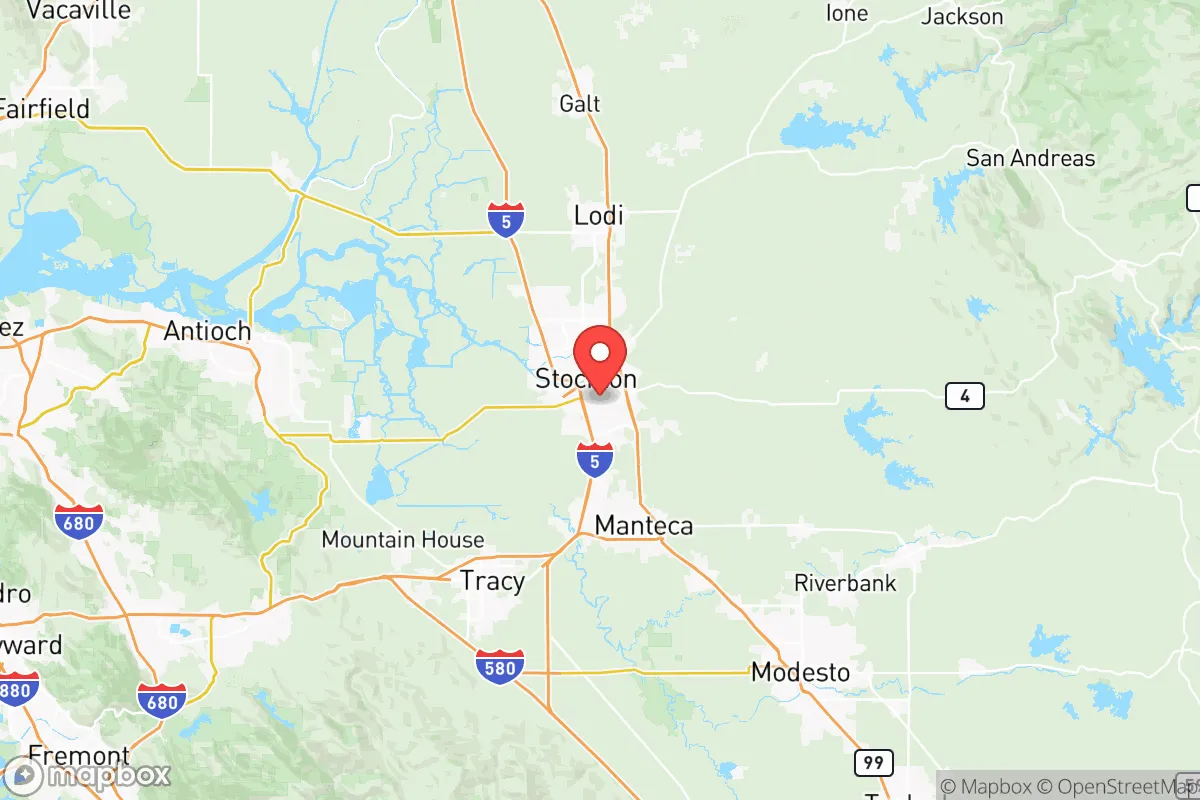
San Joaquin County sits at a political crossroads — with a Cook PVI of D+1, it’s a genuine swing area in a state that’s D+12 overall. For years, the county has leaned Democratic in presidential elections, but by much narrower margins than the rest of California. In 2024, Kamala Harris carried the county by roughly 8 points, while she won the state by over 20. That gap tells you everything: this is Democratic-leaning territory, but with a strong conservative backbone, especially in the rural edges and older suburbs.
How it compares
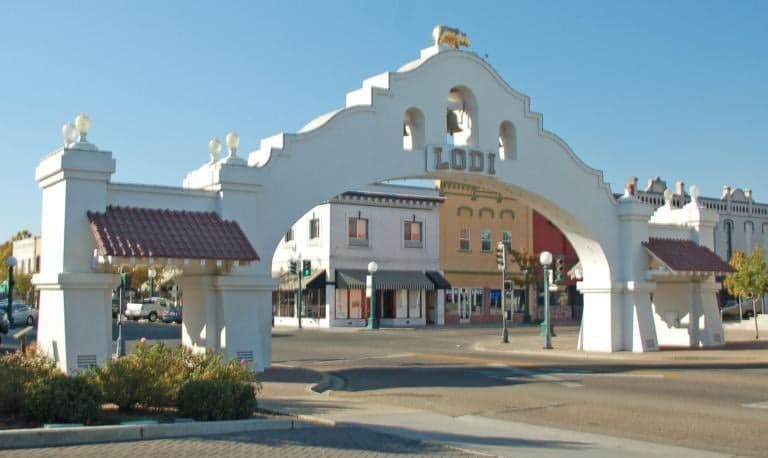
The difference between San Joaquin County’s D+1 and California’s D+12 isn’t just a number — it’s the difference between a competitive district and a safe blue seat. Take Stockton, the county seat and largest city: it votes reliably Democratic, often by 15–20 points, thanks to a diverse, working-class population and strong union presence. But drive 15 miles north to Lodi, and you’ll find a city that votes Republican by similar margins — it’s a classic inland conservative stronghold with a deep agricultural heritage. Tracy and Manteca have shifted toward Democrats over the past decade as Bay Area transplants arrive, but they still contain plenty of swing precincts where school board races and local measures can flip either way. Meanwhile, Ripon and Escalon lean solidly red. What this means in practice: San Joaquin County is one of the few places in California where a Republican candidate can win a countywide office — the current sheriff, for example, is a Republican, and GOP candidates regularly pick up seats on the Board of Supervisors. But the overall trend is slow blueward drift, driven by population growth from the Bay Area.
What this means for residents
For conservative residents, the political climate can feel like swimming against a gentle but persistent current. State policies on housing, environmental regulation, and taxes — dictated by Sacramento’s supermajority — often frustrate locals who feel the county’s agricultural and industrial needs are overlooked. On the flip side, liberal residents find that their votes for state offices matter less here than in deep-blue coastal counties; local elections remain competitive, and progressive priorities like rent control or sanctuary policies have faced tough debates. The practical upshot: if you’re a moderate or an independent, this is one of the most politically livable corners of California. You can join a neighborhood group in Stockton that’s deeply engaged in homelessness policy, or a farm bureau meeting in Lodi that’s fighting water restrictions, and both groups feel they have a voice. National polarization does seep in, but county politics stays more issue-focused than culture-war-driven compared to, say, Los Angeles or Orange County.
Culturally, San Joaquin County’s political identity is shaped by its dual role as a Central Valley agricultural powerhouse and a commuter shed for the Bay Area. That tension plays out in land-use debates: you’ll see urban-growth boundaries and farmland preservation measures on the ballot alongside pro-development initiatives from newer residents. Politically, the county tends to be more pragmatic than ideological — even its most conservative officials often work across the aisle on water and infrastructure projects. If you’re moving here, expect a place where your vote carries more weight than it would in a safe seat, and where local politics feels more like a conversation among neighbors than a battle between armies.

State Political ClimatePolitical Climate in California
State Political AnalysisPolitical Environment in the State
California is a solidly Democratic state with a Cook Partisan Voting Index of D+12, meaning it votes about 12 points more Democratic than the national average in presidential elections. Over the past 20 years, the state has shifted from a competitive purple state—where Republicans like Arnold Schwarzenegger could win statewide—to a deep blue stronghold, driven largely by the massive population growth and political consolidation of coastal metros like Los Angeles, San Francisco, and San Diego. That said, the state is far from monolithic: vast inland regions, from the Central Valley to the Sierra foothills, remain reliably red, and the overall Democratic lean masks a deeply fractured political landscape that a relocator needs to understand neighborhood by neighborhood.
Urban vs. rural divide
The political map of California is essentially a story of three Californias. The coastal urban corridor—from San Diego up through Los Angeles, the Bay Area (San Francisco, Oakland, San Jose), and into Sacramento—drives the state's Democratic supermajority. These metros account for roughly 70% of the state's population and vote D+30 or higher in many precincts. In contrast, the Central Valley (Bakersfield, Fresno, Modesto) and the Inland Empire (Riverside, San Bernardino) are more moderate-to-conservative, with many rural counties like Shasta, Butte, and Tulare voting R+20 or more. The real battlegrounds are the suburban "collar counties" like Orange County, which flipped from red to blue in the Trump era, and Ventura County, which has trended left but still has competitive local races. A conservative moving to California will feel at home in places like El Dorado Hills or Temecula, but will be a distinct minority in Santa Monica or Berkeley.
Policy environment
California's policy environment is defined by high taxes, heavy regulation, and expansive state government. The state has a progressive income tax with rates up to 13.3%, one of the highest in the nation, and a state sales tax base rate of 7.25% that can climb higher with local add-ons. Property taxes are capped at 1% of assessed value under Proposition 13, but reassessment upon sale can hit new buyers hard. The regulatory posture is aggressive: California sets its own vehicle emissions standards, has the nation's strictest environmental review law (CEQA), and mandates employer-provided health insurance, paid family leave, and a $16 minimum wage (rising to $18 by 2026). On education, the state spends above the national average per pupil but ranks poorly in outcomes, with a powerful teachers' union and a school choice landscape that is limited compared to states like Florida or Arizona. Election laws are among the most liberal: universal mail-in voting, same-day registration, and no-excuse absentee voting are standard. For a conservative relocator, the tax and regulatory burden is the biggest shock; for a liberal one, the social safety net and environmental protections are major draws.
Recent policy direction
Over the last five years, California has moved decisively left on a broad set of issues. On gun and self-defense law, the state passed some of the strictest measures in the country: SB 2 (2023) effectively bans concealed carry in most public places, and the state's assault weapons ban and magazine capacity limits have been upheld in court. On parental and education rights, California was an early adopter of "parental notification" policies for LGBTQ+ students, but in 2024 it passed AB 1955, which prohibits school districts from requiring staff to notify parents of a child's gender identity—a direct rebuke to conservative school boards. On speech and privacy, the state has a strong consumer privacy law (CCPA) but has also cracked down on "hate speech" and misinformation with laws like AB 587, which requires social media platforms to disclose content moderation policies. On medical and bodily autonomy, California has enshrined abortion access as a constitutional right and expanded gender-affirming care protections for minors, including a 2024 law that makes the state a "sanctuary" for families seeking such care. On property rights, rent control was expanded under the Tenant Protection Act of 2019, and new construction is often slowed by CEQA lawsuits. On taxation, the trend is toward higher taxes on the wealthy, with a "wealth tax" proposal gaining traction in the legislature. On voting and ballot access, California continues to expand mail-in voting and automatic voter registration, while also passing laws to combat "deepfakes" in political ads. For a relocator, the bottom line is that California is moving in a direction that prioritizes individual rights on social issues (abortion, gender, privacy) while restricting them on gun rights and property use—a trade-off that will appeal to some and alienate others.
Civil unrest & political movements
California has a long history of political activism, from the 1960s Free Speech Movement at Berkeley to the 2020 George Floyd protests, which were among the largest and most destructive in the country, particularly in Los Angeles and Oakland. The state is home to organized movements on both sides: on the left, groups like the Democratic Socialists of America have real influence in local politics, especially in the Bay Area; on the right, the "California Republican Party" is a minority but has seen a resurgence in rural areas and among Latino voters in the Central Valley. Immigration politics are a constant flashpoint: California is a "sanctuary state" under SB 54, which limits local law enforcement cooperation with federal immigration authorities, and cities like Los Angeles and San Francisco have doubled down on sanctuary policies even as the state's homeless crisis strains public resources. Secession or nullification rhetoric is mostly a fringe phenomenon, though the "Calexit" movement gained some traction after Trump's 2016 election; it has since fizzled. Election integrity controversies are less pronounced than in swing states, but conservative activists have raised concerns about mail-in ballot security and the state's voter roll maintenance. A new resident will notice visible political polarization: in coastal cities, BLM and Pride flags are ubiquitous; in inland towns, Trump flags and "Don't Tread on Me" banners are common. The homeless encampments in downtown areas of San Francisco and Los Angeles are a constant, visible reminder of the state's policy challenges and political divisions.
Projection
Over the next 5-10 years, California's political trajectory is likely to remain solidly blue, but with growing internal friction. Demographic trends—an aging white population, a growing Latino electorate, and continued in-migration from abroad—will reinforce the Democratic majority, but the state's high cost of living and housing crisis are driving an exodus of middle-class families, many of whom lean conservative, to Texas, Arizona, and Nevada. This out-migration is actually making the state more Democratic, as the people leaving tend to be more moderate or conservative. At the same time, the state's progressive wing is pushing for even more ambitious policies—single-payer healthcare, a wealth tax, and public housing—that could further alienate business and moderate voters. The wild card is the housing crisis: if the state can't build enough housing, the political pressure from rising homelessness and cost of living could lead to a backlash against the Democratic establishment, potentially opening the door for more moderate or even Republican candidates in suburban districts. For a relocator moving in now, expect to find a state that is increasingly polarized between its wealthy, progressive coastal cities and its struggling, conservative inland regions, with the political center continuing to erode.
For a new resident, the practical takeaway is that California offers a high degree of personal freedom on social and cultural issues—abortion access, LGBTQ+ rights, privacy protections—but at the cost of high taxes, heavy regulation, and limited freedom on property use and gun ownership. Conservatives can find like-minded communities in the Central Valley, Inland Empire, and Sierra foothills, but will be swimming against the tide in state politics. Liberals will find a policy environment that largely aligns with their values, but will have to contend with a high cost of living and a housing crisis that makes it hard to put down roots. The best advice: visit the specific city or neighborhood you're considering, talk to locals, and understand that California is not one political entity but a collection of very different regions that happen to share a state government.
* Values derived from national, state, county, city and local statistics and may differ in a specific area. Last updated: 2026-07-10T05:15:04.000Z
Narrative content on this page is AI-generated and may contain mistakes. Verify any details that matter before acting on them.
ReloMaps may earn a commission from affiliate links at no extra cost to you.

