Photo: Wikipedia
Demographics of San Joaquin County
Affluence Level in San Joaquin County
A middle-class area roughly in line with national averages across income, home values, education, and employment.
People of San Joaquin County
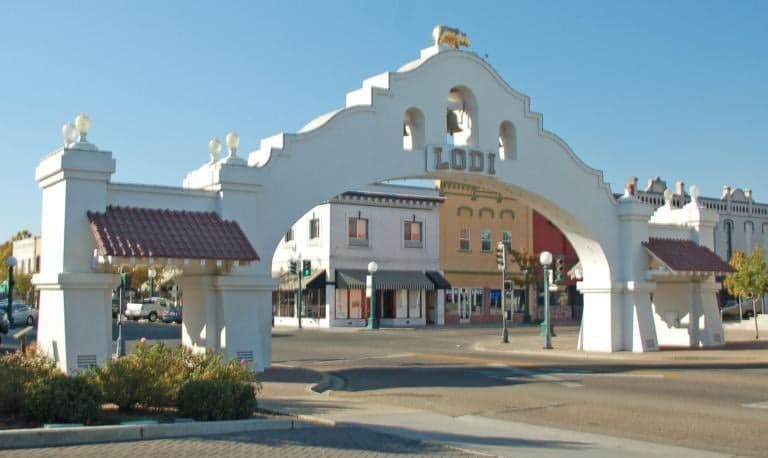
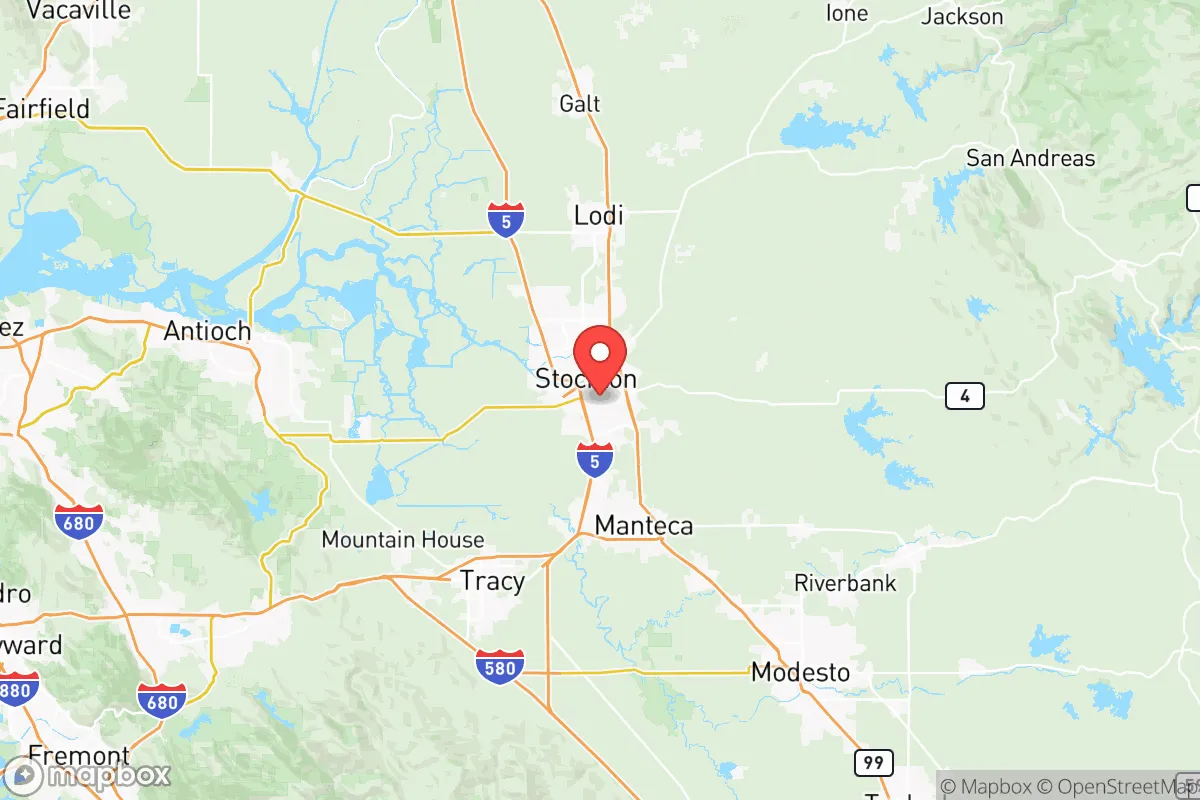
The people of San Joaquin County today form one of California’s most ethnically diverse and working-class populations, a 787,416-person mix where no single group holds a majority. Hispanics make up 42.2% of residents, followed by non-Hispanic Whites at 27.9%, East and Southeast Asians at 12.0%, Blacks at 6.7%, and Indian subcontinent residents at 5.5%. The county’s identity is rooted in agriculture, logistics, and a steady churn of immigration that has created distinct ethnic enclaves in cities like Stockton, Lodi, Tracy, and Manteca, while a relatively low 21.6% college attainment rate reflects its blue-collar economic base.
Settlement & growth (pre-1960)
Before European contact, the region was home to the Miwok and Yokuts peoples, who lived along the San Joaquin River and Delta waterways for thousands of years, with village sites near present-day Stockton and Lodi. Spanish colonization arrived in the late 18th century via Mission San José (1797), which claimed the land for ranching and farming, though actual settlement remained sparse until Mexico’s secularization of missions in the 1830s opened the area to rancho grants. The first major non-Native influx came during the 1848-1855 California Gold Rush, when Stockton became a key supply hub for miners heading to the Sierra foothills, drawing a polyglot wave of Anglo-Americans, Chinese laborers, and European immigrants.
The completion of the transcontinental railroad in 1869 cemented Stockton’s role as an agricultural and shipping center, and the county’s population exploded with the arrival of Portuguese and Italian farmers who drained Delta peatlands for asparagus and celery, settling in communities like French Camp and Linden. By the 1880s, Chinese immigrants, initially drawn by railroad construction, formed a sizable community in Stockton’s Chinatown, despite the Chinese Exclusion Act of 1882. Japanese immigrants followed in the 1890s-1910s, working as farm laborers and establishing enclaves in Lodi and Stockton, where they developed the region’s wine grape and cherry industries. The Dust Bowl migration of the 1930s brought tens of thousands of White “Okies” and “Arkies” from Oklahoma, Texas, and Arkansas, who settled in agricultural labor camps around Tracy and Manteca, forming the backbone of the county’s farm workforce for decades.
World War II and its aftermath reshaped the county further. The Stockton Naval Supply Depot (1941-1995) and nearby military bases drew Black and White workers from the South and Midwest, while the Bracero Program (1942-1964) brought Mexican laborers who later sponsored family reunification, laying the groundwork for the county’s large Hispanic population. By 1960, San Joaquin County was a predominantly White (roughly 85%) and agricultural region, with Stockton as its urban core and smaller towns like Ripon and Escalon serving as tight-knit farming communities.
Modern era (post-1965)
The 1965 Hart-Cellar Act fundamentally altered San Joaquin County’s demographics by opening immigration from Asia and Latin America. The first major post-1965 wave was Filipino immigration, driven by the 1965 Immigration Act’s family reunification provisions and demand for healthcare workers; Stockton’s Filipino community, centered around the Little Manila district, became one of the largest in the United States, with descendants now concentrated in Stockton and Lodi. Vietnamese refugees arrived after 1975, settling in Stockton and Tracy, where they established Buddhist temples and grocery stores, while a smaller wave of Cambodian and Laotian refugees followed in the 1980s.
Mexican immigration accelerated dramatically after 1965, shifting from seasonal labor to permanent settlement. By 2026, Hispanics are the largest ethnic group at 42.2%, with the highest concentrations in Stockton’s south side, Lodi, and Manteca, where they dominate construction, warehousing, and food processing. The Indian subcontinent population (5.5%) is a more recent arrival, growing rapidly since the 1990s as tech and medical professionals from India and Pakistan settled in Tracy and Stockton, drawn by affordable housing relative to the Bay Area. East and Southeast Asian communities (12.0%) include long-established Chinese, Japanese, and Filipino groups, plus newer Vietnamese and Korean enclaves in Stockton and Lathrop.
Domestic migration has also reshaped the county. Since the 1990s, Bay Area “spillover” has brought White and Asian professionals to Tracy, Mountain House, and Manteca, seeking cheaper homes while commuting to Silicon Valley and San Francisco. This has created a sharp divide: Tracy and Mountain House are increasingly suburban, college-educated, and diverse, while Stockton remains poorer, more working-class, and more heavily Hispanic and Black. The Black population (6.7%) is concentrated in Stockton’s south and central neighborhoods, with roots in the Great Migration and post-war defense industry hires.
The future
San Joaquin County is becoming more diverse and more suburban, but the pace of change varies sharply by city. The Hispanic share is projected to grow from 42.2% toward a majority by 2040, driven by higher birth rates and continued immigration, while the non-Hispanic White share (27.9%) will continue to decline. East and Southeast Asian and Indian subcontinent populations are likely to grow modestly, especially in Tracy and Mountain House, as Bay Area affordability pushes more families eastward. The county’s overall population is projected to reach roughly 900,000 by 2035, with most growth in the western cities of Tracy, Mountain House, and Lathrop, while Stockton’s growth will be slower and more infill-oriented.
Culturally, the county is evolving from a rural-agricultural identity toward a hybrid of exurban bedroom community and logistics hub, anchored by the Port of Stockton and massive Amazon and FedEx distribution centers. The political lean remains moderately Democratic, but the growing Hispanic and Asian populations are not monolithic; Tracy’s Asian and Indian voters lean more moderate than Stockton’s heavily Democratic Hispanic and Black base. The key challenge for newcomers will be the county’s low college attainment rate (21.6%) and high poverty rate, which limit upward mobility even as new housing developments sprout along Interstate 205 and Highway 99.
For someone moving in now, San Joaquin County offers affordable housing and ethnic diversity but requires a tolerance for long commutes, hot summers, and a still-developing cultural infrastructure. It is a place where the old agricultural economy and the new logistics economy coexist uneasily, and where the population is becoming younger, browner, and more suburban with each passing year. The county’s future is not as a rural backwater or a Bay Area clone, but as a distinct Central Valley melting pot where working-class pragmatism and immigrant ambition define daily life.

* Values derived from national, state, county, city and local statistics and may differ in a specific area. Last updated: 2026-07-10T05:15:04.000Z
Narrative content on this page is AI-generated and may contain mistakes. Verify any details that matter before acting on them.
ReloMaps may earn a commission from affiliate links at no extra cost to you.

