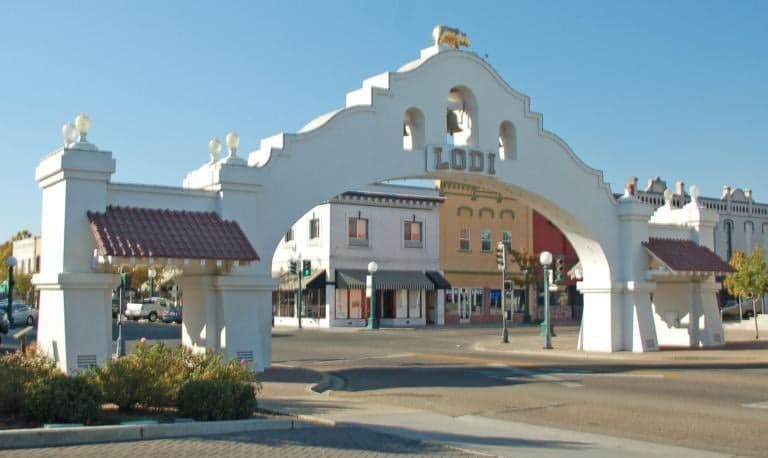
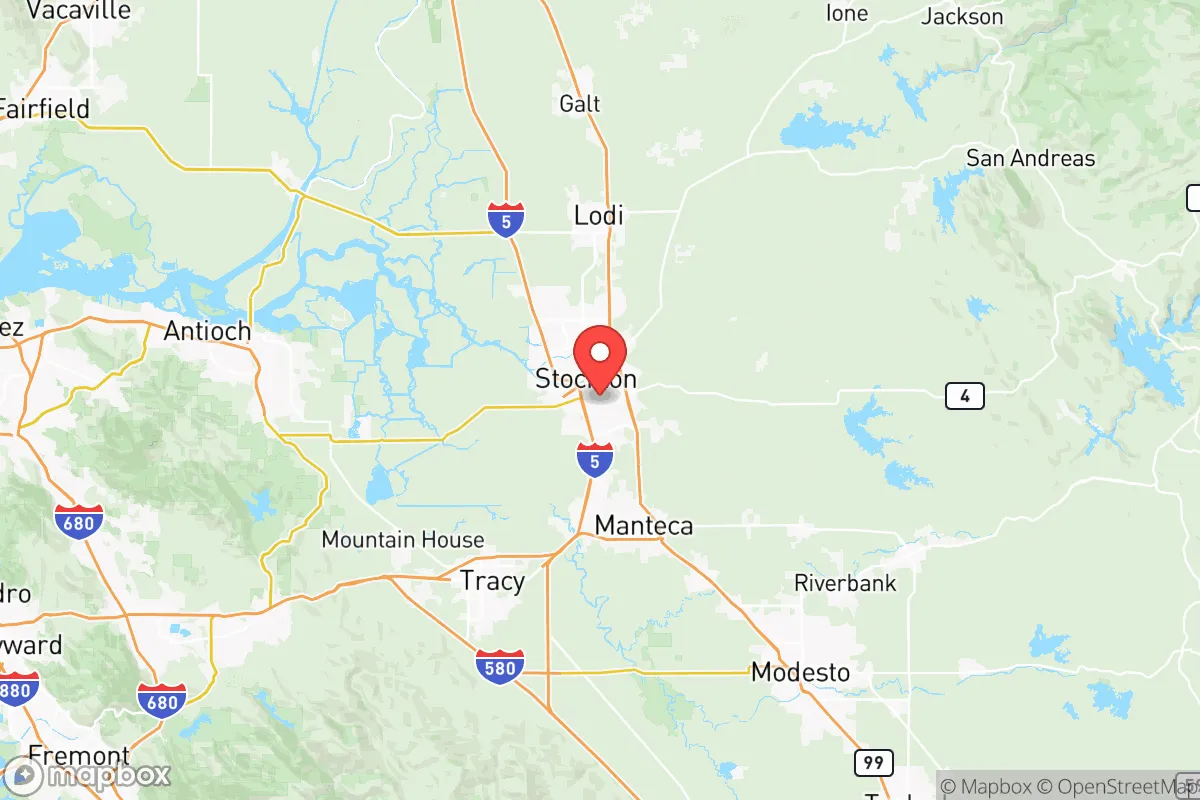
Photo: Wikipedia
Personal Sovereignty in San Joaquin County
Viable for self-reliance. Generally workable, though some barriers may limit total independence.
What does Personal Sovereignty tell us?
Personal Sovereignty measures your capacity for self-reliance and independence with minimal government friction. Higher scores mean fewer barriers between you and the way you want to live... but it assumes you have the space you need and good neighbors.
What does this tell us?
Personal Sovereignty measures your capacity for self-reliance and independence with minimal government friction. Higher scores mean fewer barriers between you and the way you want to live... but it assumes you have the space you need and good neighbors.
State Policy
Energy independence: Importer (33% of energy produced in-state)
Personal Liberty
Homesteading

Personal Liberty Analysis
San Joaquin County offers a mixed personal sovereignty environment where California's heavy state-level regulatory framework meets a more pragmatic, rural-influenced local culture. While residents cannot escape the state's high tax burden and strict business regulations, the county's agricultural roots and inland location create pockets of greater autonomy than what is found in coastal metros like San Francisco or Los Angeles. For individuals and families prioritizing personal freedom, the key is understanding where within the county—and within specific policy domains—sovereignty is strongest versus where state preemption limits local flexibility.
Tax burden and regulatory posture in San Joaquin County
California's statewide tax structure imposes a significant baseline burden on all residents, and San Joaquin County is no exception. The state's progressive income tax tops out at 13.3%, and the base sales tax rate in the county is 7.25% to 8.25% depending on the city, with Stockton and Lodi at the higher end due to local add-ons. Property taxes are capped at 1% of assessed value under Proposition 13, which provides some predictability, but effective rates can climb with voter-approved bonds and parcel taxes. The county's regulatory posture is shaped by state mandates on environmental review (CEQA), housing construction, and land use, which slow development and raise costs. However, local governments in cities like Manteca and Tracy have pursued more business-friendly approaches, streamlining permit processes for warehouses and logistics centers. The county's Board of Supervisors has also pushed back against some state housing mandates, reflecting a local desire for greater control over land-use decisions. For a relocation-minded reader, the tax burden is unavoidable in California, but San Joaquin County's lower property values relative to the Bay Area mean the dollar impact is less severe than in neighboring Alameda or Santa Clara counties.
Self-defense rights and gun law specifics in the county
California's gun laws are among the strictest in the nation, and San Joaquin County operates entirely within that framework. The state requires a 10-day waiting period, a Firearm Safety Certificate, and a background check for all purchases, including private transfers. Assault weapons are banned, and magazines are limited to 10 rounds. The county's sheriff, however, has historically taken a more permissive stance on concealed carry permits (CCWs) than some coastal jurisdictions. Under the "may-issue" system that existed before the Supreme Court's Bruen decision, San Joaquin County was considered a relatively friendly venue for CCW applicants, with the sheriff's office processing applications in a straightforward manner. Post-Bruen, the state moved to a "shall-issue" system, but California's 2023 law (SB 2) created new "sensitive places" restrictions that limit where firearms can be carried. In practice, gun owners in Ripon and Escalon—smaller, more rural communities—report less friction with local law enforcement than those in Stockton. The county has several gun ranges and sporting goods stores that cater to hunters and sport shooters, reflecting a culture where firearms are seen as tools for recreation and self-defense rather than objects of controversy. For the sovereignty-minded reader, the state's gun laws are a significant constraint, but local enforcement in San Joaquin County is less adversarial than in urban coastal areas.
Self-reliance and homesteading viability across the county
San Joaquin County's agricultural character makes it one of the more viable areas in California for homesteading and self-reliance, though zoning and water access are critical variables. The county's general plan allows for agricultural and rural residential zoning on parcels as small as 1 to 5 acres in designated areas, particularly in the eastern and southern portions of the county. Linden and Lockeford are unincorporated communities where residents keep chickens, goats, and even small livestock on modest lots, and where county code enforcement is less aggressive than in incorporated cities. Off-grid living is legally challenging due to state building codes and health department requirements for septic systems and wells, but it is not impossible. Properties in Farmington and the rural stretches near the Stanislaus County line sometimes operate with solar panels and rainwater catchment, though permits are still required for permanent structures. The county's water supply is managed by multiple districts, and groundwater pumping is regulated under the Sustainable Groundwater Management Act (SGMA), which adds complexity for anyone drilling a new well. For families seeking a balance between self-reliance and access to jobs, the unincorporated areas around Mountain House (which is actually in San Joaquin County) offer newer homes with larger lots than typical suburban subdivisions, though HOAs in planned communities can restrict gardening and livestock. Overall, homesteading is more feasible here than in any Bay Area county, but it requires navigating state and local regulations that limit full off-grid independence.
Personal liberties: parental rights, medical autonomy, speech, and property
California's state-level policies on education, healthcare, and property rights create a framework that limits certain personal liberties while protecting others. Parental rights are a contested area: the state mandates LGBTQ+ inclusive curriculum and has laws that allow minors to consent to certain medical treatments without parental notification, which has sparked opposition from conservative families. School districts in Lodi and Lincoln Unified have seen heated school board meetings over these issues, reflecting a local desire for greater parental control. Medical autonomy is constrained by California's vaccine mandates for school attendance and healthcare workers, though exemptions exist for medical reasons. On speech and property rights, the state's anti-SLAPP laws provide strong protections against frivolous lawsuits intended to silence criticism, but local noise ordinances and sign regulations can limit expressive uses of private property. Property rights are further constrained by the California Coastal Commission's authority (though San Joaquin County is inland) and by CEQA, which allows third parties to challenge development projects. For the sovereignty-focused reader, the county offers more breathing room than the Bay Area on cultural issues, but the state's preemptive laws on education and healthcare remain binding regardless of local sentiment.
In the broader California context, San Joaquin County ranks as a moderately favorable environment for personal sovereignty—significantly more permissive than the Bay Area or Los Angeles County on gun rights, homesteading, and local regulatory culture, but still constrained by state-level tax, education, and healthcare mandates. Compared to states like Texas or Arizona, the county's autonomy is limited, but within California's inland agricultural corridor, it offers one of the more pragmatic balances for individuals and families who value self-reliance and are willing to work within a regulated system. The key differentiators are the county's rural zoning flexibility, the sheriff's historically reasonable approach to CCWs, and the presence of communities like Linden and Lockeford where a homesteading lifestyle remains attainable despite state oversight.

* Values derived from national, state, county, city and local statistics and may differ in a specific area. Last updated: 2026-07-10T05:15:04.000Z
Narrative content on this page is AI-generated and may contain mistakes. Verify any details that matter before acting on them.
ReloMaps may earn a commission from affiliate links at no extra cost to you.

