Photo: Wikipedia
Political ClimatePolitical Climate in Broken Bow, OK
District shown is the primary district for this city’s centroid. Cities may span multiple districts.
Inherited from parent state — no local data available.
Local Political AnalysisPolitical Analysis of Broken Bow, OK
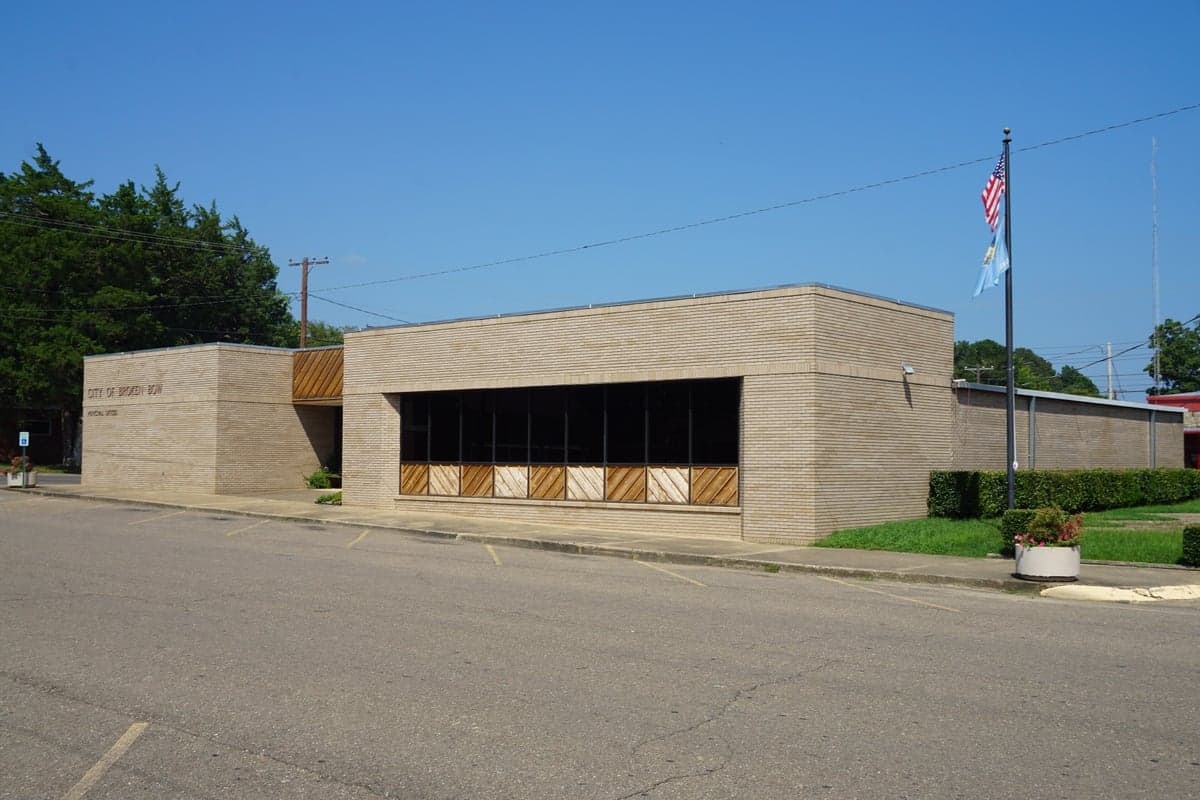
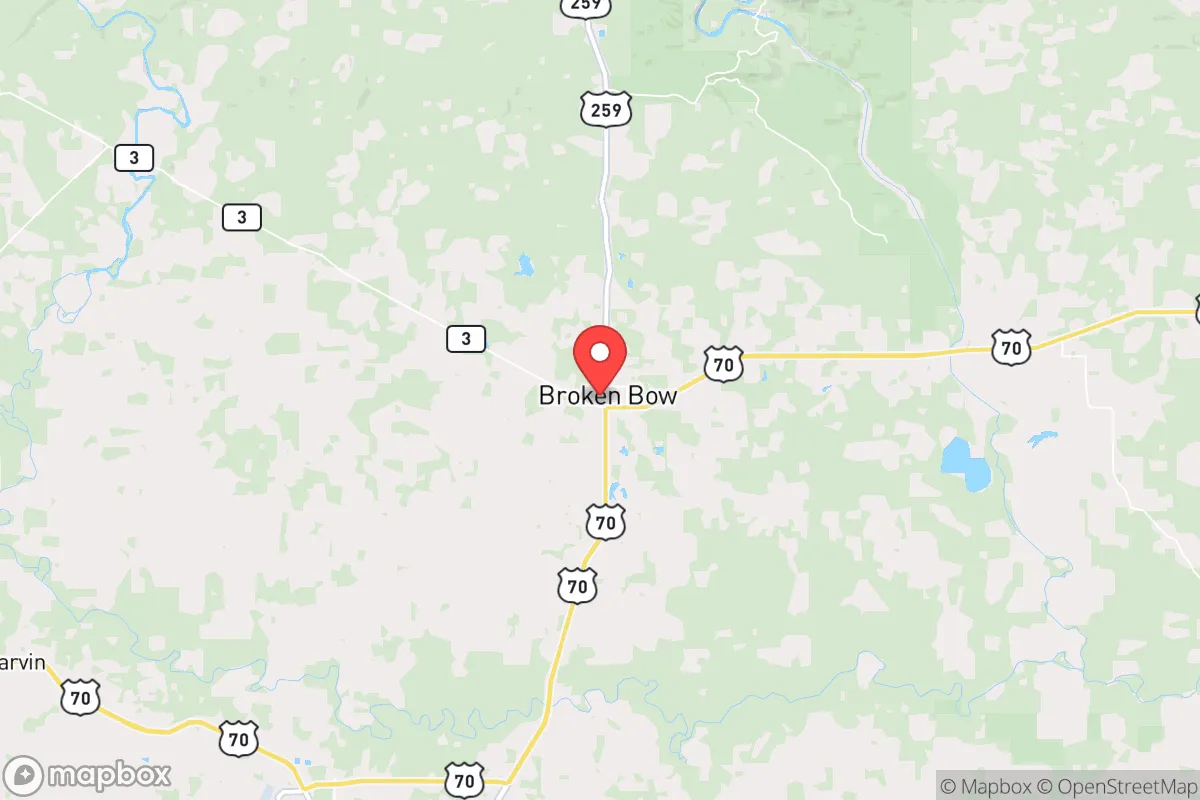
Broken Bow leans heavily Republican, mirroring the broader political landscape of southeastern Oklahoma, but with a distinctly local flavor shaped by its rural identity and growing tourism economy. The surrounding state of Oklahoma carries a Cook PVI of R+18, and McCurtain County, where Broken Bow sits, typically votes even more conservatively, often delivering margins of 70-80% for Republican candidates in statewide races. This isn't a place that's trending blue; if anything, the influx of new residents and second-home owners drawn to the scenic Ouachita Mountains and Broken Bow Lake has reinforced the area's conservative bent, as many newcomers are retirees or remote workers from red-leaning parts of Texas and Arkansas.
How it compares
Compared to Oklahoma as a whole, Broken Bow is more uniformly conservative than the state's urban centers like Oklahoma City or Tulsa, which have pockets of Democratic-leaning precincts. In those cities, you'll find neighborhoods where local school board races and city council elections can be competitive. Here in Broken Bow, partisan competition is rare. The closest political contrast comes from Idabel, about 15 miles south, which has a slightly higher share of Democratic voters due to its larger African American population, but even Idabel hasn't elected a Democrat to countywide office in years. The real divide isn't between Broken Bow and the state—it's between Broken Bow and places like Norman or Stillwater, where university influence creates a more mixed political environment. Locals often joke that the only "liberal" thing about Broken Bow is the fishing regulations on the lake.
What this means for residents
For conservative residents, the political climate means their values are reflected in nearly every aspect of local governance—from the county commission's stance on Second Amendment rights to the school board's approach to curriculum. There's little friction in daily life; you can fly a Trump flag from your truck bed without a second glance. For liberal residents, it's a different story. While they're not unsafe, they often keep their political views private to avoid awkwardness at the grocery store or church potluck. The local Democratic Party chapter is small and meets in a back room of the library. That said, the area's growing tourism industry has brought a more transient population—folks from Dallas and Houston who own cabins on the lake—and they tend to keep their politics to themselves, too. The practical effect is a community where political conversations are rare outside of election season, and even then, they're polite. Most people here are more concerned with the price of bait and the condition of the county roads than with national politics.
Culturally, Broken Bow stands apart from the rest of Oklahoma in a few notable ways. The area's strong Choctaw Nation presence—the tribe operates the Choctaw Casino Resort and funds local infrastructure—creates a unique political dynamic where tribal sovereignty and state law sometimes intersect. This isn't a point of contention; most residents, regardless of party, view the tribe as a vital economic partner. Another distinction is the area's libertarian streak on environmental issues. While the state government in Oklahoma City pushes for oil and gas development, Broken Bow's economy increasingly depends on protecting the clear waters of the Mountain Fork River and the forests of Beavers Bend State Park. This has led to a pragmatic, conservation-minded conservatism that prioritizes tourism dollars over extraction. Looking ahead, the political trajectory seems stable—Broken Bow will remain a deep red community, but its politics will likely become more focused on managing growth and balancing development with the natural beauty that draws people here in the first place.

State Political ClimatePolitical Climate in Oklahoma
State Political AnalysisPolitical Environment in the State
Oklahoma is one of the most reliably Republican states in the country, carrying a Cook Partisan Voting Index of R+18, meaning it votes about 18 points more Republican than the national average. The state hasn't voted for a Democratic presidential candidate since Lyndon Johnson in 1964, and the GOP now holds every statewide office, both U.S. Senate seats, and supermajorities in both chambers of the legislature. Over the last two decades, the shift has been less about Democrats winning and more about the GOP consolidating power — the state was already red in 2004, but the suburban and exurban rings around Oklahoma City and Tulsa have grown more conservative while rural areas have become even more deeply Republican.
Urban vs. rural divide
The political map of Oklahoma breaks down into three distinct zones: the two major metros, the mid-size college towns, and the vast rural expanse. Oklahoma City and Tulsa are the anchors of the state's population, and both are solidly Republican at the county level, but they contain the state's most competitive and diverse political terrain. Oklahoma County, home to Oklahoma City, voted for Donald Trump by about 12 points in 2024 — a far cry from the 30-point margins in surrounding rural counties, and it's the only county in the state where Democrats can realistically win local races. Tulsa County is similar, with the city of Tulsa itself leaning Democratic in recent cycles while the suburbs like Broken Arrow and Owasso are deeply conservative. The real Democratic base is concentrated in the college towns of Norman (home to the University of Oklahoma) and Stillwater (Oklahoma State), plus the eastern edge of Oklahoma City's urban core. Norman's Cleveland County has been trending Democratic for a decade, and it's the one county in the state where a Democrat can win a countywide race. Outside those pockets, the rural counties — places like McCurtain County in the far southeast, Texas County in the Panhandle, and Kay County up north — routinely vote 75-85% Republican, and that's where the state's political center of gravity lives.
Policy environment
Oklahoma's policy environment is built around low taxes, minimal regulation, and a strong emphasis on local control. The state has a flat personal income tax rate of 4.75% (down from 5.25% in 2022), a corporate rate of 4%, and no estate tax. The sales tax is 4.5% at the state level, but local municipalities add their own on top — Oklahoma City's combined rate is around 8.6%, while Tulsa's is about 8.9%. Property taxes are among the lowest in the country, with an effective rate around 0.9% of home value, thanks to a constitutional cap on assessment increases. The regulatory posture is business-friendly, with no state-level minimum wage above the federal $7.25 and a right-to-work law on the books since 2001. Education policy has been a flashpoint: the state passed universal school choice in 2024, allowing any family to use state funds for private or homeschool expenses, and it's one of the most expansive voucher programs in the nation. Healthcare is a mixed bag — Oklahoma expanded Medicaid under the 2020 ballot initiative State Question 802, but the state has some of the most restrictive abortion laws in the country, banning the procedure at fertilization with no exceptions for rape or incest. Election laws are moderately restrictive: voter ID is required, early voting runs for three days, and there's no same-day registration.
Recent policy direction
The last five years have pushed Oklahoma sharply in a conservative direction across nearly every policy domain. On guns, the state adopted constitutional carry in 2019, allowing permitless carry of firearms for anyone 21 or older, and in 2024 it passed a law prohibiting state agencies from enforcing federal gun regulations — a direct nullification-style challenge to Washington. On education and parental rights, the 2024 school choice law is the headline, but the state also passed a 2022 law requiring schools to notify parents of any curriculum involving sexual orientation or gender identity, and it banned transgender girls from competing in school sports. On speech and privacy, Oklahoma passed a law in 2024 requiring age verification for adult websites and has been aggressive in pushing social media platforms to verify users' ages. On medical and bodily autonomy, the state has the nation's most restrictive abortion ban, but it also legalized medical marijuana in 2018 via State Question 788, creating a robust and heavily regulated industry. Property rights are strongly protected — the state has a "right to farm" constitutional amendment and limits eminent domain for private development. On voting, the legislature has tightened absentee ballot rules and shortened the mail-in ballot window, though it stopped short of the strict voter ID laws seen in Texas. The overall direction is clear: Oklahoma is moving toward a model of maximum individual liberty on guns, education, and property, paired with tight state control on abortion and social issues.
Civil unrest & political movements
Oklahoma doesn't see the kind of large-scale protest activity common in coastal states, but it has its own political flashpoints. The most visible movement in recent years has been on the right: the state was a hotbed of "constitutional sheriff" activism during the COVID-19 pandemic, with several rural counties refusing to enforce mask mandates and business closures. The 2021 U.S. Capitol riot included several Oklahomans, and the state's Republican Party has been vocal about election integrity concerns, passing a 2022 law that created a new felony for "election interference" and requiring hand-counted audits in some counties. On the left, the most organized activism centers on the 2020 Medicaid expansion campaign and the medical marijuana industry, which has built a surprisingly powerful political coalition. Immigration politics are less heated than in border states, but the legislature passed a 2024 law making it a state crime to be in Oklahoma without legal status, mirroring Texas's SB 4. The most distinctive political movement is around tribal sovereignty — the 2020 McGirt Supreme Court decision affirmed that much of eastern Oklahoma remains tribal land, and the state has been in a tense negotiation with the Cherokee, Chickasaw, Choctaw, Muscogee, and Seminole nations over jurisdiction. That's a uniquely Oklahoma issue that a new resident will notice in the eastern half of the state, where tribal police, courts, and license plates are common.
Projection
Over the next five to ten years, Oklahoma is likely to stay solidly Republican, but the margins may narrow slightly in the metros. The state is seeing steady in-migration from California and Texas — Oklahoma City and Tulsa both rank in the top 20 U.S. metros for net domestic migration — and many of those newcomers are drawn by low housing costs and the business climate. That influx is likely to make the urban cores more competitive, but it's also bringing conservative-leaning migrants from California's Central Valley and Texas's border region, so the net effect on the partisan balance is unclear. The rural population is aging and shrinking, which will slowly reduce the weight of the deepest red counties. The school choice law could accelerate a trend of families moving to Oklahoma specifically for education freedom, which would likely reinforce the conservative tilt. The tribal sovereignty issue is the wild card — if the state and tribes reach a long-term compact, it could stabilize; if not, it could create a legal and political mess that dominates the next decade. Realistically, a new resident should expect Oklahoma to remain a solidly red state, but with the two metros becoming more politically competitive and the rural-urban divide growing sharper.
For a new resident, the bottom line is that Oklahoma delivers what its politics promise: low taxes, minimal regulation, strong gun rights, and a school choice system that's among the most generous in the country. If you're conservative, you'll find a state where your values are the default setting in most communities. If you're liberal, you'll find a state where your vote matters most in Norman, Oklahoma City, or Tulsa — and where you'll need to be comfortable being in the minority in most other places. The practical takeaway is that Oklahoma is a state where policy moves fast and in one direction, so it's worth checking the legislative calendar every year to see what's changed. It's a place where the government mostly stays out of your way, but it's also a place where the state is deeply involved in some of the most personal decisions you can make. Come for the cost of living, stay for the community — just know what you're signing up for.
* Values derived from national, state, county, city and local statistics and may differ in a specific area. Last updated: 2026-10-29T00:16:58.000Z
Narrative content on this page is AI-generated and may contain mistakes. Verify any details that matter before acting on them.
ReloMaps may earn a commission from affiliate links at no extra cost to you.

