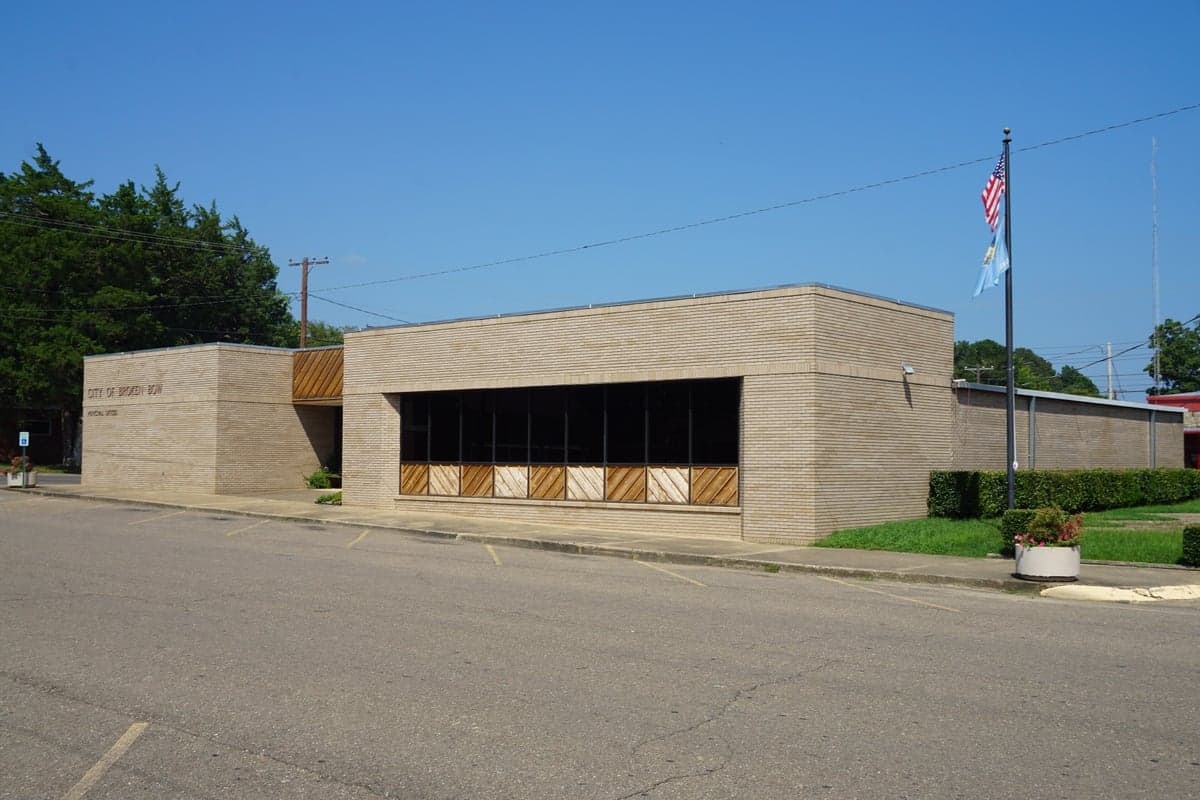
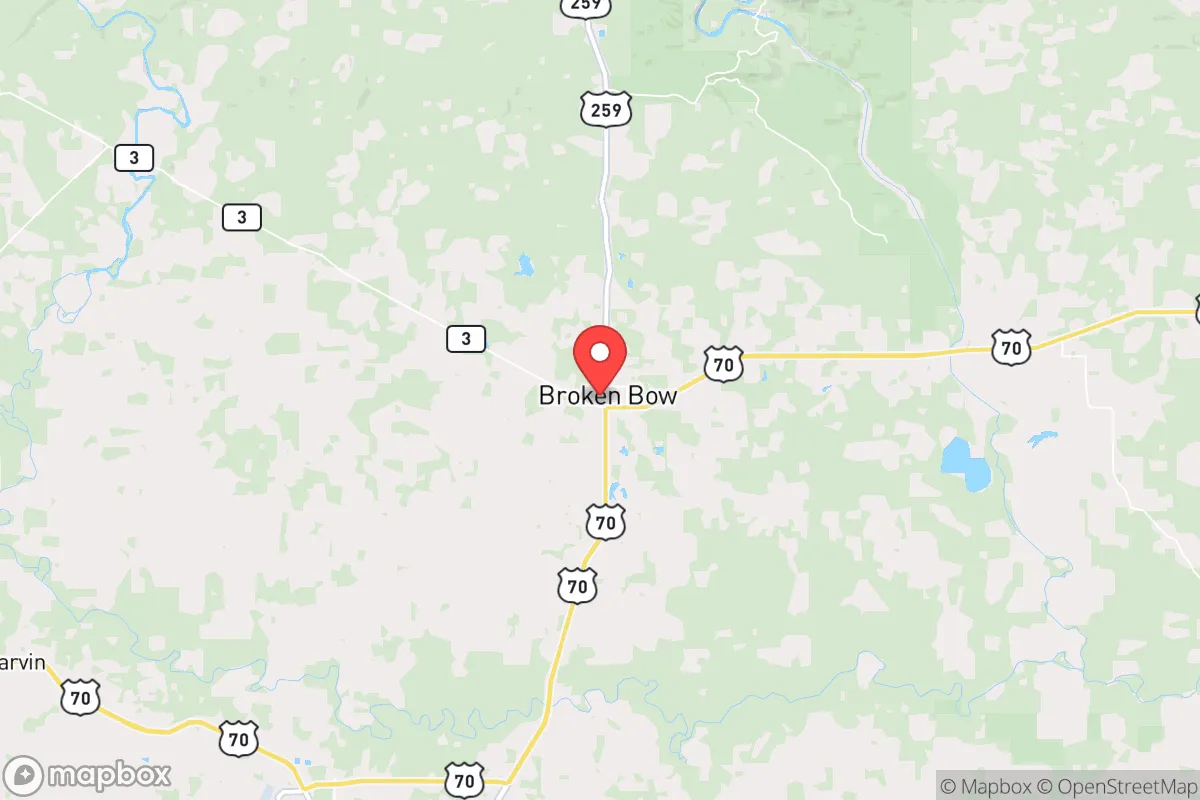
Photo: Wikipedia
Personal Sovereignty in Broken Bow, OK
Strong independent fundamentals that actively favor personal liberty and low regulation.
What does Personal Sovereignty tell us?
Personal Sovereignty measures your capacity for self-reliance and independence with minimal government friction. Higher scores mean fewer barriers between you and the way you want to live... but it assumes you have the space you need and good neighbors.
What does this tell us?
Personal Sovereignty measures your capacity for self-reliance and independence with minimal government friction. Higher scores mean fewer barriers between you and the way you want to live... but it assumes you have the space you need and good neighbors.
State Policy
Energy independence: Net exporter (180% of energy produced in-state)
Personal Liberty
Homesteading

Personal Liberty Analysis
Broken Bow, Oklahoma, sits in a corner of the state where personal sovereignty isn't just a political talking point—it's the operating system. McCurtain County's rural character, combined with Oklahoma's constitutional protections for gun owners, parents, and property holders, creates an environment where the state's footprint is noticeably lighter than in coastal or even many Midwestern jurisdictions. For a single person or family weighing relocation, the practical question isn't whether autonomy exists here, but how the specific legal and economic structures of Oklahoma and McCurtain County shape what you can actually do with your land, your money, and your household.
How the tax burden and regulatory climate compare to other states
Oklahoma's fiscal posture is genuinely light-touch, and that matters for anyone keeping score on sovereignty. The state levies a flat income tax of 4.75% as of 2026, with no progressive brackets—a structure that rewards higher earners relative to states like California or New York. Sales tax in Broken Bow runs around 9.5% when you combine the state rate (4.5%) with county and city levies, which is noticeable at the register but offset by the absence of a state property tax on personal vehicles and a property tax rate that ranks among the lowest in the nation—typically under 1% of assessed value. For a family buying a $200,000 home in McCurtain County, the annual property tax bill often lands below $1,200, a figure that would be unthinkable in most of the Northeast or upper Midwest.
Regulatory posture here is equally restrained. Oklahoma is a right-to-work state, which limits union influence on employers, and it operates under a one-stop permitting system for most business licenses. McCurtain County has no county-wide zoning ordinance outside the city limits of Broken Bow and a few small towns, meaning unincorporated land is largely free of use restrictions. The Oklahoma Business OneStop portal cuts through much of the red tape that bogs down entrepreneurs in other states, and the state's tort reform caps have kept liability insurance rates for small businesses and tradespeople comparatively low. The practical effect: fewer layers of permission between you and a workshop, a rental cabin, or a small agricultural operation.
Self-defense law and gun rights specifics in Oklahoma
Oklahoma's firearm statutes are among the most permissive in the country, and Broken Bow residents operate under the full weight of those protections. The state has permitless carry for anyone 21 or older who can legally possess a firearm—no license, no training course, no registration required for open or concealed carry. For those under 21, a standard concealed carry license remains available at 18, and Oklahoma recognizes permits from all other states, which matters if you travel frequently. The state's Castle Doctrine is unambiguous: you have no duty to retreat in your home, vehicle, or place of business, and the law presumes reasonable fear of death or great bodily harm if an intruder unlawfully enters your dwelling.
Stand-your-ground protections extend beyond the home, covering any place where you are lawfully present. Oklahoma also preempts local governments from enacting their own gun ordinances, so Broken Bow's city council cannot impose magazine limits, assault weapon bans, or waiting periods—a uniformity that keeps the legal landscape predictable. For hunters, McCurtain County's proximity to the Ouachita National Forest and Broken Bow Lake means deer, turkey, and waterfowl seasons are a short drive from town, and the state's lifetime hunting license (around $800) pays for itself within a few years for a dedicated outdoorsman.
Homesteading viability, lot sizes, and off-grid feasibility
McCurtain County is one of the few places in the lower 48 where a working homestead is still financially attainable on a modest budget. Unincorporated land outside Broken Bow sells for $2,000 to $5,000 per acre depending on timber quality and road access, and five-acre minimums are common in rural subdivisions—though many parcels are sold as 10, 20, or 40-acre tracts with no minimum square footage requirements for dwellings. The absence of county zoning means you can raise chickens, keep goats, or run a small cattle operation without seeking a conditional use permit, and Oklahoma's Right to Farm Act shields agricultural operations from nuisance lawsuits filed by neighbors who move in later and object to normal farming practices.
Off-grid living is genuinely feasible here, with caveats. Oklahoma law does not require connection to municipal water or sewer in unincorporated areas, so a well and septic system are entirely legal and standard practice. Solar is viable—McCurtain County averages over 200 sunny days per year—and the state's net metering rules require utilities to credit excess generation, though the local cooperative (Kiamichi Electric) has a cap on total distributed generation. Rainwater collection is legal and encouraged by state statute. The main constraint is the electrical grid itself: rural outages after ice storms or tornadoes can last days, so a backup generator or battery bank is less a luxury than a practical necessity for year-round residence.
Personal liberties: parental rights, medical autonomy, and property freedom
Oklahoma has moved decisively on parental rights in education. The Parental Rights in Education Act, passed in 2022, requires schools to notify parents of any medical or mental health services offered to students and prohibits instruction on sexual orientation or gender identity in grades K-3. The state's Parental Choice Tax Credit program, expanded in 2024, provides up to $7,500 per child for private school tuition or homeschooling expenses, making educational independence financially realistic for families who want to opt out of the public system entirely. Homeschooling in Oklahoma requires no state registration, no curriculum approval, and no standardized testing—you simply declare your intent and teach.
Medical autonomy is more mixed. Oklahoma is a conservative state on abortion—the procedure is banned except to save the mother's life—but it is notably permissive on vaccine choice, with a broad religious and personal belief exemption from school immunization requirements. The state does not mandate COVID-19 vaccines for any population, and a 2023 law prohibits employers from requiring them as a condition of employment. Telehealth access is robust, and direct primary care practices are growing in the region, offering flat-fee membership models that bypass insurance bureaucracy. Property rights are strongly protected: Oklahoma's Private Property Rights Protection Act requires government entities to conduct a takings analysis before enacting regulations that diminish property value, and the state has no inheritance tax and no estate tax, so land passes to heirs without a state-level death tax bite.
Relative to the rest of the country, Broken Bow and McCurtain County offer a sovereignty profile that ranks in the top tier for gun rights, property freedom, and educational independence, with a tax burden that is light by any national comparison. The trade-offs are real—rural healthcare is thinner, the nearest major airport is a two-hour drive, and the local economy leans on timber, tourism, and healthcare rather than high-wage tech or finance. But for a person or family whose priority is maximum legal latitude over their own life, land, and children, this corner of southeastern Oklahoma delivers a combination of low taxes, minimal regulation, and strong constitutional protections that few other regions can match at this price point.

* Values derived from national, state, county, city and local statistics and may differ in a specific area. Last updated: 2026-10-29T00:16:58.000Z
Narrative content on this page is AI-generated and may contain mistakes. Verify any details that matter before acting on them.
ReloMaps may earn a commission from affiliate links at no extra cost to you.

