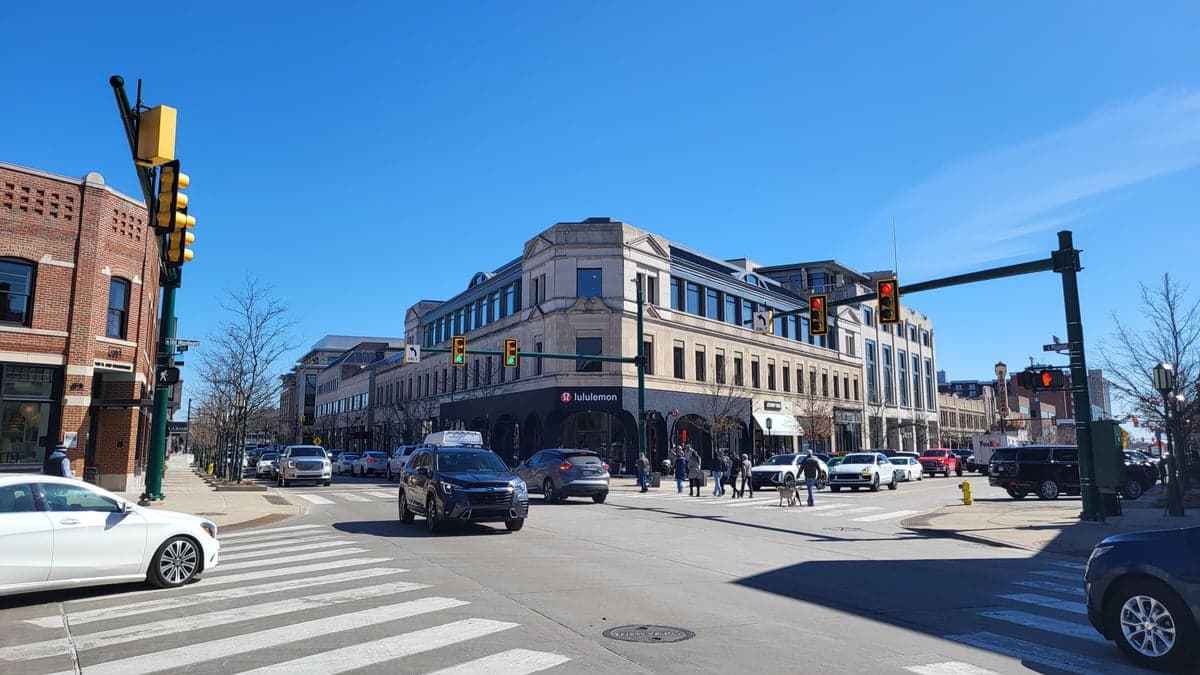
Photo: Wikipedia
Strategic Assessment of Birmingham, MI
Multiple tactical vulnerabilities. Population density, target proximity, or disaster risk are likely compounding. A retreat property and exit planning is required.
What does the Strategic Assessment tell us?
Our Strategic Assessment grades tactical survivability of an area. Major population centers, military targets, fallout zones, natural disasters, and border exposure all drive risk — lower exposure means a more defensible position in a crisis.
This is heavily inspired by Joel Skousen's Strategic Relocation book. Highly recommended you checkout the book ($)What does this tell us?
Our Strategic Assessment grades tactical survivability of an area. Major population centers, military targets, fallout zones, natural disasters, and border exposure all drive risk — lower exposure means a more defensible position in a crisis.
This is heavily inspired by Joel Skousen's Strategic Relocation book. Highly recommended you checkout the book ($)Strategic Pillars

Key Distances
Regional Safe Places
Below is our recommended "safe zones" in Michigan and the surrounding area based on our strategic heuristics. For most people, it's unrealistic to live in a “safe zone” full-time due to work, family or other personal reasons. They tend to be more rural. However, many of these areas are perfect for second homes and retreat properties that double as a vacation home or even a short-term rental.


Important Note: For informational purposes only. This does not mean nothing bad ever happens in the green zones. Please use common sense. This is based on public data and modeled with AI. We tried to take a conservative approach but mistakes happen. We update this regularly as new information becomes available.
Solar Generator Recommendations
Backup power matters more here than in safer locations. We've picked three solar generators across budgets and capacity tiers — start with the budget unit if you only need a few essentials, or step up if you want to run a fridge and HVAC for days at a time.

Jackery Portable Power Station Explorer 300
Budget OptionPower on the Go: Weighing only 11 lbs, it's convenient to set up and store with book-sized foldable solar panels

BLUETTI Portable Power Station AC180
Designed for both indoor and outdoor scenarios, AC180 is highly capable as it has a robost capacity and continuous output power.

EF ECOFLOW DELTA Pro Ultra Power Station
Upgraded PickEcoFlow DELTA Pro Ultra is a whole-home energy system designed to grow with your family. Integrated with the Smart Home Panel 2, it scales to meet your evolving energy needs — keeping your home powered, intelligent, and secure through every stage of life.
We earn a commission, at no additional cost to you.
Strategic Assessment Analysis
Birmingham, Michigan, presents a mixed strategic picture for the relocation-minded reader focused on resilience and self-sufficiency. While its location in southeastern Michigan offers certain natural advantages—namely, abundant fresh water and a relatively low risk profile for major natural disasters—its proximity to the Detroit metropolitan area introduces significant man-made risks and logistical challenges for those prioritizing long-term preparedness. The city’s core strength lies in its access to resources and community infrastructure, but its vulnerability to regional fallout and its position within a dense, interconnected urban corridor demand careful consideration.
Geographic position and natural advantages for long-term stability
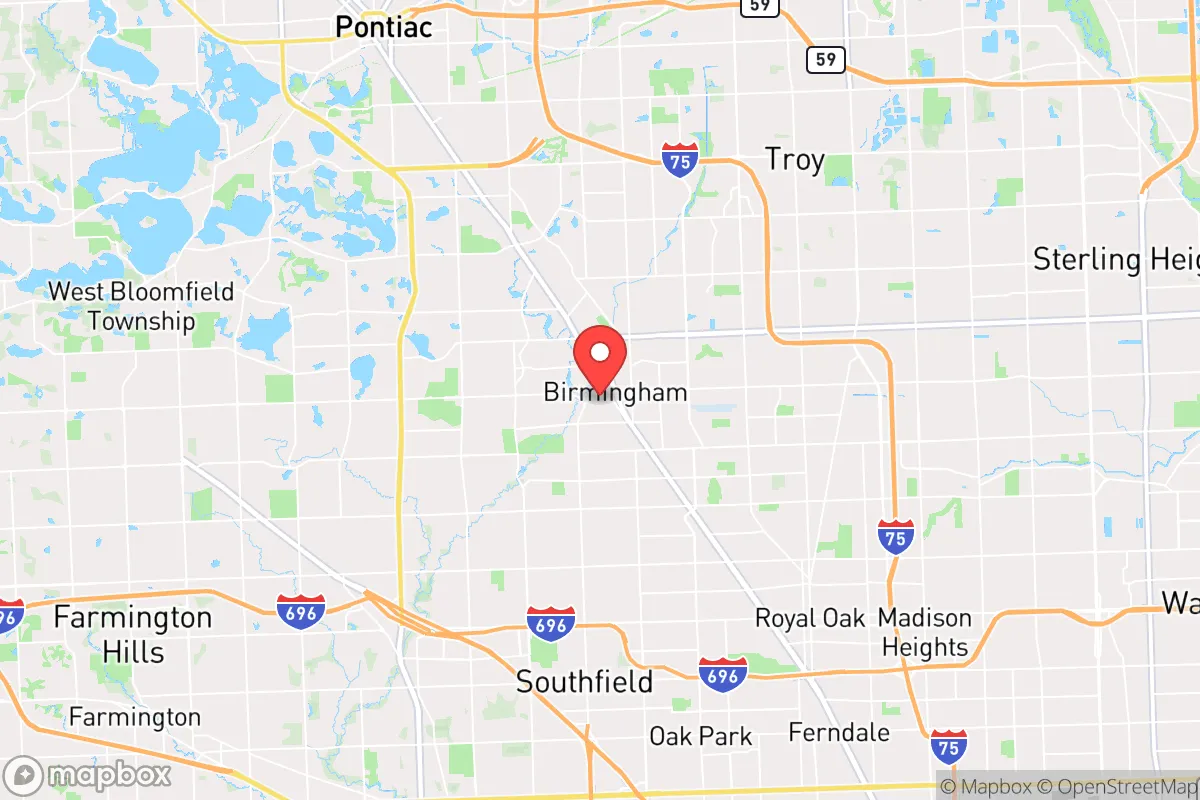
Birmingham sits in Oakland County, roughly 20 miles northwest of downtown Detroit, placing it within the Great Lakes region—a zone widely regarded as a climate haven due to its stable water supply and moderate temperature extremes. The area is not prone to hurricanes, earthquakes, wildfires, or tornadoes of significant intensity, which reduces the baseline risk of catastrophic natural events. The presence of the Great Lakes, particularly Lake St. Clair and Lake Erie within a short drive, provides a virtually inexhaustible source of fresh water, a critical asset for any resilience plan. The surrounding terrain is gently rolling, with ample tree cover and green space, including the sprawling 2,000-acre Bloomer Park and the River Rouge corridor, which offer some natural buffer and potential for local foraging or small-scale agriculture. The region’s soil is fertile, and the growing season, while short (roughly 150 days), is sufficient for cold-hardy crops like root vegetables, squashes, and greens. For a relocator, the key geographic advantage is the combination of water abundance and low natural disaster frequency—a rare pairing in the continental United States.
Risks, exposures, and proximity to fallout-relevant landmarks
The most significant strategic vulnerability for Birmingham is its proximity to the Detroit metropolitan area, a major population and industrial hub. Detroit is home to critical infrastructure—including the Detroit Metro Airport, the Ambassador Bridge (a key trade corridor), and numerous chemical and manufacturing plants along the Rouge River and the Detroit River. In a scenario involving a major man-made disaster, such as a terrorist attack, industrial accident, or grid-down event, Birmingham lies within the likely fallout zone of both direct and secondary effects. The city is roughly 15 miles from the Detroit Water and Sewerage Department’s main treatment plant, a potential target, and within 30 miles of the Fermi 2 nuclear power plant in Monroe County. While Fermi 2 has a strong safety record, any incident there could place Birmingham within the 50-mile emergency planning zone. Additionally, the region’s dense highway network—I-75, M-59, and I-696—means that any large-scale evacuation or supply chain disruption would quickly choke the area. The city’s own infrastructure, including its electrical grid and water supply, is tied to regional systems that could be compromised in a widespread event. For the relocator, the takeaway is clear: Birmingham’s natural safety is offset by its position within a high-value, high-density target zone.
Practical resilience for a relocator: food, water, energy, and defensibility
On the practical side, Birmingham offers a mixed bag for someone serious about self-sufficiency. The city itself is a wealthy, well-maintained suburb with strong local governance and a robust tax base, which translates to well-funded emergency services and a proactive community. However, this same affluence creates a dependency on just-in-time supply chains for food, fuel, and medical supplies. The local grocery stores, while plentiful (Kroger, Whole Foods, and a local market), are not designed for long-term storage, and the city’s zoning restricts large-scale agricultural operations. For food resilience, a relocator would need to rely on community gardens, backyard plots, or partnerships with farms in the surrounding rural areas of Oakland and Livingston counties. Water is more promising: the municipal supply comes from the Detroit River, but a backup well or rainwater catchment system is feasible given the region’s average 33 inches of annual rainfall. Energy resilience is a weak point. The grid is reliable under normal conditions but is aging and vulnerable to cyberattacks or physical sabotage. Solar potential is moderate—Michigan averages 160 sunny days per year, less than the Southwest—but a grid-tied system with battery backup is a viable investment. Natural gas is widely available for heating, but a propane tank or wood stove provides a more independent option. Defensibility is Birmingham’s biggest practical challenge. The city is a dense, walkable suburb with a grid-like street pattern and multiple entry points, making it difficult to secure in a crisis. The population density (roughly 3,500 people per square mile) means that any prolonged disruption would lead to rapid resource depletion and potential civil unrest. For a relocator, the best strategy is to treat Birmingham as a base for community and resources, not as a standalone fortress. A more defensible property would be a rural homestead within a 30-minute drive, where one can store supplies and retreat if needed.
In the overall strategic picture, Birmingham, Michigan, is a location of calculated trade-offs. It offers a stable, low-disaster-risk environment with access to abundant fresh water and a strong local economy, making it a reasonable choice for a relocator who values community infrastructure and is willing to invest in backup systems. However, its proximity to Detroit and its position within a dense urban corridor introduce significant man-made risks that cannot be ignored. The city is not a self-sufficient haven; it is a node in a larger, fragile system. For the reader who is serious about disaster readiness, Birmingham works best as a hub for resources and social connections, with a clear plan for evacuation or retreat to a more defensible location in the event of a major crisis. The key is to approach it with eyes open: enjoy the benefits of a well-run suburb, but never mistake its convenience for true resilience.

* Values derived from national, state, county, city and local statistics and may differ in a specific area. Last updated: 2026-10-05T03:56:01.000Z
Narrative content on this page is AI-generated and may contain mistakes. Verify any details that matter before acting on them.
ReloMaps may earn a commission from affiliate links at no extra cost to you.

